Menu & categories

Tomato

Juicy, low in calories and full of vitamins

Wiki about tomato Nutri-Score A Vegan Yes Gluten-free Yes Lactose-free Yes Nut-free Yes
NUTRITION / 100 g
18 kcal 0.9 g Protein 3.9 g Kohlenhydrate 0.2 g Fett

Introduction

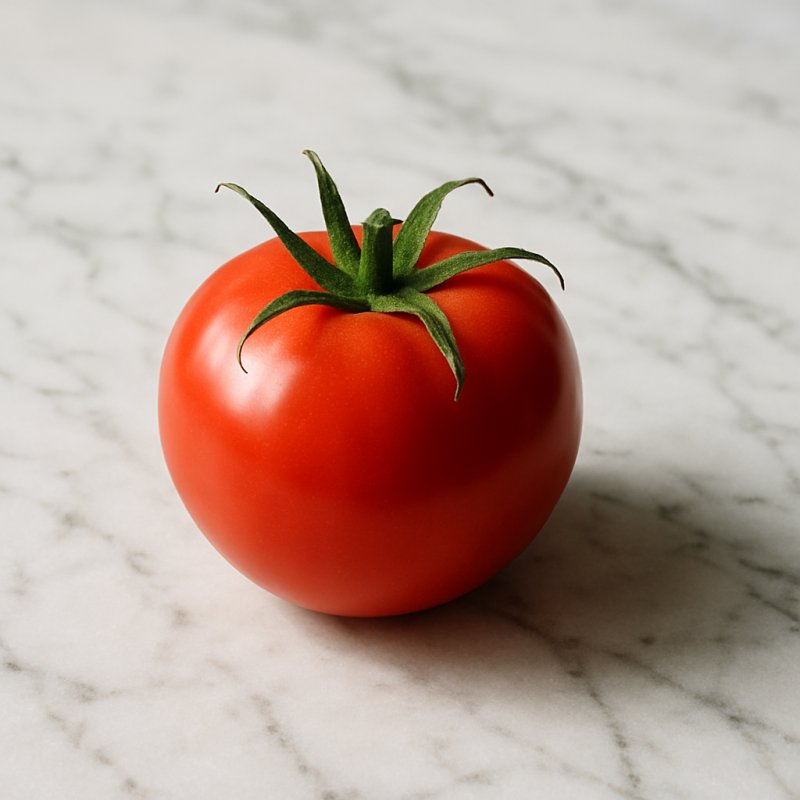
Fresh red tomato
Tomatoes have been with me since childhood: from the first wobbly attempt in my parents' balcony box to the plump, fragrant fruits I use in my kitchen today. As a 35-year-old editor from Europe I'm fascinated not only by the taste but also by the history, diversity and culture around this ingredient. The tomato is much more than a red vegetable for salad – botanically it is a fruit, culinarily an unbeatable base for sauces, soups, stews and much more. Its versatility makes it a cornerstone of Mediterranean cuisine and a symbol of fresh, seasonal cooking.

When I write about tomatoes I inevitably think of market days: the scent of ripe fruit, the glossy red, but also the variety of colors from yellow through orange to almost dark violet. San Marzano tomatoes for the perfect pasta sauce, beef tomatoes for caprese, cherry tomatoes for quick oven dishes – each variety has its own profile. A colleague of mine swears by old varieties like “Black Krim” and “Green Zebra”, which yield less in the garden but are aromatically unforgettable. He always says a tomato is perfect when it smells of summer as soon as you cut it.

Historically the tomato comes from South America, reached Europe via Mexico and was initially viewed with suspicion. Only gradually did it conquer the kitchens of Italy, Spain and finally the rest of the continent. Today the tomato is so central to European recipes that it's hard to imagine a pantry without passata, canned tomatoes and tomato paste. I remember research in Naples: an elderly signora told me that the best tomato sauce needs only three things – ripe San Marzano, good olive oil and patience. And she was right.

Good tomatoes are recognized by a firm but yielding skin, an intense scent at the stem end and a weight that surprises the hands. Watery, pale fruits without aroma are unfortunately often the result of harvesting too early or long transport routes. That's why I use regional produce in season whenever possible. Out of season I reach for high-quality

Availability & types

Availability and types of tomato

The tomato is one of the most popular ingredients worldwide. It originally comes from South America, especially from regions that are now part of Peru, Ecuador and northern Chile. From there sailors brought the plant to Europe, and it quickly became popular particularly in Italy, Spain and Portugal. Today the tomato is grown in many countries because it is relatively adaptable. That means it can be grown in greenhouses, outdoors and even on balconies.
Because of this wide distribution tomatoes can be found year-round in supermarkets. However there are differences in taste and quality depending on the season.

Season and availability

  • Summer (main season): From about June to September many regions of Europe have tomato season. During this time tomatoes often taste sweeter and more intense because they get more sun.
  • Spring and autumn: There are still many tomatoes from local greenhouses. The taste is good but sometimes a bit milder.
  • Winter: Then tomatoes often come from warmer countries or heated greenhouses. They are available but often less aromatic. A tip: in winter choose varieties that still taste good then, such as datterini or cherry tomatoes.
Origin today

Large quantities of tomatoes currently come from countries like Spain, Italy, the Netherlands, Morocco, Turkey and also from regional growing areas in Germany, Austria or Switzerland. The exact origin in the supermarket depends on the season.
At weekly markets you often find regional tomatoes from small farms in summer. These often taste more intense because they are harvested riper.

Types, varieties and variants

Tomato is not all the same. There are thousands of varieties that differ in shape, color, size and taste. Here are the main types, explained simply:

  • Round tomatoes: These are the classic tomatoes you often see at the supermarket. They are medium-sized, round and
Details & nutrition

Property Value
Unit g
Average weight per piece 120
Calories per 100 18
Protein per 100 0.9
Carbohydrates per 100 3.9
Sugar per 100 2.6
Fat per 100 0.2
Saturated fat per 100 0.03
Monounsaturated fat 0.03
Polyunsaturated fat 0.08
Fiber per 100 1.2
Vitamin C (mg) per 100 14
Vitamin D (IU) per 100 0
Calcium (mg) per 100 10
Iron (mg) per 100 0.3
Nutri-Score A
CO₂ footprint 0.7 kg CO2e/kg
Origin Worldwide, often Spain/Italy/local greenhouses
Gluten-free Yes
Lactose-free Yes
Nut-free Yes
Vegan Yes
Note Sensitive to cold; best stored at room temperature. Harvested ripe is especially flavorful.

Technical & scientific information

Tomato (Solanum lycopersicum) is a fruit cultivated worldwide from the nightshade family (Solanaceae) and is among the most important vegetable species for nutrition, processing and research. Botanically it is a berry characterized by a multilocular fruit structure, variable forms and an exceptional range of bioactive compounds. The tomato is both agronomically and nutritionally significant, combining high yields, versatile uses and a complex aroma profile.

Botany and morphology: Tomato plants are annual to short-lived perennial herbs with hairy, often viscid-smelling shoots. Leaves are pinnately compound, flowers are hermaphroditic, usually yellow and arranged in inflorescences. The fruit varies in size, color and shape – from cherry-sized cherry fruits to large-caliber beefsteak types, in colors from red, orange, yellow and pink to green and nearly black (anthocyanin-rich varieties). Fruit structure includes exocarp (skin), mesocarp (flesh), endocarp (seed chambers) and a gelatinous layer around the seeds; the number of locules is variety-specific.

Taxonomy and genetics: The tomato belongs to the genus Solanum and is closely related to potato, pepper and eggplant. The diploid genome (2n = 24) is well mapped, the reference genome has been sequenced and enables precise breeding strategies. Important genetic loci concern fruit size (fw genes), shape (sun, ovate), firmness (rin, nor), sugar-acid balance and disease resistance (e.g. Tm genes against tomato mosaic virus). Modern breeding uses marker-assisted selection, introgression of wild relatives (e.g. S. pimpinellifolium) and CRISPR-based editing to optimize yield, quality, shelf life and stress resistance. <

Wiki entry for: tomato
Active now: 6 visitors of which 2 logged-in members in the last 5 minutes