Menu & categories

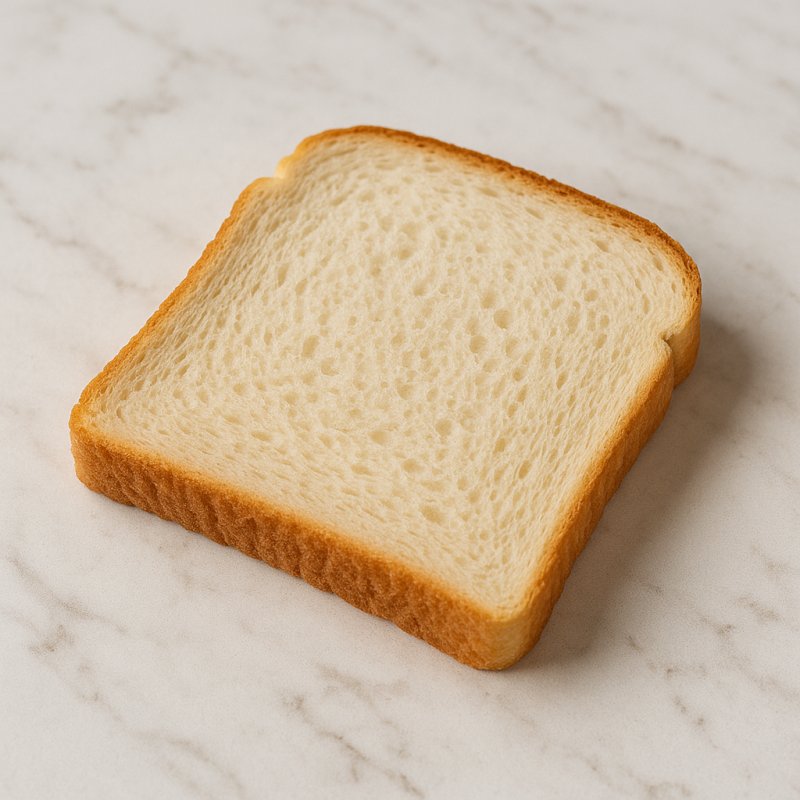
Toast bread

Soft wheat bread in slices, ideal for toasting and topping.

Wiki about slice of bread Nutri-Score C Vegan No Gluten-free No Lactose-free No Nut-free Yes
NUTRITION / 100 g
260 kcal 8.5 g Protein 49 g Kohlenhydrate 3.5 g Fett

Introduction

Sliced toast bread
I have developed an amazing relationship with toast bread, probably starting with a rushed breakfast routine where there was never enough time in the morning, but always time for crispy bread. For me toast bread is more than a quick snack; it is a culinary chameleon that shines both in nostalgic moments and in spontaneous cooking experiments. I still remember a rainy afternoon when, out of boredom, I spread avocado, hot pepper and a few leftover herbs on two slices of toast – and suddenly I understood why simple ingredients make you happy.

What makes toast bread so popular is its versatility. There is the classic white toast, fluffy and neutral in taste, but also darker varieties with whole grains or seeds that provide more texture and bite. In my kitchen I use toast bread for:

  • Quick breakfasts with butter, jam or scrambled eggs.
  • Savory variations like bruschetta, croque madame or hearty sandwiches.
  • Small helpers like breadcrumbs for casseroles or crispy croutons.
A colleague of mine swears that toast bread is the basis of any successful snack because it is so reliable. That is quite accurate; toast forgives mistakes, absorbs flavors well and becomes more aromatic when toasted. A small recipe secret I like to share: slightly moistened slices cooked in a pan with some butter become even more flavorful and absorb savory toppings better.

I also have practical tips: store toast bread airtight, freeze excess and defrost slices directly in the toaster. If you like the crust extra crispy, toast twice in quick succession.

In the end, toast bread for me is a comforter, playground and time-saver at once. It accompanies us from simple mornings to improvised dinners, connects childhood memories with new taste ideas and shows how much enjoyment can be hidden in unassuming things.

Availability & types


Availability and types of toast bread

Where does toast bread come from?
Toast bread is usually made from wheat. Wheat is a cereal plant that grows in large fields. After harvest the kernels are milled and processed into flour. The flour is then mixed with water, yeast and sometimes milk or sugar into a dough and baked — this is how the bread we toast or eat directly is produced.

Growing regions
Wheat grows in almost every part of the world. Major growing regions are:
  • Europe (e.g. Germany, France, Poland)
  • North America (USA, Canada)
  • Russia and parts of Asia
  • Australia
Many countries also buy wheat from other countries, so flour and therefore toast bread are usually available year-round.
How easy is it to get toast bread?
Very easy! You can find toast bread in almost every supermarket, in bakeries and sometimes at farmers' markets. There are:

  • Fresh toast bread from the bakery, often still warm and with a crispy crust.
  • Prepackaged toast bread in the supermarket, which has a long shelf life.
  • Frozen toast bread, which can be stored and defrosted later.
One advantage is: because wheat stores well, there is toast bread all year round — even if the wheat harvest only happens once a year.
What varieties and types of toast bread are there?
Toast bread comes in many shapes and flavors. Here are the most common ones, simply explained:

  • White toast bread – the classic, soft bread. It is light because the flour has been refined and the outer layers of the grain removed.
  • Whole grain or wholemeal toast – here the whole grain is retained. That makes the bread darker and healthier because more fiber and vitamins are preserved. Fiber is like little brushes that help your stomach work.
  • Multigrain or seeded toast – with various grains and seeds such as sunflower seeds or flaxseed; this gives more bite and flavor.
  • Rye toast – made from rye flour, slightly more robust in taste, often denser than wheat toast.
  • Sourdough toast – has a slightly tangy taste. Sourdough is a natural "starter" made of water and flour that gives the bread flavor and shelf life.
  • Milk or brioche toast – very soft and slightly sweet, almost like cake; good for sweet spreads.
  • Gluten-free toast bread – for people who cannot tolerate the elastic protein gluten. Instead of wheat, rice, corn or buckwheat are often used. Gluten is what makes the dough stretchy; without gluten the bread is often crumblier.
  • Thin or thick slices – depending on whether you want thin slices for light snacks or thick slices for heavier toppings.
Whether you're looking for a simple, soft toast bread or a special flavor with seeds or sourdough — the selection is large. You can try different varieties in supermarkets, health food stores or at the bakery next door until you find your favorite toast bread.
Details & nutrition

Property Value
Unit g
Average weight per piece 25
Calories per 100 260
Protein per 100 8.5
Carbohydrates per 100 49
Sugar per 100 5
Fat per 100 3.5
Saturated fat per 100 0.8
Monounsaturated fat 1
Polyunsaturated fat 1.3
Fiber per 100 3
Vitamin C (mg) per 100 0
Vitamin D (IU) per 100 0
Calcium (mg) per 100 100
Iron (mg) per 100 2.5
Nutri-Score C
CO₂ footprint 0.08 kg CO2e/100g
Origin Germany/EU (typical)
Gluten-free No
Lactose-free No
Nut-free Yes
Vegan No
Note Nutritional values and allergens may vary by manufacturer; check the label.

Technical & scientific information


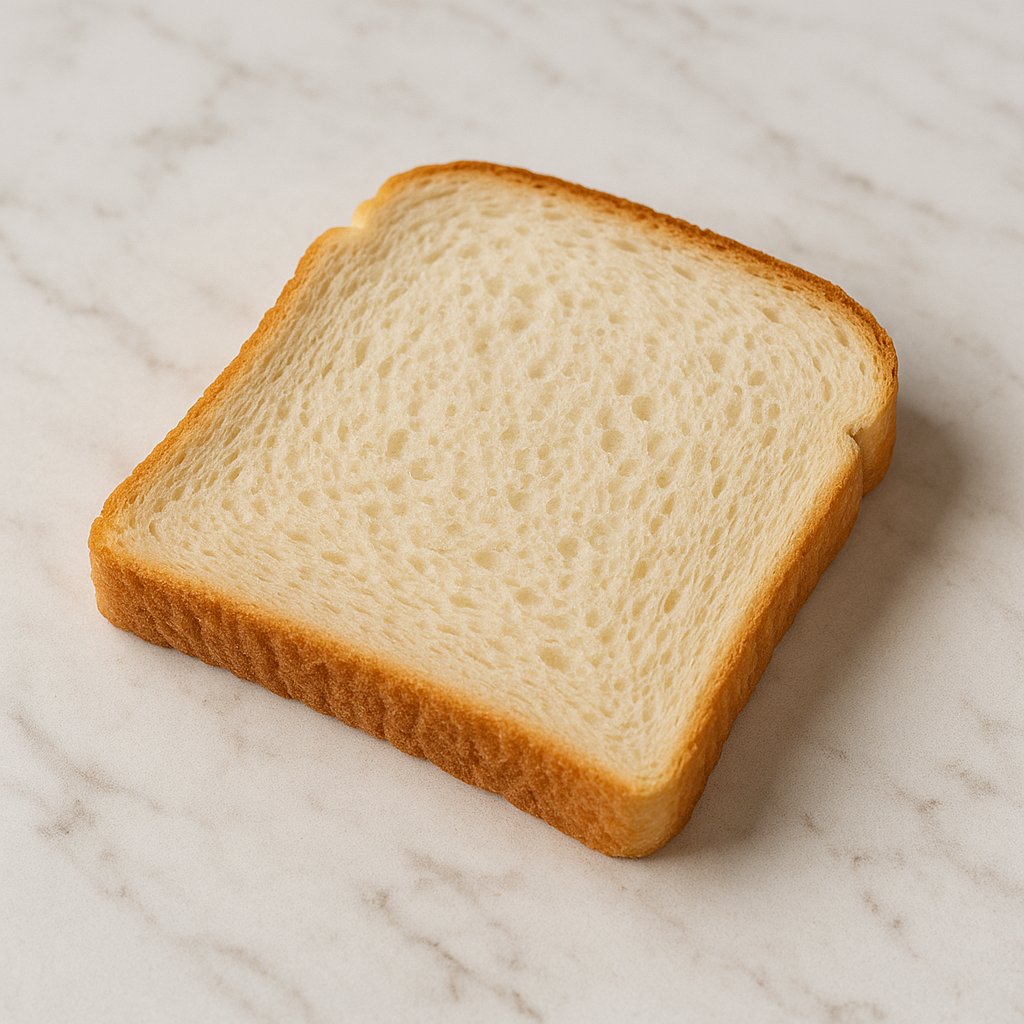
Toast bread refers to an industrially or artisanally produced, evenly sliced white or wholemeal bread characterized by a pronounced crust and a fine, elastic crumb and typically intended for toasting. It is usually based on wheat flour and differs from other bread forms by standardized baking pans, high slice density and often longer shelf life due to packaging and additives.

Chemical composition: The main components of toast bread are starch (predominantly amylopectin and amylose), proteins (primarily gluten proteins such as gliadin and glutenin), water, small amounts of lipids and minerals. Starch makes up the largest proportion of the dry matter and determines the textural development during baking. Proteins influence gas-holding capacity and thus the volume and cell structure of the crumb.

Nutritional values (typical ranges per 100 g):

  • Calories: about 240–290 kcal.
  • Carbohydrates: 45–55 g, predominantly as starch, with 1–5 g sugars.
  • Protein: 7–10 g, depending on the flour protein content.
  • Fat: 2–6 g, varying with added fats or oils.
  • Dietary fiber: 2–6 g, significantly higher in wholemeal variants.
  • Minerals and vitamins: may be fortified with iron, calcium and folic acid.
Processing methods: Industrial production includes mixing (flour, water, yeast, salt, fat, sugar), kneading to develop gluten, primary fermentation, dividing and shaping, final proofing in baking pans and even baking. Additional steps are rapid cooling, mechanical slicing and packaging under modified atmosphere. Typical additives are enzymes (e.g., amylases), emulsifiers (e.g., DATEM, SSL), oxidizing agents (ascorbic acid) and preservatives (calcium propionate) to reduce mold formation and delay staling.

Physico‑chemical processes during baking and toasting: During baking there is starch gelatinization, where starch absorbs water and swells, as well as protein crosslinking due to heat, which stabilizes the crumb structure. When toasting, brown pigments and flavor compounds are formed on the surface through the Maillard reaction (reaction of reducing sugars with amino acids); at higher temperatures sugar caramelization also occurs. Loss of water at the crust surface increases crispness.

Health aspects: White toast bread generally has a higher glycemic index than wholemeal variants, which can lead to faster rises in blood glucose. Wholemeal or fiber-rich toasts offer benefits for digestion and satiety. Additives such as sodium in the form of salt and possible preservatives should be considered with excessive consumption. Intense toasting can lead to formation of acrylamide; exposure can be reduced by limiting the degree of browning. For people with celiac disease or gluten intolerance, gluten-free variants are required, which often use alternative starches and binding agents.

Storage, shelf life and safety: Sliced toast bread is usually packaged airtight, sometimes under modified atmosphere, to reduce oxidation and mold growth. Staling is a reversible physical process caused by retrogradation of amylopectin and amylose and results in increased firmness; reheating can partly reverse gelatinization and partially restore softness. Mold growth is a microbiological risk in moist storage and can lead to mycotoxins.

Variants and uses: Toast bread is available as white, multigrain, wholemeal and fortified types as well as gluten-free variants. Culinarily it is used for toasts, sandwiches, breading and croutons and is a common breakfast and convenience product.

Wiki entry for: slice of bread
Active now: 24 visitors of which 2 logged-in members in the last 5 minutes