Menu & categories

Tilsiter 45% fat i.Tr.

Spicy semi-hard cheese with medium fat content

Wiki about Tilsiter 45% fat in dry matter Nutri-Score D Vegan No Gluten-free Yes Lactose-free No Nut-free Yes
NUTRITION / 100 g
340 kcal 25 g Protein 0.5 g Kohlenhydrate 27 g Fett

Introduction

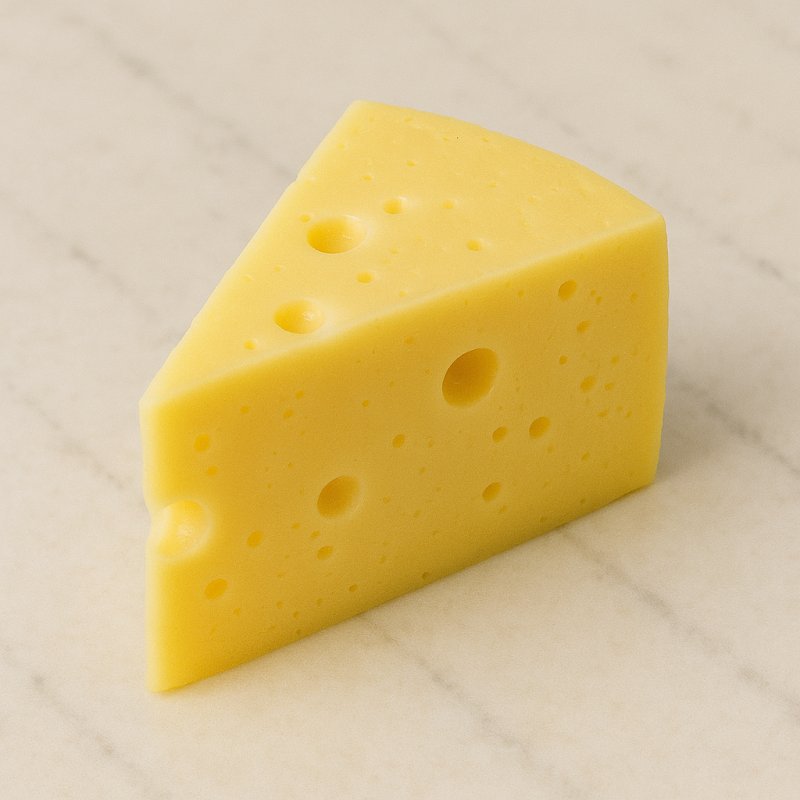
Tilsiter cheese in slices
Tilsiter 45% fat in dry matter is one of those ingredients that consistently earns a place of honor in my European kitchen. As a 35-year-old editor who moves between recipe research, visits to the weekly market and typing at a keyboard, I have learned how versatile, characterful and reliable this semi-hard cheese is. The term “45% fat in dry matter” does not describe the absolute fat content of the cheese, but the share relative to the water-free portion – an important indication for flavor, texture and melting behavior. Tilsiter is aromatic but not overpowering, creamy yet still sliceable, and it brings that pleasant, mild piquancy that enriches both cold snacks and hot dishes.

Originally becoming known in the Tilsit region, Tilsiter is now produced in several European countries – with slight regional nuances. In the typical 45% fat in dry matter version it presents a harmonious balance: enough fat for a creamy mouthfeel, but sufficient structure for neat slices and cubes. Its rind is usually tender to lightly washed, the paste color ivory to pale yellow, and the eyes irregular and fine – a true classic for cheese platters, sandwiches and gratinated dishes.

A colleague of mine, a passionate hobby cook who loves Alpine cuisine, swears by finishing his potato gratin with Tilsiter. He claims no other cheese so nicely hits the “golden point between melt and flavor.” When I reproduced his dish, I understood what he meant: Tilsiter melts evenly, blends intimately with potatoes and cream, and provides aromatic depth without overwhelming the palate. In my own kitchen it also often ends up on wholegrain bread with cucumber slices and mustard – simple, quick, good.

Those who want to describe the sensory profile of Tilsiter 45% fat in dry matter will find terms like mildly savory, slightly nutty, with subtle buttery notes. On the nose it shows a gentle spiciness that can become milder or more intense over time – depending on maturity. Younger examples are softer and milder, more matured variants appear more aromatic. On the bite the paste is elastic

Availability & types

Availability and types of Tilsiter 45% fat in dry matter

Tilsiter 45% fat in dry matter is a semi-firm table cheese with small to medium eyes and a mildly savory, sometimes slightly piquant flavor. The designation “45% fat in dry matter (in d.m.)” means: if all the water were removed from the cheese, 45% of the remaining mass would be fat. Practically for you this means: it is neither very low-fat nor particularly high-fat, but sits in the medium range and is well suited for bread, cooking and gratinating.

Origin:
Tilsiter originates in the 19th century. It was developed by settlers in the town of Tilsit (today Sowetsk, Kaliningrad region). Later the production method was continued and adapted in the Switzerland and in Germany. Therefore there are today different “schools” and qualities of Tilsiter. In Switzerland “Swiss Tilsiter” is a well-known variety, while in Germany Tilsiter is produced in several federal states in dairies. Despite the same basic idea, the taste can vary slightly depending on region, milk source and ripening.

Commercial availability:
Tilsiter 45% fat in dry matter can be found in many supermarkets, discount stores and delicatessens. Usually it appears:

  • as pre-sliced portions in the refrigerated counter, convenient for bread and toast,
  • as block pieces (e.g. 200–300 g) that you can slice yourself,
  • rarely also as a whole wheel or larger pieces at the cheese counter.
Seasonally, Tilsiter is available year-round. In regions with a strong cheese tradition (e.g. Alpine area) there can be seasonal special batches whose flavor varies slightly depending on the cows' feed (spring, summer, hay).
Details & nutrition

Property Value
Unit g
Average weight per piece 30
Calories per 100 340
Protein per 100 25
Carbohydrates per 100 0.5
Sugar per 100 0.5
Fat per 100 27
Saturated fat per 100 17
Monounsaturated fat 8
Polyunsaturated fat 1
Fiber per 100 0
Vitamin C (mg) per 100 0
Vitamin D (IU) per 100 8
Calcium (mg) per 100 700
Iron (mg) per 100 0.2
Nutri-Score D
CO₂ footprint 6.0 kg CO2e/kg
Origin Switzerland/Germany
Gluten-free Yes
Lactose-free No
Nut-free Yes
Vegan No
Note Ripens with red smear; strong-aromatic flavor. Traces of lactose possible depending on degree of ripening.

Technical & scientific information

Tilsiter 45% fat in dry matter is a semi-firm table cheese with cultural-historical significance and a clearly defined technological derivation. The addition “45% fat in d.m.” refers to the fat content in the dry matter, a standardized parameter of cheese technology that describes the concentration of milk fat relative to the water-free portion of the cheese. Tilsiter is characterized by an elastic, finely sliceable texture, irregular eye formation (grit- to cherry-stone size) and an edible rind, generally pale yellow to orange, shaped by specific surface microflora. Sensorily it is aromatic, slightly piquant to savory with milky-acid notes, depending on ripeness.

Production and technological process steps
Production of Tilsiter 45% fat in d.m. begins with pasteurized or thermized cow's milk. After standardizing the protein-fat ratio, defined starter cultures are added (mainly mesophilic lactic acid bacteria such as Lactococcus lactis and Leuconostoc species) which ferment lactose to lactic acid. Coagulation is induced by rennet or microbial chymosin preparations, causing casein micelles to aggregate into a gel. After cutting the curd into medium-sized grains it is stirred at controlled temperatures (typically 30–34 °C) to promote whey expulsion. Subsequent molding and pressing determine the final paste structure and porosity. After the brine bath (NaCl concentration approx. 18–22%) the rind stabilizes and ion exchange with calcium influences the strength of the protein network.

Ripening takes place over 4–12 weeks, often in climate-controlled ripening rooms with 90–95% relative humidity and temperatures between 10 and 15 °C. Surface smear cultures (e.g. Brevibacterium linens, Corynebacterium spp.) are maintained, which through enzymatic activities (proteases, lipases, dehydrogenases) contribute to typical aroma profiles. The pH increases at the rind due to deamination processes, steering proteolysis from the edge towards the center. The resulting biochemistry produces free amino acids, short-chain fatty acids and volatile compounds that define the characteristic aroma.

Wiki entry for: Tilsiter 45% fat in dry matter
Active now: 23 visitors of which 2 logged-in members in the last 5 minutes