Menu & categories

Tequila

Mexican agave spirit with a pronounced aroma.

Wiki about tequila Nutri-Score E Vegan Yes Gluten-free Yes Lactose-free Yes Nut-free Yes
NUTRITION / 100 ml
230 kcal 0.0 g Protein 0.0 g Kohlenhydrate 0.0 g Fett

Introduction

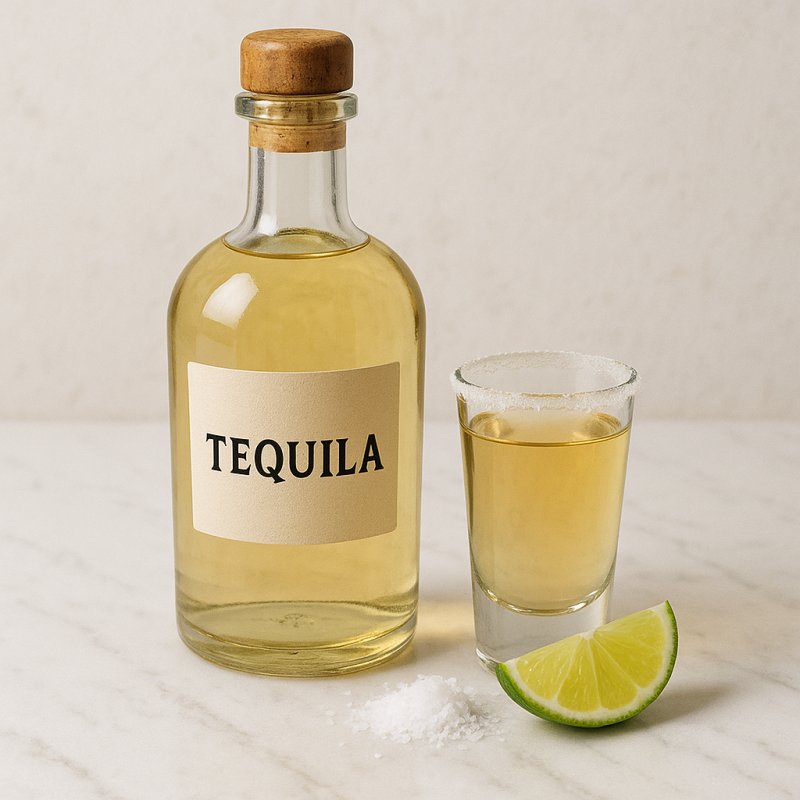
Clear tequila in a shot glass
Tequila has something magical for me: already the first time, when I uncorked a bottle in a small cantina, that warm scent of roasted agave and wood rose to my nose and I knew this was not an ordinary spirit. I still remember the evening when a friend and I argued whether tequila is only a mixer or can also be enjoyed neat. Today I laugh about it, because the answer is clearly both.

Basically tequila is made from the Blue Weber agave, whose heart-shaped piñas are harvested by the jimadores with astonishing precision. The raw sweetness of the agave is transformed by cooking, fermentation and double distillation and, depending on ageing, very different profiles emerge: fresh and spicy, honey-sweet or velvety vanillary.

  • Blanco: clear, often grassy and ideal for cocktails.
  • Reposado: briefly aged in casks, with hints of oak and caramel.
  • Añejo: longer ageing, deeper notes of chocolate, tobacco, vanilla.
  • Extra Añejo: very aged, almost like a cognac in complexity.
I like to reveal a small trick: when I want to impress guests, I first serve a fine Blanco as a welcome, then an Añejo with dessert. A colleague of mine once brought several vintages from a distillery – we tasted blind and noted aromas like citrus, pepper, roasted nuts. Such tastings open the view to the diversity.

Tequila differs from mezcal mainly in production and flavor; the smoky character of mezcal is less typical for tequila. As a companion to food, tequila pairs excellently with grilled fish, taco variations, but also with dark chocolate. Small serving tips: slightly chilled, in a tulip-shaped glass, enjoy slowly.

In the end tequila is more than a drink to me: it tells of soil, craftsmanship and stories at the table. Every bottle has an origin, a method and a moment that can make it unforgettable.

Availability & types

Availability and types of tequila

Tequila is a beverage from Mexico made from the Blue Agave. The agave looks like a large, spiky plant with thick leaves. From the inside of this plant a sweet, syrupy liquid is obtained which is then fermented and distilled to make tequila. It is important to know that tequila is an alcoholic beverage and intended only for adults; children and adolescents must not drink it.

Origin and growing regions
Tequila may only be called such if it is produced in certain regions of Mexico. This is similar to Champagne, which may only be called Champagne if it comes from a specific area in France. The most important region is the state of Jalisco, especially around the town of Tequila. In addition, parts of four other states may produce tequila: Nayarit, Tamaulipas, Michoacán and Guanajuato. These areas have the right soil and suitable climate – not too wet and not too cold – for the agave to grow well.

The agaves need several years (usually 6–10 years) to become large and sweet enough. A comparison: just as an apple tree needs time before it bears many fruits, the agave also needs time to gather enough sugar for the tequila.

Available types and variants
There are different kinds of tequila that vary in taste and color. The bottle often also indicates whether the tequila was made from 100% agave or as a Mixto (where other sugars were additionally used). 100% agave is generally rated better because it contains more genuine agave flavor.

  • Blanco (also Plata or Silver): unaged tequila. It is clear and has a fresh, direct agave flavor. You can compare it to fresh orange juice.
  • Reposado: this tequila was briefly aged in oak casks (usually 2–12 months). As a result it gets a light golden color and milder aromas, similar to tea that has steeped briefly.
  • Añejo: it was aged longer in casks (at least one year). Añejo is darker and has rich, complex flavor notes – you could compare it to chocolate or caramel, just less sweet.
  • Extra Añejo: aged very long (at least 3 years). This tequila is even smoother and more luxurious in taste.
  • Joven or Gold: usually a blend of Blanco and aged tequilas or a Blanco with coloring/aromas. It is often cheaper.
  • Cristalino: aged tequila that has been made clear again by filtration so that it looks fresh but has more mature aromas.
Where to get tequila?
Tequila is available worldwide in supermarkets, liquor stores and online. There are inexpensive bottles for mixing cocktails and more expensive variants for drinking neat. The label contains important information: whether it is 100% agave, the origin and the type (Blanco, Reposado etc.). If you are unsure, it helps to ask for recommendations or try small bottles.

In summary: tequila comes from Mexico, is made from Blue Agave, there are different ageing levels from fresh to very aged, and it is sold in many flavors and price ranges. Remember: tequila is a beverage for adults, and children should not drink it.
Details & nutrition

Property Value
Unit ml
Calories per 100 230
Protein per 100 0.0
Carbohydrates per 100 0.0
Sugar per 100 0.0
Fat per 100 0.0
Saturated fat per 100 0.0
Monounsaturated fat 0.0
Polyunsaturated fat 0.0
Fiber per 100 0.0
Vitamin C (mg) per 100 0
Vitamin D (IU) per 100 0
Calcium (mg) per 100 0
Iron (mg) per 100 0.0
Nutri-Score E
CO₂ footprint 0.15 kg CO2e/100 ml
Origin Mexico
Gluten-free Yes
Lactose-free Yes
Nut-free Yes
Vegan Yes
Note Typically around 38–40% ABV; nutritional values vary depending on alcohol content and any additives.

Technical & scientific information

Tequila is an alcoholic beverage produced by distillation, obtained from the fermented, typically enzymatically or thermally hydrolyzed sucrose-like carbohydrates of Agave tequilana (var. Weber azul). As a protected geographical designation of origin, the name "Tequila" may be used only for products produced in certain regions of Mexico and processed according to legal requirements.

Botanical and chemical starting materials: The agave hearts, so-called piñas, contain fructans (mainly inulin) and small amounts of free sugars. By heating or enzymatic treatment these polysaccharides are broken down into fermentable monosaccharides (mainly fructose and glucose). During fermentation yeasts convert these sugars into ethanol and carbon dioxide. In addition to ethanol, secondary compounds such as fusel alcohols (higher alcohols), esters, aldehydes and small amounts of methanol are produced during fermentation and distillation, which influence aroma profiles and sensory properties.

Manufacturing process (simplified):

  • Harvesting and peeling of the piñas.
  • Cooking/Autoclaving or steaming to hydrolyze inulin into fermentable sugars (traditionally in stone ovens, industrially also in autoclaves or using enzymes).
  • Crushing and pressing to obtain the sugary liquid.
  • Fermentation with yeasts (often Saccharomyces species) for 24–96 hours, depending on temperature and strain.
  • Distillation, usually two distillation runs in copper stills or steel tanks; separation fractions are used for quality control.
  • Optional aging in oak barrels, which leads to Reposado, Añejo and Extra Añejo categories and provides additional aromatic components.
Classification: Tequila is differentiated by alcohol content, ageing time and raw material share. Important categories are Blanco (young, usually unaged), Reposado (short in wood), Añejo (longer in wood) and Extra Añejo (very long aged). Products labeled 100% Agave are made exclusively from agave syrup; other tequilas may contain up to 49% additives such as cane alcohol or other sugar syrups.

Nutritional values and composition: Pure tequila contains per 100 ml at 40% ABV primarily ethanol, with an energy content of approximately 220–240 kcal per 100 ml. Carbohydrates, proteins and fats are negligible in pure distillates. Mineral and vitamin contents are minimal and nutritionally irrelevant.

Health aspects: Ethanol is an active substance with well-documented acute and chronic effects. In the short term it acts as a central depressant, impairs coordination and reaction time and can lead to alcohol intoxication. Long-term, regular consumption increases the risk of liver disease, cardiometabolic disorders and several cancers; ethanol is classified as carcinogenic. Additional constituents such as fusel oils and aldehydes can influence the severity of hangover phenomena. While moderate consumption has occasionally been associated in epidemiological studies with reduced cardiovascular risk, these findings should not be interpreted as a license to consume; individual health risks, interactions with medications and contraindications in pregnancy must be considered.

Safety and quality control: Regulated producers monitor methanol content, volatile compounds and microbiological purity. Sensory analyses and chemical tests (e.g. GC-MS) are used to verify origin, production methods and ageing status.

Wiki entry for: tequila
Active now: 6 visitors of which 2 logged-in members in the last 5 minutes