Menu & categories

Syrup

Sweet concentrate for enhancing beverages and dishes.

Wiki about syrup Nutri-Score E Vegan Yes Gluten-free Yes Lactose-free Yes Nut-free Yes
NUTRITION / 100 ml
320 kcal 0.0 g Protein 80.0 g Kohlenhydrate 0.0 g Fett

Introduction

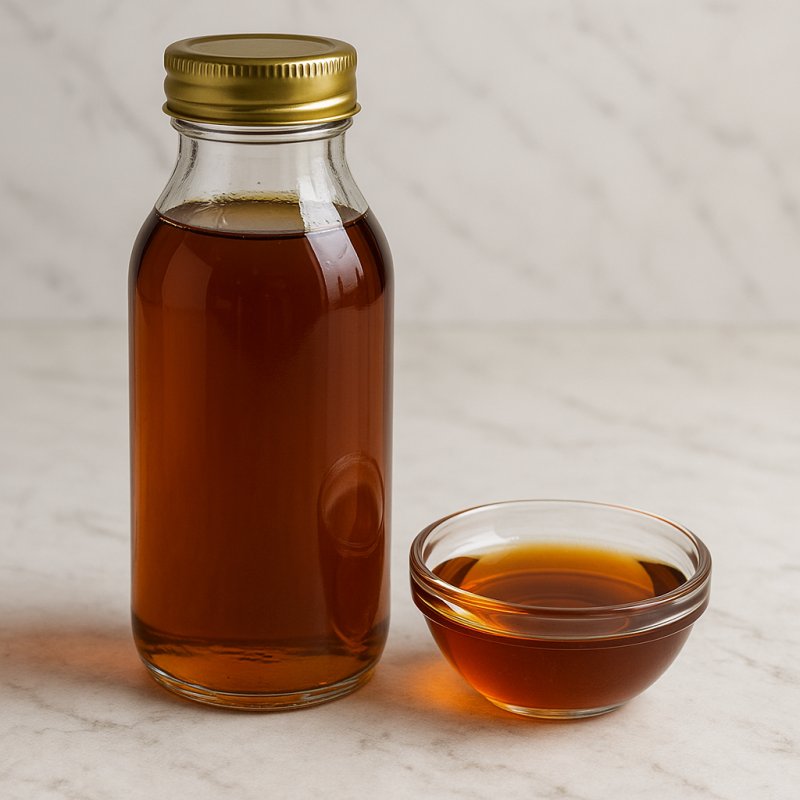
Golden-brown syrup in a glass
Syrup is for me a small culinary all-purpose tool: thick, sweet and surprisingly versatile. I still remember my first attempts to make syrup at home, when the sugar in the pot suddenly caramelized and my kitchen smelled for a moment like a patisserie. Since then I've learned that syrup is much more than just a pancake companion; it is aroma, texture and memory at the same time.

What I value about syrup is its variety. The range extends from maple syrup to fruit syrups and simple sugar syrups with herbs. A colleague once brought homemade rosemary syrup to the office and suddenly my espresso felt like a little festive drink. Such anecdotes show how quickly syrup can elevate everyday moments.

Practical aspects matter to me, so here briefly and concisely is what defines syrup and how I use it:

  • Basic recipe: sugar and water in a 1:1 ratio for a simple sugar syrup; longer cooking thickens and caramelizes.
  • Variants: fruit syrups made by boiling berries; honey or maple alternatives for more intense flavors.
  • Uses: drinks, desserts, marinades, dressings and as a glaze for pastries and meats.
I make sure to bottle syrup cleanly and store it in the refrigerator; this way it keeps much longer and loses less aroma. When I have guests I often make two variants: a light sugar syrup with citrus and a dark caramel syrup. That gives room to experiment with cocktails and desserts and always produces surprised looks.

In conclusion: syrup is uncomplicated to make and fascinating in its possibilities. It combines sweet memories with creative uses in the kitchen and is easy to adapt — a small bottle with big impact that I rarely don't have within reach.

Availability & types

Availability and types of syrup

Syrup is a sweet, thick liquid used in many kitchens around the world. It is easy to find in supermarkets, health food stores or at farmers' markets. Some varieties are available year-round, others only in certain seasons. Syrups come in many different types — from natural tree syrups to fruit or sugar syrups — and each type has its own origin and typical growing regions.

  • Maple syrup: This syrup comes from the sap of maple trees. The trees are 'tapped' in spring, meaning the sap is collected and boiled down until it becomes thick and sweet. The best-known production areas are Canada (especially the province of Québec) and the northeastern USA. Maple syrup is available in different colors and flavor intensities: from light and mild to dark and robust — similar to tea, which can be weaker or stronger.
  • Cane sugar syrup: Sugar cane grows in warm, tropical countries such as Brazil, India and Thailand. Sugar and syrups are produced from cane juice by pressing and boiling. Molasses is a dark, very flavorful syrup that arises as a byproduct of sugar production.
  • Beet sugar syrup: In cooler regions such as Europe and parts of the USA, sugar is produced from sugar beets. Thick syrups or molasses can also be made from these, with a taste different from cane products.
  • Agave syrup: Made from the agave plant, which grows mainly in Mexico. Agave syrup is often very fluid and sweet; many people use it as an alternative to sugar because it mixes easily in baking.
  • Fruit syrups: These syrups come from concentrated fruit juice, for example raspberries, strawberries, citrus or grapes. The fruits can grow in many places — strawberries in temperate zones, citrus in warmer regions. Fruit syrups often have an intense aroma and are popular for desserts or drinks.
  • Other types: There is also coconut syrup from Southeast Asia, date syrup from the Middle East and birch syrup from Scandinavia. Industrial variants like glucose or corn syrup, made from corn, are also common and often used in candies or processed products.
Some syrups are completely natural and made only from plant sap and heat. Others are flavored, meaning aromas like vanilla or caramel are added. There are raw, unfiltered products as well as very clear, refined variants. Fresh tree syrups such as maple are often seasonal: they are best purchased fresh in spring. Fruit syrups are usually available year-round because they are cooked and preserved for long shelf life.

Syrup can be bought in supermarkets, health food stores, specialist retailers or online. At farmers' markets you often find local varieties from regional producers. Pay attention to labels: terms like organic or fair indicate that environmental and labor aspects were considered in cultivation and production. After opening, some syrups, especially fruit or natural types, should be refrigerated to stay fresh longer.

In summary: syrups come in many types — from maple to cane and agave to fruit or coconut syrups — and originate from different regions of the world. Some varieties are fresh and seasonal, others available year-round. With a little searching you can always find the right flavor for pancakes, drinks or baked goods and choose between natural, flavored or industrial options.

Details & nutrition

Property Value
Unit ml
Calories per 100 320
Protein per 100 0.0
Carbohydrates per 100 80.0
Sugar per 100 78.0
Fat per 100 0.0
Saturated fat per 100 0.0
Monounsaturated fat 0.0
Polyunsaturated fat 0.0
Fiber per 100 0.0
Vitamin C (mg) per 100 0.0
Vitamin D (IU) per 100 0
Calcium (mg) per 100 10
Iron (mg) per 100 0.2
Nutri-Score E
CO₂ footprint 0.07 kg CO2e pro 100 ml
Origin Depending on the variety and manufacturer (e.g., sugar beet, sugarcane, glucose syrup).
Gluten-free Yes
Lactose-free Yes
Nut-free Yes
Vegan Yes
Note Nutritional values can vary significantly depending on the type of syrup (e.g., sugar syrup, maple syrup, agave syrup); very high sugar content.

Technical & scientific information

Definition and general overview: Syrup is a viscous, water-rich sugar solution used as a sweetener, flavor carrier and technological additive in foods. In industrial and homemade forms, syrup is produced by extraction of solvents (e.g. plant saps) or by concentrating sugar solutions, possibly after chemical or enzymatic modification of starches or sugars.

Chemical composition and physical properties: The main components of syrup are sugars (mono- and disaccharides such as glucose, fructose, sucrose), water and, in many cases, small amounts of organic acids, minerals, flavor compounds and colorants. Sugar content is typically given in °Brix and often ranges between 50 and over 75 °Brix. Viscosity, freezing point and density depend strongly on sugar content and temperature; higher °Brix values lead to an exponential increase in viscosity and a stronger freezing point depression.

Types and characteristic constituents:

  • Maple/sugar syrups: Mainly sucrose, minerals and characteristic aroma compounds from the tree sap.
  • Invert sugar syrup: A mixture of glucose and fructose produced by hydrolysis of sucrose; it has improved moisture retention and anti-crystallization properties.
  • Glucose syrups / corn syrup: Produced from starch by enzymatic or acid hydrolysis; main constituents are glucose and oligosaccharides.
  • Fruit syrups: Rich sources of fruit sugars and polyphenols; the aroma profile varies greatly depending on the starting fruit.
Processing methods: Production steps include extraction or dissolution, clarification/filtration, enzymatic or acid hydrolysis (for starch-containing raw materials), evaporation/concentration under vacuum, optionally degassing, pasteurization and filling. Enzymes such as alpha‑amylase and glucoamylase are used to break down starch into glucose and oligosaccharides. Colors and flavors can be formed by controlled Maillard reactions and caramelization or may be produced undesirably during heating.

Analytical parameters and quality control: Common analyses are Brix measurement for total sugar content, HPLC to determine individual sugar profiles, pH, color measurement, microbiological tests after dilution and stable isotope analysis for authenticity checks (e.g. maple vs synthetic syrup). Rheometric measurements provide information on flow behavior and the temperature dependence of viscosity.

Nutritional values and health aspects: Syrups are energy-dense sugar sources with typical caloric values of about 300–330 kcal per 100 g, depending on the sugar profile and water content. The glycemic index varies: pure glucose syrups lead to a faster blood sugar response than fructose-rich syrups. High consumption can contribute to dental caries, weight gain and metabolic effects. Fructose is largely metabolized in the liver and excessive intake may increase lipogenic activity. Moderate use and consideration of total sugar intake are advisable from a nutritional perspective.

Technological functions in foods: Syrups act as sweeteners, humectants, texture agents and crystallization inhibitors. They lower the freezing point in frozen applications, contribute to Maillard browning and serve as fermentation substrates in beverages or baked goods.

Storage and safety: Due to the high sugar content, microbial activity in concentrated syrups is low, but the risk for yeasts and bacteria increases upon dilution. Proper sealing, refrigeration after opening and avoidance of contamination extend shelf life.

In summary, syrup is a versatile, chemically simple but technologically important food whose properties can be controlled by choice of raw materials, enzymatic or thermal treatment and concentration level, while health aspects driven by the high sugar content largely determine recommendations for use.

Wiki entry for: syrup
Active now: 30 visitors of which 2 logged-in members in the last 5 minutes