Menu & categories

Sunflower seeds

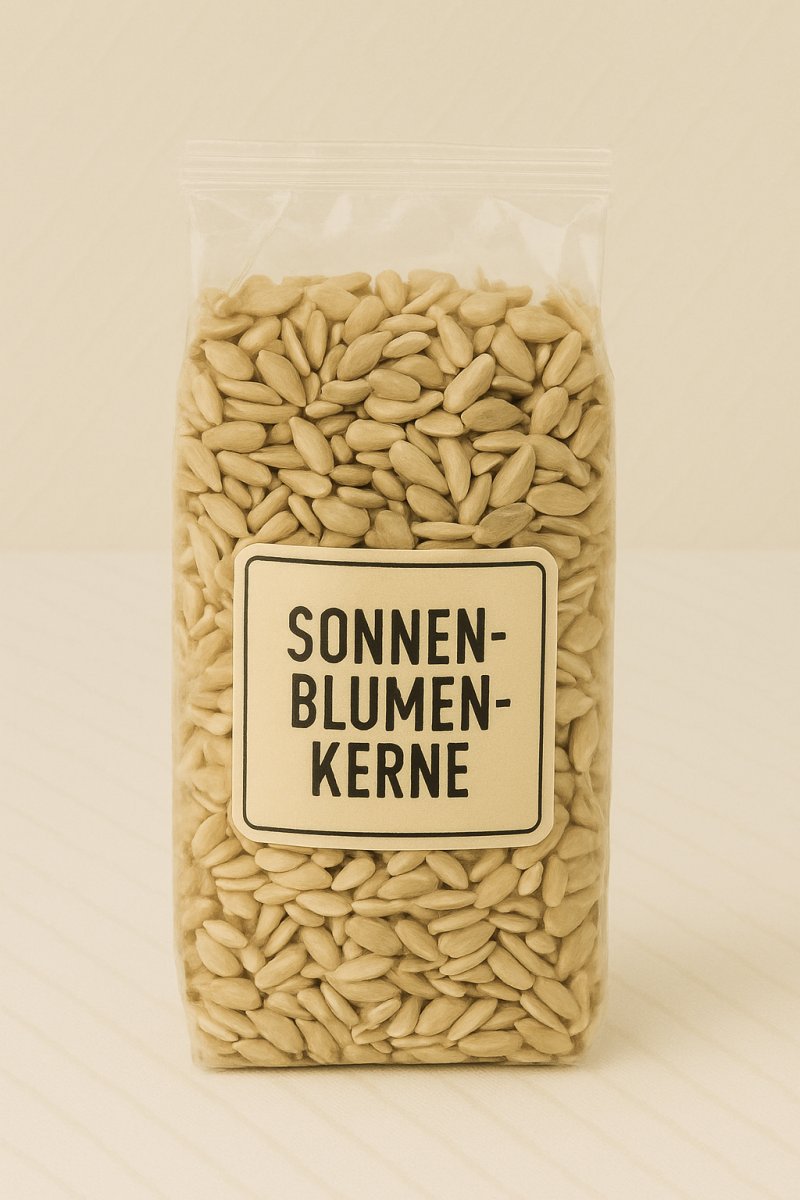
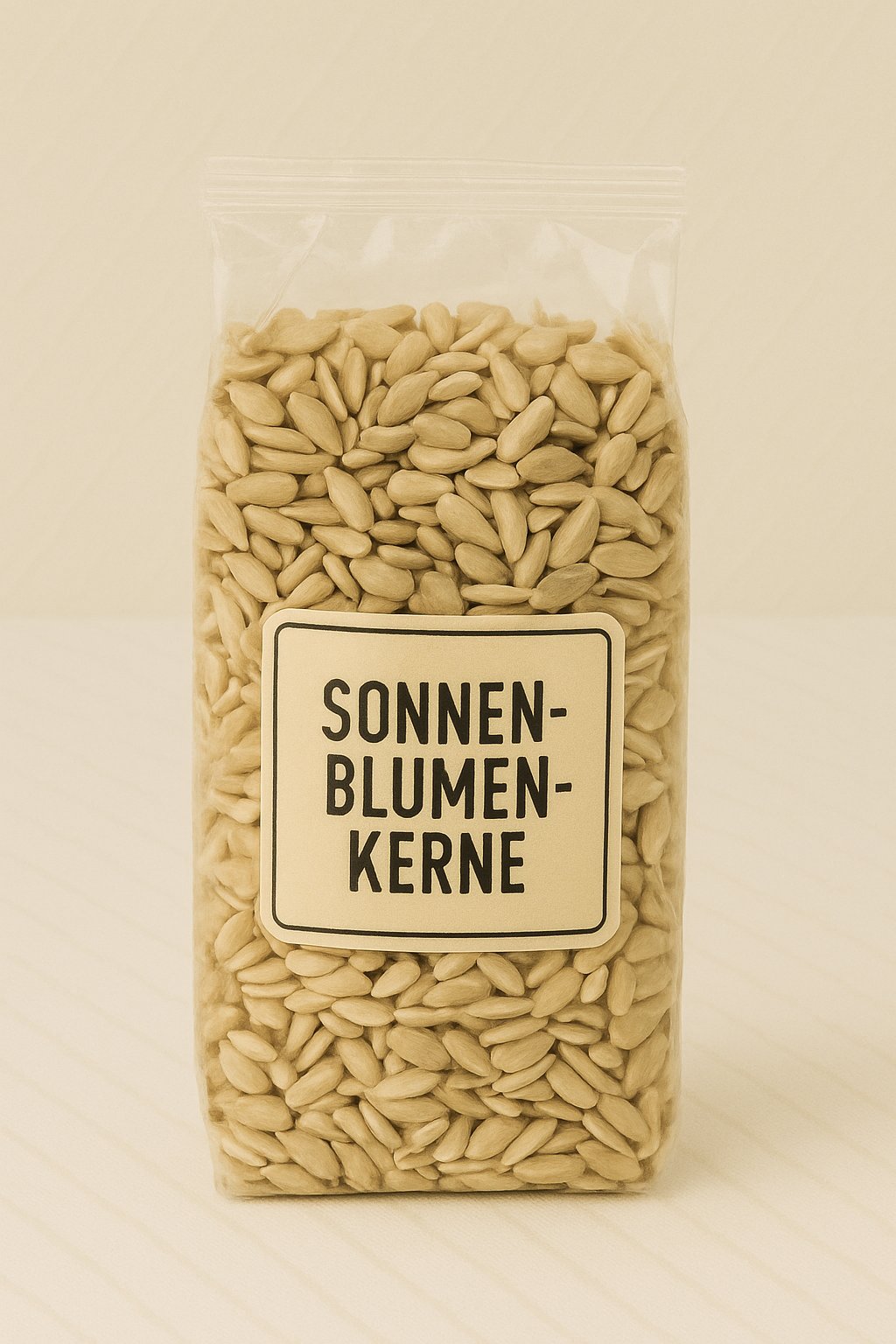
Crispy seeds with many unsaturated fatty acids and plant-based protein.

Wiki about sunflower seed Nutri-Score D Vegan Yes Gluten-free Yes Lactose-free Yes Nut-free Yes
NUTRITION / 100 g
584 kcal 20.8 g Protein 20 g Kohlenhydrate 51.5 g Fett

Introduction

Bowl with sunflower seeds
I still remember the first bag of sunflower seeds I bought out of pure curiosity in a market hall: the seller lifted the bag, and a nutty scent rose up that immediately made me curious. Since then sunflower seeds have been among my little kitchen secrets. They are crunchy, versatile, and despite their plain appearance full of flavor and nutrients.

What I especially love is their ability to elevate dishes with minimal effort. Roasted they develop a deep aroma reminiscent of nuts, without being a tree‑nut allergen. A colleague of mine swears by sprinkling them over his morning porridge; he claims it gives him more joy at breakfast than an elaborate recipe. I often use them in salads, in bread or as a crunchy crust for roasted vegetables.

A few facts I always keep in mind:

  • Nutrients: sunflower seeds are rich in vitamin E, magnesium and healthy fats.
  • Variants: with shell or shelled; unsalted, roasted or natural.
  • Versatility: oil production, topping, pesto substitute or simply as a snack.
Practical tips I've gathered over the years:
When I roast them, I do so over medium heat for a few minutes and stir constantly — that way they become evenly golden. I store roasted seeds airtight and cool so they don't go rancid. And when no nuts are at hand, sunflower seeds are a wonderful alternative for texture and protein.

There is something comforting about putting a bowl of sunflower seeds on the table: they invite sharing, nibbling and experimenting. For me they are a small all‑rounder that improves both simple and refined dishes, and does so with modest elegance.

Availability & types


Availability and types of sunflower seeds

Sunflower seeds originate from North America. People there cultivated sunflowers many hundreds of years ago. Today sunflowers grow in almost every part of the world. Major growing regions include, for example, Russia, Ukraine, Argentina, Turkey, the USA and China. You can imagine it this way: sunflowers are like rice or wheat — they thrive in many countries and are harvested there.

Even though the plants flower in summer, sunflower seeds are available in stores year‑round. This is because the seeds are dried and stored after harvest. You can therefore find them in supermarkets, health food stores, natural food shops, weekly markets and even online. Some people buy them in bulk packs or from bulk bins, others prefer small bags.

Important types and variants
Sunflower seeds come in different varieties, which are distinguished by their appearance, use or processing. Here is a simple overview:

  • Oilseed varieties: these seeds are usually smaller and have a dark, often uniform shell. They are primarily used for producing sunflower oil. They are also called oilseeds because a lot of oil is pressed from them.
  • Edible / snack varieties (confectionery seeds): these are often larger and have striped or patterned shells. They are ideal for snacking, baking or as a topping for salads.
  • Shelled seeds (kernels or “shell removed”): here the hard shell has been removed and you buy only the soft kernel. These are well suited for baking, muesli or for children because you don't have to crack the shell first.
  • Whole seeds with shell: known as sunflower seeds for cracking and nibbling. You can open the shell with your teeth — many find cracking the shell as with nuts entertaining.
  • Roasted, salted or seasoned: like chips, sunflower seeds are available raw or already roasted and seasoned with salt or other spices. This changes the taste and makes them crunchier.
  • Organic and conventional: organic seeds come from plants grown without certain chemical pesticides. It is an option for people who pay attention to ecological farming.
  • Seed for planting: some seeds are intended for sowing. These often differ from edible varieties and should not simply be eaten as a snack.
You can think of the different types like articles of clothing: some seeds are like sturdy boots (for oil and industrial use), others are like fine trainers (for snacking), and others are like fingerless gloves (shelled), so they're easier to work with. Whatever variant: check the packaging when buying — it often states whether the seeds are roasted, salted, organic or intended for planting.

In conclusion: sunflower seeds are easy to obtain and there are many types for different purposes. Whether as a snack, an ingredient in baking or as an oil source — almost everyone can find a suitable variety.
Details & nutrition

Property Value
Unit g
Calories per 100 584
Protein per 100 20.8
Carbohydrates per 100 20
Sugar per 100 2.6
Fat per 100 51.5
Saturated fat per 100 4.5
Monounsaturated fat 18.5
Polyunsaturated fat 23
Fiber per 100 8.6
Vitamin C (mg) per 100 1.4
Vitamin D (IU) per 100 0
Calcium (mg) per 100 78
Iron (mg) per 100 5.3
Nutri-Score D
CO₂ footprint 1.5 kg CO2e/kg
Origin Europe (depending on cultivation; often Eastern Europe)
Gluten-free Yes
Lactose-free Yes
Nut-free Yes
Vegan Yes
Note Depending on processing may contain traces of tree nuts, sesame or gluten.

Technical & scientific information

Sunflower seeds are the edible seeds of the garden or oil sunflower (Helianthus annuus) and are used both as food and for oil production. Botanically they are achenes; the inner fruit, freed from its shell (kernel), is rich in energy and bioactive compounds. Through breeding there are varieties with different fatty acid profiles, for example linoleic‑rich types and high‑oleic cultivars with increased oleic acid content.

Chemical composition and nutritional values
Shelled sunflower seeds have a high energy density. Typical nutritional values per 100 g lie in the range of about 550–600 kcal. Macronutrient distribution includes roughly 50–55 g fat, 20–25 g protein, 15–20 g carbohydrates and 8–10 g fiber. The fat is predominantly unsaturated: linoleic acid (C18:2, Omega‑6) dominates in conventional varieties; oleic acid (C18:1, Omega‑9) is markedly increased in high‑oleic cultivars. Saturated fatty acids make up only a small portion. Sunflower seeds also provide significant amounts of vitamin E (α‑tocopherol), as well as minerals such as magnesium, phosphorus, potassium and traces of selenium.

Other bioactive components
Sunflower seeds contain phytosterols, mainly β‑sitosterol, which may have cholesterol‑lowering properties. Small amounts of polyphenols and phenolic acids are present; they contribute to antioxidant capacity and interact with tocopherols. At the same time phytic acid (phytate) is a known anti‑nutrient that can reduce mineral bioavailability.

Processing methods
Important processing steps are dehulling, drying, roasting and oil extraction. For oil production both mechanical cold pressing and solvent‑assisted extraction (e.g. hexane) are used; subsequent refining steps include degumming, neutralization, bleaching and deodorization. Roasting changes aroma and reduces anti‑nutritional factors, but can partially degrade heat‑sensitive tocopherols. Fermentation, sprouting and enzymatic treatments are being studied to reduce phytate and improve protein digestibility.

Sensory properties, shelf life and storage
Due to the high proportion of polyunsaturated fatty acids sunflower seeds are prone to oxidation. Lipid oxidation leads to flavor changes (rancidity) and can form nutritionally relevant peroxides. Tocopherols act as natural antioxidants, however cool, dry storage and airtight packaging significantly extend shelf life.

Health aspects
Regular consumption of unsalted sunflower seeds may have beneficial effects on cardiovascular risk factors due to the combination of unsaturated fatty acids, vitamin E, magnesium and phytosterols. Because of the high energy density portion control is advisable. Phytates can inhibit absorption of certain minerals; this can be mitigated by roasting, soaking, sprouting or fermenting. Allergies to sunflower seeds are rare but documented; cross‑reactions with other seeds or pollens are possible.

Safety and quality parameters
As with other oilseeds hygienic parameters and contaminant controls (mycotoxins, heavy metals) are relevant. Industrial analytics include fatty acid profile, tocopherol content, moisture, peroxide value and microbiological testing to ensure product quality and safety.

Overall sunflower seeds are a nutrient‑dense ingredient whose positive effects on nutrition and health can be optimized by proper storage, appropriate processing and mindful portioning.

Wiki entry for: sunflower seed
Active now: 12 visitors of which 2 logged-in members in the last 5 minutes