Menu & categories

Sugar snap peas

Crisp, mildly sweet legume for wok, salads and side dishes.

Wiki about sugar snap pea Nutri-Score A Vegan Yes Gluten-free Yes Lactose-free Yes Nut-free Yes
NUTRITION / 100 g
42 kcal 2.8 g Protein 7.5 g Kohlenhydrate 0.2 g Fett

Introduction

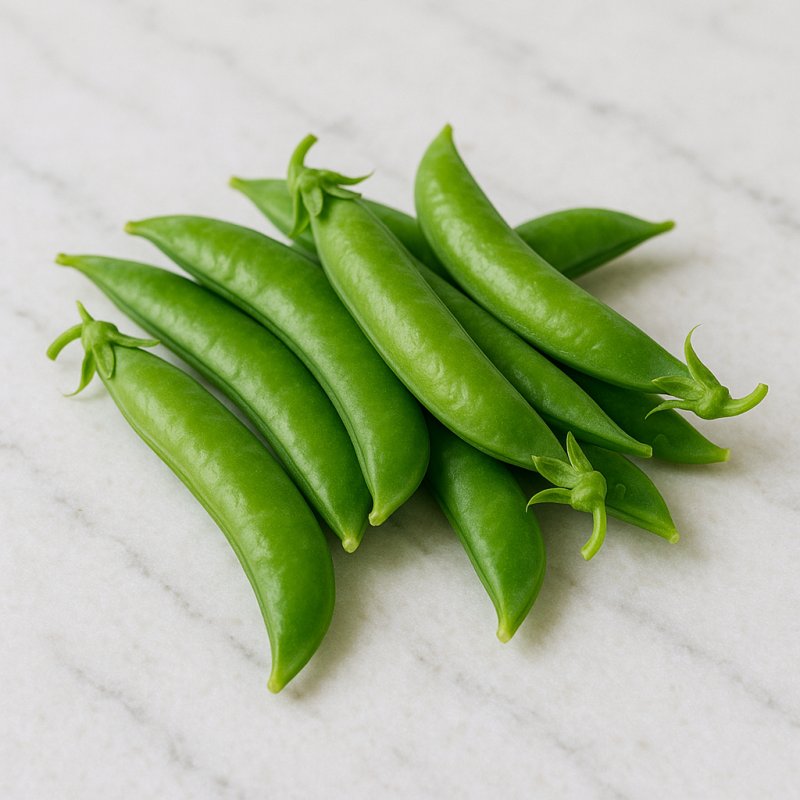
Fresh green sugar snap peas in a bowl
I still remember the first summer when sugar snap peas regularly ended up on my plate. A colleague brought a bag of freshly harvested pods to the office back then, and even the smell when cutting them open awakened a kind of childlike anticipation in me. Since then sugar snap peas have been, to me, a symbol of lightness in the kitchen: crunchy, sweet and surprisingly versatile.

What I particularly love about sugar snap peas is their directness. You bite in and everything is immediately there: the crisp resistance, the short sweet finish and that green aroma that evokes spring and the garden. I eat them raw as a snack, stir-fry them briefly for wok dishes or blanch them for salads. They are easy to handle and forgiving when, in the rush of dinner plans, I don't slice them precisely.

Preparation is quick to explain and fun. I usually just remove the side string, trim the ends and decide on the spot. Sometimes they go into an Asian-inspired pan with ginger and soy sauce, sometimes simply with butter and lemon zest. The combinations are almost endless.

I also appreciate the health benefits. Sugar snap peas are light, low in calories and provide vitamin C and fiber. They pair well with proteins and grains and immediately give any plate a fresh note.

  • Quick and easy: 2–3 minutes in the pan is often enough.
  • Versatile: usable raw, steamed, sautéed or in a wok.
  • Storage: store briefly in the fridge; they are best fresh.
I like to enjoy sugar snap peas seasonally and keep small rituals, such as shelling them with friends or trying new spice combinations. The next time you pass a stall with shiny green pods at the market, buy a handful. You'll see how they bring freshness and joy to simple dishes in no time.

Availability & types

Availability and types

Sugar snap peas are the crunchy, sweet pea pods in which both the pod and the small peas inside can be eaten. They originate from wild peas that people have been cultivating for thousands of years. Today sugar snap peas are grown in many countries because they are popular with children and adults: they are good raw as a snack, fit well in salads or can be quickly stir-fried.

Where do sugar snap peas come from and where are they grown?
Peas originally come from the area between the Mediterranean and Central Asia. Today sugar snap peas grow almost everywhere in the world where the climate is mild to warm. In Europe they often come from countries like Spain, the Netherlands and France, especially in spring and autumn. In warmer periods and regions, for example in southern Europe or in greenhouses, they are also available almost year-round. Supermarkets often combine imports from different countries so we can find sugar snap peas throughout the year.

When are they fresh?
Fresh sugar snap peas are in season in late spring through summer, when they grow in nearby fields. You'll find them best at farmers' markets or from local growers then. Out of season, frozen sugar snap peas or fresh imported pods from other countries are the usual alternatives.

Which types and varieties exist?
There are several types of edible pea pods. The main ones are:

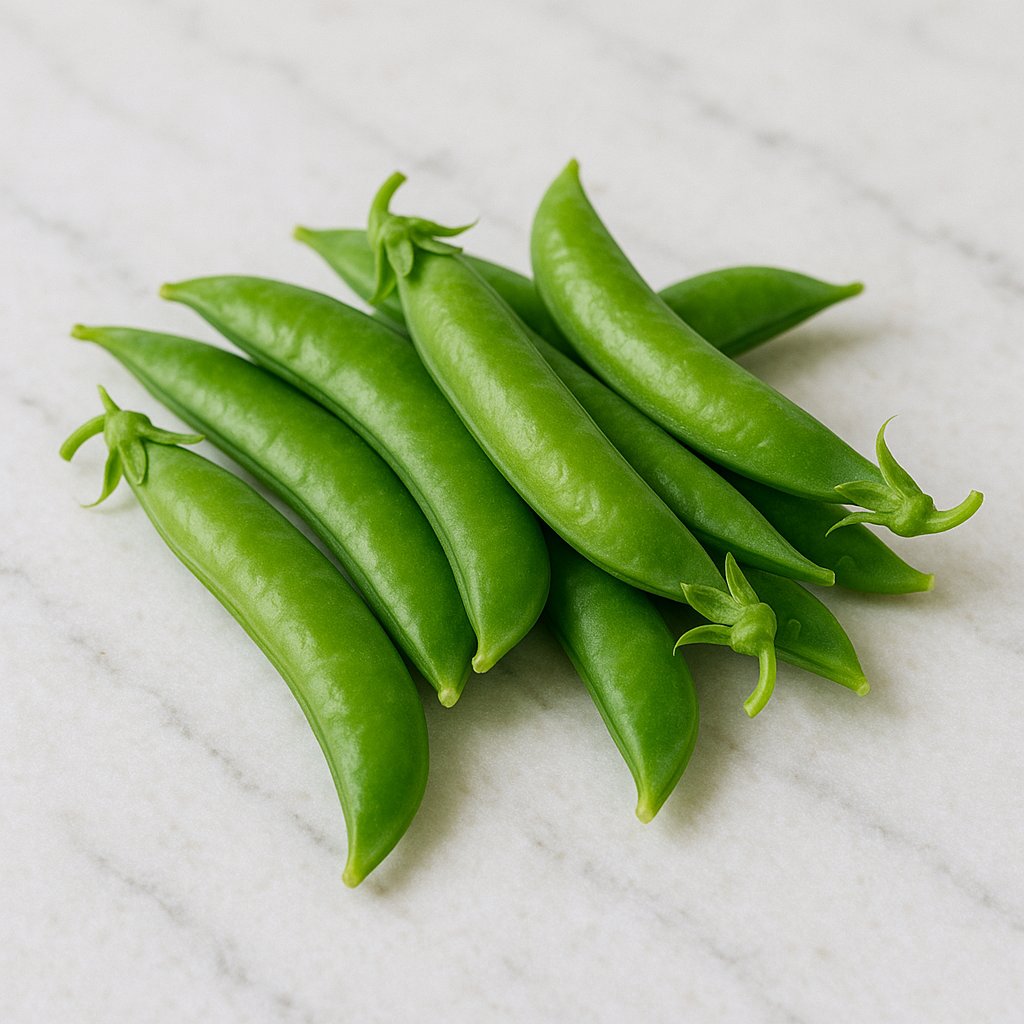
  • Round sugar snap peas (Sugar Snap): these are thicker, rounder pods. You can nibble the whole pod; it is juicy and sweet. The peas inside are well developed.
  • Flat sugar snap peas (Snow Peas / Schneeschoten): these are flat and rather tender. The pod is thinner and the peas inside are smaller. They are well suited for quick stir-frying because they don't need long cooking times.
  • Bush vs. vining varieties: some plants stay small and bushy (bush varieties). They do not need support and are easier for small gardens. Others climb on poles or nets (vining varieties). These grow longer and often yield more, but require support like a small trellis.
  • Colored variants: there are also colorful varieties, for example with slightly purple pods. They look decorative and often have the same taste as green varieties.
  • Early and late varieties: some varieties mature quickly and are harvest-ready early in the year (useful when the weather is still changeable). Others take longer but provide fresh pods later in summer or autumn.
How do you find good sugar snap peas?
Look for firm, smooth pods without brown spots. They should feel crisp and smell sweet. If you can't find fresh ones, frozen sugar snap peas are a practical alternative: they are usually quick-frozen shortly after harvest so many vitamins and the flavor are preserved. Organic sugar snap peas are grown without chemical pesticides; they can be a good choice if you prefer that option.

Sugar snap peas are therefore widely available: fresh in season at the market, imported in supermarkets, frozen year-round or as an organic option. The different types — round or flat, bushy or vining, green or colorful — offer many possibilities for garden, kitchen and taste.
Details & nutrition

Property Value
Unit g
Average weight per piece 5
Calories per 100 42
Protein per 100 2.8
Carbohydrates per 100 7.5
Sugar per 100 4.0
Fat per 100 0.2
Saturated fat per 100 0.03
Monounsaturated fat 0.01
Polyunsaturated fat 0.09
Fiber per 100 2.6
Vitamin C (mg) per 100 60
Vitamin D (IU) per 100 0
Calcium (mg) per 100 43
Iron (mg) per 100 2.0
Nutri-Score A
CO₂ footprint 0.4 kg CO2e/kg
Origin Europe (e.g. Germany/Netherlands; seasonal, partly imported)
Gluten-free Yes
Lactose-free Yes
Nut-free Yes
Vegan Yes
Note Before eating, if necessary, remove any strings along the seams; briefly blanch or cook in the wok for only a few minutes so they remain crisp.

Technical & scientific information

Sugar snap peas (edible pods of peas) refer to cultivated variants of the species Pisum sativum, whose pod wall is tender and fully edible. Among the most common types are the flat snow peas and the thick-walled Sugar Snap Peas, which botanically differ through breeding in traits such as pod shape, seed development and pod tenderness. Harvest time and variety determine texture; pods are harvested at a young stage before seed maturation, when starch is still low and sugar content is sensorially favorable.

Chemical composition and nutritional values: sugar snap peas are low in calories and high in water. The following values are typical indications per 100 g of fresh pods and are provided for guidance only.

  • Energy: about 40–45 kcal.
  • Macronutrients: carbohydrates 6–9 g (of which sugars 3–5 g), fiber 2–4 g, protein 2.5–3.5 g, fat < 1 g.
  • Vitamins: high content of vitamin C (typically 30–60 mg), measurable amounts of vitamin K (approx. 20–40 µg) and B vitamins such as folate (approx. 60–80 µg).
  • Minerals: potassium (approx. 200–300 mg), magnesium (20–40 mg), iron (0.5–2 mg) and calcium (20–40 mg).
In addition, sugar snap peas contain secondary plant compounds such as flavonoids, phenolic acids and carotenoids (e.g. lutein, zeaxanthin), which have antioxidant properties. The content of simple sugars contributes to the sweet taste, while the still low starch in the young state keeps the texture tender.

Antinutrients and safety: like many legumes, sugar snap peas contain small amounts of phytates, trypsin inhibitors and lectins. These compounds can reduce the bioavailability of certain minerals or inhibit digestive enzymes, but they are present in low amounts in typical consumption. Short heat treatment (blanching, cooking) significantly reduces antinutritional factors. Allergic reactions to peas can occur, though they are less common than peanut or soy allergies.

Processing, storage and nutrient behavior: for preservation sugar snap peas are typically blanched and frozen or processed using sterilization methods. Blanching inactivates enzymes that lead to color and quality loss and stabilizes vitamins. Vitamin C is water-soluble and thermolabile; therefore prolonged cooking leads to significant losses, whereas steaming or quick sautéing minimizes nutrient losses. Storage is optimal at 0–4 °C and high humidity, otherwise sugars can convert to starch and pods lose sweetness and tenderness.

Health aspects: sugar snap peas are favorable for blood sugar regulation and support intestinal health due to their fiber content and low glycemic effect. The high vitamin C content strengthens antioxidant protection and supports iron absorption from plant sources. Folate content is relevant in pregnancy care. Vitamin K intake may be considered in people on anticoagulant medication.

Culinary use and selection: fresh sugar snap peas are crisp, bright green and free from brown spots. They are eaten raw in salads, briefly cooked in stir-fries, steamed or served as a side. Gentle preparation preserves texture and much of the water-soluble vitamins. Before eating, sugar snap peas should be washed and any strings removed from the pod edges if necessary.

In summary, sugar snap peas are nutrient-rich, low-calorie vegetables with a favorable profile of vitamins, minerals and secondary plant compounds. With appropriate harvest, storage and gentle processing, their nutritional benefits can largely be preserved, while simple cooking steps reduce antinutritional components and ensure food quality.

Wiki entry for: sugar snap pea
Active now: 20 visitors of which 2 logged-in members in the last 5 minutes