Availability and types of sugar decorations
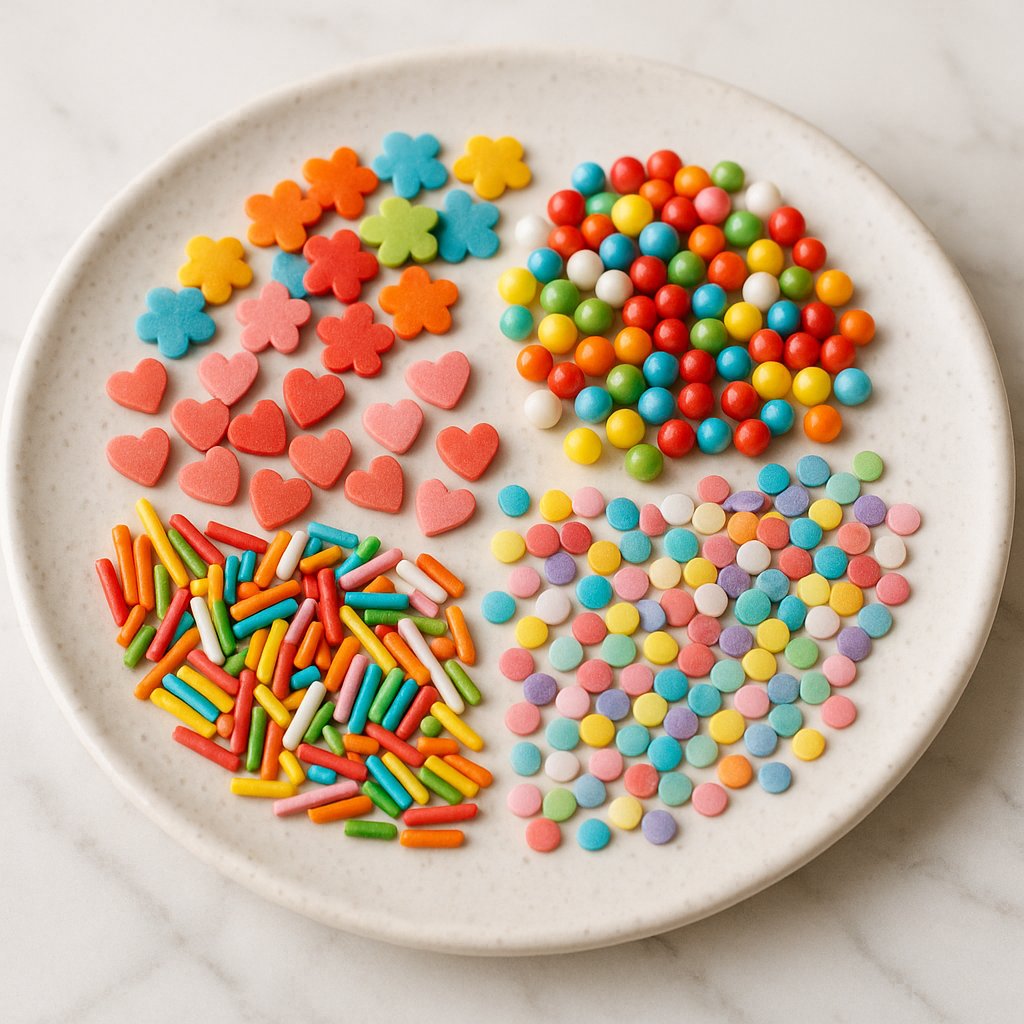
Sugar decorations are a sweet ornament that you place on cakes, cookies and muffins to make them look prettier and taste even better. You can get sugar decorations in many stores, for example in the supermarket, in specialist baking shops or online. They are often found with baking ingredients or with sweets. Some varieties are available all year round, others only at certain holidays like Christmas or Easter – think of colourful sprinkles in egg shapes for Easter or sugar decorations in the shape of snowflakes at Christmastime.
Where do sugar decorations come from?
Sugar decorations are mostly manufactured in factories. The main raw material is sugar, which often comes from sugar beets or sugarcane. Sugarcane grows in warmer countries, for example in Brazil, India or parts of Africa. Sugar beets grow in colder regions, for example in Europe, Russia or North America. After the sugar is extracted, it is pressed into shapes, coloured and sometimes flavoured so the decoration looks colourful and tastes good.
Which types exist?
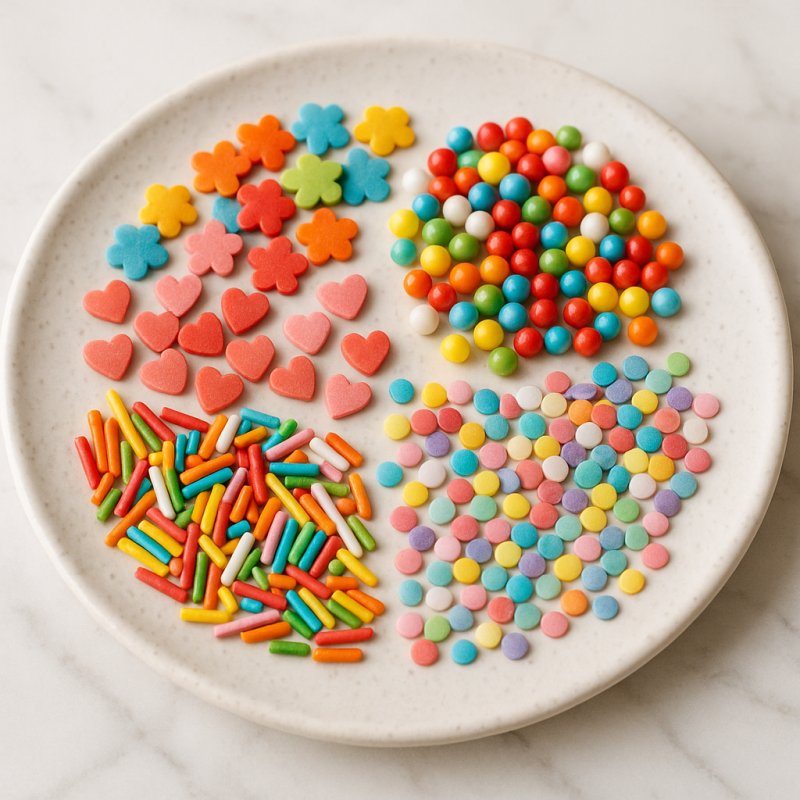
- Sprinkles and pearls: Small colourful dots or elongated sprinkles that look like confetti. They are ideal for muffins and cakes.
- Icing figures: Flat figures or flowers made of firm icing that can be placed on top. They are often very detailed and well suited for special occasions.
- Sugar mass (fondant): This mass can be rolled out and cut into shapes. It is like modelling clay but edible and is often used to cover entire cakes.
- Marzipan and sugar-paste forms: Marzipan is made from almonds and sugar; sugar paste is purely sugar. Both can be shaped, for example into small animals or flowers.
- Edible glitter and powders: Fine, shimmering powder or glitter that is applied to make baked goods shine. It consists of sugar crystals or special food colourings.
Variants and special characteristics
Sugar decorations come in many colours and shapes. Some variants are smooth and crunchy, others soft and easy to shape. Here are a few examples to make it clearer:
- Colours: From simple colours like red, yellow and blue to metallic tones (such as silver and gold) that shine like real metal.
- Flavour: Many varieties simply taste sweet. Some, however, also have added flavours such as vanilla, lemon or chocolate.
- Texture: Hard (crunchy like candies), soft (like gummy bears) or mouldable (like modelling clay, but edible).
- Dietary considerations: There are also sugar-free or vegan variants suitable for people with certain dietary preferences. Sugar-free decorations use sweeteners instead of regular sugar; vegan variants avoid gelatin or other animal-derived ingredients.
Tips for selection
When you buy sugar decorations, first consider where you will use them: for a children's birthday cake colourful sprinkles or small figures are suitable, for an elegant wedding cake finer pearls or a gold sheen are more appropriate. Check the packaging to see whether the decoration is heat-resistant (important if the baked goods will be baked) or intended only for decorating after baking.
In summary: Sugar decorations are widespread, mainly produced in factories that use sugar from sugar beets or sugarcane, and there are countless varieties — from colourful sprinkles to soft figures to mouldable fondant. This makes it easy to find the right decoration for every occasion.