Menu & categories

Sugar beet syrup

Sweet syrup made from sugar beets with a caramelized, malty aroma

Wiki about beet syrup Nutri-Score E Vegan Yes Gluten-free Yes Lactose-free Yes Nut-free Yes
NUTRITION / 100 g
310 kcal 1.5 g Protein 75 g Kohlenhydrate 0.1 g Fett

Introduction

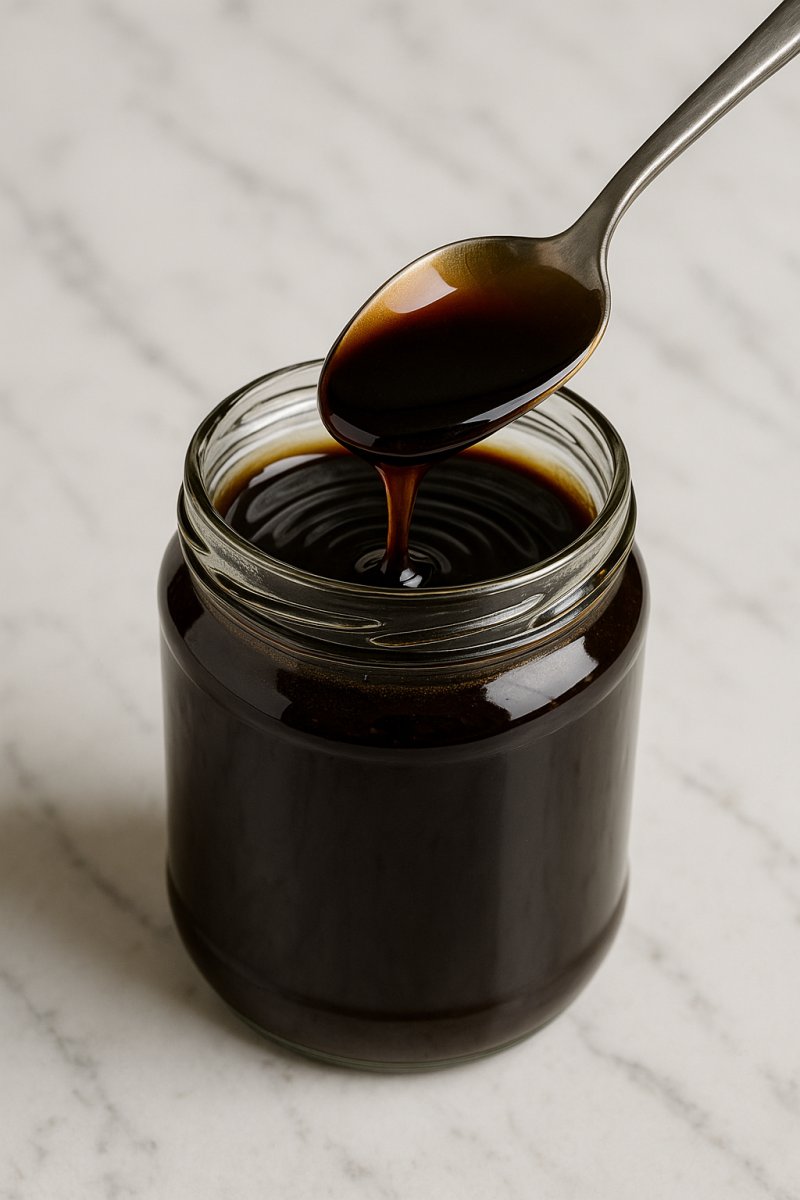
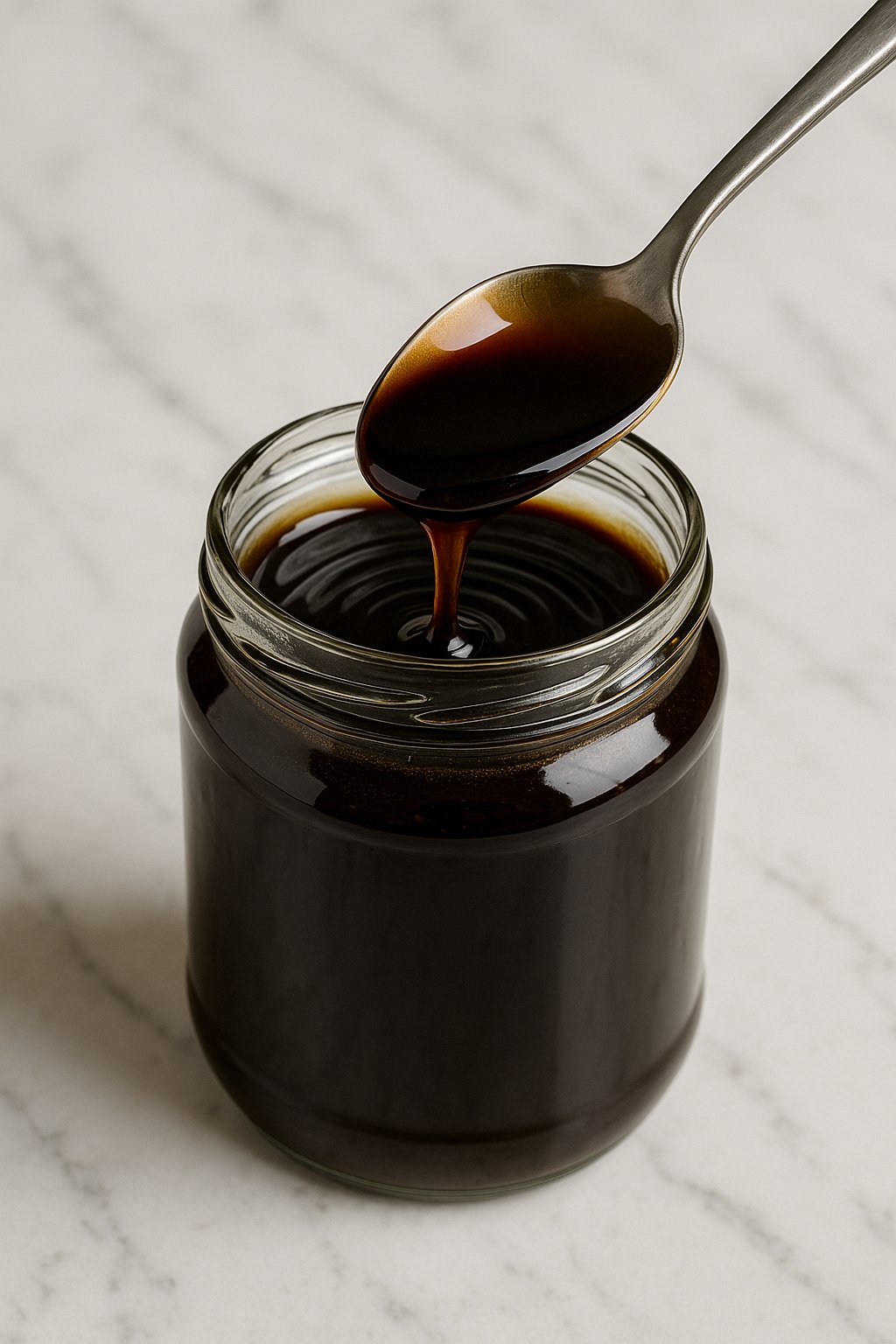
A jar of sugar beet syrup with a spoon on a wooden table
I still remember the first time I tried beet syrup in a small shop-café: a veil-like scent of caramel and earth that dissolved in the mouth into a surprising warmth. Since then this ingredient has become a secret kitchen hero for me. Beet syrup, also known by names like sugar beet syrup or sugar-beet molasses, is dark, velvety and carries a depth that refined sugar never reaches. It has a rustic elegance that enhances both savory and sweet dishes.

What fascinates me most is the versatility. I like to use beet syrup in marinades for roasted root vegetables because its dense sweetness highlights the vegetables' natural earthy backdrop. A colleague of mine swears by adding a spoonful to bean dishes; he claims it gives the sauce that unmistakable, almost nostalgic note. In sweet recipes I often substitute it for brown sugar when I want a less assertive, malty sweetness.

Worth knowing at a glance:

  • Beet syrup is produced by boiling down the extract from sugar beets and is characterized by its dark colour and intense flavour.
  • It is denser and more aromatic than refined sugar and brings caramel-like, slightly earthy notes.
  • It pairs well with baked goods, sauces, marinades and as a finish for cheese or roasted fruit.
I like the idea that something as humble as the sugar beet ends up in a jar that warms my kitchen. I often spread a dollop of beet syrup on farmhouse bread with butter in the morning; the combination of salty butter and deep syrup is almost meditative. Sometimes I experiment with a splash in vinaigrettes or mix it into BBQ sauces, where it helps form a glossy glaze without making everything too sweet.

For anyone who wants to try it, I recommend starting with small amounts and adjusting the syrup to taste gradually. The dark, caramel intensity can instantly lift a dish to a pleasantly more robust level. When I have guests I like to tell the little anecdote about the first spoonful in that café — it's a quick opener for conversations about food, memories and the wonders of everyday ingredients. For me beet syrup is more than a sweetener; it is a flavour anchor that gives simple dishes character.

Availability & types

Availability and types

Beet syrup is a sweet spread or sweetener made from sugar beets. You can find it in many supermarkets, health-food stores or at farmers' markets. Exactly where it is sold often depends on how widely sugar beets are grown in a region and how popular traditional syrups are there. In countries with substantial sugar-beet cultivation, such as parts of Europe, beet syrup is usually easier to obtain than in regions where other crops are more important for sugar production.

Origin
Beet syrup originally comes from areas where sugar beets are grown on a large scale. Sugar beets are tuberous plants that grow under the ground – similar to a potato, but they store sugar. After harvest the beets are washed, crushed and pressed to extract the juice. This juice is then cooked down until a thick, syrup-like liquid remains: beet syrup. You can think of it like concentrating apple juice into a thick puree, only here a clear, dark syrup is produced.

Growing areas
Sugar beets grow particularly well in temperate climates, that is in regions that are neither too hot nor too cold. Common growing areas include:

  • Parts of Europe (e.g. Germany, France, Eastern Europe)
  • North America (in suitable regions)
  • sometimes also in other parts of the world where the climate fits
In these regions farmers often see large fields with rows of beet plants. Because the plants need a whole year to grow, beet syrup is not only seasonal but is normally available year-round once produced.

Available varieties and variants
There is not just one kind of beet syrup. Depending on how long the juice has been cooked or whether it has been additionally processed, different varieties arise. The main variants are:

  • Light beet syrup: This is somewhat milder in taste and lighter in colour. It is somewhat reminiscent of liquid honey, but less aromatic. People who want only a mild sweetness like this variant.
  • Dark beet syrup: Stronger in flavour and darker in colour. It often has a robust, malty or slightly caramelised taste. This syrup pairs well with dark bread or as an ingredient in baked goods.
  • Coarsely or finely filtered: Sometimes the syrup is left coarse so that small particles remain, giving it a rustic appearance. Other varieties are finely filtered and are clearer and smoother.
  • Organic variants: Here producers ensure that the sugar beets are grown without synthetic pesticides or artificial fertilisers. Such products are often found in health-food stores.
  • Blends: Some manufacturers mix beet syrup with other syrups (e.g. maple or fruit syrups) to create new flavour profiles. It's like blending juices to achieve a new taste.
Tips for selection
When buying beet syrup, pay attention to the label (light or dark) and whether it is organic, if that matters to you. Especially in regions with extensive beet cultivation the selection is larger. In supermarkets you will usually find it in bottles or jars; at farmers' markets sometimes directly from local producers – which can often taste fresher.

In summary, beet syrup is a versatile regional sweet product available in many variants: from light and mild to dark and intense, in organic quality or as blended products. Its availability depends on how widespread sugar-beet cultivation is in the area, but in most supermarkets and specialty stores you can find at least a basic selection today.
Details & nutrition

Property Value
Unit g
Calories per 100 310
Protein per 100 1.5
Carbohydrates per 100 75
Sugar per 100 70
Fat per 100 0.1
Saturated fat per 100 0.0
Monounsaturated fat 0.0
Polyunsaturated fat 0.0
Fiber per 100 0.0
Vitamin C (mg) per 100 0.0
Vitamin D (IU) per 100 0.0
Calcium (mg) per 100 80
Iron (mg) per 100 10
Nutri-Score E
CO₂ footprint 1.2
Origin Europe
Gluten-free Yes
Lactose-free Yes
Nut-free Yes
Vegan Yes
Note Values may vary slightly depending on the manufacturer and concentration; high sugar content, use sparingly.

Technical & scientific information

Beet syrup is a viscous sweetener obtained by evaporating and refining juice from sugar beets (Beta vulgaris). It has a dark brown colour and a characteristically malty flavour that distinguishes it from cane sugar syrups. In industrial and artisanal processes beet syrup serves both as a sweetener and as a technical raw material for food production and preservation.

Production and processing
Production of beet syrup begins with obtaining beet juice by crushing and diffusing the beet pieces in warm water. The raw juice is then clarified to remove suspended solids, plant parts and non-sugar substances. Clarification is performed by adding milk of lime (calcium hydroxide) and treating with carbon dioxide (carbonation), which precipitates insoluble mineral residues. This is followed by evaporation under vacuum to remove water and achieve a syrup-like concentration. Depending on the desired purity and colour, further decolourisation and ion-exchange steps may take place. Characteristic of traditional home methods is less intensive refining, which preserves more melanoidins and secondary compounds.

Chemical composition
Beet syrup consists predominantly of carbohydrates, mainly sucrose, but also glucose and fructose in smaller amounts due to partial inversion during heating. Typical concentrations are 60–80% reducing and non-reducing sugars on a dry matter basis. Other constituents include organic acids (e.g. malic acid), amino acids, minerals such as potassium, calcium, magnesium and trace iron, as well as phenolic compounds and melanoidins formed by Maillard reactions during heating. The water content after evaporation is usually between 15 and 25%.

Nutritional values and sensory properties
Per 100 g beet syrup provides approximately 250–300 kcal, depending on water content and processing. The majority of calories come from sugars; fat and protein are negligible. Sensory-wise beet syrup is intensely sweet with slightly bitter or caramel-like notes, often earthy and malty. Viscosity depends on sugar concentration and temperature; syrups do not typically gel on strong cooling, but they show increased thickness compared with pure sugar solutions.

Technological properties and applications
Beet syrup is used in the food industry as a sweetener, humectant and flavour carrier. Due to its hygroscopic properties it improves the texture of baked goods, extends freshness and reduces crystallisation in jams and confectionery. In food chemistry it is also used as a starting material for the production of invert sugar, syrup blends or fermentable sugar solutions. Furthermore, it is suitable for traditional recipes such as marinades, sauces and as a spread.

Health aspects
Beet syrup provides readily available energy like other sugars and should be consumed in moderation from a nutritional perspective. Because of its low content of vitamins or proteins it offers no significant micronutrient advantage compared with other sweeteners. Mineral contents, particularly potassium, are present but in small amounts. During heating, uncontrolled processing can increase the formation of Maillard products; some of these are desirable for flavour, while other heat-generated compounds may have potentially undesirable health effects if consumed in high amounts. People with metabolic conditions such as diabetes should restrict sugar intake, including beet syrup, according to individual dietary recommendations.

Storage and quality characteristics
High-quality beet syrup is homogeneous, free of foreign odours and shows no visible crystallisation or mould. It should be stored cool and protected from light to minimise oxidation and flavour changes. Uptake of water from the environment can impair microbial stability; therefore hygienic filling and tightly sealed containers are important. Sensory and chemical tests, such as measuring sugar degree (Brix), pH and microbial assays, are used for quality assurance.

Overall, beet syrup is a technically versatile sweetener with a specific aroma profile and nutritional characteristics typical of sugar products. Its production combines chemical clarification steps and physical concentration, and its use in foods depends on technological requirements and taste preferences.

Wiki entry for: beet syrup
Active now: 20 visitors of which 2 logged-in members in the last 5 minutes