Menu & categories

Strawberries

Fruity-sweet berries high in vitamin C and low in calories.

Wiki about strawberry Nutri-Score A Vegan Yes Gluten-free Yes Lactose-free Yes Nut-free Yes
NUTRITION / 100 g
32 kcal 0.7 g Protein 7.7 g Kohlenhydrate 0.3 g Fett

Introduction

Strawberries
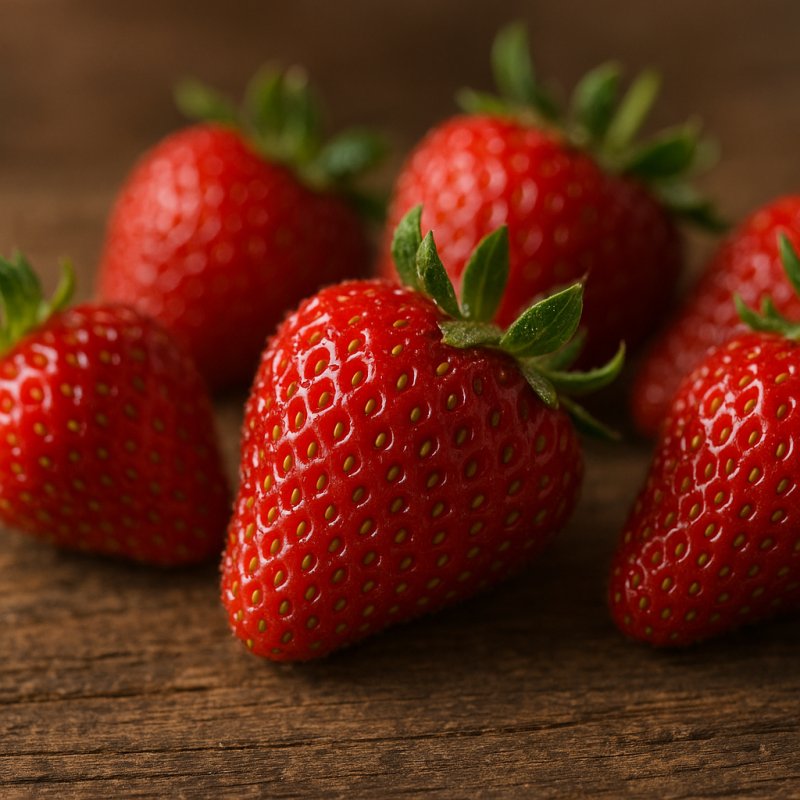
I like to claim that strawberries are the smallest thrills of the season. As soon as the air warms and the first markets are set up, a ritual follows for me: I go in search of that one crate of fragrant, deep-red fruits that practically explode when you bite into them. A colleague of mine calls it "summer in the hand," and I can hardly disagree, because smell and taste immediately remind me of warm afternoons.

Strawberries are amazingly versatile and at the same time uncomplicated. They provide surprisingly much vitamin C, fiber and a good dose of antioxidants, while remaining low in calories. Early varieties are often more delicate, later ones juicier, and somewhere in between you find the perfect balance of sweetness and acidity.

I've learned that it's best to store strawberries unwashed and wash them only shortly before eating so they don't spoil too quickly. At the market I choose the darkest-red, firmest fruits with a green stem, because they are the most aromatic. Once, on a country outing while picking, I forgot a small bowl full in my backpack and later found that slightly crushed fruits were wonderful for a spontaneous jam.

Practical tips and culinary pairings I keep recommending:

  • Pairings: basil, balsamic, goat cheese, dark chocolate and prosecco pair surprisingly well.
  • Uses: raw, in salads, as compote, in cakes or as a quick dessert sauce.
  • Storage: cool, unwashed and consume within two days for best quality.
In the end every bowl of strawberries is a small experiment with memories. I still remember the taste of a particular variety that reminded me of my first holiday after a long time, and an afternoon coffee with a friend where we simply shared the fruits with cream. It's these simple moments that make strawberries irresistible to me.

Availability & types


Availability and types of strawberries

Strawberries are one of the most popular fruits because they are sweet, juicy and versatile. Where do they come from and what kinds are there? Here you can learn in an easy way how strawberries are grown, where they come from and which varieties and types you can find in the shop or at the market.

Origin and growing regions
Strawberries originally come from nature, where small wild varieties grew. The large, sweet strawberries we know today are the result of long cultivation and crosses of plants from Europe and North America. Today strawberries are grown almost everywhere in the world:

  • Europe: Countries like Spain, the Netherlands, Poland and Italy supply many strawberries, especially in the warm season.
  • North America: In the USA California is a huge growing area; many strawberries come from there throughout much of the year.
  • South America: Countries like Mexico and Chile export strawberries to the USA and Europe, especially when it is winter there.
  • Asia: Large quantities are also produced in China and Japan, often for the domestic market.
Because strawberries spoil easily, they are often transported quickly or frozen. In greenhouses and under tunnels farmers can grow strawberries earlier in the year or extend the harvest. It's like giving a plant a warm little house so it can bear fruit longer.

Main types and varieties of strawberries
There are many varieties that differ in taste, size, color and ripening time. They can be roughly grouped into these categories:

  • June-bearing or once-bearing varieties: These produce a large quantity once a year, usually in early summer. Imagine a bush having a big party at the same time.
  • Everbearing or remontant varieties (also called "multiple-bearing"): These plants provide several harvests per year, for example in spring and autumn. It's as if the shrub celebrates several small parties.
  • Day-neutral varieties: These strawberries are less dependent on day length and can fruit almost continuously if the weather is right. This is practical for growers who want fruit year-round.
  • Alpine/wild strawberries: These are smaller, very aromatic and often have a more intense flavor. They are like the "gourmet" variant of the strawberry.
Variants available commercially
In stores you find not only fresh strawberries but also different forms:

  • Fresh: Ready to eat or for baking.
  • Frozen (IQF): Individual fruits quickly frozen – practical for smoothies or baking in winter.
  • Canned and jam: Strawberries in jars, often with sugar, good for breakfast.
  • Dried: For muesli or snacks.
Special features
There are also organic strawberries, grown without chemical pesticides, and bred varieties that stay fresh longer or look more robust. Taste and appearance can differ: some varieties are particularly sweet, others more aromatic or very red.

In summary: strawberries come from many countries and are available almost year-round because they are imported fresh, grown in greenhouses or frozen. There are different varieties — from small, intense wild berries to large, juicy cultivated forms — and many processed forms like jam or frozen products. So almost everyone can find the strawberry they like best.

Details & nutrition

Property Value
Unit g
Average weight per piece 12
Calories per 100 32
Protein per 100 0.7
Carbohydrates per 100 7.7
Sugar per 100 4.9
Fat per 100 0.3
Saturated fat per 100 0.02
Monounsaturated fat 0.04
Polyunsaturated fat 0.15
Fiber per 100 2
Vitamin C (mg) per 100 59
Vitamin D (IU) per 100 0
Calcium (mg) per 100 16
Iron (mg) per 100 0.4
Nutri-Score A
CO₂ footprint 0.5 kg CO2e/kg
Origin Germany / EU (seasonal)
Gluten-free Yes
Lactose-free Yes
Nut-free Yes
Vegan Yes
Note Wash thoroughly before eating; very ripe fruits are sweeter and more delicate.

Technical & scientific information


Strawberries (mostly cultivated varieties of Fragaria × ananassa) are botanically an unusual fruit: the red, juicy parts perceived as the fruit are a false fruit, while the numerous small hard grains on the surface (achenes) are the true fruits. Cultivated strawberries originate from crosses between American wild species and are characterized by early ripening, large berries and intense aroma.

Chemically, the fruit consists of over 90 percent water; the dry matter fraction is made up mainly of carbohydrates (predominantly simple sugars), soluble and insoluble fibers, organic acids and a range of secondary plant compounds. Typical macronutrient values for fresh strawberries per 100 g are about 30–40 kcal, 0.5–1 g protein, 0.2–0.6 g fat, 6–8 g carbohydrates and 1.5–3 g fiber, with values varying by variety and ripeness.

Key constituents at a glance:

  • Water: >90%.
  • Sugars: mainly fructose, glucose and small amounts of sucrose, responsible for sweetness and Maillard reactions during heat treatment.
  • Organic acids: citric acid and malic acid predominate and influence flavor and pH.
  • Fiber: pectin and cell wall polysaccharides, important for texture and gel formation in preserves.
  • Vitamins and minerals: relatively high content of vitamin C (typical range: approx. 30–60 mg/100 g), folate, potassium and manganese in notable amounts.
  • Phenolic compounds: anthocyanins (mainly pelargonidin glycosides), flavonols and ellagic acid derivatives, which convey antioxidant properties.
  • Aroma compounds: a complex mix of volatile esters, aldehydes and furanones (e.g. furaneol), which shape the characteristic strawberry aroma.
Technological processing and shelf-life aspects are relevant for industry and household. Strawberries are non-climacteric, they do not ripen significantly after harvest and have a short shelf life. Cooling (0–4 °C) slows metabolism and microbial spoilage; nevertheless shelf life is often limited to a few days. Common processing methods include freezing, pasteurization and drying. Freezing preserves many aromas and nutrients largely, while pasteurization is used for sterilization but reduces heat-sensitive compounds such as vitamin C and volatile aroma compounds. In jam production natural pectin is key for gel formation in combination with sugar and acidity.

Biochemically two processes are technologically important: enzymatic browning by polyphenol oxidase and the stability of anthocyan-containing pigments. Acidification, low temperatures and short processing times minimize color losses. Furthermore, ripeness and variety choice influence the content and composition of secondary plant compounds as well as aroma intensity.

For health, strawberries provide micronutrients and secondary plant compounds with potentially positive effects: antioxidant and anti-inflammatory activities are described in studies, and the content of fiber and potassium supports metabolic health. The mechanisms of action are mainly based on polyphenols and vitamins; concrete clinical effects, however, depend on amount, food matrix and overall diet quality. Sensitizations are possible: strawberries can trigger oral allergy syndrome in people with pollen associations.

In summary, strawberries are a water-rich, aromatic false fruit with a complex mixture of sugars, acids, fibers, vitamins and phenolic compounds. Their chemical composition determines aroma, texture and technological behavior during processing, while secondary plant compounds contribute to nutritional assessment. Due to their short shelf life gentle cooling or suitable processing is crucial to preserve nutrients and sensory quality.

Wiki entry for: strawberry
Active now: 6 visitors of which 2 logged-in members in the last 5 minutes