Menu & categories

Stilfser

Flavourful South Tyrolean semi-hard cheese with protected designation of origin

Wiki about Stelvio Nutri-Score D Vegan No Gluten-free Yes Lactose-free No Nut-free Yes
NUTRITION / 100 g
360 kcal 23 g Protein 0 g Kohlenhydrate 30 g Fett

Introduction

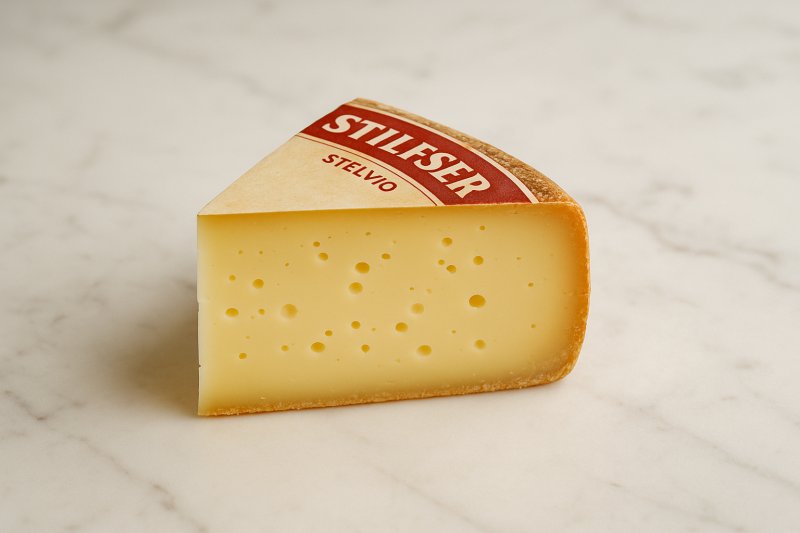
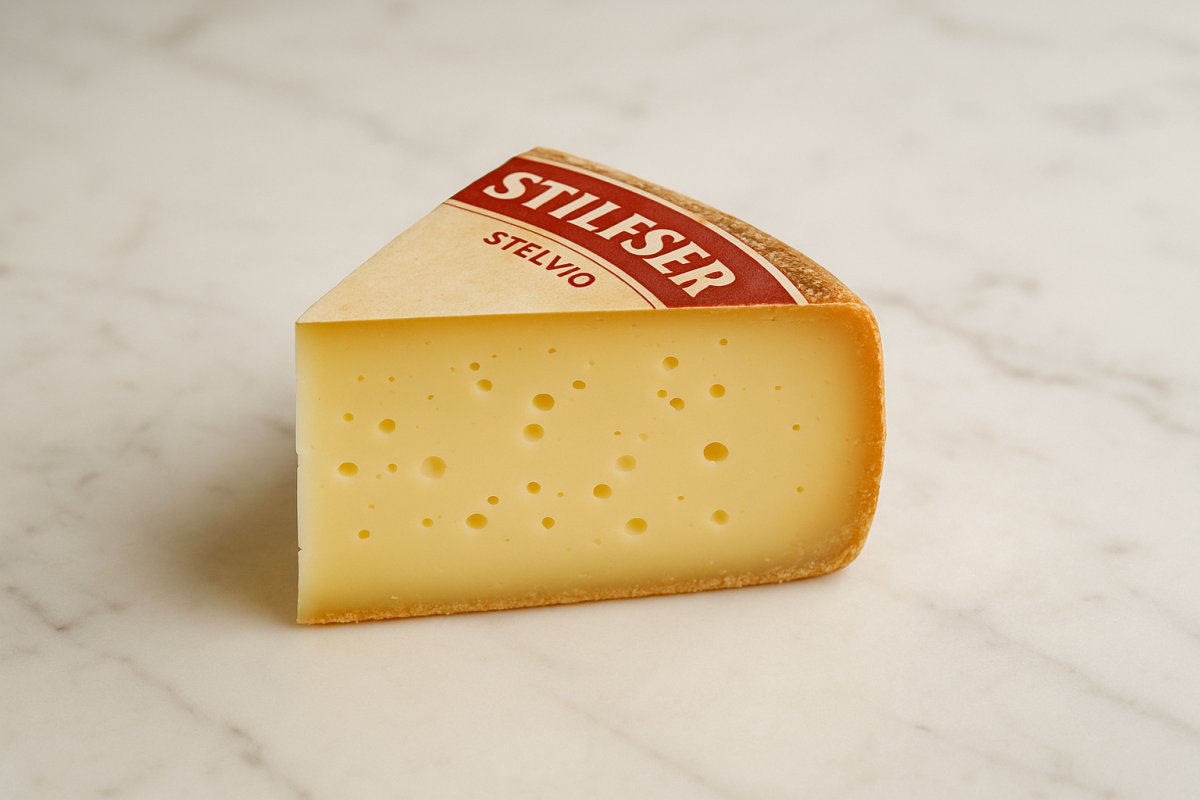
A wheel of Stilfser cheese with a cut corner
I still remember the first time Stilfser was offered to me at a weekly market: a rustic loaf with a brown crust that looked as if it had stories to tell from the Alps. I was curious, reached for it and tasted it – and immediately there was that combination of nutty depth, a fine acidity and a creamy texture that was hard to compare with any other cheese. Since then Stilfser has been a regular companion in my kitchen, from a quick evening snack to a more elaborate cheese platter for guests.

Stilfser is a traditional hard cheese from South Tyrol that is often made with flavorful mountain milk. What makes it special to me is the balance between robustness and elegance: young it is still somewhat supple and mild; when aged it develops more intense, fruity and slightly piquant notes. I like it in slices on toasted farmhouse bread, but also coarsely shaved over pasta. A colleague of mine swears by serving Stilfser in thin strips on an apple–fennel salad – a combination that harmonizes surprisingly well.

The production speaks of craftsmanship and patience: raw milk, long maturation times and the interplay of climate and cellar. That also explains why there are so many variations. Once, on a trip through the Vinschgau, I sampled three different wheels side by side and was amazed at how the aromas changed just from small differences in storage. This variety is what makes Stilfser so exciting to me.

Practical tips I use myself:

  • Serve at room temperature so the aromas can open up.
  • Pair with strong bread, fresh fruit or nuts – the combinations are almost endless.
  • For gratinating, young Stilfser is wonderful; it melts nicely and remains flavorful.
In short: Stilfser is a cheese that brings together down-to-earth character and refinement. It invites tasting, tells of mountain meadows and tradition, and rewards the curious with lots of flavor. For me it remains a small culinary treasure that should not be missing from any collection of characterful cheeses.

Availability & types

Availability and types

Stilfser (also known as Stelvio or Stilfser cheese) is a mountain cheese from the Alps, produced mainly in the area around the Stelvio Pass. When you think of a cheese made in high mountains you can imagine cows grazing on green meadows and fresh mountain air making the milk special. That matters, because the milk determines the cheese's flavor.

Origin
Stilfser originally comes from the Italian Alps around the Stelvio Pass (Stelvio is a high mountain pass). Some varieties are also made in neighbouring regions where farmers have similar environmental conditions: fresh alpine meadows, clean water and cool nights. You can think of it like apples: apples from mountain regions often taste a little different than those from lowlands because the plants grow differently. The same applies to Stilfser.

Production areas
Stilfser is not "grown" like vegetables but produced from milk. The main production sites are farms and small dairies in mountain villages. Important areas include:

  • Italian Alps – especially the area around the Stelvio Pass.
  • Border regions – sometimes dairies in neighbouring regions produce similar cheeses.
  • Alpine pastures – many farmers move their animals to higher pastures in summer; there the milk is often particularly aromatic.
Available types and variants
Stilfser comes in different variants, much like fruit comes in several varieties. Here are the main ones, simply explained:

  • Young Stilfser – This cheese has not been aged long. It is softer, milder and tastes fresh. For children you might say it is like a softer, less strongly flavoured version that is easier to chew.
  • Aged Stilfser – This cheese has been stored longer and therefore develops a stronger, more piquant flavour. It sometimes has small crystals or a slightly grainy texture; these are completely natural "sparks" of flavour.
  • Alpine Stilfser – When the cheese is made entirely from the milk of animals grazing on higher alpine meadows, producers often call it this. This variant can have a particularly intense flavour because the animals eat many different herbs.
  • Organic Stilfser – Made from the milk of animals kept according to organic standards. This means they receive certain feeds and often live under somewhat stricter rules. Many people like this variant because it feels more sustainable.
Where to find Stilfser
Stilfser is available at supermarkets with a cheese counter, at delicatessens or directly from dairies. In tourist mountain regions there are often markets selling local products – there you can sometimes buy directly from the producer and even taste it. If you are looking for it, it helps to ask for the name "Stilfser", "Stelvio" or the region.

In summary: Stilfser is a mountain cheese rooted in the Alps, offered in various stages of maturation and variants. Whether you prefer a mild young Stilfser or a strong aged one depends on your taste. It's best to try small pieces – as with new fruits or sweets – to find out which variant you like most.
Details & nutrition

Property Value
Unit g
Calories per 100 360
Protein per 100 23
Carbohydrates per 100 0
Sugar per 100 0
Fat per 100 30
Saturated fat per 100 20
Monounsaturated fat 8
Polyunsaturated fat 1
Fiber per 100 0
Vitamin C (mg) per 100 0
Vitamin D (IU) per 100 40
Calcium (mg) per 100 800
Iron (mg) per 100 0.2
Nutri-Score D
CO₂ footprint 9.5
Origin Italy (South Tyrol, Trentino, Province of Bolzano)
Gluten-free Yes
Lactose-free No
Nut-free Yes
Vegan No
Note Stilfser (Stelvio) is a semi-firm PDO cheese made from pasteurized cow's milk, with a washed rind and a pronounced, savory flavor.

Technical & scientific information

Stilfser is an Italian hard cheese from the alpine region, produced mainly in South Tyrol/Alto Adige and neighbouring Trentino. As a traditional cheese with a protected designation (in parts under the name "Stilfser" or "Stelvio"), it is characterised by long maturation, a firm but sometimes crumbly texture and an aromatic, mildly piquant flavour profile. The name is derived from the geographic region around the Stelvio Pass (Passo dello Stelvio), where artisanal production has historical roots.

Chemical composition and constituents
The typical chemical composition of an aged Stilfser essentially corresponds to that of hard cheeses: moisture content usually ranges between 30 and 40 percent, fat in dry matter (fat i.d.m.) often amounts to 40–50%. Typical constituents include:

  • Proteins: Mainly caseins (α-, β- and κ-casein), which are broken down during coagulation and maturation by proteolysis into peptides and free amino acids; this process contributes substantially to aroma and texture development.
  • Fats: Milk-derived triglycerides, which during maturation are cleaved by lipases into free fatty acids; short-chain free fatty acids contribute to sharp, piquant notes.
  • Lactose: In aged cheese lactose content is very low due to degradation by lactic acid bacteria and the expulsion of whey, usually only traces remain.
  • Minerals: Mainly calcium and phosphate, bound in the casein matrix and present in the solid phase; these influence firmness and melting behaviour.
  • Vitamins: Fat-soluble vitamins such as A and D and B vitamins in smaller amounts; content varies with milk quality and maturation.
Nutritional values (typical ranges)
Exact values depend on maturity and fat content; rough reference values per 100 g are:

  • Energy: about 350–420 kcal
  • Fat: 28–34 g (of which saturated fatty acids: 18–22 g)
  • Protein: 24–30 g
  • Carbohydrates: <1–2 g (virtually no available lactose)
  • Salt: 1–2 g, depending on salting during production
Processing methods
Production starts with pasteurised or raw cow's milk, which is inoculated with specific starter cultures and rennet to initiate coagulation. After coagulation the curd is cut and whey is partially expelled by pressing. Characteristic for Stilfser are:

  • Intensive whey separation and strong pressing to achieve a dense cheese structure.
  • Salting by rubbing or brine baths, which stabilise the rind and regulate microbial activity.
  • Long maturation in controlled cellars or natural mountain caves at moderate temperatures (typically 10–14 °C) and high humidity, often for several months up to more than a year. During maturation shifts in the microbial community, proteolysis and lipolysis occur, shaping the flavour.
Sensory and microbiological aspects
Sensory-wise Stilfser shows a complex profile: milky-nutty base notes, with increasing spicy, piquant and fruity nuances depending on age. The rind can be dry and brownish, the paste ranging from ivory to golden yellow. Microorganisms such as lactic acid bacteria, propionibacteria and to a limited extent Penicillium species (surface-associated) influence flavour and texture. Hygiene and controlled maturation conditions are important to prevent unwanted spoilage organisms.

Health aspects
Stilfser provides high-quality protein, essential amino acids, calcium and fat-soluble vitamins. Due to its high fat and saturated fatty acid content it should be consumed in moderation, especially with cardiovascular risk factors. The low lactose content makes aged Stilfser well tolerated by many people with lactose intolerance. Those allergic to milk proteins should avoid the cheese. Raw-milk variants can carry a potential pathogen risk; however, properly aged raw-milk cheeses are often safe if maturation time is sufficient and microbiological control is in place.

Summary
Stilfser is a regionally typical, aged hard cheese with a high nutrient content, a complex microbial and chemical ripening dynamic and a characteristic sensory profile. The composition of proteins, fats, minerals and few carbohydrates, together with the maturation methods, determines the aroma, texture and tolerability of this cheese. Responsible production and appropriate consumption are key to reconciling enjoyment and health benefits.

Wiki entry for: Stelvio
Active now: 18 visitors of which 2 logged-in members in the last 5 minutes