Availability and types
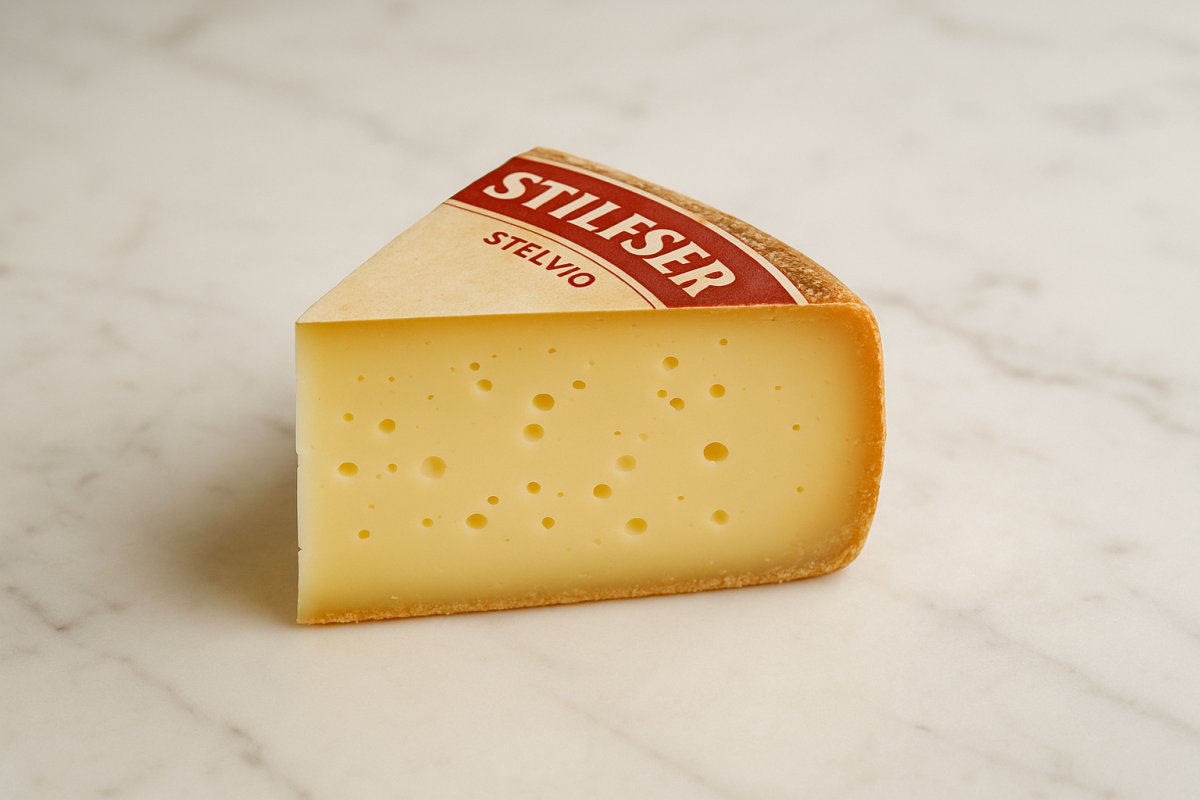
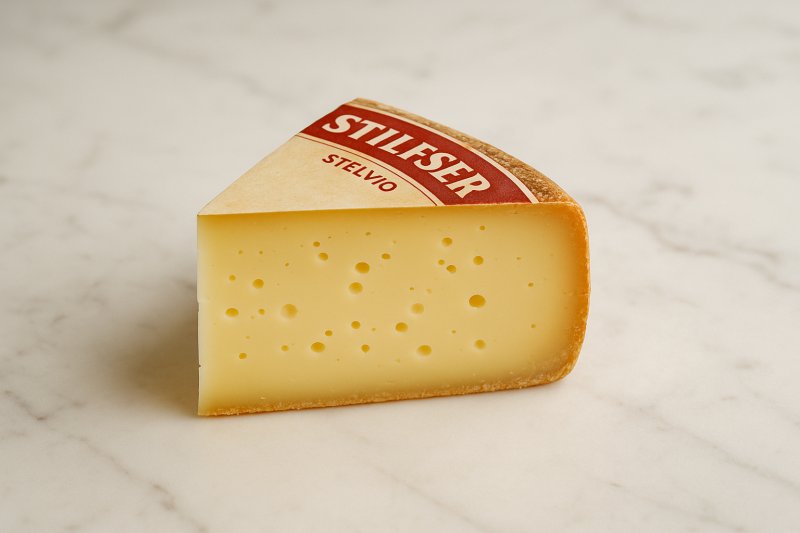
Stilfser (also known as Stelvio or Stilfser cheese) is a mountain cheese from the Alps, produced mainly in the area around the Stelvio Pass. When you think of a cheese made in high mountains you can imagine cows grazing on green meadows and fresh mountain air making the milk special. That matters, because the milk determines the cheese's flavor.
Origin
Stilfser originally comes from the Italian Alps around the Stelvio Pass (Stelvio is a high mountain pass). Some varieties are also made in neighbouring regions where farmers have similar environmental conditions: fresh alpine meadows, clean water and cool nights. You can think of it like apples: apples from mountain regions often taste a little different than those from lowlands because the plants grow differently. The same applies to Stilfser.
Stilfser originally comes from the Italian Alps around the Stelvio Pass (Stelvio is a high mountain pass). Some varieties are also made in neighbouring regions where farmers have similar environmental conditions: fresh alpine meadows, clean water and cool nights. You can think of it like apples: apples from mountain regions often taste a little different than those from lowlands because the plants grow differently. The same applies to Stilfser.
Production areas
Stilfser is not "grown" like vegetables but produced from milk. The main production sites are farms and small dairies in mountain villages. Important areas include:
Stilfser is not "grown" like vegetables but produced from milk. The main production sites are farms and small dairies in mountain villages. Important areas include:
- Italian Alps – especially the area around the Stelvio Pass.
- Border regions – sometimes dairies in neighbouring regions produce similar cheeses.
- Alpine pastures – many farmers move their animals to higher pastures in summer; there the milk is often particularly aromatic.
Available types and variants
Stilfser comes in different variants, much like fruit comes in several varieties. Here are the main ones, simply explained:
Stilfser comes in different variants, much like fruit comes in several varieties. Here are the main ones, simply explained:
- Young Stilfser – This cheese has not been aged long. It is softer, milder and tastes fresh. For children you might say it is like a softer, less strongly flavoured version that is easier to chew.
- Aged Stilfser – This cheese has been stored longer and therefore develops a stronger, more piquant flavour. It sometimes has small crystals or a slightly grainy texture; these are completely natural "sparks" of flavour.
- Alpine Stilfser – When the cheese is made entirely from the milk of animals grazing on higher alpine meadows, producers often call it this. This variant can have a particularly intense flavour because the animals eat many different herbs.
- Organic Stilfser – Made from the milk of animals kept according to organic standards. This means they receive certain feeds and often live under somewhat stricter rules. Many people like this variant because it feels more sustainable.
Where to find Stilfser
Stilfser is available at supermarkets with a cheese counter, at delicatessens or directly from dairies. In tourist mountain regions there are often markets selling local products – there you can sometimes buy directly from the producer and even taste it. If you are looking for it, it helps to ask for the name "Stilfser", "Stelvio" or the region.
Stilfser is available at supermarkets with a cheese counter, at delicatessens or directly from dairies. In tourist mountain regions there are often markets selling local products – there you can sometimes buy directly from the producer and even taste it. If you are looking for it, it helps to ask for the name "Stilfser", "Stelvio" or the region.
In summary: Stilfser is a mountain cheese rooted in the Alps, offered in various stages of maturation and variants. Whether you prefer a mild young Stilfser or a strong aged one depends on your taste. It's best to try small pieces – as with new fruits or sweets – to find out which variant you like most.