Menu & categories

Squid

Lean, protein-rich seafood

Wiki about squid Nutri-Score A Vegan No Gluten-free Yes Lactose-free Yes Nut-free Yes
NUTRITION / 100 g
79 kcal 16 g Protein 0.8 g Kohlenhydrate 1 g Fett

Introduction

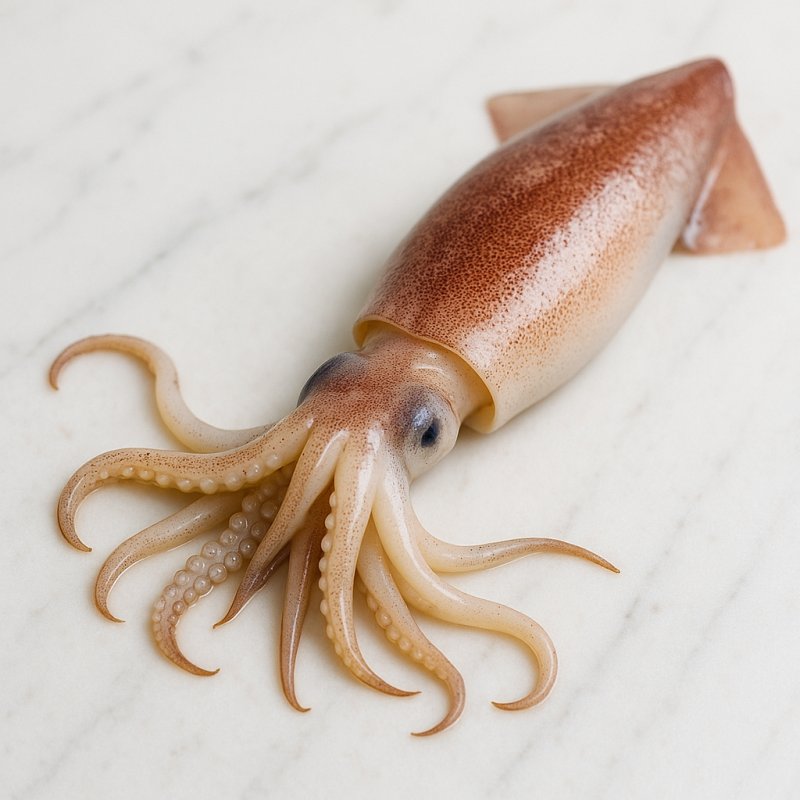
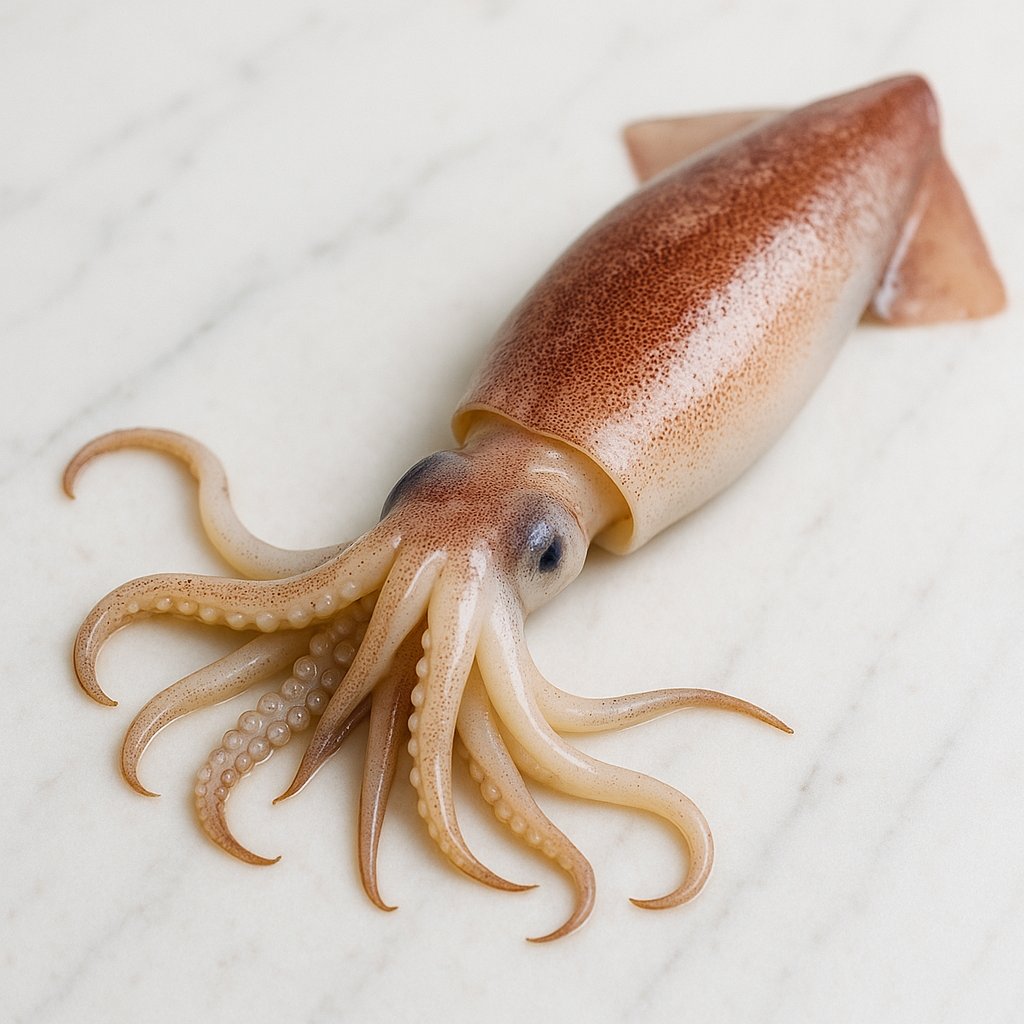
Raw squid meat on a cutting board
I have a secret love for squid that has developed over years and sometimes becomes surprisingly dramatic. Once I was sitting at a windy harbor, the smell of sea and grilled oil in the air, and I remember exactly when a plate of calamari was placed before me – crispy on the outside, tender inside, with a squeeze of lemon that held everything together. That moment showed me how versatile and yet so simple this ingredient can be.

Squid is fascinating: it is both a fine, delicate fish substitute in salads and a rustic star on the grill. Its texture ranges from silky to slightly chewy, depending on how it is treated. I have learned that quick, intense heat or very slow braising are the best ways to cook it perfectly. A colleague of mine insisted for years that squid should only be seared briefly; then I introduced him to a slowly braised stew, and his face at the first spoonful was priceless.

What I particularly appreciate about squid is its adaptability. It absorbs marinades and harmonizes with Mediterranean herbs just as well as with fermented, spicy flavors from Asian cuisine. Some of my favorite combinations include garlic, parsley and a good olive oil, while others shine with soy sauce, ginger and sesame. That makes it a favorite ingredient both for inventors and for food lovers alike.

Practical tips I've picked up along the way:

  • Fresh squid smells mildly of the sea and has a firm, glossy surface.
  • For tender results: either cook very briefly at high heat or braise for several hours at low temperature.
  • Clean well before cooking: remove skin and entrails if the seller has not already done so.
  • Apply acidic marinades like lemon or vinegar only briefly, otherwise the texture changes.
I like to connect small stories to squid: the spontaneous dinner after a rainy market visit, the improvised starter for guests or the simple family recipe passed down from an older neighbor. Squid is not a loud ingredient, but it rewards those who give it time and a little attention. In the end you are left with a dish that can be both humble and surprisingly elegant, and that is exactly what makes it so irresistible to me.

Availability & types

Availability and types of squid

Squid is a marine animal that can be eaten in many countries. It belongs to the class of cephalopods, which means it has a head with eyes and tentacles that look like arms. Squid live in oceans around the world, so they are often readily available in supermarkets, fish markets and restaurants. Depending on where you live, they appear in shops either fresh or frozen.

Origin and fishing areas

Squid are mostly caught in seas around Europe, Asia, Africa and South America. Major fishing areas include, for example, the Atlantic off Spain and Portugal, the Mediterranean, the waters around Japan and Korea, and the coasts of South America. Fishers use nets or special squid pots to catch them. Because squid are not farmed on boats like salmon, for example, they generally come from the wild.

What varieties exist?

  • Squids (calamari): these are perhaps the best known squids. They have thinner bodies and long tentacles. They are often used for squid rings (calamari) or in sushi. They are commonly found in supermarkets frozen or ready to eat.
  • Squids in the strict sense: some species are a bit thicker than the common squids and have a rounder body. They are prepared similarly to other squids, but are sometimes roasted or grilled whole.
  • Cuttlefish (also known as Sepia, providing the "cuttlebone"): these animals have a hard shell inside called the cuttlebone. They often provide the dark ink that is used, for example, to color rice or pasta. Cuttlefish are enjoyed in stews or grilled.
  • Giant squids and octopuses: these are rarer in shops. Giant squids are very large and are usually not sold fresh. Octopuses (eight-armed) are not squids in the strict sense, but belong to the same animal group; they are also popular in many cuisines.
Fresh, frozen or processed?

You can buy squid in various ways:

  • Fresh: directly at the fish market or near the coast you can often find fresh squid. Fresh squid does not smell unpleasantly of "fish", but rather faintly of the sea.
  • Frozen: in many supermarkets you will find it in the frozen section. This is practical because it keeps for a long time and is often already cleaned.
  • Processed: squid is also available ready-prepared – for example breaded and fried (calamari), canned or as part of sushi. Squid ink is sometimes sold in jars for culinary use.
Shopping tips

When you buy squid, check the label: it often states where it was caught and whether it is fresh or frozen. Fresh squid should be glossy and elastic. Frozen products are convenient if you don't have a fish shop nearby. In restaurants it is often indicated which type of squid is used – some kitchens use specific varieties because of their flavor or size.

Overall, squid is a versatile ingredient available in many parts of the world. Whether as juicy rings, grilled, stuffed or in ink-colored rice – there are many types and variants, so almost anyone can try something delicious with it.
Details & nutrition

Property Value
Unit g
Calories per 100 79
Protein per 100 16
Carbohydrates per 100 0.8
Sugar per 100 0
Fat per 100 1
Saturated fat per 100 0.4
Monounsaturated fat 0.2
Polyunsaturated fat 0.3
Fiber per 100 0
Vitamin C (mg) per 100 4
Vitamin D (IU) per 100 0
Calcium (mg) per 100 32
Iron (mg) per 100 0.8
Nutri-Score A
CO₂ footprint 3.0
Origin Sea, depending on the product mostly the Northeast Atlantic or the Mediterranean
Gluten-free Yes
Lactose-free Yes
Nut-free Yes
Vegan No
Note Nutritional values for raw squid without breading or marinade; preparation (pan-frying, deep-frying, sauces) can significantly increase calorie and fat content.

Technical & scientific information

Squid (commonly used term for various species of cephalopods, mainly from the order Teuthida) is a marine ingredient with a characteristic flavor, tender texture and versatile processing options. Biologically, squid belong to the mollusks and are characterized by a slender, muscular mantle, ten arms (in many species eight arms and two feeding tentacles) and a well-developed nervous system. The external anatomy and muscle structure influence both the culinary properties and the mechanical processing steps.

Chemical composition and constituents: The muscular portion of squid consists predominantly of water (typically 75–85%). Proteins make up the second largest portion and are usually in the range of 15–20% of fresh weight. These proteins are mainly contractile proteins such as myosin and actin, but also include structural and enzymatic proteins. Fat content is low (usually < 2%), with the lipid fraction containing a high proportion of polyunsaturated fatty acids, including omega-3 fatty acids such as EPA and DHA. Minerals are present in relevant amounts, especially potassium, phosphorus, magnesium and selenium. Squid also supplies B vitamins, notably vitamin B12, niacin and riboflavin.

Nutritional values (typical values per 100 g, raw weight):

  • Calories: approx. 70–100 kcal
  • Protein: 15–20 g
  • Fat: 0.5–2 g
  • Carbohydrates: usually < 1 g
  • Cholesterol: variable, often 150–250 mg
Processing methods: Squid can be offered fresh, frozen, dried, pickled or canned. Common culinary preparations include quick frying, grilling, deep-frying (e.g. calamari), braising and use in stews. Technologically relevant steps in food processing include skinning, removal of the shell (gladius), evisceration, cooling and rapid freezing to preserve quality. Freezing speed is important: quick-freezing techniques minimize ice crystal formation and thus cell damage, better preserving texture and water-holding capacity. Mechanical tenderization can contribute to tenderness, while enzymatic treatments (e.g. with proteases) can be used in a controlled way to reduce chewiness, but carry the risk of over-softening and flavor changes.

Sensory properties and structure: The mantle muscle fibers are short and densely packed, which after gentle heat exposure leads to a tender, slightly elastic consistency. Prolonged heating causes protein cross-linking and water loss, which can lead to the characteristic rubbery texture. Flavor is dominated by mild, slightly sweet and umami-like notes, which are intensified by Maillard reactions during dry-heat cooking.

Health aspects: Due to the high protein content and low fat content, squid is suitable for protein-rich, calorie-conscious diets. The presence of omega-3 fatty acids and selenium offers potential cardioprotective and antioxidant benefits. Caution is warranted, however, because of cholesterol content and possible allergic reactions: people with seafood allergies can be hypersensitive to squid. It should also be noted that squid (like other marine organisms) can accumulate heavy metals and environmental contaminants; regular consumption of large specimens from polluted areas can lead to increased intake. Hygiene and proper cold chain management are crucial, since spoilage and bacterial contamination (e.g. histamine formation under improper storage) increase food safety risks.

Food-chemical particularities: The ink substance (containing melanin) is used in some preparations and contains organic pigments and ink components; it is culinary and technically usable but should be handled microbiologically. Furthermore, enzymatic activities (e.g. proteolytic enzymes) are important for post-catch aging and tenderness development and can be regulated by cooling and rapid processing.

In summary, squid is a nutrient-rich marine ingredient with high protein, low fat and distinctive textural properties, whose culinary quality strongly depends on catch, processing and preparation. Scientific knowledge about composition, hydration, enzymatics and freeze-sensitivity allows targeted measures to optimize sensory quality, food safety and nutritional benefits.

Wiki entry for: squid
Active now: 14 visitors of which 2 logged-in members in the last 5 minutes