Menu & categories

Calamari

Lean seafood meat with a high protein content

Wiki about squid Nutri-Score A Vegan No Gluten-free Yes Lactose-free Yes Nut-free Yes
NUTRITION / 100 g
92 kcal 16 g Protein 3.1 g Kohlenhydrate 1.4 g Fett

Introduction

Raw calamari on a cutting board
I remember the first time I stood at a small fish market on the coast and admired the dark, glossy bodies of the calamari. A vendor handed me a specimen, and I was surprised by the delicate elasticity and the faint scent of the sea. Since then calamari have become a constant companion in my kitchen: versatile, quick to prepare and always a little bit exciting.

What I love about calamari is their flexibility. They can be transformed in many directions: quickly seared as tender rings, stuffed and gratinated in the oven, or crisp-fried into that classic appetizer that works so well on summer terraces. A colleague of mine swears by searing them very briefly at very high heat – he says it's like 'a little culinary firework' and I agree. If they're handled badly, i.e. cooked too long, you'll quickly end up with a chewy result; the art is to get the cooking time just right.

Calamari offer not only flavor but also an interesting nutritional profile: they are high in protein, relatively low in fat, and provide important minerals such as selenium and zinc. In my recipes I like to pair them with fresh herbs, citrus notes and a touch of chili to highlight the marine flavors while keeping the dish balanced.

When choosing, I watch for freshness: clear eyes, a firm body and a fresh smell are good indicators. Frozen calamari can be an excellent alternative if properly handled. I once learned on a trip to a small harbour town that the locals even season and roast the tentacles separately — a simple but delicious idea I often repeat.

In short, calamari are for me an ingredient full of possibilities: straightforward, refined and always ready to make a meal special. Whether as a delicate main or a crispy accompaniment, they bring sea, texture and personality to the plate — and now and then a little kitchen story I enjoy sharing.

Availability & types

Availability and types of calamari

Calamari are marine animals that belong to the cephalopods. You can find them in many parts of the world, especially where the water is not too cold. Calamari can be bought fresh, frozen or even pre-processed. In supermarkets and fish markets they are often sold in pieces, whole or as rings. In restaurants they are frequently served fried as 'calamari', but they can also be grilled, pan-seared or used in soups and stews.

Origin and fishing areas
Calamari live mainly in the sea, in coastal waters and in deeper areas. Some important fishing and farming areas are:

  • European Mediterranean: Many calamari that end up in European restaurants come from here.
  • Atlantic off Europe and North Africa: In these waters fishermen catch large quantities.
  • East and Southeast Asia: Countries like Japan, Korea and China have large fishing fleets and process a lot of squid.
  • South America and Australia: There are also areas with many calamari, especially in cooler marine zones.
Sometimes calamari come from wild catch, i.e. the open sea. There are also projects trying to farm some species in special tanks. Farming means the animals are raised in controlled environments, similar to fish farming.

Which varieties and variants exist?
Calamari come in various sizes and shapes. Here are the main types you will likely see in shops or restaurants:

  • Baby calamari (baby squid): Very small animals, often used whole. They are tender and are sometimes marinated or fried.
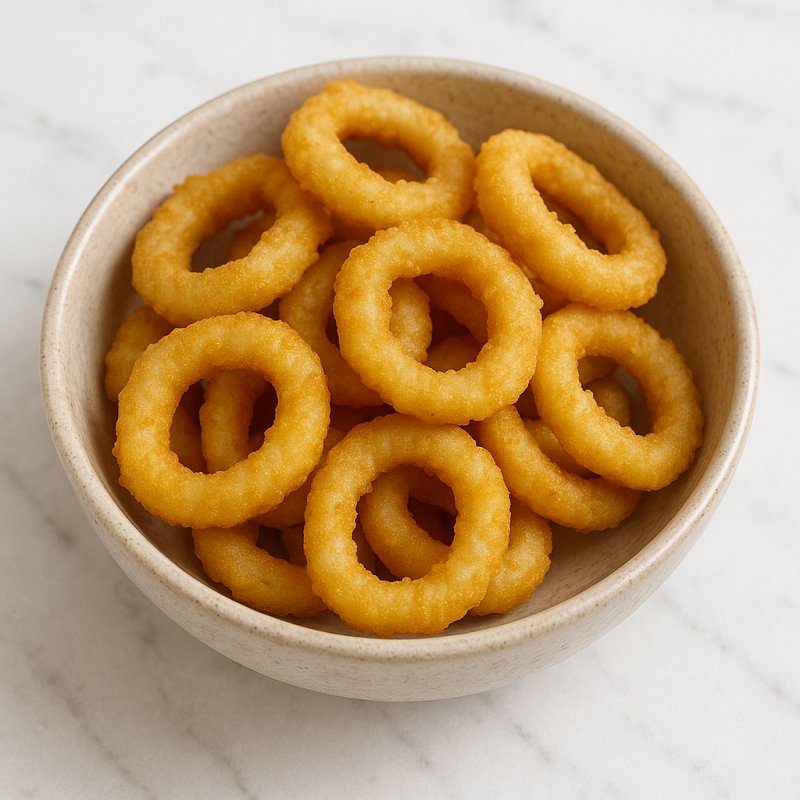
  • Calamari rings: This is a form in which calamari are sold or served: the body is cut into rings. This form is popular for fried calamari.
  • Whole calamari: With head, tentacles and body. These can be stuffed or grilled whole.
  • Large species (e.g. giant or mantle squid): Some species become considerably larger and are offered in slices or pieces. Large specimens are often firmer in bite.
  • Similar cephalopod species: Sometimes different cephalopod species are sold together. 'Cuttlefish' or 'squid' are general terms – calamari are a subgroup.
Processing and sale forms
Calamari can be purchased in different conditions:

  • Fresh: Directly after catch, usually at the market. Fresh calamari smell mildly of the sea, not strong.
  • Frozen: Common in supermarkets. Frozen calamari are practical because they can be stored for a long time.
  • Prepared: Already cleaned, in rings or filleted. This saves work when cooking.
  • Preserved: In cans or jars, often in oil, tomato sauce or pickled.
When you buy calamari, check the origin information on the packaging. They tell you from which sea the animals come and whether they were wild-caught or farmed. This helps to choose consciously – for example whether you want something fresh for a special meal or frozen for quick dishes. Calamari are versatile, tasty and available in many variants, so there's something for every taste.
Details & nutrition

Property Value
Unit g
Average weight per piece 120
Calories per 100 92
Protein per 100 16
Carbohydrates per 100 3.1
Sugar per 100 0
Fat per 100 1.4
Saturated fat per 100 0.4
Monounsaturated fat 0.3
Polyunsaturated fat 0.5
Fiber per 100 0
Vitamin C (mg) per 100 4
Vitamin D (IU) per 100 0
Calcium (mg) per 100 32
Iron (mg) per 100 0.7
Nutri-Score A
CO₂ footprint 3.5
Origin Sea, commonly the Mediterranean and the Atlantic
Gluten-free Yes
Lactose-free Yes
Nut-free Yes
Vegan No
Note Nutritional values for raw calamari (squid, without breading or marinade). Values may vary slightly depending on fishing area and processing.

Technical & scientific information

Squid denotes in culinary and biological contexts several species of cephalopods belonging to the class Cephalopoda. In Europe and many cuisines worldwide the term often refers to smaller species such as Loligo and Alloteuthis; the name derives from the Italian 'calamaro'. Morphologically, squid are characterized by an elongated, torpedo-shaped body, two longer tentacular arms in addition to eight shorter arms, and an internal chitinous pen (gladius) as a supporting structure. Their skin contains chromatophores that allow adaptive color changes for camouflage and communication.

Chemical composition and constituents
Fresh squid consists mainly of water (approx. 75–85%) and has a moderate protein content. Proteins make up about 15–20% of the dry matter and contain all essential amino acids, with arginine, glycine and taurine present in notable amounts. Lipids are low (typically 0.5–3% of fresh weight) and show a favorable fatty acid profile, largely consisting of polyunsaturated fatty acids including omega-3s like EPA and DHA. Mineral contents are comparatively high for seafood, particularly iodine, phosphorus, zinc and selenium. Present vitamins include B vitamins (especially niacin and B12) and small amounts of vitamins A and E.

Nutritional values (typical per 100 g raw squid)

  • Calories: approx 90–100 kcal
  • Protein: approx 15–18 g
  • Fat: approx 0.5–1.5 g
  • Carbohydrates: typically negligible
  • Water: 75–85 g
Processing methods
Squid is processed in many ways: fresh, frozen, dried or canned (in oil or marinade). Common preparations include frying, grilling, steaming, deep-frying (e.g., calamari rings) or as part of stews and salads. For food technology, important processing steps are removing the viscera and the chitinous pen, skinning and optionally cutting into rings or strips. Deep freezing is a common technique for preservation; rapid freezing methods (shock freezing) are preferred to minimize cell damage and quality loss. Marination and the use of enzymes (e.g., papain) can influence texture, but should be applied in a controlled way to avoid excessive protein breakdown.

Sensory properties and texture
Fresh squid has a mild, slightly sweet marine aroma. Texture and tenderness depend on temperature and time: briefly and hot-cooked muscle tissue remains tender, while longer cooking leads to a rubbery, tough consistency, unless braised slowly at low temperature. The mucopolysaccharides and the muscle tissue structure with strongly cross-linked myofibrils determine these properties.

Health aspects
Squid are nutritionally advantageous due to high protein content and low fat; the contained omega-3 fatty acids and trace elements support cardiovascular and neurological functions. However there are risks: seafood can contain allergens that can trigger severe reactions in sensitized individuals. Moreover squid can be exposed to environmental contaminants such as mercury, organic pollutants and microplastics; with regular consumption origin and residue analyses should be considered. Proper storage and sufficient thermal treatment are important to minimize microbial risks. For frozen products the cold chain must be maintained to prevent quality loss and bacterial spoilage.

Sustainability and fisheries management
Stocks of various cephalopod species are subject to natural fluctuations, as cephalopods often have high reproductive rates and short life cycles. Sustainability assessments vary by species, fishing area and method; bycatch and efficient use of the resource are central management issues. Certifications and traceability can help with selection.

Overall, squid represent a protein-rich, low-calorie ingredient with specific nutritional benefits and sensory properties, whose quality depends greatly on species, processing and storage. Consumers should pay attention to origin information and possible contamination risks if they have health restrictions or consume them frequently.

Wiki entry for: squid
Active now: 14 visitors of which 2 logged-in members in the last 5 minutes