Menu & categories

Spring onion

Aromatic spring vegetable with a mild scallion flavor

Wiki about spring onion Nutri-Score A Vegan Yes Gluten-free Yes Lactose-free Yes Nut-free Yes
NUTRITION / 100 g
32 kcal 1.8 g Protein 7.3 g Kohlenhydrate 0.2 g Fett

Introduction

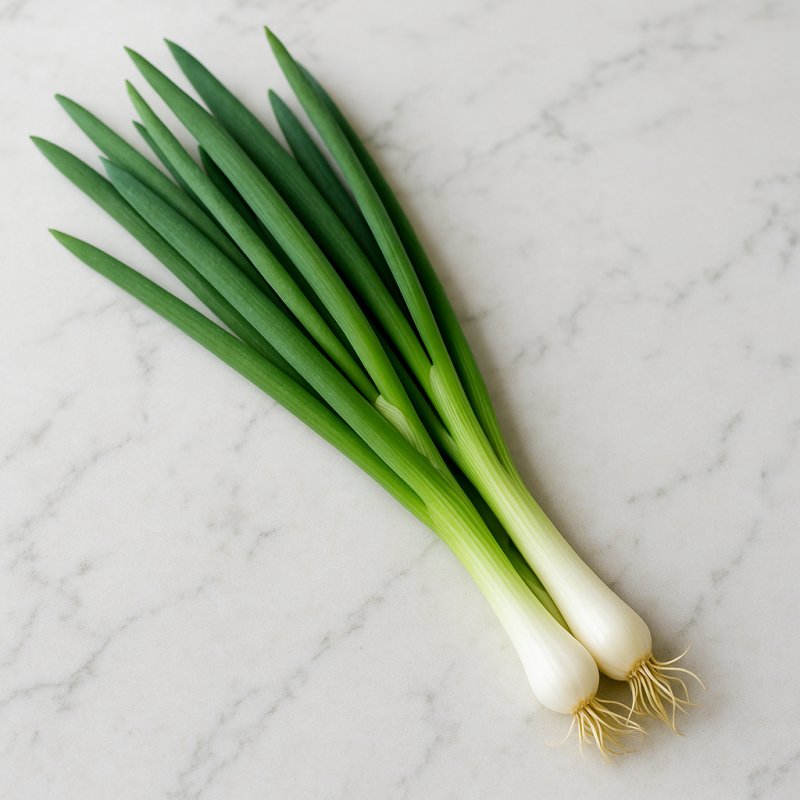
Fresh green spring onions with white bulbs
I love spring onions, and that is partly tied to memories of warm summer evenings when a simple supper became a small celebration. When I see the long, slim stalks lying in the kitchen, I think of the first time a colleague at a barbecue wanted to recklessly fry spring onion rolls in sesame oil and tossed all reservations overboard: almost every attempt ended in a new taste experience.

For me, spring onions are the versatile all-rounders of the vegetable garden and the pantry at the same time. They give off a fresh, mild heat that enlivens dishes without dominating. I sprinkle them raw over a bowl so the crisp texture contrasts with the creamy, or I gently sauté them in butter for a silky base in soups. Sometimes I roughly chop them and mix them into herb quark when I expect guests and want to put something charming on the table quickly.

It is also convenient that spring onions bring so little complication: the white ends are easy to use, the green tips add color and aroma. I often store the stalks in a glass of water in the fridge because they stay fresh longer and join a dish wonderfully at the last minute. In my kitchen they are the secret weapon for quick flavor updates.

If you want to think about more ways to use them, I recommend these simple options:

  • Raw: as a crisp finish for salads and sandwiches.
  • Fried: in oil or butter they caramelize slightly and become sweetish.
  • Steamed/Braised: as a base in soups, risottos or stews.
  • As a topping: finely sliced over Asian soups, baked potatoes or grilled vegetables.
I still clearly remember a rainy Sunday when I improvised a sort of quick spring onion pancake from leftovers — simple, but so convincing that friends at the table remembered the night. Spring onions continue to inspire me because they start small and make the dish stand out. Anyone who works with them will understand why they almost always have a permanent place in my kitchen.

Availability & types

Availability and types

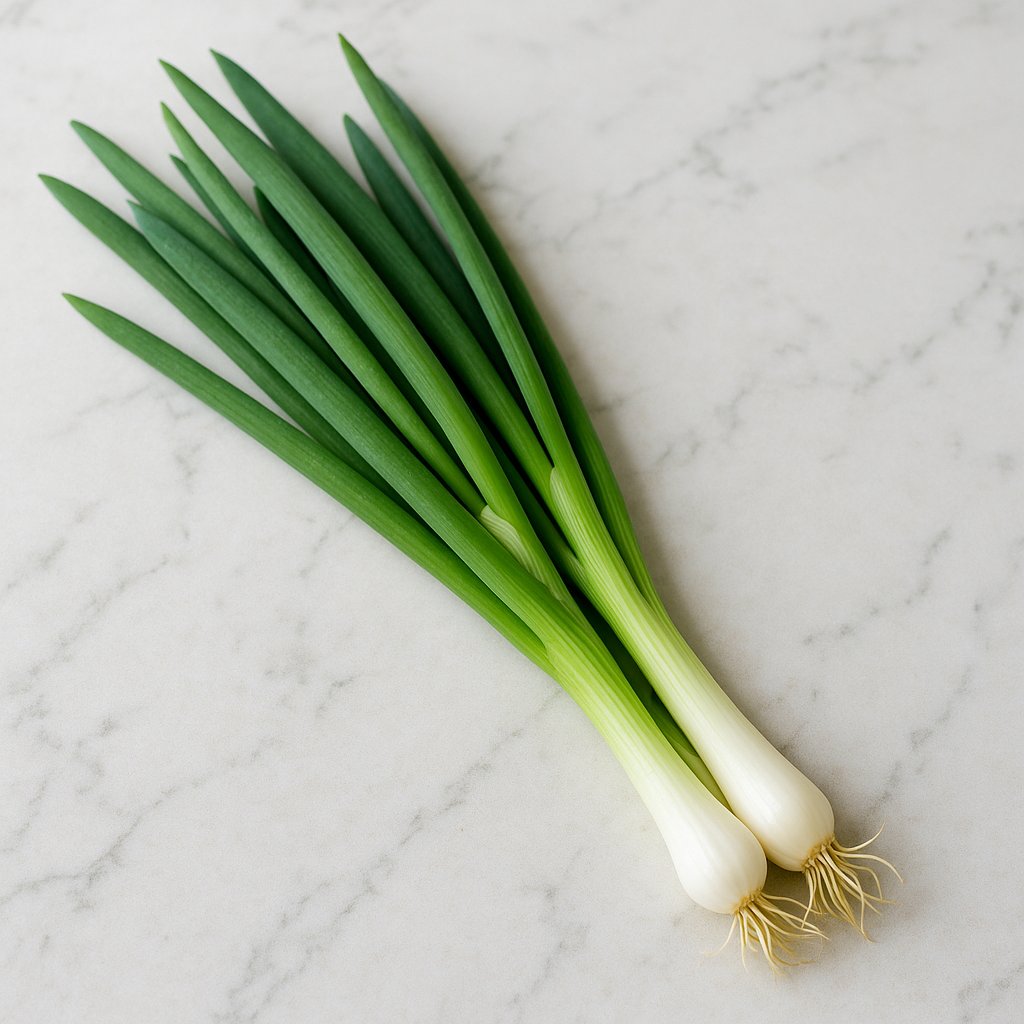
Spring onions are a very common ingredient that can be bought almost all year round. They belong to the onion family but are slimmer and have long green stalks with a small white bulbous part at the end. Because they are mild in flavor, they are often used raw in salads, as a garnish, or briefly sautéed in many dishes.

Origin
Spring onions originally come from Asia, especially regions in China and other East Asian countries, where they have been cultivated for thousands of years. From there the plants spread to many parts of the world. Today spring onions grow almost everywhere the climate is not too extreme. One can imagine: just as an apple tree prefers certain places, spring onions like locations with mild climates and good soil.

Growing regions
Spring onions are grown in many countries. Major growing regions include:

  • Europe: Especially in countries like Spain, the Netherlands and France you can find large fields of spring onions. They are also produced in greenhouses during colder months.
  • Asia: China is one of the largest producers – there spring onions are cultivated both for domestic consumption and for export.
  • North America: In the USA and Canada farmers also grow many spring onions, mainly in warmer areas and irrigated fields.
In supermarkets and markets you will see spring onions from the region or from other countries. If you prefer regional products, it is worth checking the country of origin or regional labels.

Available varieties and variants
Spring onions come in different shapes and sizes. Here are the main types, simply explained:

  • Spring onions / scallions: These are typically slim with long green tubes. They are very mild and are often eaten raw. You can use them practically anywhere in the kitchen.
  • Shallots: These are smaller and rounder than spring onions and have a more intense flavor. They belong to the same onion family but are considered a separate variety.
  • Chives: This is a very fine variant that looks like grass-like stems. In terms of taste chives are very mild and are often finely chopped over dishes.
  • Winter-hardy varieties: There are specific varieties that tolerate colder temperatures. These varieties are sown in autumn or grown outdoors and remain available in cooler regions.
  • White or red variants: Some onion types have slightly differently colored shafts or bulb parts, which usually only affects appearance, not the basic taste.
In stores you can find whole bunches with long green stalks or prepackaged packs with particularly uniform stalks. At the weekly market spring onions are often fresher and sometimes just harvested from the field.

When choosing spring onions, look for firm, crisp stalks and no wilting leaves. Just as you check an apple for firmness and shine, freshness in spring onions indicates how good they will taste.

In summary: spring onions are available year-round, are grown in many countries and come in different varieties – from very mild spring onions to more robust, winter-hardy types. They are versatile and easy to recognize, so almost anyone can use them in their kitchen.
Details & nutrition

Property Value
Unit g
Average weight per piece 15
Calories per 100 32
Protein per 100 1.8
Carbohydrates per 100 7.3
Sugar per 100 2.3
Fat per 100 0.2
Saturated fat per 100 0.03
Monounsaturated fat 0.02
Polyunsaturated fat 0.1
Fiber per 100 2.6
Vitamin C (mg) per 100 18
Vitamin D (IU) per 100 0
Calcium (mg) per 100 72
Iron (mg) per 100 1.5
Nutri-Score A
CO₂ footprint 0.3
Origin Worldwide, especially Europe and Asia
Gluten-free Yes
Lactose-free Yes
Nut-free Yes
Vegan Yes
Note Spring onions, also called scallions or young onions, are used both raw and cooked and give dishes a mild onion flavor.

Technical & scientific information

Spring onion (Allium fistulosum), often also called winter onion, spring onion or shallot, is a biennial species in the family Alliaceae. Botanically it differs from the common kitchen onion by a longer, slimmer, hollow leaf part and by the absence of a pronounced bulb. From a cultural history perspective it was domesticated in East Asia and established worldwide as a crop for fresh and raw consumption.

Morphology and cultivation
The plant forms long, tube-shaped foliage leaves that narrow at the base and do not exhibit a clearly developed bulb. The roots are fibrous, the inflorescences are umbels with numerous flowers that, when seeds form, produce small dark-brown seeds. Spring onions prefer well-drained soils and cool to temperate temperatures; they are relatively cold-tolerant and can be grown as a preceding or following crop. Harvest times vary depending on variety and cultivation practice, with young plants usually harvested whole and older plants cut for the green leaf portion.

Chemical composition and constituents
Spring onions consist predominantly of water (about 85–90 %), carbohydrates (approx. 7–10 %), small amounts of protein (approx. 1–2 %) and lipids (<0,5 %). Important micronutrients include vitamin C, provitamin A (carotenoids), B vitamins and minerals such as potassium, calcium, magnesium and iron. Characteristic are sulfur-containing secondary plant compounds, notably organic sulfides and thiols (e.g. alliin, isoalliin and their enzymatic degradation products resembling allicin), which are responsible for the typical aroma and the mild pungent note. Flavonoids such as quercetin and other polyphenols with antioxidant properties are also present.

Nutritional values (average per 100 g, raw spring onion)

  • Calories: about 32 kcal
  • Protein: 1.8 g
  • Carbohydrates: 7.3 g (of which sugars ~2.3 g)
  • Fiber: 2.6 g
  • Fat: 0.2 g
  • Vitamin C: approx. 18 mg
  • Potassium: approx. 180 mg
Processing and culinary use
Spring onions are used fresh, raw, blanched, sautéed or lightly fried. The green leaf parts often serve as an aromatic garnish, while the white to light-green shaft provides a milder, onion-like flavor. When exposed to heat, volatile sulfur compounds change through thermal decomposition and Maillard reactions, making the aroma rounder and less sharp. Freezing and preservation methods (e.g. freezing or drying) affect texture and taste; blanching before freezing inactivates enzymes that would otherwise lead to color and quality loss.

Health aspects
The sulfides and flavonoids in spring onions are associated in research with antimicrobial, antioxidant and potentially cardioprotective effects. Fiber supports gut health, while potassium helps regulate blood pressure. In some individuals, fructans or other FODMAP components in Allium vegetables can cause bloating and gastrointestinal discomfort. Allergic reactions are rare, but cross-reactions are possible in people sensitive to Liliaceae/Alliaceae. The caloric content is low, which makes spring onions suitable for calorie-conscious diets.

Storage, quality and safety
Fresh spring onions should be stored cool and moist (e.g. in the vegetable drawer of the refrigerator) to prevent wilting; drying out and temperature stress reduce shelf life and aromatic quality. Microbiologically, fresh onion vegetables are generally unproblematic, but improper storage can lead to mold growth or microbial contamination. In production, hygienic procedures should be observed in cutting frequency management to prevent cross-contamination.

In summary, the spring onion is a versatile, low-calorie vegetable with characteristic sulfurous aroma compounds, useful micronutrients and potential health benefits. Its chemical profile makes it interesting both for culinary applications and for functional foods, while individual intolerances and proper processing influence practical use.

Wiki entry for: spring onion
Active now: 18 visitors of which 2 logged-in members in the last 5 minutes