Menu & categories

Spice blend

Aromatic blend of various spices for enhancing dishes

Wiki about spice mix Nutri-Score B Vegan Yes Gluten-free No Lactose-free Yes Nut-free No
NUTRITION / 100 g
250 kcal 10 g Protein 40 g Kohlenhydrate 8 g Fett

Introduction

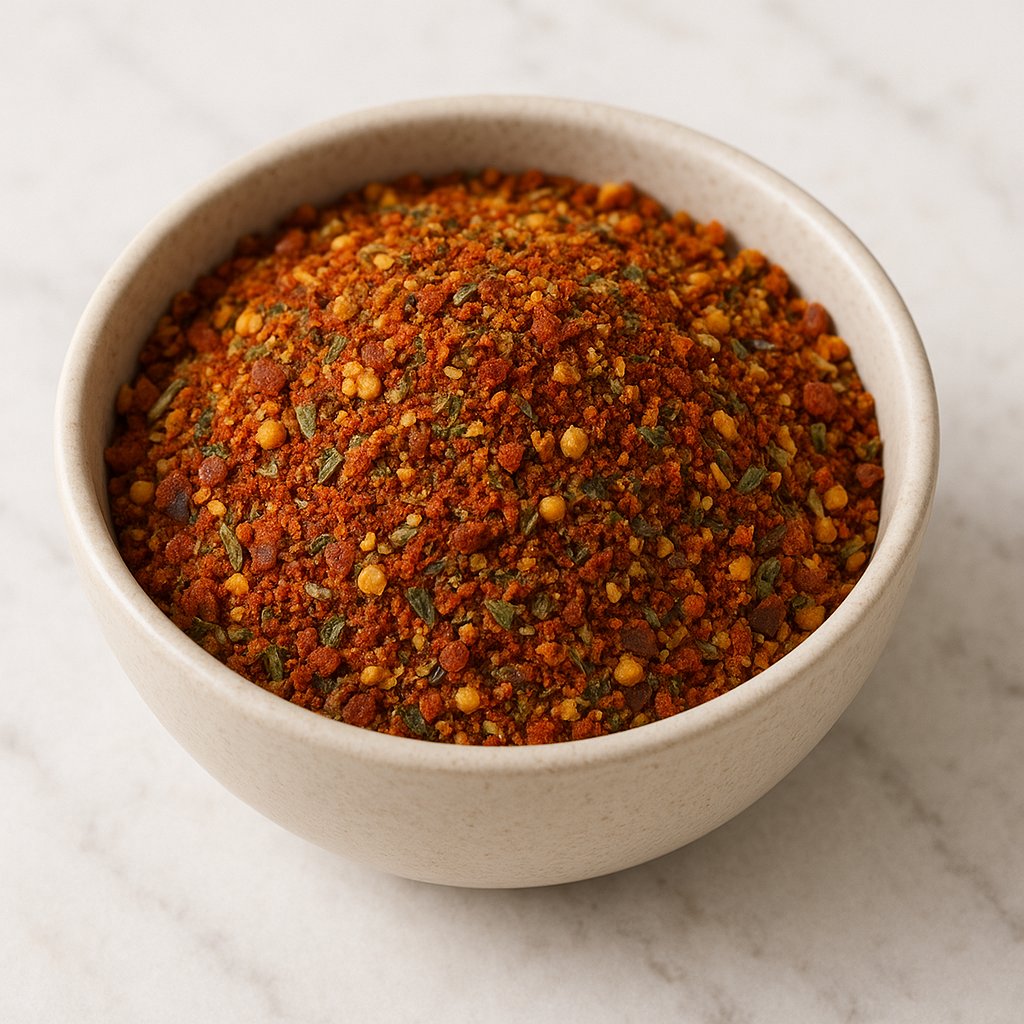
Colorful spice blend in a bowl
I love spice blends because to me they are the little wonders of the kitchen: a pinch of origin, a touch of history and a promise of flavor that can transform whole dishes in a few seconds. I still remember buying, once out of season at the farmers' market, a bag of mixed spices that smelled of cinnamon, cumin and a mysterious sweetness. At home it turned out to be a mix for savory stews, not for cakes — and from that mistake one of my favorite winter recipes was born.

Spice blends are as diverse as the cultures they come from. Some are simple and work almost always, others are complexly composed and tell a small story with every ingredient. I have learned that few things define the kitchen as much as the balance between salt, acidity, sweetness and bitterness — and the right spice blend can create that balance almost on its own.

Typical components

  • Pepper and salt for the base seasoning
  • Cumin, coriander and paprika for earthy, warm notes
  • Turmeric, cinnamon or cloves for depth and aromatic warmth
  • Chili flakes or cayenne for the desired heat
I have often observed how a simple handful of spice blend makes the difference when grilling, in sauces or on roasted vegetables. A colleague of mine swears by stirring a jar of 'all-purpose' mix every Sunday, and his guests keep asking for the recipe because everything tastes so balanced. The art is to adapt the mix to the dish and the mood: sometimes bold, sometimes delicate, sometimes exotic, sometimes familiar.

Homemade mixes allow for experimentation and create connections — I like to mix a simple blend to use up excess leftovers in the pantry, and sometimes long-term favorites emerge from that. At the same time I also appreciate high-quality, carefully composed blends from small producers that play with rare spices and open up new taste experiences.

In the end, for me spice blends are about the joy of discovery and the freedom to intensely shape dishes with a few moves. Once someone finds their perfect blend, they know: it is not only aromas they add, but memories, moods and a bit of culinary magic.

Availability & types

Availability and types

A spice blend is a combination of different spices that together create a particular aroma. It is very easy to find in supermarkets, health-food stores, farmers' markets and online. Some blends are packaged in small jars or tins, others come in larger bags for the kitchen. You can also buy spice blends freshly at the spice counter or mix them yourself at home — it's like a small experiment where you combine different ingredients until you like the taste.

Origin
Spice blends often have long histories: many originate from specific regions of the world, where people have passed down recipes for centuries. For example, famous blends like curry come from India, ras el hanout from North Africa and garam masala also from India. Other blends such as taco seasoning are of more recent origin and suit particular dishes from countries like Mexico. You can imagine: each region has its favorite spices, just as everyone has a favorite cake — typical blends then emerge from that.

Growing regions
Spices in blends grow in different places: pepper from tropical areas, cinnamon from tropical islands, paprika from warmer climates and dried herbs like oregano or thyme often from Mediterranean countries. Some spices come from Southeast Asia, some from South America or Africa. That means: the ingredients of a blend can come from many parts of the world. Because of transport, spice blends are now available almost everywhere, even in small towns.

Available types and variants
There are countless spice blends — some are very well known, others are specific to certain dishes. Here are a few types you can easily find:

  • Classic blends: For example curry, garam masala or five-spice powder. These are often intended for particular cuisines and give a dish a typically regional taste.
  • Grill and BBQ blends: These often contain paprika, sugar, salt and smoke flavors, so meat or vegetables taste good when grilled.
  • Herb blends: Like Italian herbs or Provence mixes with oregano, basil and thyme — good for pasta or pizza.
  • Specialty blends: Salt-free variants for people who want to eat less salt, or hotter variants with extra chili for those who like it fiery.
  • Organic and fair-trade options: These blends come from organic farming or are supplied under fair conditions for the producers. It's similar to buying an apple from an organic farmer instead of from an industrial crate.
  • Regional and homemade variants: On markets or within families people often sell or pass on their own recipes — it's like a secret recipe that each family makes a little differently.
When you choose a spice blend, you can look at the label: it states which ingredients are contained and sometimes how spicy or salty the blend is. If you don't like something, such as coriander, you can look for a variant without that ingredient or mix the blend yourself. Overall, spice blends are very flexible, easy to obtain and quickly bring different flavor profiles into your kitchen.
Details & nutrition

Property Value
Unit g
Calories per 100 250
Protein per 100 10
Carbohydrates per 100 40
Sugar per 100 5
Fat per 100 8
Saturated fat per 100 1
Monounsaturated fat 3
Polyunsaturated fat 4
Fiber per 100 20
Vitamin C (mg) per 100 15
Vitamin D (IU) per 100 0
Calcium (mg) per 100 200
Iron (mg) per 100 10
Nutri-Score B
CO₂ footprint 1.8
Origin Depending on the individual spices used; often of international origin
Gluten-free No
Lactose-free Yes
Nut-free No
Vegan Yes
Note Nutritional values are average values, as composition can vary greatly depending on the spice blend and manufacturer.

Technical & scientific information

Spice blend denotes a combination of two or more dried or freshly processed spices, herbs and sometimes salt or sugar that are used together to season foods. Spice blends range from simple combinations, such as pepper-salt mixes, to complex, region-specific recipes like garam masala, ras el hanout or five-spice powder. As a product they are usually powdered or granulated dry goods produced by mixing in defined proportions to ensure repeatable sensory properties.

Composition and chemical fundamentals

The chemical composition of a spice blend reflects the individual components. Typical groups of constituents are:

  • Essential oils (e.g. linalool, eugenol, thymol), which are responsible for aroma and volatility.
  • Alkaloids and terpenes, which can have taste-shaping and sometimes bioactive effects.
  • Polyphenols and flavonoids, which have antioxidant properties and contribute to color and taste.
  • Pungent components such as piperine (from black pepper) or capsaicin (from chili), which contribute to the perception of heat and metabolic-related effects.
  • Minerals and trace elements from dried plants, which can be nutritionally relevant but are usually present only in small amounts.
Nutritional values and microbiological aspects

Spice blends are low in energy because they consist mainly of fiber-rich plant material and contain only small amounts of fat or sugar. Typical nutritional values per 100 g are low calories, moderate fiber content and traces of protein, carbohydrates, vitamins and minerals. Microorganisms can be a problem especially in wetter or improperly dried raw materials; drying, hygienic processing and, where appropriate, heating or sterilization steps increase microbiological safety.

Processing methods

Manufacture comprises several stages:

  • Harvesting and drying: Raw spices are dried, usually by natural air drying or industrial dryers, to reduce water activity and improve shelf life.
  • Cleaning and sorting: Foreign matter, stones and contaminants are removed mechanically, sometimes supplemented by optical sorting.
  • Crushing and milling: Depending on the desired texture, spices are coarsely crushed or finely milled. Milling temperatures and durations affect aroma losses through volatile components.
  • Mixing and homogenizing: Set formulas are mechanically mixed to ensure uniform distribution; anti-caking agents may be added.
  • Packaging: Protective packaging with barrier properties against moisture and light preserves aroma and prevents spoilage.
Sensory properties and stability

Aromas in spice blends are largely volatile compounds. Light, oxygen, heat and moisture lead to aroma degradation, oxidation of oils and possible taste changes. To extend shelf life, airtight, light‑blocking packaging and storage in cool, dry conditions are central. Some manufacturers use microencapsulated oils to release volatile aromas in a controlled way.

Health aspects

Many spices contain bioactive substances with potential health effects. Examples include antioxidant properties of turmeric polyphenols (curcuminoids), antimicrobial effects of oregano or thyme oils and anti‑inflammatory effects of certain terpenes. At the same time, spice blends can contain allergens (e.g. celery, mustard) or natural toxins such as plant glycosides in traces. At high doses, in sensitive individuals or in combination with medications interactions are possible; in particular curcumin can influence the action of certain drugs.

Quality control and labeling

Regulatory aspects emphasize purity, allergen labeling and residue controls. Quality tests include sensory analysis, moisture content, particle size distribution, essential oil content, microbiological testing and residue analyses for pesticides and contaminants such as heavy metals. Authenticity checks using chromatographic methods (GC‑MS, HPLC) or DNA‑based procedures prevent adulteration and mislabeling.

In the kitchen, spice blends serve both to provide flavor and to simplify recipes. From a scientific perspective they are complex, matrix-like composites whose interplay of chemistry, technology and sensory science determines aroma, stability and potential health effects.

Wiki entry for: spice mix
Active now: 20 visitors of which 2 logged-in members in the last 5 minutes