Menu & categories

Soy sauce

Savory seasoning sauce made from fermented soybeans

Wiki about soy sauce Nutri-Score C Vegan Yes Gluten-free No Lactose-free Yes Nut-free Yes
NUTRITION / 100 ml
53 kcal 8 g Protein 5 g Kohlenhydrate 0.1 g Fett

Introduction

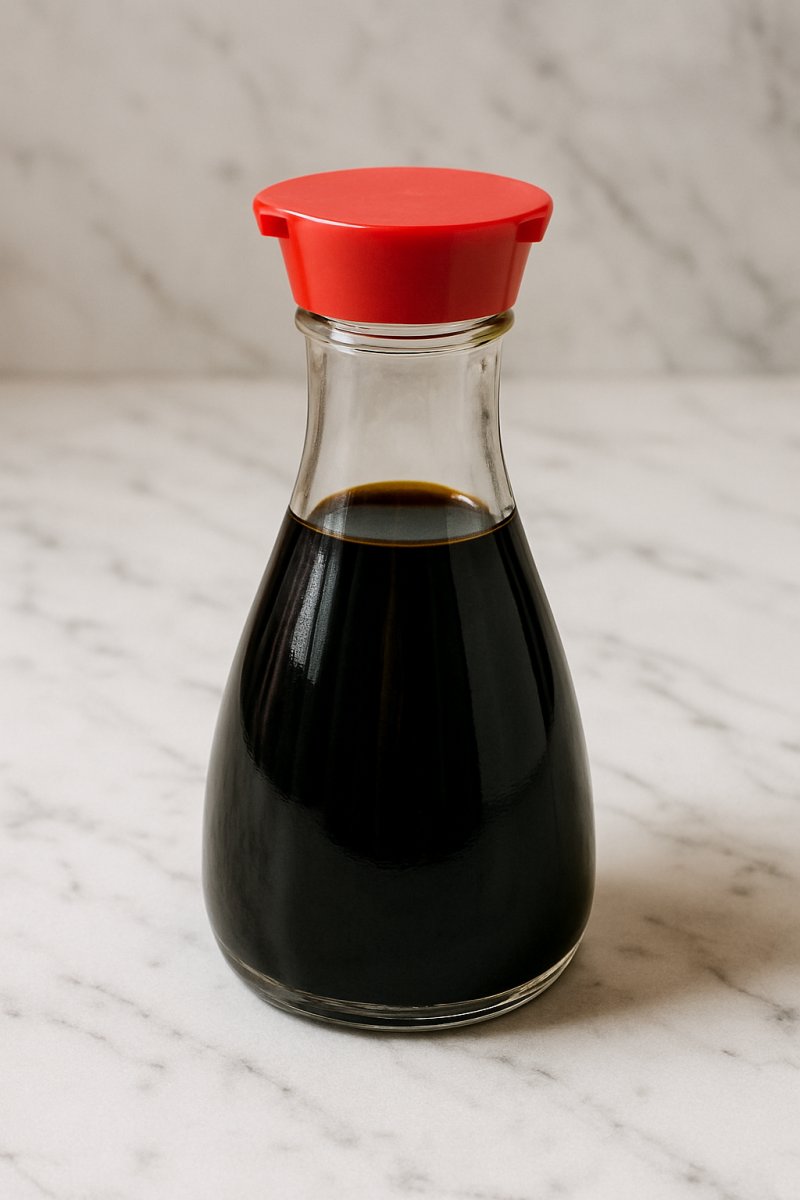
A small bowl with dark soy sauce
I still remember well the first evening when soy sauce in my kitchen turned my idea of seasoning upside down. A friend brought a bottle back from a trip, and the scent alone was so deep and promising that I immediately wanted to start experimenting. Since then this dark, salty liquid has never really left me.

Soy sauce is much more than just a dip for sushi. It is produced by fermenting soybeans, sometimes together with wheat, salt and water, and the variety of production methods makes it a surprisingly multifaceted seasoning. I have learned that there are roughly two directions: the light, saltier variant, which lifts a dish without covering its character, and the dark, aged version, which works with caramel and umami-rich notes.

When I cook, I often reach for soy sauce first, even before I take the salt shaker. It brings not only salt but also depth and complexity. A colleague of mine swears by adding a few drops to the gravy to fill flavor voids. I put it in almost everything: in marinades for vegetables, in soups for a warm base flavor, in dressings where it wonderfully balances the acidity of vinegar.

A small tip from my practice: always taste in small steps. Soy sauce can dominate, but properly dosed it adds nuances you only notice when they are missing. I also like to experiment with regional varieties — Japanese shoyu, Chinese tamari or Filipino patis — each brings its own story to the plate.

  • Use: marinades, soups, sauces, dressings, as a finish.
  • Taste: salty, umami, sometimes slightly sweet or malty.
  • Tips: use sparingly, vary regionally, pay attention to quality.
For me soy sauce is a small bottle full of possibilities: unassuming, but transformative. It connects cultures and cuisines and always reminds me how a single drop can shape the memory of a meal.

Availability & types

Availability and types

Soy sauce is a very common seasoning sauce that you can find in almost any supermarket. It originally comes from East Asia, especially from countries like China, Japan and Korea. There it has been produced for hundreds of years and is an important part of many dishes. Nowadays it is produced all over the world because people everywhere like its mild and salty taste.

The main ingredient in soy sauce is Sonnenbohnen – these are soybeans. These beans are grown in many warm regions. Large growing areas are:

  • China – one of the oldest and largest growing regions.
  • Japan – famous for special varieties with a delicate flavor.
  • South Korea – has its own traditional variants.
  • USA, Brazil and Argentina – many soybeans are also grown here, used for soy sauce or animal feed.
In supermarkets you will find different kinds of soy sauce. The main types can be explained as follows:

  • Light soy sauce – also called “light”. It is thinner, lighter in color and has a salty taste. It is often used in cooking when the food should not become too dark.
  • Dark soy sauce – this is thicker, dark brown and somewhat sweeter due to added ingredients like sugar. It gives dishes a nice color and a more intense flavor.
  • Natural/fermented soy sauce – this is produced when soybeans and often wheat slowly ferment with the help of microorganisms. “Fermenting” means that small living helpers (like bacteria or fungi) transform the ingredients so that a complex flavor develops — similar to cheese or yogurt. Such sauces often taste rounder and more aromatic.
  • Quick-made or chemically produced soy sauce – here a faster process is used instead of long fermentation. These variants are often cheaper but sometimes taste less deep or “refined”.
  • Tamari – this is a Japanese form of soy sauce that often contains little or no wheat. It usually tastes somewhat fuller and is a good choice for people who cannot tolerate gluten.
  • Shoyu – a Japanese name for soy sauce, where wheat is often added. Shoyu has a balanced taste and is used in many Japanese recipes.
  • Reduced-salt soy sauce – for people who need to watch their salt intake. It has less salt but usually a somewhat milder taste.
  • Gourmet or artisanal varieties – small producers make soy sauce using traditional methods and add special flavors. These sauces are often more expensive but particularly flavorful.
When you look for soy sauce in the store, you can pay attention to a few things: check the label for “fermented” if you want a natural taste; look for “tamari” if you want little or no wheat; or choose “light” or “dark” depending on whether your dish needs a strong color. For quick use, the normal supermarket soy sauce is practical; for special dishes a more expensive, slowly produced variety can sometimes be worth it.

In short: soy sauce comes from different countries and in many varieties. It is easy to find, and with a little attention to the label you will find exactly the kind that suits your food.
Details & nutrition

Property Value
Unit ml
Calories per 100 53
Protein per 100 8
Carbohydrates per 100 5
Sugar per 100 0.5
Fat per 100 0.1
Saturated fat per 100 0.02
Monounsaturated fat 0.03
Polyunsaturated fat 0.05
Fiber per 100 0.5
Vitamin C (mg) per 100 0
Vitamin D (IU) per 100 0
Calcium (mg) per 100 30
Iron (mg) per 100 1.5
Nutri-Score C
CO₂ footprint 1.8
Origin Asia, produced worldwide
Gluten-free No
Lactose-free Yes
Nut-free Yes
Vegan Yes
Note High-sodium seasoning, often made with wheat; there are also gluten-free variants made from pure soy.

Technical & scientific information

Soy sauce is a fermented seasoning that originated in East Asia and is used worldwide in cooking. Classic soy sauce is produced by fermenting cooked soybeans and grains, typically wheat, under the action of molds of the genus Aspergillus (e.g. Aspergillus oryzae or A. sojae), followed by a brine mash with lactic acid and alcohol formation by various bacteria and yeasts. This multi-stage microbiological process produces the characteristic aroma, the dark brown color and the high content of free amino acids, particularly glutamate, which is responsible for the savory-umami taste note.

Chemical composition and ingredients can be roughly divided into several groups:

  • Proteins and amino acids: proteolysis breaks down soybean proteins into peptides and free amino acids; L-alanine, L-glutamate and other amino acids contribute to taste.
  • Carbohydrates and sugars: enzymes break down starch from grains and possibly other polysaccharides into maltose and simple sugars that serve as substrates for yeasts and contribute to Maillard reactions.
  • Salt (sodium chloride): in commercial soy sauce salt typically makes up 14–18 % of the mass and serves both as a flavoring and as a preservative.
  • Organic acids and alcohols: lactic acid, acetic acid and ethanol are formed during fermentation and influence pH, shelf life and aroma.
  • Colorants and aroma compounds: Maillard reactions and other chemical transformations generate melanoidins and volatile aroma compounds such as sulfides, aldehydes and pyrazines.
Nutritional values vary by type and production method, but a typical light soy sauce contains per 100 g about 50–80 kcal, 10–12 g protein, very little fat and around 4–7 g available carbohydrates. However, the sodium content is high; a single tablespoon can provide 700–1000 mg of sodium, which is relevant for people with hypertension or salt-sensitive diets.

Production methods can be divided into three main categories: traditional fermentation, accelerated fermentation and chemical hydrolysis. In traditional fermentation a koji (a mold-supported product made from beans and grains) is prepared and then fermented in brine for months to years. This method yields complex aromas and natural enzymes. Accelerated processes use controlled enzymes, specific microorganisms and warmer conditions to shorten maturation. Chemically hydrolyzed soy sauces are produced by acid hydrolysis of soy protein; they quickly deliver high amounts of free amino acids but are aromatically different and can contain unwanted by-products such as 3‑MCPD (3‑monochloropropanediol) if not properly purified.

From a health perspective there are several aspects to consider. Positive are the contribution of essential amino acids, bioactive peptides and antioxidant compounds that can occur in fermented products. Negative is primarily the high sodium load, which can increase the risk of high blood pressure. Fermented products can also contain small amounts of biogenic amines such as histamine, which can trigger reactions in sensitive individuals. In chemically hydrolyzed variants attention should be paid to residues of process by‑products; however modern production methods and regulations have significantly reduced these risks.

Sensorily, one distinguishes light (usukuchi), dark (koikuchi) and thicker variants as well as regional specialties like tamari, which often contains little or no wheat and is therefore of interest to people with wheat intolerance. For nutrition‑conscious consumers low‑sodium variants or reduced usage are options to gain flavor benefits without excessive salt intake.

In summary, soy sauce is a chemically and microbiologically complex product whose character arises from the interaction of enzymes, microorganisms, salt and heat. Quality and health properties strongly depend on the production method and the choice of raw materials, which is why fermented, traditionally made soy sauces are often considered advantageous in terms of flavor and ecology, while industrial alternatives should be evaluated in a differentiated way regarding nutrition and safety.

Wiki entry for: soy sauce
Active now: 20 visitors of which 2 logged-in members in the last 5 minutes