Menu & categories

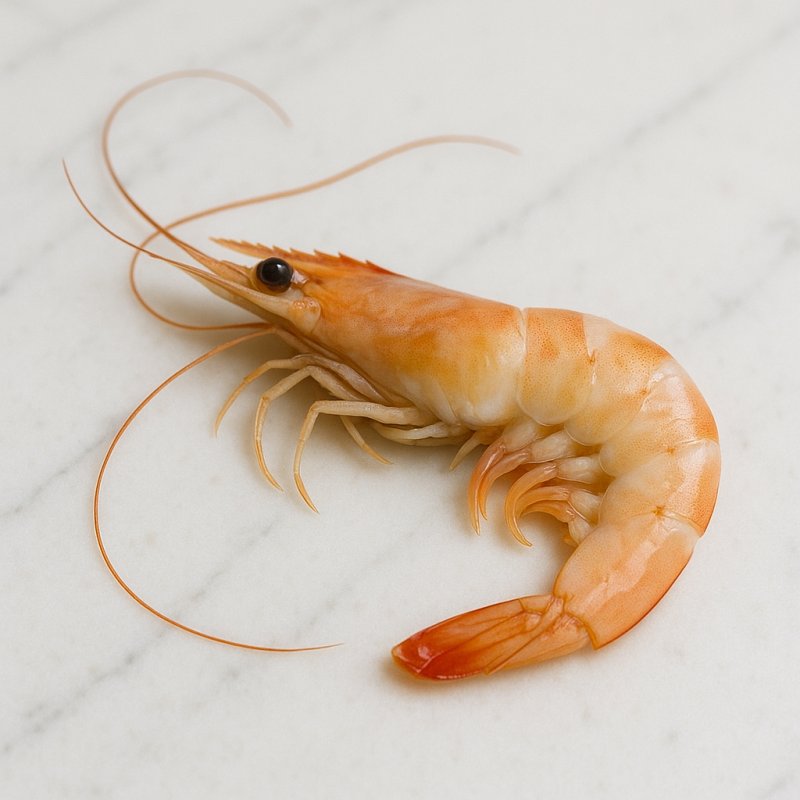
Shrimps

Lean crustacean with high-quality protein and iodine

Wiki about shrimp Nutri-Score B Vegan No Gluten-free Yes Lactose-free Yes Nut-free Yes
NUTRITION / 100 g
99 kcal 24 g Protein 0.2 g Kohlenhydrate 0.8 g Fett

Introduction

Raw shrimp in shell lying on ice
I still clearly remember my first conscious contact with shrimp: a mild summer evening, a market stall at the harbor and the scent of lemon and garlic in the air. Since then shrimp have had a permanent place in my kitchen and in my memories. They are versatile, quick to prepare and at the same time a culinary statement that turns simple home cooking into something special.

What has always fascinated me about shrimp is their ability to adapt to any method of preparation. Whether in a spicy pan with chili and garlic, as the classic Camarones al Ajillo or as a gently cooked ingredient in a creamy pasta — shrimp bring a delicate sweetness and a fine texture that enhances many dishes. A colleague of mine swears by cooking shrimp briefly at high heat, otherwise they quickly become tough; I have internalized this rule and have often relied on it to save a dinner.

From a nutritional point of view shrimp are a smart choice: they provide high-quality protein, are relatively low in fat and contain important minerals like iodine and selenium. That makes them a pleasant option for people who want to eat consciously without giving up enjoyment. Still it is worth paying attention to origin and catch method, because sustainability affects the taste and the future of our seas.

When shopping I always look for signs of freshness: a clear smell of the sea, no dark spots on the body and a firm texture. Frozen shrimp are often practical and just as tasty if they are properly thawed. I once experimented and served raw, marinated shrimp as a "sushi alternative" — a risky but pleasing attempt that caused great amazement at a small dinner party.

  • Cooking tip: Cook briefly at high heat, otherwise they become tough.
  • Seasoning idea: Lemon, garlic, chili and fresh herbs harmonize excellently.
  • Sustainability: Pay attention to certifications and regional fishing methods.
Shrimp are for me more than just an ingredient; they are a small everyday luxury and at the same time a reliable party trick. Every time I heat the pan and the shrimp slide in, I know that something good will come of it — sometimes simple and delicious, sometimes surprisingly creative. Thus the desire for shrimp always remains present, both in my kitchen and in the stories I tell about them.

Availability & types

Availability and types of shrimp

Shrimp are small crustaceans that live in many seas and rivers around the world. Because they are so popular, they come in different forms and from different regions. When you look for shrimp at the supermarket or fishmonger, you can pay attention to some terms and differences so you find the right variety.

Origin and production areas

  • Wild catch: Some shrimp are caught in the wild – this is called wild catch. It often happens in coastal areas, for example in the Northeast Atlantic, in the waters off South America or in Southeast Asia. Wild-caught shrimp swim freely and often have a robust flavor.
  • Aquaculture (shrimp farms): Many shrimp today come from aquaculture. These are farms where people raise shrimp in tanks or ponds. Large producing countries include Vietnam, India, Thailand, Ecuador and China. Aquaculture helps make more shrimp available because harvesters are not only dependent on the sea.
A simple comparison: wild catch is like apples picked directly from the tree, while aquaculture is like an orchard where people tend the plants so they grow regularly.

Available varieties and sizes

  • Shrimp by size: Shrimp are often sorted by size. There are very small ones (used for salads or soups), medium and very large shrimp that can be grilled or pan-fried. Sometimes the package shows a number like 16/20 – that indicates how many shrimp are contained per pound (approx. 450 g). A higher number generally means smaller shrimp.
  • Shrimp species: There are different species, for example North Sea shrimp (small and delicate), tiger shrimp (with dark stripes, often very large) and freshwater shrimp (from rivers or ponds). Each species looks a bit different and has its own taste.
  • Shrimp with or without shell: You can find shrimp fresh with shell, peeled or peeled and deveined (the dark "strand" along the back has been removed). Peeled shrimp are easier to eat, but shrimp with shell often retain more flavor during cooking.
Fresh, frozen or precooked

  • Fresh: Fresh shrimp come straight from the market or fishmonger. They are often not yet cooked. Look for a good smell (not "fishy" or unpleasant) and clear eyes on the animals – this indicates they are truly fresh.
  • Frozen: Many shrimp are frozen because this keeps them shelf-stable longer. Frozen shrimp can taste just as good as fresh if they are thawed correctly.
  • Precooked: Some shrimp are already cooked and then often sold frozen or in cans. These are convenient because you only need to reheat them or use them cold in salads.
What to watch for

  • Check origin labels: sometimes it states which country the shrimp come from.
  • When buying in store you can ask whether the shrimp are from wild catch or aquaculture.
  • If you care about animal welfare and the environment, there are also labels and information on responsible fisheries or sustainable farming – just ask in the shop if you want to know more.
In summary: shrimp are available fresh, frozen or precooked, from the wild or from farms, in many different species and sizes. Depending on what you want to cook – soup, pasta, grilling or salad – you will find the appropriate type of shrimp at the supermarket or fishmonger.

Details & nutrition

Property Value
Unit g
Average weight per piece 15
Calories per 100 99
Protein per 100 24
Carbohydrates per 100 0.2
Sugar per 100 0
Fat per 100 0.8
Saturated fat per 100 0.2
Monounsaturated fat 0.1
Polyunsaturated fat 0.3
Fiber per 100 0
Vitamin C (mg) per 100 0
Vitamin D (IU) per 100 40
Calcium (mg) per 100 70
Iron (mg) per 100 2.0
Nutri-Score B
CO₂ footprint 4.0
Origin Wild-caught or aquaculture, depending on the product
Gluten-free Yes
Lactose-free Yes
Nut-free Yes
Vegan No
Note Nutritional values for raw shrimp without shell, without additives; may have elevated cholesterol levels.

Technical & scientific information

Shrimp are shell-bearing, jointed crustaceans from the group of ten-footed crustaceans (Decapoda), which worldwide are both wild-caught and farmed in aquaculture. The term covers various species, including saltwater and freshwater species such as the common shrimp (Crangon crangon) or the white and tiger-like species (e.g. Litopenaeus vannamei). Morphologically, shrimp are characterized by a flattened body with a clearly delineated head-thorax segment (cephalothorax), a segmented abdomen and five pairs of walking legs. Many species possess a hard chitinous exoskeleton that is renewed by molting during growth.

Chemical composition and nutritional values
Shrimp consist mainly of water (about 70–80% of fresh weight), followed by proteins, lipids and minerals. Protein content typically ranges between 18 and 24% of fresh weight and contains all essential amino acids, making shrimp a high-quality protein source. Fat content is relatively low (usually 1–3%), however the lipids contain a high proportion of polyunsaturated fatty acids, particularly omega-3 fatty acids such as eicosapentaenoic acid (EPA) and docosahexaenoic acid (DHA), albeit in lower amounts than in fatty fish. Shrimp are also rich in minerals such as sodium, potassium and phosphorus and particularly in trace elements such as iodine, zinc and selenium. Cholesterol content is elevated compared to some other seafood; nevertheless many studies indicate that moderate consumption in healthy individuals does not necessarily have a negative effect on cardiovascular risk, as beneficial fatty acids and proteins exert a balancing effect.

Biochemical and sensory properties
Shrimp muscle contains structural proteins such as actin and myosin as well as CDs-typical binding proteins, which during cooking produce the characteristic firm, elastic bite. When heated, muscle proteins denature and aggregate, thereby changing texture and color. The pink to orange coloration after cooking results mainly from the carotenoid astaxanthin, which is bound to proteins and released by heat. Aroma-active compounds arise from Maillard reactions and the thermal breakdown of amino acids and nucleotides; additionally volatile sulfur- and nitrogen-containing compounds contribute to the typical marine aroma.

Processing methods
Shrimp are marketed fresh, chilled, frozen, peeled, cooked, dried, salted or canned. Common processing steps include:

  • Blast chilling or quick freezing for preservation and minimization of microbial activity.
  • Peeled and deveined (removal of the intestinal tract) to improve sensory quality and storage stability.
  • Pre-cooking (blanching) before freezing to stabilize texture and color.
  • Marinating, curing or smoking as finishing processes.
Safety and health aspects
Several aspects are relevant for food safety. Allergenic proteins in shrimp, including tropomyosin, can trigger severe allergic reactions in sensitized individuals. Cross-reactions with other crustaceans and sometimes with house dust mites have been described. Microbiological hazards increase with improper storage due to psychrotrophic bacteria. In addition shrimp can accumulate residues of veterinary and plant protection agents, antibiotics or heavy metals depending on the catch area or farming conditions; therefore appropriate controls are important.

Ecological and nutritional significance
Shrimp production has a large impact on global dietary patterns, as it provides a protein-rich, rapidly available food source. However intensive aquaculture leads to ecological problems such as habitat loss (e.g. mangrove clearing), nutrient input, disease spread and the use of chemicals. Sustainability initiatives and certifications aim to promote best practices, including improved feeding, recirculating systems and increased supply chain transparency.

In summary shrimp are nutritionally valuable seafoods with high protein content, beneficial fatty acids and important micronutrients; their quality and safety strongly depend on catch, farming and processing conditions, while ecological issues play a central role for responsible use.

Wiki entry for: shrimp
Active now: 12 visitors of which 2 logged-in members in the last 5 minutes