Menu & categories

Sausage

Savory meat product – fat and salt content vary depending on the type.

Wiki about sausage Nutri-Score D Vegan No Gluten-free No Lactose-free No Nut-free Yes
NUTRITION / 100 g
300 kcal 14.0 g Protein 2.0 g Kohlenhydrate 27.0 g Fett

Introduction

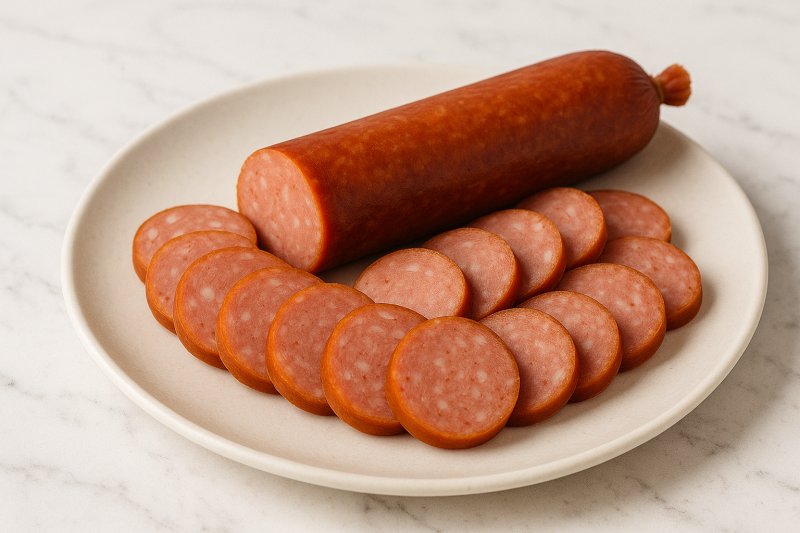
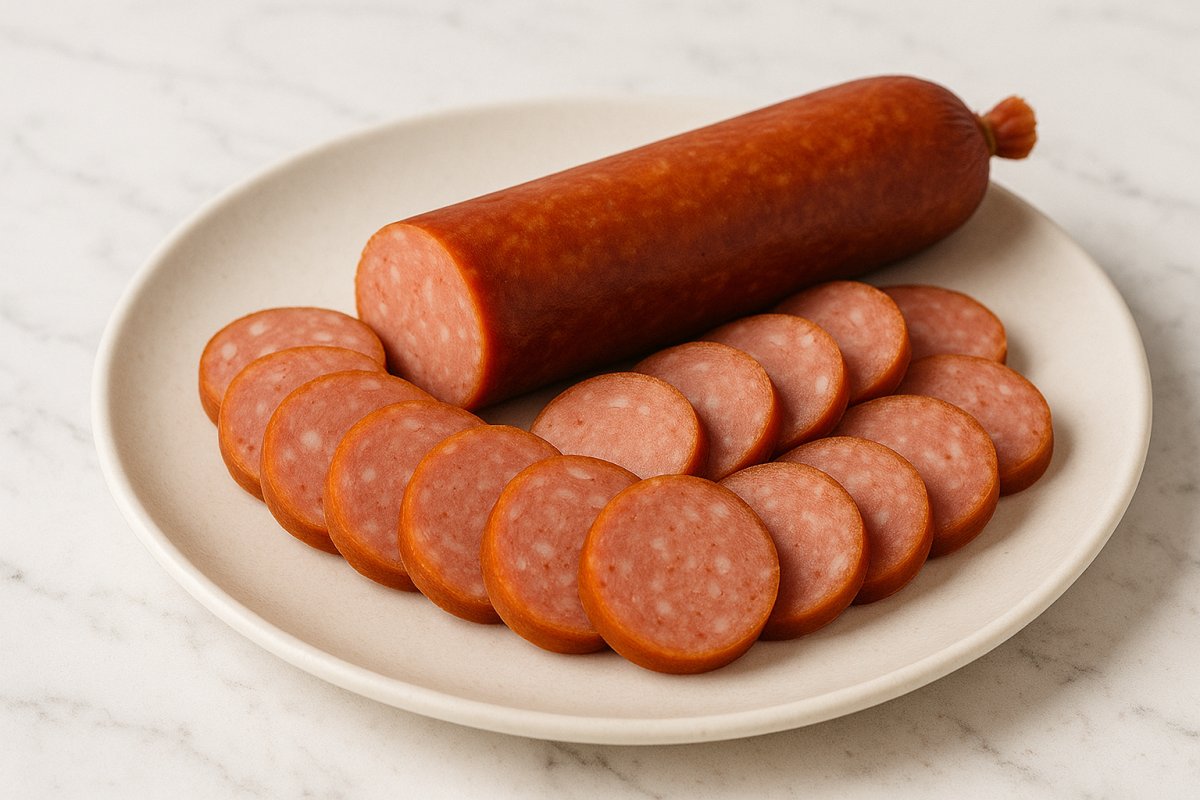
Sliced sausage on a board
Sausage feels to me both familiar and fascinating. When I think of sausage, I don't just see a plate, but whole street markets, damp butcher shops and the lively mood at a picnic in the park. I still remember a market stall where the vendor handed me pieces of a smoky Landjäger while mist hung over the stalls and people searched for the best breakfast of the day.

Sausage is variety in a casing. It can be hearty, mild, air-dried or fresh. A colleague once brought homemade merguez into the office, and I was surprised how much spices and heat can change the flavor. The casing, the texture, the herbs — everything tells a story about the region, tradition and the people who make them.

For me sausage is also always a matter of meeting people. On a trip through Spain I sat with strangers at a table and shared chorizo braised in red wine. Simple things often connect the most: a knife, a slice, a conversation. Of course there are technical sides too: curing, smoking, stuffing and maturation times, and I like how artisanal precision meets pure sensuality.

  • Bratwurst – ideal grilled, juicy and flavorful.
  • Salami – air-dried, perfect on a cheese board.
  • Chorizo – boldly spiced, good for stews.
  • Leberwurst – spreadable, comforting on bread.
When cooking I love simplicity: a thick slice in a hot pan, a gentle simmer in a sauce or the crispy end on the grill. I have learned that the best sausage is the one made with respect for the product and shared with joy. That creates memories that linger long after the last bite.

Availability & types

Availability and types of sausage

Sausage is not a plant that grows, but a food made from meat and spices. You can think of sausage a bit like different kinds of bread: there are many types, shapes and flavors depending on where they are made and what ingredients are used. You can get sausage almost everywhere: at the supermarket, at the butcher (the meat seller), at the weekly market or directly from small producers in the countryside.

Origin and "production areas"
Because sausage is made from meat, people talk about regions of origin or places of production rather than cultivation areas. Important regions where many different sausages are made include:

  • Germany: For example Thuringia (Thüringer Rostbratwurst), Bavaria (Weißwurst) and the Rhineland. Each region has its own recipes.
  • Italy: Famous for salami and various air-dried sausages.
  • Spain: Known for chorizo, which is often spicier and redder due to paprika.
  • France and Eastern Europe: There are also many traditional varieties there, like saucisson or kabanossi.
  • Local butcheries: Small artisanal businesses often make special varieties that are only found in the region.
These regions are important because traditions, climate and the spices used make sausages taste different — similar to cheese or bread.

Available types and variants
Sausage comes in many forms. Here are the main groups, simply explained:

  • Fresh sausages: These include Bratwurst or Bockwurst. They are raw and must be cooked or fried. You can take them home and prepare them immediately in the pan.
  • Cooked sausages (Brühwürste): These sausages are already cooked, i.e. boiled or scalded. Examples are Vienna sausages (Wiener Würstchen) or Fleischwurst. You can eat them cold or briefly warm them.
  • Raw sausage types (air-dried or matured): Salami or many Italian sausages belong here. They are dried for a long time and can be eaten without cooking. It's like baking bread for a long time — then it keeps longer.
  • Smoked sausages: These sausages have been exposed to wood smoke. That gives a smoky aroma, for example in Krakauer or some ham sausages.
  • Specialty sausages: Leberwurst (with liver), Blutwurst (with blood) or sausages with special spices. Some sausages are softer, others firmer.
  • Vegetarian/vegan alternatives: There are now sausages without meat, made from beans, soy or mushrooms. They look and taste similar but are plant-based.
How do I find the right sausage?
When you shop, it helps to look at the label: does it say "fresh", "cooked", "smoked" or "air-dried"? That tells you how to prepare the sausage and how long it will keep. Fresh sausages must be kept in the refrigerator and eaten quickly, while air-dried varieties last longer.

Sausage is therefore very diverse — like a shelf full of different breakfast rolls. Try different varieties, ask the butcher for recommendations and discover which sausages you like best. This way you quickly learn which sausage suits which dish and where your favorite sausage comes from.
Details & nutrition

Property Value
Unit g
Calories per 100 300
Protein per 100 14.0
Carbohydrates per 100 2.0
Sugar per 100 1.0
Fat per 100 27.0
Saturated fat per 100 10.0
Monounsaturated fat 12.0
Polyunsaturated fat 3.0
Fiber per 100 0.0
Vitamin C (mg) per 100 0.0
Vitamin D (IU) per 100 40
Calcium (mg) per 100 20
Iron (mg) per 100 1.2
Nutri-Score D
CO₂ footprint 6.0
Origin Germany/Europe (depending on the producer)
Gluten-free No
Lactose-free No
Nut-free Yes
Vegan No
Note Values are indicative for average scalded/cooked sausages; actual nutritional values vary widely by variety (e.g., salami, Lyoner, liver sausage) and recipe.

Technical & scientific information

Sausage refers to a diverse group of meat preparations in which pieces of meat, forcemeat or meat emulsions are filled into a casing and made shelf-stable or refined through various processing steps. The raw materials used typically come from pork, beef, poultry or game; increasingly blends with plant proteins are also offered. Sausage products vary widely in composition, manufacturing methods and degree of maturation, ranging from raw sausage to cooked sausage to types of ham.

Chemical composition and ingredients: Sausage consists primarily of water, proteins and fat. The water content ranges by type from about 40 to 70%, fat content typically varies from 10 to over 40% and influences texture, flavor and energy density. Protein components are mainly myofibrillar proteins (e.g. myosin, actin), which are solubilized during comminution and salting and form a gel-like matrix. Also present are:

  • Lipids: triacylglycerols and phospholipids, which shape flavor and mouthfeel.
  • Collagen and connective tissue, which can be converted to gelatin by heating.
  • Salts (primarily NaCl) for protein extraction, preservation and seasoning.
  • Curing salts (nitrite/nitrate) for color fixation, flavor and inhibition of Clostridium botulinum.
  • Phosphates to improve water binding and stabilize texture.
  • Spices, sugars, starter cultures in raw or fermented sausages and antioxidants (e.g. ascorbates).
Nutritional values (typical ranges per 100 g): Energy content is usually between 200 and 400 kcal. Protein content is often between 12 and 25 g, carbohydrates are low in pure meat sausages (0–5 g), sodium content is often high (several hundred to >1,500 mg). The share of saturated fatty acids depends on fat content and animal species.

Processing methods: Key steps include comminution/cutting, salting, kneading or emulsifying, filling into casings, possibly smoking, heating (scalding, baking), fermentation and drying. In raw sausages starter cultures (Lactobacillus, Pediococcus) are used; by producing lactic acid they lower pH and thus influence shelf life and aroma. Drying reduces water activity (aw) and inhibits microbial growth, while smoking introduces phenolic compounds that also have a preservative effect.

Microbiology and food safety: By combining pH reduction, salt, nitrite and reduction of water activity, pathogenic microbes can be controlled. Nevertheless, risks remain with improper processing or storage: Listeria monocytogenes, Salmonella spp. and Clostridium species can occur. Nitrite acts as an inhibitor against Clostridium botulinum and stabilizes the red color by forming nitrosomyoglobin. However, at high temperatures and in the presence of certain amines the formation of nitrosamines can occur, which are considered carcinogenic; therefore ascorbates are added to reduce these reactions.

Health aspects: Sausage provides high-quality proteins, B vitamins (including B12), heme iron and zinc, but can be viewed critically because of high fat and sodium content and processing-related substances. Epidemiological studies led to the classification of processed meat as carcinogenic (IARC Group 1) with an association to colorectal cancer; suggested mechanisms include formation of nitrosamines, pro-oxidative effects of heme iron and inflammatory processes caused by N-oxides and lipid oxidation products.

Conclusion: Sausage is a technological food product with complex composition and diverse manufacturing processes that control texture, flavor and shelf life. Nutritionally it offers valuable nutrients, while there are modulating risks due to high sodium and fat content and chemical compounds formed or added during processing. Technological measures such as controlled fermentation, optimized nitrite usage, antioxidants and good hygiene practices serve to ensure safety and quality and to minimize health risks.

Wiki entry for: sausage
Active now: 12 visitors of which 2 logged-in members in the last 5 minutes