Menu & categories

Sauce binder

Starch-based binding agent for thickening sauces and soups

Wiki about sauce thickener Nutri-Score C Vegan Yes Gluten-free No Lactose-free Yes Nut-free Yes
NUTRITION / 100 g
360 kcal 0.3 g Protein 89 g Kohlenhydrate 0.1 g Fett

Introduction

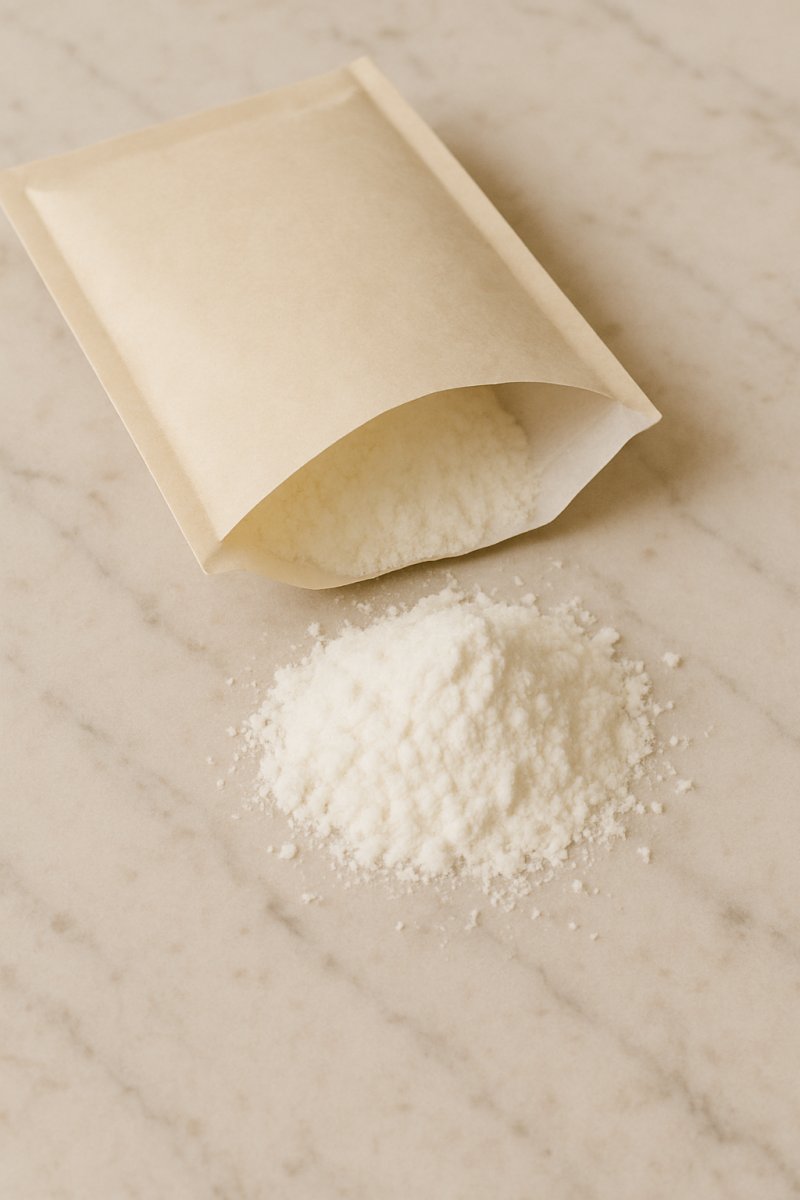
Dry sauce binder in a spoon next to a bowl of sauce
I still remember well the first time someone told me about Sossenbinder: it was at an improvised dinner with friends, and a colleague pulled a small packet out of her bag as if it were a secret recipe. Curious as I am, I wanted to know immediately what this unassuming powder carrying so much enthusiasm could do.

To me, Sossenbinder is one of those kitchen helpers that are both practical and underrated. It is a hybrid between a thickening agent and a flavor support, usually based on flour, starch or hydrocolloids, sometimes supplemented with dried vegetable or mushroom powders. In my kitchen I use it when I want a smooth sauce quickly without lumps and without hours of reduction. I enjoy the quiet moment when a too-thin jus suddenly comes together and shines — almost like a small magic trick.

What I particularly appreciate is the versatility. Sossenbinder:

  • binds liquid sauces evenly,
  • helps stabilize textures,
  • saves time on elaborate reductions,
  • and can, depending on the blend, season subtly.
Once, on a summer picnic, I had to improvise cooking for a hungry group of ten people. The cream sauce for the pasta was too thin, and my improvised dry kit with Sossenbinder saved not only the dish but also my composure. The guests noticed nothing of the rescue operation — only clean plates and requests for seconds.

Of course there are limits: fresh reductions have a depth that a powder does not fully achieve. Sossenbinder is therefore not a substitute for careful cookery, but rather a reliable assistant for days when time or nerves are short. For people with special dietary needs it's worth checking the ingredient list, because composition and additives vary greatly.

In closing: I see Sossenbinder as a charming kitchen companion — pragmatic, understated and often life-saving. In my pantry it has a fixed place, alongside other small helpers that make cooking easier and sometimes even a little magical.

Availability & types

Availability and types of Sossenbinder

Sossenbinder are practical helpers in the kitchen that thicken sauces and give them a nice, smooth consistency. Although the name may sound like something specific, Sossenbinder are usually simple mixes of flour, starch or other binding agents that you find in a small packet at the supermarket. They are widespread and available in most food stores – from large supermarkets to small corner shops.

Origin
The idea behind Sossenbinder is old: people have long sought ways to make soups and sauces more substantial. In the past, flour, butter or egg yolks were used. Today Sossenbinder are produced industrially. Ingredients such as wheat flour, corn starch or potato starch are used. These ingredients come from plants grown in fields. If the packaging, for example, says wheat, it means the binder was made from cereals. If it says corn, it comes from corn kernels.

Growing regions
The raw materials for Sossenbinder are grown in many regions of the world. Some typical growing areas are:

  • Wheat: Wheat is widely grown in Europe, North America and parts of Asia. Large wheat fields can be found in Germany, France and Russia.
  • Corn: Corn fields are found mainly in North America (for example in the USA), but also in southern Europe and South America.
  • Potatoes: Potatoes, from which potato starch is made, are grown in many European countries, such as Germany, Poland and the Netherlands.
You can picture it like this: farmers plant these crops, harvest the grains or tubers and then send them to factories. There the flour or starch is extracted, dried and packaged into small packets for the kitchen.

Available varieties and variants
Sossenbinder are available in many different types – depending on what you want to thicken or what preferences you have. Here are some simple explanations of the most common types:

  • Flour-based binders (e.g. wheat flour): This is the classic variant. You stir a little flour into the sauce, sometimes mixed with cold liquid to avoid lumps. Good for light and dark sauces.
  • Starch-based binders (corn or potato starch): Starches make sauces clearer and glossier compared with flour. They are often used where a finer consistency is desired, such as in fruit sauces or thin broths.
  • Ready mixes: Supermarkets also sell ready-made Sossenbinder mixes that contain spices or stock. These are convenient because they provide flavor and binding together.
  • Gluten-free variants: For people who cannot tolerate gluten there are Sossenbinder made from corn or potato starch or other gluten-free ingredients. These work similarly to regular binders.
  • Vegan/alternative products: Some binders are made specifically without animal ingredients, which is important for vegans.
Overall Sossenbinder are easy to find and come in many forms. The next time you have a sauce that's too thin, you can check the shelf: it is usually clearly labeled whether it is flour-, corn- or potato-starch based, or whether spices are already included. This way you quickly find the right variant for your dish.
Details & nutrition

Property Value
Unit g
Calories per 100 360
Protein per 100 0.3
Carbohydrates per 100 89
Sugar per 100 0.5
Fat per 100 0.1
Saturated fat per 100 0.05
Monounsaturated fat 0.01
Polyunsaturated fat 0.04
Fiber per 100 0.5
Vitamin C (mg) per 100 0
Vitamin D (IU) per 100 0
Calcium (mg) per 100 5
Iron (mg) per 100 0.2
Nutri-Score C
CO₂ footprint 0.7
Origin Depending on the manufacturer, usually made from wheat or corn starch; production predominantly in Europe
Gluten-free No
Lactose-free Yes
Nut-free Yes
Vegan Yes
Note Nutritional values for a commercial sauce binder, consisting predominantly of modified starch in powder form. Exact composition may vary by manufacturer (e.g., proportion of wheat vs. corn starch, additives).

Technical & scientific information

Sossenbinder is a common collective term for dry binding agents used to thicken and stabilize sauces, ragouts and fonds in the kitchen. Technically they are usually powdery mixes of starches, flours, milk or egg powders, and additives such as emulsifiers, thickeners and flavor enhancers. The formulations are designed for rapid solubility and a uniform consistency so that users with low handling sensitivity can achieve reproducible results.

Chemical composition and typical ingredients
The base of many Sossenbinder consists of plant starches, primarily wheat starch, corn starch or potato starch. These polysaccharides are made up of amylose and amylopectin, whose ratio determines thickening behavior: amylose forms stronger gels, amylopectin yields creamier, less retrograding structures. In addition, flours (e.g. wheat flour) are often used, supplying proteins and additional starch. Other components include:

  • Emulsifiers (e.g. mono- and diglycerides): promote mixing of fat and water phases.
  • Modified starches: chemically or physically treated starches that are more heat- and pH-stable and allow consistent behavior during heating and cooling.
  • Thickeners such as guar gum or xanthan may be added for certain textures.
  • Flavor ingredients including salt, yeast extract or spice blends for rounding out the taste.
  • Preservatives and anti-caking agents (e.g. silicon dioxide): improve shelf stability and flowability.
Nutritional values and labeling
Nutritional information varies by recipe; typical Sossenbinder are carbohydrate-rich due to the starch content and contain relatively low amounts of fat and protein. Per 100 g calories usually fall in the range of 300–370 kcal, carbohydrates dominate with 70–85 g, while fat and protein amounts are typically below 5–10 g. Salt content can vary greatly depending on seasoning. In industrial products, declarable allergens such as gluten (from wheat) must be clearly indicated.

Processing methods
Sossenbinder are generally dispersed in cold liquid and then heated so that the starch swells and gels. Some physical parameters should be considered:

  • Temperature: gelatinization temperature differs by starch type; corn and wheat starch often gelatinize between 60–75 °C.
  • Shear rate and stirring: even stirring prevents lump formation; emulsifiers support distribution in fatty sauces.
  • pH stability: starches are sensitive to strong acid; modified starches or hydrocolloids increase stability at low pH.
Scientific and health aspects
From a nutritional perspective Sossenbinder mainly provide utilizable carbohydrates. People with celiac disease or gluten intolerance must pay attention to gluten-free variants (e.g. based on corn or potato starch). Modified starches are generally regarded as safe; however they are subject to food regulations and labeling requirements. Excessive use of highly salted or flavored mixes can contribute to increased sodium intake.

Sensory and functional properties
The choice of binder influences mouthfeel, viscosity, transparency and the flavor balance of the sauce. Potato starch often produces a transparent, smooth texture, while wheat starch tends to give slightly cloudy, fuller sauces. Combinations with proteins or fats change the gel structure and heat stability. Industrial Sossenbinder are formulated to show as little retrogradation (firming) as possible on reheating or cooling.

In summary, Sossenbinder are technically optimized starch-based mixes that, through targeted additives, ensure controlled binding, stability and sensory quality of sauces. For consumers, ingredient lists and allergen labeling are important sources of information to choose suitable products and account for dietary restrictions.

Wiki entry for: sauce thickener
Active now: 15 visitors of which 2 logged-in members in the last 5 minutes