Menu & categories

Sardines in oil

Sardines preserved in oil as a protein-rich canned fish

Wiki about sardine in oil Nutri-Score C Vegan No Gluten-free Yes Lactose-free Yes Nut-free Yes
NUTRITION / 100 g
250 kcal 23 g Protein 0 g Kohlenhydrate 17 g Fett

Introduction

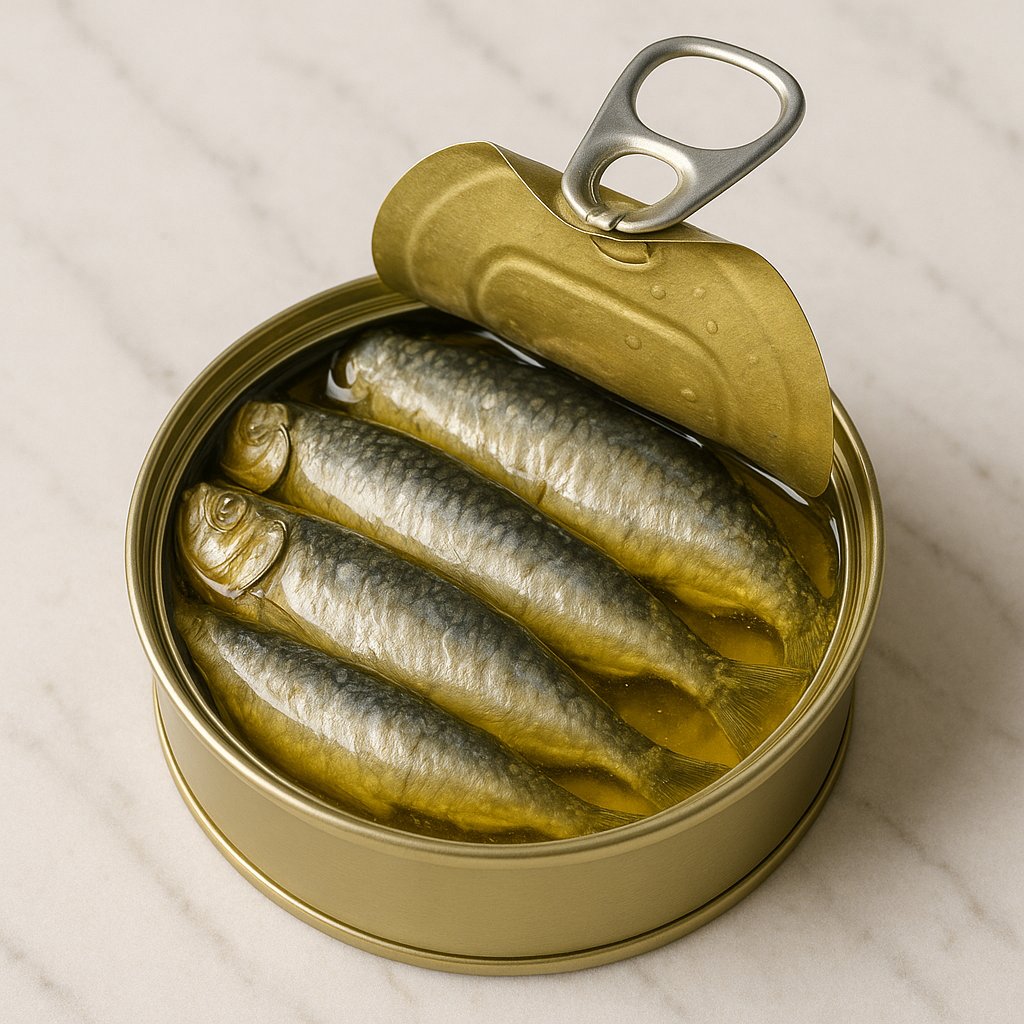
Sardines in oil in an opened can
I still remember exactly the first evening I seriously thought about oil-packed sardines: it was late, the fridge was an open-air theatre of leftovers and I had opened a tin of sardines, simply because the idea of yet another frozen pizza seemed unbearable. As soon as I opened the tin that salty, oil-soaked scent rose up, which felt surprisingly comforting. I took a piece onto some crusty bread, closed my eyes and decided: This deserves more respect.

Oil-packed sardines are small miracles in a can. They come in different oils — often olive or sunflower oil — and bring a compact load of flavour and nutrients. I have encountered them in many kitchens: as a quick snack after sports, as a hearty ingredient in salads, but also in more elegant combinations when I wanted to surprise guests. A colleague of mine swears by serving them on warm potatoes with herbs; he calls it his "quick Sunday ritual".

Why I appreciate oil-packed sardines:
  • Versatility: They work on their own, as a bread topping, in pasta or as a flavouring in sauces.
  • Shelf life: The tin makes them available at any time — a small reserve for spontaneous cooking moods.
  • Nutritional value: Omega‑3 fatty acids, protein and important minerals are present in every bite.
Of course there are quirks: some tins taste intensely fishy, others are milder; the oil plays a big role. I have learned to keep the liquid and occasionally use it in dressings, because it is a concentrated carrier of flavour. In a particularly creative phase I mixed sardines with capers, lemon zest and a little mustard into a savoury spread — the result was surprisingly delicate and disappeared faster than I could photograph it.

Today, when I open a tin of oil-packed sardines, it's less an emergency measure and more a deliberate choice. It's a small, honest food that carries stories of coasts, tradition and uncomplicated enjoyment. Sometimes it's exactly what you need: simple, powerful and full of flavour.

Availability & types

Availability and types of oil-packed sardines

Oil-packed sardines are small fish often sold in tins. They are easy to find in many supermarkets around the world. You can buy them in large supermarkets, delicatessens, health food stores or online. Because they are preserved in tins, they have a long shelf life and are therefore practical when you want something to eat quickly or when stocking up.

Origin
Sardines come from the sea. Depending on which sea they were caught in, they can look or taste slightly different. Popular fishing areas include:

  • Atlantic: Off the coasts of Spain, Portugal and Morocco there are many sardines. These are often mild in flavour.
  • Mediterranean: Sardines from the Mediterranean are popular in many European countries and are often used in regional cuisine.
  • Pacific: Sardines are also caught on the west coast of North and South America and in parts of Asia.
Sometimes the tin indicates where the fish were caught. That helps to know if the sardines come from a region you prefer.

Available varieties and options
There are different ways sardines are sold in cans. These differences concern the oil, the spices and how the fish were prepared. Here are the most common variants, explained simply:

  • In sunflower oil: This is a neutral option. The sardines taste more like fish and the oil is mild. Many people like it because it doesn't mask the natural flavour.
  • In olive oil: Olive oil gives a rounded, slightly fruity taste. This variant often seems a bit more premium and pairs well with bread or salads.
  • In soy or vegetable oil: These oils are inexpensive and keep the fish moist. In terms of flavour they are restrained, similar to sunflower oil.
  • With tomato sauce: Here the sardines are packed in a spicy tomato sauce. This is convenient for pasta or as a snack on bread.
  • With spices or spicy: Some cans are seasoned with pepper, chili or herbs. This makes them more aromatic and sometimes spicier.
  • Smoked or grilled: Some sardines are lightly smoked or grilled before being canned. This gives a smoky flavour, similar to grilled meat.
  • "Whole" or "filleted": Whole sardines have head and bones, but are often cooked so that the bones are edible. Fillets are without head and large bones and therefore particularly practical for children or people who do not like bones.
  • Organic and sustainable options: There are cans with organic labels or indications of sustainable fishing. This means that care was taken during catching to avoid overfishing stocks and to reduce environmental impact.
Simply put: oil-packed sardines come in many flavours and types of oil, and they originate from different seas. If you read the label, you often see where the sardines were caught and how they were prepared. That way you can easily choose a variety you like — like with ice cream: vanilla, chocolate or strawberry, only for fish!
Details & nutrition

Property Value
Unit g
Average weight per piece 25
Calories per 100 250
Protein per 100 23
Carbohydrates per 100 0
Sugar per 100 0
Fat per 100 17
Saturated fat per 100 4
Monounsaturated fat 7
Polyunsaturated fat 4
Fiber per 100 0
Vitamin C (mg) per 100 0
Vitamin D (IU) per 100 400
Calcium (mg) per 100 380
Iron (mg) per 100 2.5
Nutri-Score C
CO₂ footprint 3.0
Origin Sea fish, typically caught in the Atlantic or Mediterranean, preserved in oil and packed in cans
Gluten-free Yes
Lactose-free Yes
Nut-free Yes
Vegan No
Note Nutritional values refer to drained sardines in oil, including edible bones. Vitamins and minerals may vary slightly depending on the brand and type of oil.

Technical & scientific information

Oil‑packed sardines are small, oil-preserved fish, usually from the herring family (Clupeidae), that after catching and processing are preserved in tins or jars in vegetable or fish oil. Typically these are young anchovies or sardines (Sardina pilchardus, Sardinops spp.), whose flesh is tender and, because of the preserving oil, has an increased energy content. Preservation involves heat pasteurization or sterilization after the addition of salt, spices and oil, which achieves microbiological stability and long shelf life.

Chemical composition and nutrients

Oil‑packed sardines contain a high proportion of water (approx. 60–70 %) and are rich in protein (around 20–25 %), with the protein providing a complete amino acid profile including all essential amino acids. Fat content varies greatly, depending on the added oil and the fish's natural fat reserves; it is usually between 10 and 25 % or higher when packed in oil. Lipids consist of triglycerides, phospholipids and cholesterol. Characteristic are the polyunsaturated fatty acids, especially the long-chain Omega‑3 fatty acids, notably EPA (eicosapentaenoic acid) and DHA (docosahexaenoic acid), which are relevant for cardiovascular and neurological functions.

Minerals and vitamins

Sardines provide notable amounts of calcium, phosphorus, iron, selenium and iodine. In canned products where the bones are soft and eaten, calcium intake increases significantly. Vitamin-wise, oil-packed sardines are rich in fat-soluble vitamins such as Vitamin D and Vitamin A, as well as B vitamins, particularly Vitamin B12, which is important for blood formation and neurological health.

Processing methods

  • Catch: Sardines are usually obtained by coastal and nearshore fisheries using nets. Rapid processing minimizes microbial spoilage.
  • Pre-cleaning and cooking: Removing head and entrails is common; in some production methods small bones remain; before preservation the fish are often pre-cooked.
  • Filling: The fish are placed in tins or jars and topped up with oil (e.g. sunflower, olive or soy oil), sometimes with salt or sauce.
  • Sterilization: A thermal treatment produces a shelf-stable product. This treatment partially reduces nutrients, but particularly affects the bioavailability of lipids and fat‑soluble vitamins.
Health aspects

Regular consumption of oil-packed sardines is associated, due to their high Omega‑3 content, with positive effects on cardiovascular disease, inflammatory processes and lipid profiles. Vitamin D and calcium contribute to bone health, while Vitamin B12 can prevent deficiency. Canned products often have elevated sodium content, so people with hypertension or on a sodium‑restricted diet should watch the salt level. Another health consideration is possible contamination with environmental pollutants such as mercury, dioxins or PCBs; small pelagic fish like sardines generally accumulate lower amounts than larger predatory fish, but they remain a relevant factor for risk assessment.

Storage and sensory properties

Oil‑packed sardines have a supple texture and an intense, slightly fatty flavour due to the oil. Shelf life depends on package integrity and preservation conditions; unopened tins are stable at room temperature for a long time, opened products should be kept cool and consumed promptly. Sensory changes such as fat oxidation can lead to rancid notes, which is why antioxidant measures (e.g. addition of Vitamin E to the oil) and packaging that protects from light and air are used.

Overall, oil-packed sardines are a nutrient-dense, readily available protein source with specific health benefits from Omega‑3 fatty acids and fat‑soluble vitamins; their nutritional properties and processing techniques make them an important component of many dietary strategies, while hygiene, salt content and potential environmental contaminants should be considered when choosing.

Wiki entry for: sardine in oil
Active now: 20 visitors of which 2 logged-in members in the last 5 minutes