Menu & categories

Rum cherries

Cherries preserved in rum as an aromatic sweet

Wiki about rum-soaked cherry Nutri-Score D Vegan Yes Gluten-free Yes Lactose-free Yes Nut-free Yes
NUTRITION / 100 g
210 kcal 1.0 g Protein 32 g Kohlenhydrate 0.2 g Fett

Introduction

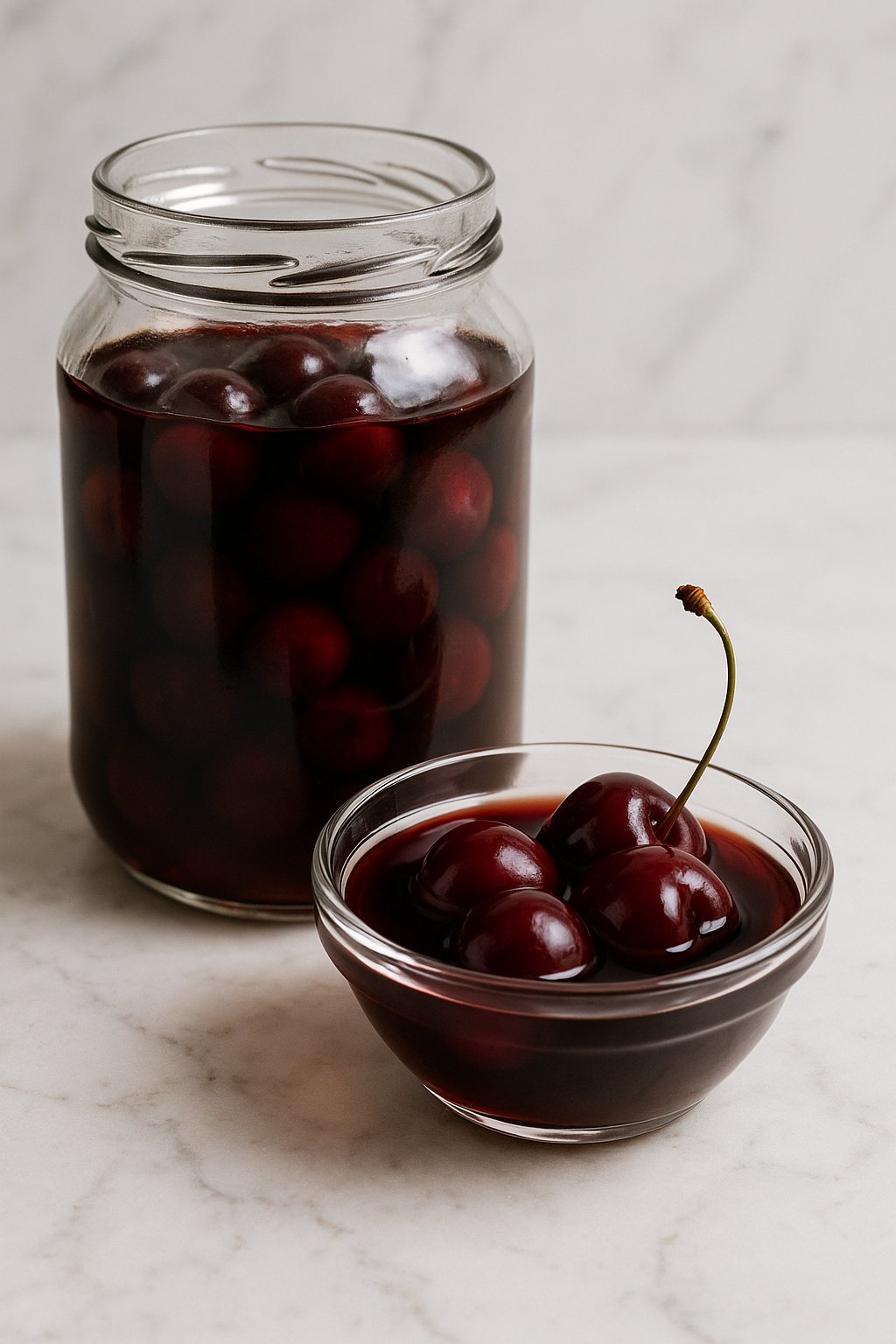
Rum cherries in a bowl with some rum
I still clearly remember the first spoonful of rum cherries I tried somewhere at a flea market in a rain-haze-shrouded city: a jar with deep red liquid that smelled so intensely I almost dampened my jacket just to smell it longer. These small, shiny fruits have something nostalgic and at the same time playful for me. They are not simply preserved – they tell of holidays, family celebrations and spontaneous dessert ideas that suddenly taste wonderful.

Rum cherries are cherries that have been soaked in rum and often complemented with sugar, spices or citrus. The sweetness of the fruit meets the warm, vanilla-like depth of the rum, and the result is a flavor balance between fruity freshness and velvety warmth. I like to use them as a little secret in desserts: on vanilla ice cream, in chocolate cake or as a surprising element on a cheese platter. A colleague of mine swears by spreading them on pancakes with a dollop of mascarpone — a combination that allegedly saved his Sundays.

The preparation is surprisingly uncomplicated. Fresh or preserved cherries are placed in rum, often together with sugar and optional flavors like cinnamon, vanilla bean or orange peel. The longer they steep, the more intense the aroma becomes. I once experimented with a jar with a pinch of smoked salt; the result was surprisingly complex and paired excellently with dark chocolate.

Rum cherries are versatile:

  • As a topping for ice cream, panna cotta or yogurt
  • In pound cake, to refine cake layers
  • As an aromatic element in autumn cocktails or long drinks
  • On cheese boards, especially with mature, slightly piquant cheeses
They are also a wonderful gift: a homemade jar feels more personal than a bottle of wine and is quick to prepare. When I want to serve something special to guests, I like to reach for a small spoonful of rum cherries — they always bring a smile and start conversations about flavors, memories and the small joys of life.

Availability & types

Availability and types

Rum cherries are cherries that have been preserved in alcohol – usually rum, hence the name. They are not like fresh cherries straight from the tree, but are often sold in jars or cans. That makes them longer-lasting and practical when you want to bake or prepare desserts at home. You can buy rum cherries year-round because they are preserved. Fresh cherries, by contrast, are only available in certain months, while rum cherries are, like other preserved cherries, always available.

Where do rum cherries come from? They are made by mixing cherries with sugar and rum or rum flavoring. The cherries themselves often come from countries where many cherries are grown, for example from Germany, Turkey or southern Europe. Sometimes cherries from other regions are also used. The exact origin is usually indicated on the jar's label.

There are several types or variants of rum cherries you can find in stores. Here are the main ones, explained like a simple list:

  • With real rum: These rum cherries have been soaked in real alcohol. They taste strongly of rum and are often a bit more expensive. The alcohol helps to intensify the flavor and to preserve the fruit for longer.
  • With rum flavor (alcohol-free): Some products have only the taste of rum but no real alcohol. This is practical for children or people who do not drink alcohol. An aroma that tastes like rum is used in these cases.
  • Sugar or syrup variants: Some rum cherries sit in a thick, sweet syrup. Others are only lightly sugared. The syrup makes the cherries juicier and sweeter – almost like a fruit sauce.
  • With or without pit: You can find rum cherries with the stone still in or already pitted. Pitted cherries are more practical for baking because you don't have to deal with pits.
  • Dried or semi-dried: Less common are rum cherries that are slightly dried. They are chewier and have a more concentrated flavor – good if you want a different mouthfeel.
  • Organic or conventional: As with many foods, there are organic variants as well. Organic cherries are grown according to specific rules, without certain chemical agents.
How to find the right variety? If you are looking for something for cakes or tarts, pitted rum cherries in syrup are often practical. For children or people who don't want alcohol, alcohol-free versions are suitable. If you like an intense rum flavor, choose those with real rum. The label usually states whether alcohol is present and where the cherries come from.

In short: rum cherries are available year-round because they are preserved. They often come from cherry-growing regions in Europe or Turkey, and there are many variants – with real rum, alcohol-free, in syrup, with or without pits and in organic quality. This way you can choose the appropriate type depending on taste and intended use.
Details & nutrition

Property Value
Unit g
Average weight per piece 8
Calories per 100 210
Protein per 100 1.0
Carbohydrates per 100 32
Sugar per 100 30
Fat per 100 0.2
Saturated fat per 100 0.02
Monounsaturated fat 0.05
Polyunsaturated fat 0.08
Fiber per 100 1.5
Vitamin C (mg) per 100 3
Vitamin D (IU) per 100 0
Calcium (mg) per 100 15
Iron (mg) per 100 0.4
Nutri-Score D
CO₂ footprint 1.8
Origin Varies by producer; commonly Europe
Gluten-free Yes
Lactose-free Yes
Nut-free Yes
Vegan Yes
Note Nutritional values refer to cherries preserved in sugar syrup and rum with moderate alcohol and sugar content; actual values may vary depending on recipe and manufacturer.

Technical & scientific information

Rum cherries are preserved or candied cherries that are flavored and preserved by marinating in rum or rum-flavored liquid. They are often used as an ingredient in baked goods, desserts, jams and mixed alcoholic beverages and are characterized by a combined sweetness, fruit acidity and a typical ethanol aroma. Production ranges from simple homemade recipes to industrial processes where sensory quality, shelf life and microbiological safety are controlled.

Raw material and selection

  • Starting materials are predominantly sweet cherries (Prunus avium) or sour cherries (Prunus cerasus), depending on the desired flavor profile. Sweet cherries provide more natural sugars, while sour cherries offer stronger fruit acidity.
  • Pitted or whole cherries are used; pitted cherries facilitate processing and consumption, while whole fruits can be more aesthetically appealing.
Chemical composition and nutritional values

  • Cherries are composed mainly of water (approx. 80–85 %) and carbohydrates (mainly sucrose, glucose, fructose). Sugar content varies depending on variety and ripeness.
  • Other components include organic acids (e.g. malic and citric acid), which contribute to fruit acidity, as well as soluble fiber and small amounts of protein and lipids.
  • The fruit contains secondary plant compounds such as anthocyanins and other flavonoids, which have antioxidant properties and are responsible for the red to dark-red color.
  • By preserving with sugar and rum the nutritional composition changes: caloric content increases significantly due to added sugar, and the ethanol fraction varies depending on the process; industrially produced rum cherries can retain a notable alcohol content, while homemade variants often show a higher rum concentration.
Processing methods

  • Maceration: cherries are stored in a solution of rum, sugar and possibly water and spices (e.g. vanilla, cinnamon) for days to weeks at room temperature so that sugar and alcohol penetrate the fruit tissue and aromas are extracted.
  • Candied with rum: when combined with classic candying processes, sugar is gradually incorporated to stabilize the fruit, with rum added as an aroma carrier.
  • Pasteurization and sterile filling: to extend shelf life rum cherries in jars can be pasteurized. With sufficient alcohol and sugar content, however, a preserving effect can be achieved without additional heat treatment.
  • Dealcoholization: for alcohol-free variants rum flavors can be produced artificially or dealcoholized rum extracts can be used to provide the typical flavor profile without ethanol.
Microbiology and shelf life

The preservation mechanism is based primarily on the combined influence of increased sugar content (osmotic effect), reduced water activity and the presence of alcohol, which inhibit the growth of bacteria and molds. Critical factors are hygiene during processing, sterility of packaging and storage conditions. In inadequately preserved products there is a risk of microbial spoilage, particularly by osmophilic yeasts.

Health aspects

  • Rum cherries provide secondary plant compounds with potential antioxidant effects, but in commercial formulations the caloric density and high sugar content predominate, which can be metabolically relevant if consumed regularly (e.g. weight gain, impact on blood sugar).
  • The residual alcohol content makes the ingredient unsuitable for children, pregnant women or abstinent persons, unless specifically dealcoholized products are used.
  • Allergic reactions to cherries are rare but can occur in sensitized individuals. Industrial products may also contain additives or sulfites that can trigger intolerances.
Applications

Rum cherries are commonly used in baked goods such as Black Forest cake, seasonal holiday pastries, ice creams, cocktails and as a garnish. They function as both a flavor and color contributor and can be integrated into dishes either intensely or subtly depending on processing.

In summary, rum cherries are a flavored fruit product whose sensory properties and shelf life depend on variety, sugar content, alcohol content and processing method. Considering the nutritional pros and cons, the product should be regarded as a flavor-intense but sugar- and possibly alcohol-containing ingredient whose use should be chosen according to the situation.

Wiki entry for: rum-soaked cherry
Active now: 20 visitors of which 2 logged-in members in the last 5 minutes