Menu & categories

Rum raisins

Raisins soaked in rum as an aromatic ingredient for baking and desserts

Wiki about rum-soaked raisin Nutri-Score D Vegan Yes Gluten-free Yes Lactose-free Yes Nut-free Yes
NUTRITION / 100 g
260 kcal 2.0 g Protein 58.0 g Kohlenhydrate 0.5 g Fett

Introduction

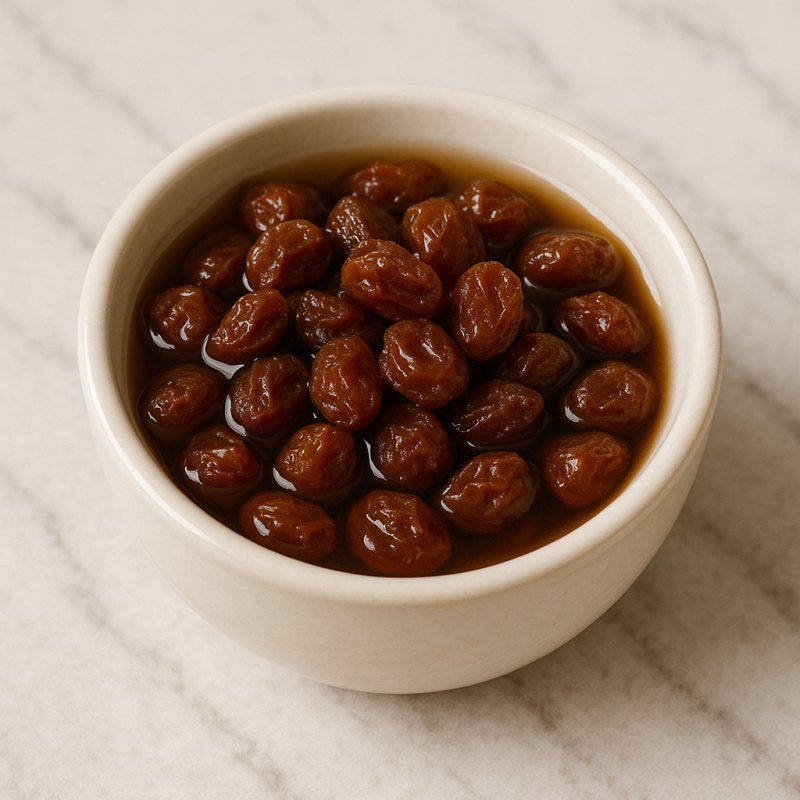
Rum raisins in a small bowl
I still remember clearly the first scent that really surprised me: a bowl of rum-soaked raisins sitting on a kitchen table in a sunny holiday home. The smell was warm, slightly alcoholic and sweet, a hint of vanilla and caramelized sugar that immediately evoked memories of coffee breaks and cozy afternoons. Since then, rum-soaked raisins have been a small culinary secret for me that elevates sweet baked goods, cheese boards and even savory dishes to another level.

Rum-soaked raisins are made when dried grapes are soaked in rum. For me the magic is in the combination: the concentrated sweetness of the raisins meets the deep, spicy warmth of the rum. I've tried different variants — from robust dark rum to mild white rum — and each variety gives the raisins its own character. A colleague of mine swears by the combination with brown sugar and cinnamon, while a friend prefers to add a citrus note to balance the sweetness.

The uses are surprisingly versatile:

  • Baking: Rum-soaked raisins are the secret stars in pound cakes, stollen and muffins.
  • Desserts: They give puddings, ice cream and parfaits depth.
  • Cheese and antipasti boards: They provide a delightful contrast to pungent cheeses or salty nuts.
  • Savory dishes: I've used them in braised dishes, where they balance the acidity in the dish.
A small tip I learned in a cooking class: briefly warm the rum to lukewarm before soaking. This opens the aromas faster and the raisins absorb more flavor. You can soak them overnight or leave them for several weeks — the longer, the more intense the result. I once forgot a jar for months; when I found it again the flavor was so complex that I almost enjoyed it neat, with a few nuts alongside.

To me rum-soaked raisins are more than just an ingredient. They are a bridge between memories and new taste experiences, a small culinary surprise that gives even simple dishes character. When I have guests, I always make sure to have a jar on hand — it's amazing how often a single raisin starts a conversation.

Availability & types

Availability and types

Rum-soaked raisins are raisins that have been soaked in rum. Today you can buy them in many stores or make them easily at home. They are particularly popular for baking, for example in cookies or stollen, and give a sweet, slightly alcoholic taste. Rum-soaked raisins are often found in supermarkets, in specialty baking shops or in online stores. Sometimes they sit on the shelf in small jars, sometimes in bags, and in well-stocked organic stores there are also varieties without artificial additives.

Origin
The base for rum-soaked raisins is raisins, i.e. dried grapes. Grapes grow in warm regions: many raisins come from countries around the Mediterranean such as Spain, Greece and Turkey. Other raisin types come from California in the USA or from countries like Australia. The rum in which the raisins are soaked usually comes from Caribbean countries like Jamaica, Barbados or Cuba – there sugar cane is grown and distilled into rum. Thus rum-soaked raisins are created by the meeting of two regions: the grapes from more Mediterranean or dry-warm areas and the rum from tropical sugarcane-growing regions.

Growing regions of the base ingredients

  • Grapes/raisins: Spain (e.g. the region around Málaga), Turkey (especially the Aegean region), Greece as well as California. These areas are sunny and dry, which is good for drying grapes.
  • Rum: Caribbean islands like Jamaica, Barbados, Cuba, but also countries in Central and South America or Mauritius produce rum. Sugar cane grows there, from which rum is made.
Available varieties and options
Rum-soaked raisins come in different versions so everyone can find a suitable option. Here are the main types, explained simply:

  • Classic rum-soaked raisins: raisins soaked in regular rum. They taste sweet and have a light alcoholic note.
  • Alcohol-free variants: For children or people who don't want alcohol, there are raisins soaked only in rum flavor or in grape juice. They taste similar but do not contain alcohol.
  • Rum-soaked raisins with different rum types: Just like with cola or juice, there are different taste nuances: dark rum gives a stronger, maltier flavor, light rum often tastes lighter and sweeter. Some producers state on the package from which region the rum comes.
  • Organic and natural products: In organic stores you'll find rum-soaked raisins without artificial additives or without added sugar. These are often more expensive, but important for people who prefer natural ingredients.
  • Whole raisins vs. chopped: Some packages contain whole, large raisins; others are smaller or chopped so they distribute better in dough.
Practical tips on availability
If you can't find rum-soaked raisins in the store, you can buy regular raisins and soak them at home in some rum. After just a few hours they will be juicy and flavorful. For an alcohol-free version use grape juice or apple juice. On the internet there are also many producers offering special blends or different rum types, so you can choose according to your taste.

Overall, rum-soaked raisins are easy to obtain and there are many variants – from classic with real rum to alcohol-free or organic alternatives. That way you can find exactly the variety that suits your recipe or your taste.
Details & nutrition

Property Value
Unit g
Calories per 100 260
Protein per 100 2.0
Carbohydrates per 100 58.0
Sugar per 100 58.0
Fat per 100 0.5
Saturated fat per 100 0.1
Monounsaturated fat 0.1
Polyunsaturated fat 0.2
Fiber per 100 3.0
Vitamin C (mg) per 100 2.0
Vitamin D (IU) per 100 0
Calcium (mg) per 100 40
Iron (mg) per 100 1.5
Nutri-Score D
CO₂ footprint 1.8
Origin Depending on the producer, often a blend of dried grapes from Southern Europe or overseas and rum from the Caribbean or Europe
Gluten-free Yes
Lactose-free Yes
Nut-free Yes
Vegan Yes
Note Information refers to raisins soaked in rum without further additives; depending on the brand, sugar or flavorings may be added.

Technical & scientific information

Rum-soaked raisins are sultanas or currants that, after drying, are marinated in rum or rum-phosphate solutions. They are used both as a baking ingredient – for example in stollen, cakes or cookies – and on their own as a gourmet ingredient. From a technical point of view they are a combination of dried grapes with an alcoholic extract, where chemical, microbiological and physical parameters determine the final product in terms of flavor, shelf life and nutritional value.

Raw material and composition
The base of rum-soaked raisins are dried grapes, whose main components are water, sugars (predominantly glucose and fructose), fiber (pectin), organic acids (e.g. tartaric acid) and secondary plant compounds (polyphenols, flavonoids). By soaking in rum additional components are introduced: ethanol (typically 35–55 % vol. depending on the rum used), volatile flavor compounds (terpenes, esters, aldehydes), colorants and small amounts of minerals from the distillate. The final chemical composition depends on the concentration of the rum, the soaking ratio and the contact time.

Processing methods
There are several industrial and homemade processes for producing rum-soaked raisins. Typical steps are:

  • Selection and preparation: cleaning the dried grapes, optionally milling or shortening long stems.
  • Hydration/swelling: before soaking raisins are partially rehydrated to facilitate rum uptake, e.g. by briefly soaking in water or syrup.
  • Marinating: immersion in rum or a rum-water mixture; industrial processes use controlled temperature and rotation for even impregnation.
  • Aging: storage over days to weeks so that flavor compounds diffuse and chemical reactions (e.g. ester formation) occur.
  • Filling/packaging: before sale raisins can be drained or left in rum; sometimes they are lightly heated to ensure microbiological stability.
Microbiology and shelf life
The low water content of dried raisins inhibits many microorganisms; this is supplemented by the antimicrobial effect of ethanol. Nevertheless contaminating yeasts or mold spores can be a problem with improper storage. Industrial products are subject to pasteurization or a sufficiently high alcohol content to ensure microbiological safety. Shelf life depends on water activity, alcohol content, packaging and storage conditions; airtight, dark and cool storage prolongs quality.

Nutritional values and chemical reactions
Rum-soaked raisins supply mainly energy from carbohydrates – free monosaccharides predominate – along with small amounts of proteins and fats and minerals such as potassium and trace elements. The alcohol content per 100 g of final product is variable; in undiluted rum-soaked raisins trace alcohol can be measurable, while draining reduces it considerably. During aging Maillard reactions and ester formation can lead to changed flavors and a darker color.

Health aspects
From a nutritional point of view rum-soaked raisins are a calorie-dense ingredient with natural sugars and beneficial secondary plant compounds. Points of concern are the high sugar content and the presence of alcohol, which are relevant for children, pregnant women, people with alcohol problems and certain medical situations. Allergic reactions to sulfites are possible if the raisins were treated with sulfur dioxide before drying. In addition the sugar content can promote tooth decay if consumption and oral hygiene are not observed.

Sensorial and culinary application
Sensorially rum-soaked raisins carry notes of dried fruit, caramel-like sweetness and typical rum aromas (vanilla, wood, esters). The texture is soft to slightly sticky; when cooked they can absorb liquid and release aromas. In formulations they influence structure, moisture content and flavor, which is why their quantity and pretreatment (draining, warming, chopping) are regularly adjusted.

Regulatory and labeling aspects
Under food law alcoholic ingredients must be labeled accordingly, especially if relevant amounts of alcohol remain in the final product. Information on allergens or sulfites is also mandatory if these additives have been used. For export and trade there are sometimes country-specific limits and labeling requirements.

In summary rum-soaked raisins are a technically considered product whose properties are determined by raw material quality, soaking process and storage conditions. They offer characteristic sensory qualities but carry nutritional and health-specific aspects that must be considered when used in foods.

Wiki entry for: rum-soaked raisin
Active now: 18 visitors of which 2 logged-in members in the last 5 minutes