Menu & categories

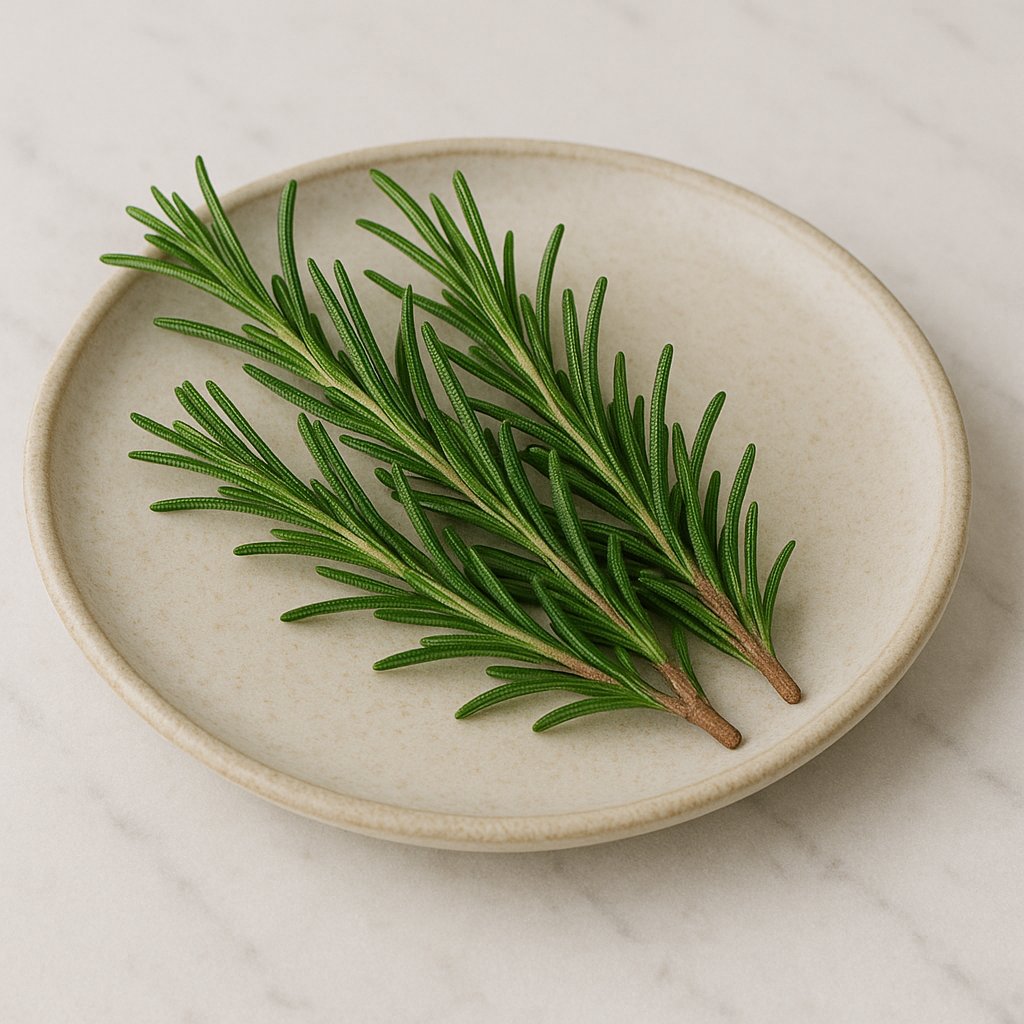
Rosemary

Aromatic Mediterranean culinary herb with an intense flavor

Wiki about rosemary Nutri-Score A Vegan Yes Gluten-free Yes Lactose-free Yes Nut-free Yes
NUTRITION / 100 g
131 kcal 3.3 g Protein 20.7 g Kohlenhydrate 5.9 g Fett

Introduction

Fresh rosemary sprigs on a wooden board
Rosemary for me is like a small evergreen friend in the kitchen that can transform a dish with just a few needles. I still remember a rainy Sunday afternoon when, while cooking, I accidentally sprinkled too much rosemary over the roast. Instead of ruining the food, the herb turned the scent into a warm, slightly resinous embrace that filled the whole house. Since then I'm convinced: rosemary is a kitchen magician that brings structure, depth and a bit of theatre to simple recipes.

What I love about rosemary is its versatility. It goes well with slow-cooked meats, with roasted vegetables and, surprisingly, also with baked fruits. I once dared to use rosemary in a plum cake — a colleague of mine was skeptical, sniffed and then took another slice. The combination of sweet and resinous was so convincing that he asked for the recipe. Rosemary can be bitter and balsamic, but it can also show floral notes, depending on whether you use the needles fresh or press them lightly before frying.

I've picked up practical tips over years: fresh rosemary gives a more intense aroma, dried is more concentrated and keeps longer. I usually strip the needles from the woody stems when I want to chop them finely, and I like to throw whole sprigs into the stew pot — they give off flavor slowly and can be removed easily before serving. You should dose rosemary; too much can become dominant, but used correctly it highlights other ingredients.

  • Flavor: resinous, slightly peppery, with citrus and pine notes
  • Uses: roasting, braising, baking, flavored oils and butters
  • Tips: fresh for delicate aromas, dried for long storage
For me rosemary is more than just a spice. It is a mood lifter when cooking, a small aroma artist that evokes memories — of family meals, of improvised dinners and of afternoons when a scent turned the kitchen into a cozy stage. When I have a plant on the balcony, I jokingly talk to it before I harvest a few sprigs. It probably doesn't help the taste, but it makes cooking a ritual I wouldn't want to miss.

Availability & types

Availability and types of rosemary

Rosemary is an evergreen shrub that many people have in gardens, on balconies or in the kitchen. It originally comes from the Mediterranean, from countries like Spain, Italy and Greece. There it grows on sunny, warm slopes and likes dry soil – you can imagine it as a small plant that prefers to lie in the sun and does not like too much water.

Today rosemary is cultivated in many parts of the world. In Europe it grows not only in the south but also in warmer regions of Germany, France and Portugal. It is also grown in North Africa, parts of Asia and even in the USA. So if you see rosemary in the store, it could come from different countries. Smaller plants for the balcony or large fields for harvest often come from different regions, depending on what is growing best at the time.

There is not just one kind of rosemary. As with apples or dogs, there are different varieties that differ slightly. Here are the main ones, simply explained:

  • Prickly rosemary (classic): This is the rosemary most people know. It has long, stiff needles and a strong, spicy scent. It pairs well with meat, potatoes and bread.
  • Arching rosemary (bushy): This variety grows more compact and wider. It is often attractive for flower beds or tubs on the balcony because it does not grow very tall.
  • Prostrate or creeping rosemary (groundcover): This variety grows low and wide, almost like a carpet. It is good for covering slopes or as an ornamental plant between stones.
  • Desert or aromatic rosemary: Some varieties smell somewhat different – stronger of pine or citrus. These are sometimes used specifically for aromatherapy or for special recipes.
Besides these varieties there are also rosemary plants bred to be more cold-hardy or to grow particularly quickly. Such plants are practical if you live in a climate that is not as warm as the Mediterranean.

Rosemary is available commercially in various forms:

  • Fresh sprigs: Often found in supermarkets or at weekly markets. They are ideal for cooking because the aroma is very intense. Fresh rosemary keeps in the refrigerator for a few days, best wrapped in a damp cloth.
  • Dried leaves: Sold in jars or bags. They are practical because they are long-lasting. Dried the aroma is somewhat milder but still good for seasoning.
  • Frozen rosemary: Sometimes available in the freezer, often in oil cubes. This preserves the flavor well and allows using small portions while cooking.
  • Potted plants: Young rosemary plants for garden or balcony are especially popular. If well cared for, you can repeatedly harvest fresh sprigs.
When you buy rosemary, you can look for small signs: leaves should look fresh green, not brown or wilted. Dried rosemary should still have a scent. Sometimes the country of origin is also indicated — this helps if you prefer a particular aroma.

In summary: rosemary originally comes from the Mediterranean but is now cultivated worldwide. There are different varieties, from upright to creeping, and you can get it fresh, dried, frozen or as a potted plant. This way you can find the right form for every need, whether for the kitchen, the balcony or as a pretty garden plant.
Details & nutrition

Property Value
Unit g
Average weight per piece 2
Calories per 100 131
Protein per 100 3.3
Carbohydrates per 100 20.7
Sugar per 100 0.9
Fat per 100 5.9
Saturated fat per 100 2.8
Monounsaturated fat 1.5
Polyunsaturated fat 1.0
Fiber per 100 14.1
Vitamin C (mg) per 100 21.8
Vitamin D (IU) per 100 0
Calcium (mg) per 100 317
Iron (mg) per 100 6.7
Nutri-Score A
CO₂ footprint 0.5
Origin Mediterranean region, today cultivated worldwide in temperate climate zones
Gluten-free Yes
Lactose-free Yes
Nut-free Yes
Vegan Yes
Note Nutritional values refer to fresh rosemary. Dried rosemary has more concentrated nutritional values per 100 g due to its lower water content.

Technical & scientific information

Rosemary (Rosmarinus officinalis, syn. Salvia rosmarinus) is an evergreen, aromatic shrub of the Lamiaceae family, native to the Mediterranean region. Botanically it consists of woody shoots, narrow needle-like leaves and blue to violet flowers. Botanically and culturally, rosemary has been used since antiquity as a spice, medicinal plant and ornamental.

Chemical composition and constituents
The characteristic aroma is mainly due to the essential oil, which depending on variety and location makes up between 0.5 and 2.5% of the fresh plant. Dominant constituents of this oil are 1,8‑Cineole (Eucalyptol), α‑Pinene, Camphor, Verbenone and Borneol. Besides the volatile components, rosemary also contains non-volatile secondary plant compounds such as rosmarinic acid, carnosol and carnosic acid, which belong to the phenolic compounds. These compounds contribute to antioxidant and antimicrobial properties. Mineral analyses show traces of potassium, calcium and iron as well as small amounts of vitamins, especially vitamin A precursors (carotenoids) and vitamin C in fresh leaves.

Nutritional values
Rosemary is used in small amounts as a spice; therefore nutritional values per serving are low. Per 100 g of fresh leaves there are approximately 131 kcal, 20–25 g carbohydrates, 7–8 g protein, 14–15 g fat and around 4–7 g fiber. In typical seasoning amounts (a few grams) the contributed macronutrients and calories are negligible; the nutritionally relevant effects rather result from the plant's secondary compounds.

Processing methods
Rosemary can be used fresh, dried or as a concentrated oil or extract. Drying reduces the essential oil partially but preserves many phenols; thus the flavor remains even as a dried herb. For the production of essential oil, steam distillation or hydrodistillation are used. To preserve heat-sensitive polyphenols, CO2 extraction methods are also used in the food and pharmaceutical industries. In the kitchen there are additional applications as infusions (oils, vinegars), as a flavor in marinades or as a smoke aroma.

Biological effects and health aspects
Pharmacologically, rosemary extracts show antioxidant, antimicrobial and anti-inflammatory activities, which have been documented in vitro and in animal studies. Rosmarinic acid and carnosol are strong radical scavengers and can reduce oxidative cellular damage. Essential oils have, depending on composition, bactericidal and fungicidal effects. Clinical studies in humans are, however, limited and provide only partially conclusive results; therefore therapeutic claims should be treated with caution.

Safety and interactions
In culinary amounts rosemary is considered safe. When using highly concentrated extracts or essential oils, skin irritation, allergic reactions and systemic effects with high oral intake are possible. Camphor-rich oils can be neurotoxic, particularly in infants and young children. People with hormone-sensitive conditions or with blood coagulation disorders should be cautious, as interactions with medications cannot be completely excluded. Pregnant women should avoid large therapeutic doses.

Cultivation and quality
Rosemary prefers sunny, well-drained sites with slightly alkaline to neutral pH. Quality and chemical composition of the harvest depend on location, season, harvest stage and postharvest treatment. Standardization of extracts often targets fixed contents of rosmarinic acid or certain terpenes to ensure reproducible activity profiles.

In summary, rosemary is a versatile plant with characteristic essential oils and phenolic compounds responsible for flavor, preservative properties and potential health effects. Scientific studies support many bioactive effects in laboratory models, while clinical evidence for therapeutic applications is still limited; however, safe culinary use remains undisputed.

Wiki entry for: rosemary
Active now: 15 visitors of which 2 logged-in members in the last 5 minutes