Menu & categories

Rollmops

Hearty pickled fish delicacy

Wiki about rollmop Nutri-Score B Vegan No Gluten-free Yes Lactose-free Yes Nut-free Yes
NUTRITION / 100 g
150 kcal 18 g Protein 1 g Kohlenhydrate 8 g Fett

Introduction

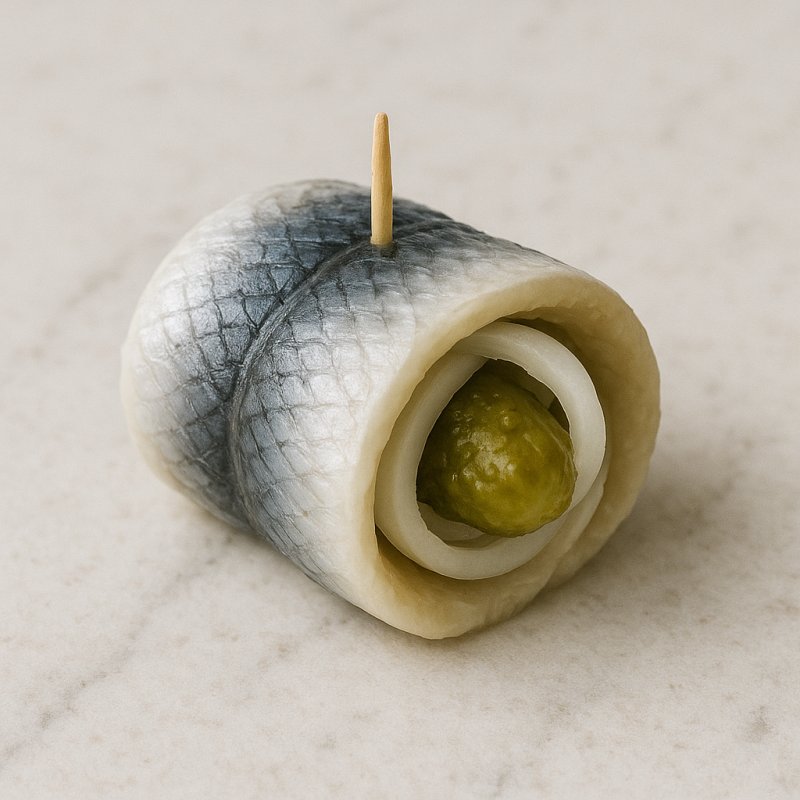
Rollmops on a plate
I still remember the summer when I worked at a small fish restaurant on the coast. It was a time full of fresh seafood and delicious dishes, but the highlight for me were the rollmops. These small pickled fish rolls, often served as a snack or starter, have a very special meaning for me. They are not only a treat but also a piece of culinary tradition.

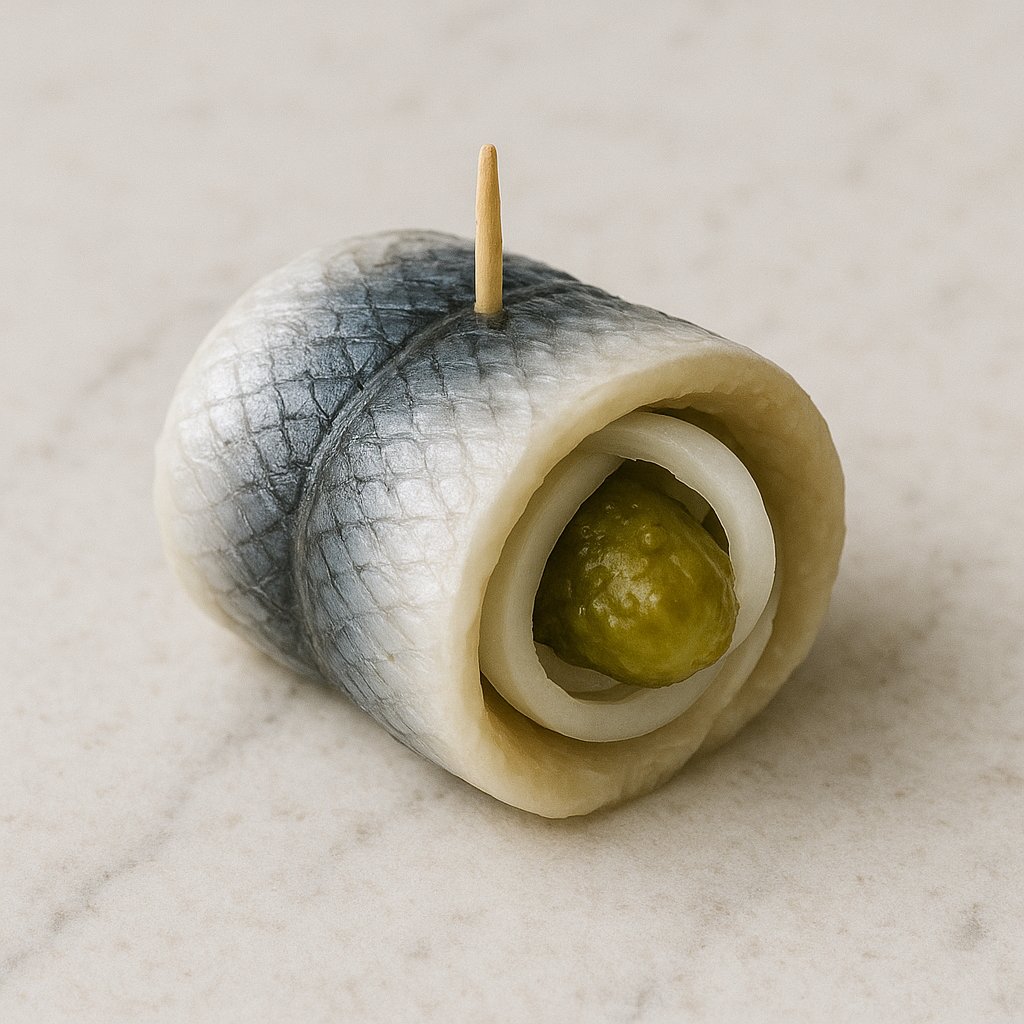
Rollmops are usually made from herring, which is pickled in vinegar and rolled with various fillings like onions, cucumbers or mustard. The first time I prepared a rollmop I was nervous. My colleague, a true fish lover, stood by my side. „It's very simple“, he said with a broad grin. „You just have to arrange the filling properly and then fix it with a toothpick.“ It sounded so straightforward, and yet I wasn't sure I would get it perfect. But after a few tries I got the hang of it, and the first rollmops were a real success.

In many European countries rollmops are a popular delicacy. They are often served on buffets, and I can remember countless parties where they were the hit. The combination of the salty fish and the tangy marinade is simply irresistible. I can hardly wait for spring to come and the barbecue evenings to begin! There's nothing better than enjoying a few fresh rollmops together with a slice of dark bread and a cold beer.

The preparation of rollmops is a true art, and there are countless variations that anyone can try at home.

  • Some add capers to create an additional flavor component.
  • Others experiment with different spices to give their own twist.
I find it exciting that rollmops are not only popular in German cuisine, but many other cultures have their own variants. Whether as part of a festive buffet or simply as a hearty snack in between, rollmops are a versatile dish that should never be missing in my kitchen. So the next time I enjoy a rollmop, I will think back on all the funny moments and the small challenges I experienced while preparing them. It's not just food, it's a little journey into the past that delights me anew every time.

Availability & types

Rollmops are a particular type of pickled fish that is popular in many parts of the world. They are made mainly from herring, a fish that lives in cold waters. To make rollmops, the herring is first filleted, meaning the fillets are separated from the fish body. After that they are seasoned, rolled and often pickled with vinegar, onions and spices. This makes rollmops particularly tasty and gives them a unique flavor.

The origin of rollmops is particularly interesting. They originally come from northern Germany, where they were developed as a method of preserving fish. In the past, when refrigerators did not exist, it was important to make fish last a long time. Pickling in vinegar and spices helped keep the fish fresh and protected it from bacteria. Today rollmops are popular not only in Germany but also in many other countries.

Rollmops can be produced in various fishing areas, but most come from the North Sea or the Baltic Sea. There are many fishermen there who specialize in catching herring. The fish are then processed quickly so they remain fresh. In some countries rollmops are even produced in large factories, where they are pickled according to special recipes to guarantee a consistent flavor.

When it comes to varieties and types of rollmops, there is a wide selection. Here are some of the most common types:

  • Classic rollmops: These are simply pickled with onions and vinegar, the traditional taste.
  • Rollmops with mustard: Mustard is added here, giving the rollmops a spicy note.
  • Rollmops with pickled cucumbers: These contain small pieces of pickled cucumber that provide a crunchy bite.
  • Rollmops with peppers: In this variant pieces of pepper are added, giving the rollmops a sweetish note.
  • Vegetarian rollmops: There are even vegetable-based alternatives prepared similarly but without fish.
The variety of rollmops makes them an interesting snack or side dish. They can be eaten on their own, but they also go well with bread rolls or salads. Rollmops are not only tasty but also healthy, as fish contains many important nutrients that are good for our bodies.

In many supermarkets and delicatessens rollmops can be found in jars or tins. They are often located in the refrigerated section. There are also specialized fish markets where fresh rollmops are offered. If you like rollmops, you can also easily prepare them at home. There are many recipes that show you step by step how to make your own rollmops.

Details & nutrition

Property Value
Unit g
Average weight per piece 30
Calories per 100 150
Protein per 100 18
Carbohydrates per 100 1
Sugar per 100 0
Fat per 100 8
Saturated fat per 100 2
Monounsaturated fat 1
Polyunsaturated fat 1
Fiber per 100 0
Vitamin C (mg) per 100 0
Vitamin D (IU) per 100 0
Calcium (mg) per 100 10
Iron (mg) per 100 0.5
Nutri-Score B
CO₂ footprint 2.5
Origin North Sea
Gluten-free Yes
Lactose-free Yes
Nut-free Yes
Vegan No
Note Rollmops are a popular delicacy made from pickled herring.

Technical & scientific information

Rollmops are a traditional ingredient in German cuisine made from pickled herring. Typically the fish fillets are filled with onions, cucumbers or spices and then rolled. They are commonly found on buffets, as delicate appetizers or as a snack, and are popular because of their savory taste and long shelf life. To better understand the characteristics of rollmops, it is useful to consider different aspects such as chemical composition, nutritional values, processing methods and health aspects.

Chemical composition

The chemical composition of rollmops varies depending on preparation method and ingredients. The main component, herring, contains a variety of proteins, fats and minerals. Herring is known for its high content of omega-3 fatty acids, which are valued for their health-promoting properties. These fatty acids are important for heart health and can have anti-inflammatory effects.

In addition, rollmops are rich in vitamins, particularly vitamin D and B vitamins, which play an important role in metabolism. The filling, often made of onions or cucumbers, provides additional nutrients such as fiber and extra vitamins. In particular, the onion contains antioxidants that may help in cancer prevention.

Nutritional values

The nutritional values of rollmops can vary depending on the recipe. On average 100 grams of rollmops contain the following nutritional values:

  • Calories: approx. 150–200 kcal
  • Protein: approx. 20–25 g
  • Fat: approx. 6–15 g
  • Carbohydrates: approx. 2–3 g
  • Salt: approx. 1–2 g
These values can vary depending on preparation and ingredients used. The high protein content makes rollmops a protein-rich snack option.

Processing methods

The preparation of rollmops takes place in several steps. First the herrings are filleted and immersed in an vinegar solution. This solution not only provides the characteristic sour taste but also plays a decisive role in preserving the fish. The pickling time varies, but typically lasts from several hours to several days.

After the fillets have been pickled, they are filled with the desired stuffing and rolled. The rollmops can then be fixed with a wooden skewer or string to keep their shape. The final step is placing them again in a marinade, which often consists of vinegar, water and spices.

Health aspects

Rollmops are considered a healthy snack option, particularly due to their high content of omega-3 fatty acids and protein. These nutrients support heart health.

Wiki entry for: rollmop
Active now: 17 visitors of which 2 logged-in members in the last 5 minutes