Menu & categories

Peanuts

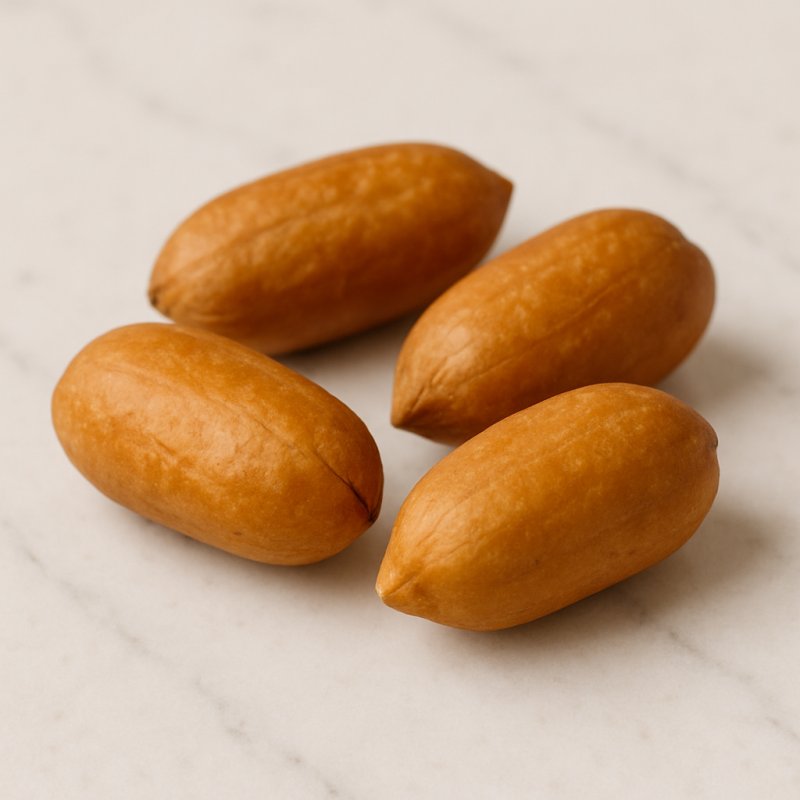
Crispy, aromatic source of protein and fat.

Wiki about roasted peanut Nutri-Score C Vegan Yes Gluten-free Yes Lactose-free Yes Nut-free No
NUTRITION / 100 g
590 kcal 25.5 g Protein 16.1 g Kohlenhydrate 49.7 g Fett

Introduction

Roasted peanuts
I have a small weakness for roasted peanuts, and I admit it openly. Once a colleague brought a bag into the editorial office and suddenly the whole office seemed hypnotized by that warm, nutty aroma. I still remember, with a guilty smile, sneaking the last bite and thinking: how can something so simple make you so happy?

Roasted peanuts are incredibly versatile in flavor. They provide a crunchy texture that carries sweet or savory flavors wonderfully. Whether plain as a snack, chopped over a salad, or as the base for a spicy peanut dressing – they work almost always. On my first visit to a street market in Southeast Asia I learned how hot roasted peanuts with chili and lime create a flavor explosion that I have enjoyed recreating at home ever since.

When I roast them myself, I pay attention to a few simple things. I stir regularly so nothing burns and I keep smelling them, because the perfect roast is a matter of seconds. Here are a few practical tips that have often helped me:

  • Oven: 160–180 °C for 10–15 minutes, turn once.
  • Pan: Roast over medium heat, stirring constantly, in 8–12 minutes.
  • Salting: Salt before or after roasting depending on desired adhesion.
  • Storage: Airtight, cool and dark; last longer in the refrigerator.
From a nutritional perspective, peanuts provide protein, healthy fats, fiber and vitamin E, but they are also calorie-dense and among common allergens. Once I tried to serve a guest a dish with peanuts without considering the allergy – since then I always ask about intolerances beforehand.

In conclusion: roasted peanuts are more than just a snack, they are a little kitchen all-rounder. I love them as a crunchy topping, as a base for sauces, or simply to nibble on with a cold beer. Feel free to try creating your own mixes with honey, chili or cocoa powder — often the best ideas arise spontaneously in the heat of roasting.

Availability & types

Availability and types of the ingredient peanuts, roasted

Peanuts originate from South America, where they were cultivated by people thousands of years ago. It is believed the plant was first found in regions like present-day Peru or Brazil. Today peanuts are grown worldwide where it is warm and not too cold – in a climate comparable to a long, sunny summer.

Important growing regions include:

  • USA (especially states like Georgia, Alabama and Texas)
  • China and India, which produce large quantities for the world market
  • Argentina and Brazil in South America
  • African countries such as Nigeria or Sudan
These countries cultivate peanuts in large fields, similar to cornfields. Because peanuts mature underground on the plant (they grow in pods beneath the soil), farmers need good soils and enough time for drying.
There are several well-known peanut varieties that differ in shape, size and flavor. You can compare them to apple varieties: some are better for baking, others taste especially good raw. Major varieties include:
  • Virginia – large kernels, often roasted whole and sold as a snack
  • Runner – uniformly sized kernels, ideal for roasting and peanut butter
  • Spanish – smaller, robust kernels with more flavor; good for sweets
  • Valencia – sweeter flavor, often in pods with several kernels
Each variety has its own character, like different potato or tomato varieties.
Besides varieties, there are many formats in which roasted peanuts can be found in stores. Here is a simple overview:
  • Raw or roasted – raw are untreated, roasted have a stronger nutty taste
  • Dry roasted – without added oil, crunchy and less oily
  • Oil roasted – roasted in oil, often more flavorful and juicier
  • Salted or unsalted – salt is like a spice; children often prefer salted ones
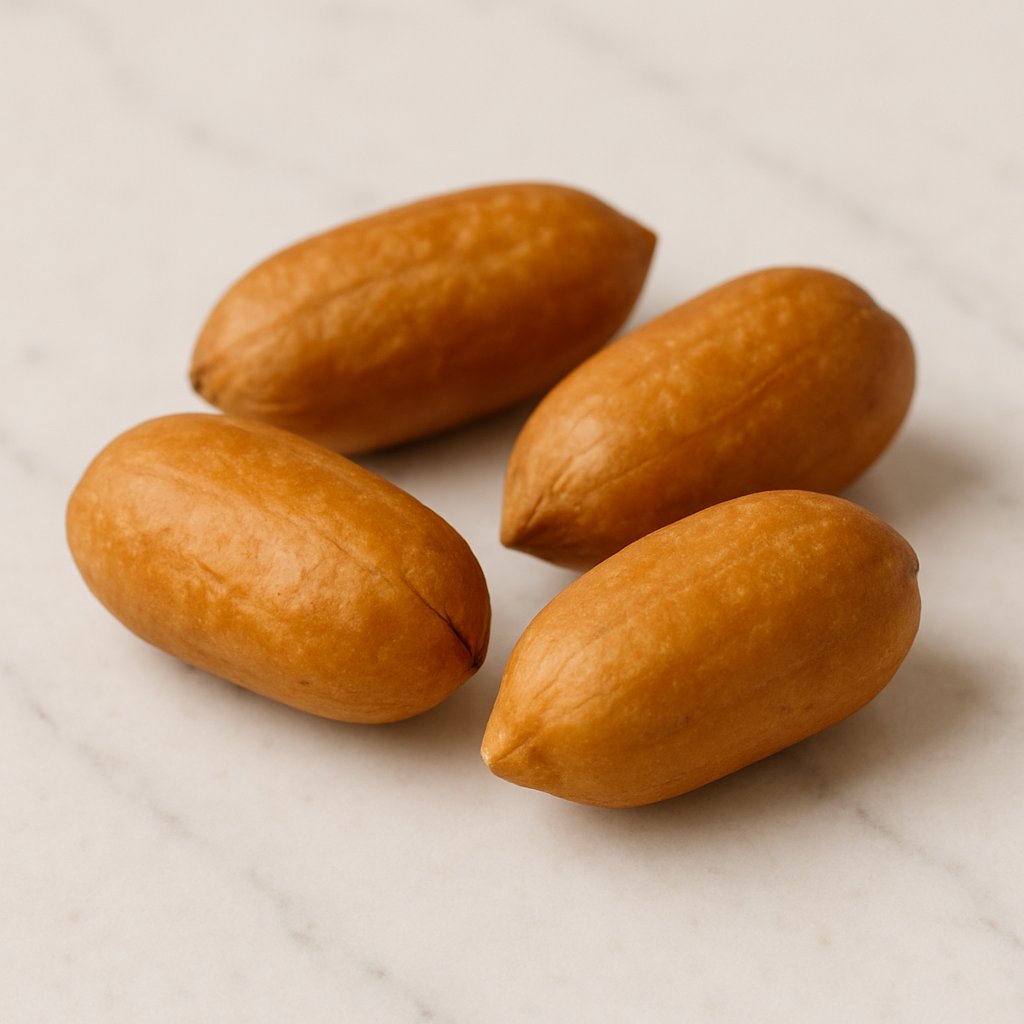
  • With skin or blanched – blanched means the red skin is removed; they appear lighter
  • Flavored – honey, chocolate, chili or smoked are popular variants
  • In-shell or shelled – in-shell stay fresh longer and are fun to crack
  • Organic or conventional – organic means certain chemicals were not used in cultivation
Peanuts are available year-round in supermarkets because they store well. Kept dry and dark they remain fresh for a long time, similar to nuts or dried fruit. One important note: some people are allergic to peanuts. For them even small amounts can be dangerous. Therefore packaging often carries a warning.

In short: roasted peanuts originally come from South America, are now grown worldwide and are available in many varieties and formats. Whether large or small, salted or chocolate-coated — there is a roasted peanut to suit every taste.
Details & nutrition

Property Value
Unit g
Calories per 100 590
Protein per 100 25.5
Carbohydrates per 100 16.1
Sugar per 100 4.7
Fat per 100 49.7
Saturated fat per 100 7.7
Monounsaturated fat 24.5
Polyunsaturated fat 15.6
Fiber per 100 8.5
Vitamin C (mg) per 100 0.0
Vitamin D (IU) per 100 0
Calcium (mg) per 100 54
Iron (mg) per 100 2.6
Nutri-Score C
CO₂ footprint 0.25 kg CO2e/100 g
Origin Argentina
Gluten-free Yes
Lactose-free Yes
Nut-free No
Vegan Yes
Note Nutritional values typical for roasted peanuts; salt content depends on the variant (salted/unsalted).

Technical & scientific information

Peanuts, roasted are the dried seeds of the plant Arachis hypogaea, which acquire a characteristic aroma, altered texture and modified chemical properties through thermal treatment. Roasting is performed industrially or artisanally and affects both sensory characteristics and shelf life as well as the nutritional properties of the nut.

Chemical composition and nutritional values: Roasted peanuts consist mainly of fat, protein and fiber. Typical macronutrient values per 100 g are approximately 550–600 kcal, 45–55 g fat, 20–30 g protein, 10–20 g carbohydrates and 6–10 g fiber. The fat is predominantly monounsaturated (oleic acid) and polyunsaturated (linoleic acid), supplemented by small amounts of saturated fatty acids. Functional micronutrients include niacin (B3), folate, vitamin E (tocopherols) and minerals such as magnesium, phosphorus and potassium. Phytochemically, peanuts contain secondary plant compounds such as phenols, flavonoids and the stilbene resveratrol, which may exhibit antioxidant activity.

Proteins and amino acid profile: Peanut protein is composed mainly of storage proteins (Ara h family), including important components such as Ara h 1, Ara h 2 and Ara h 3. These proteins supply essential amino acids but are limited in sulfur-containing amino acids (methionine, cysteine). Thermal treatment alters protein structure: partial denaturation can improve digestibility, while Maillard reactions can create cross-links that make certain amino acids less available.

Processing methods: There are several roasting methods:

  • Dry/air roasting: heating with hot air, lower oil transfer, more uniform roasting.
  • Oil roasting: brief frying in vegetable oil, leads to more intense flavor and increased fat content.
  • Blanching: removal of the peanut skin after roasting, affects color and storage stability.
Thermal reactions during roasting include the Maillard reaction, which forms aroma compounds such as pyrazines and creates the characteristic roasted note. At the same time, reducing sugars and amino acids can lead to by-products; the content of heat-sensitive vitamins may partially decrease due to exposure to high temperatures.

Food safety and storage: An important safety issue is aflatoxins, secondary metabolites from Aspergillus species that can develop under unsuitable storage conditions. Roasting does not completely eliminate aflatoxin levels, so control of raw material and hygienic storage conditions are crucial. Roasted peanuts are susceptible to oxidation of their oils; light, oxygen and heat accelerate rancidity. Cool, dry and preferably airtight storage extends shelf life.

Health aspects: Peanuts provide valuable protein, unsaturated fats and micronutrients and are associated with beneficial effects on cardiovascular risk markers when used as part of a balanced diet. At the same time peanuts are a common cause of severe IgE-mediated food allergies, which can trigger anaphylactic reactions at low doses. Processed products with peanut contact are also problematic for sensitive individuals. Energy and fat content should also be considered, particularly in low-energy diet planning.

Overall, roasted peanuts are a nutrient-dense ingredient with characteristic physicochemical properties, whose nutritional benefits and risk factors should be managed through quality assurance and appropriate processing.

Wiki entry for: roasted peanut
Active now: 6 visitors of which 2 logged-in members in the last 5 minutes