Menu & categories

Ricotta

Mild fresh cheese made from whey with a creamy consistency

Wiki about ricotta Nutri-Score C Vegan No Gluten-free Yes Lactose-free No Nut-free Yes
NUTRITION / 100 g
150 kcal 11 g Protein 3 g Kohlenhydrate 10 g Fett

Introduction

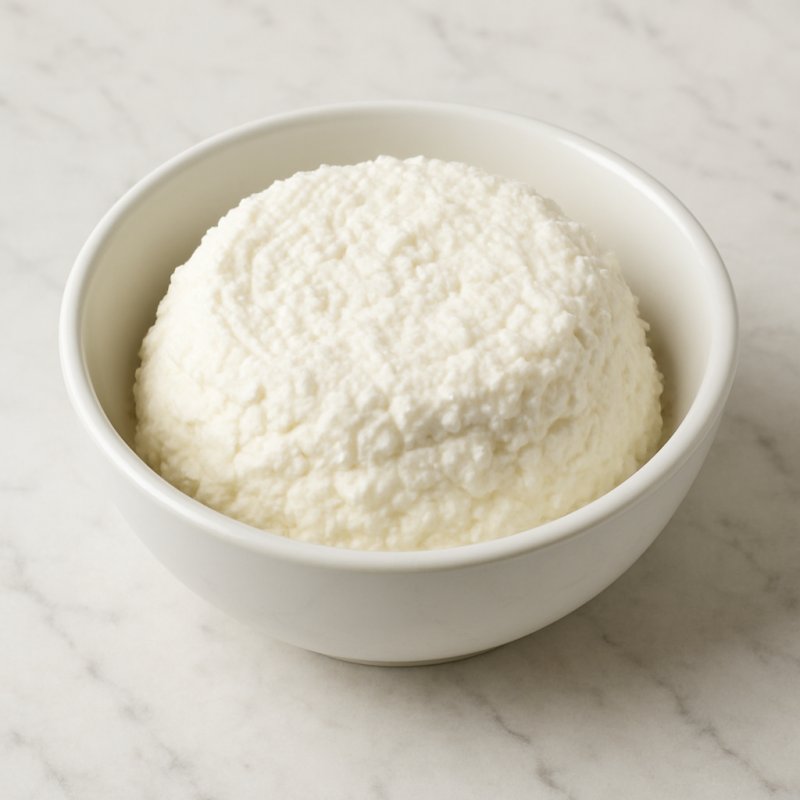
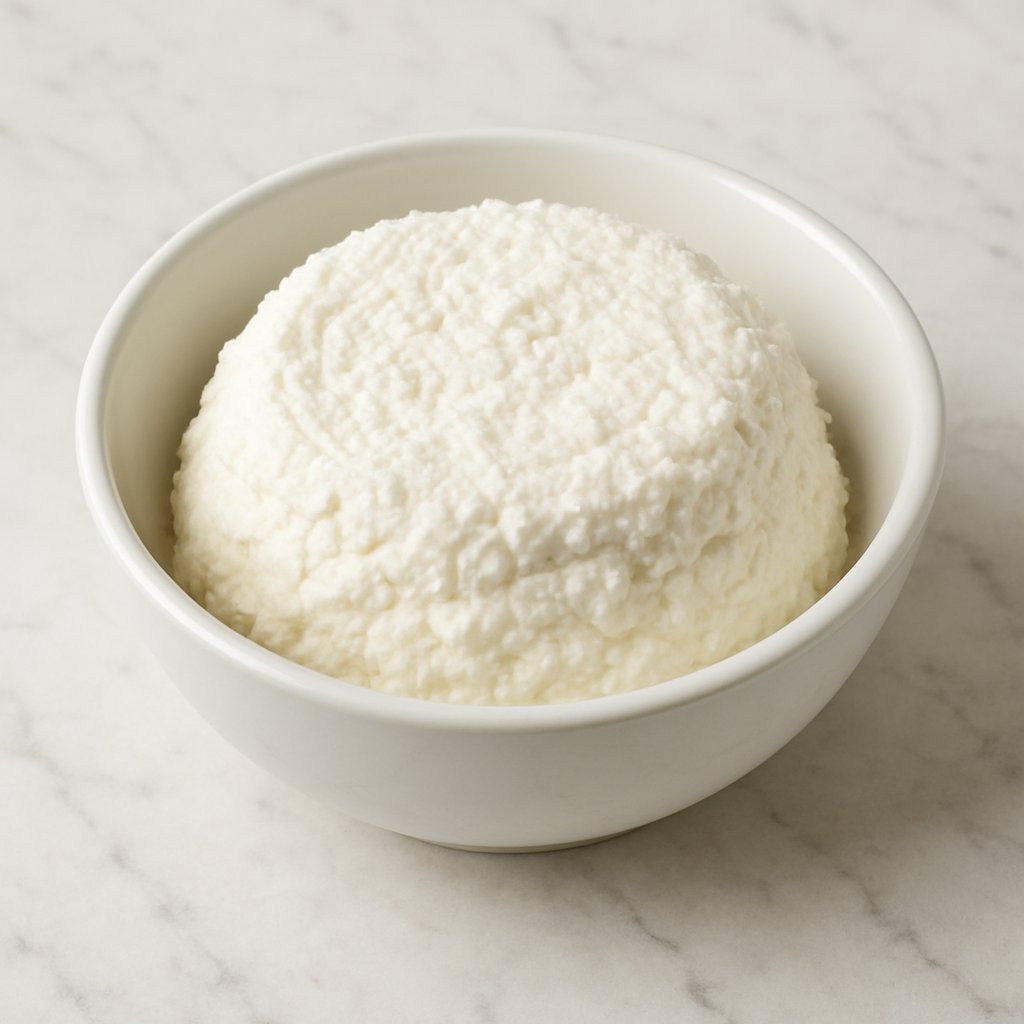
Bowl of fresh ricotta cheese
I have a small weakness: ricotta can make me happy with very little effort. The first time I consciously came into contact with this velvety fresh cheese was at an improvised kitchen party, when a friend spontaneously served a warm pancake filled with ricotta in the middle and drizzled with lemon. I still remember how this simple dish showed me that ricotta is less an ingredient than a promise — tender, mild and at the same time surprisingly adaptable.

Ricotta is traditionally an Italian fresh cheese made from whey, characterized by its light graininess and mild‑creamy flavor. I’ve learned that quality depends not only on fat content but on how the whey is treated. During a visit to a small farm in Emilia‑Romagna a producer explained that slow heating and gentle draining determine the texture — and you can taste it.

What I especially love about ricotta is its versatility. It’s a chameleon in the kitchen:

  • Savory: In lasagna, gnocchi or on roasted vegetables, ricotta brings creaminess without dominating.
  • Sweet: With honey, cinnamon or orange blossom it becomes a delicate dessert.
  • Light: Combined with citrus fruits or herbs it feels fresh and almost weightless.
I remember a colleague who thought ricotta was only for cakes. He was astonished when I served him a roasted eggplant with herb ricotta — he called it irresistible. Moments like that make me try new combinations again and again: ricotta with roasted tomatoes, on crusty bread, in stuffed zucchini flowers or as the base for a light pasta sauce.

Another plus is how easy it is to handle. Fresh ricotta needs little embellishment; a drizzle of olive oil, a pinch of salt and a few herbs can be enough. Still, it’s worth trying different types — from very dry, almost crumbly ricotta to particularly creamy variants that are almost like mascarpone. Each version has its place in my pantry.

Ricotta is for me more than just an ingredient: it’s a small culinary invitation to be creative, share memories and turn simple dishes into special moments. I keep coming back to it because it’s down‑to‑earth and yet surprisingly varied.

Availability & types

Availability and types of ricotta

Ricotta is a soft, creamy fresh cheese originally from Italy. The name “ricotta” literally means "cooked again." It was traditionally made from the liquid left over from cheesemaking — the whey was cooked again, producing the fine ricotta. Today ricotta is produced in many countries, but the best known varieties still come from Italy, especially regions such as Lombardy, Piedmont, Campania and Sicily. These areas have a long cheesemaking tradition, and many producers still follow old recipes.

Ricotta is fairly easy to find in supermarkets and farmers’ markets. It typically comes in small plastic tubs or containers in the refrigerated section, often next to other fresh cheeses or mozzarella. In well stocked food shops you can also find artisanal or "artisan" varieties from local cheesemakers that are especially fresh and flavorful. When looking for ricotta, check the use‑by date and whether it needs to be refrigerated — usually it does.

  • Fresh variants: This is the typical ricotta, soft, slightly grainy and mild in flavor. It works well in sweet desserts like cannoli or in savory dishes such as lasagna and filled pasta.
  • Ricotta Salata: The word “salata” means "salted." This variant is pressed and dried, making it firmer and sliceable or chunkable. It has a stronger taste and pairs well with salads or grated over pasta.
  • Ricotta Affumicata (smoked): Sometimes ricotta is lightly smoked, giving it a smoky flavor. Like smoked cheese or bacon, it adds depth and goes well with warm dishes.
  • Low‑fat or reduced‑fat ricotta: For people who want less fat, there are lighter versions. They are a bit less creamy but serve the same purpose in recipes.
  • Plant‑based ricotta alternatives: For people who avoid dairy there are ricotta alternatives based on soy, almonds or cashews. These attempt to mimic the creamy texture and are often aimed at vegans.
Ricotta can be made from different types of milk: traditionally from the whey remaining after making sheep, goat or cow cheese. Today fresh milk or blends are often used as well. Each milk type slightly changes the flavor: sheep’s milk makes ricotta a bit more intense and savory, goat’s milk gives a slightly tangy note, and cow’s milk yields a very mild, creamy ricotta.

When you buy ricotta you can also look for certain terms that tell you how it was made or how it will taste. For example, “fatto a mano” means handmade, indicating traditional production. Some packages carry the designation “DOP” — a label that shows the ricotta comes from a specific region and method. Such products often have a particularly authentic, traditional flavor.

Overall ricotta is therefore easy to obtain and highly versatile: there’s the classic fresh version, firmer or smoked variants, lighter options and even plant‑based alternatives. Where it comes from and which milk was used often determine its taste—much like different apple varieties taste differently. Tasting is fun: you’ll quickly find which type you prefer.
Details & nutrition

Property Value
Unit g
Calories per 100 150
Protein per 100 11
Carbohydrates per 100 3
Sugar per 100 3
Fat per 100 10
Saturated fat per 100 6.5
Monounsaturated fat 2.3
Polyunsaturated fat 0.4
Fiber per 100 0
Vitamin C (mg) per 100 0
Vitamin D (IU) per 100 20
Calcium (mg) per 100 240
Iron (mg) per 100 0.2
Nutri-Score C
CO₂ footprint 4.0
Origin Italy / Europe
Gluten-free Yes
Lactose-free No
Nut-free Yes
Vegan No
Note Nutritional values may vary slightly depending on fat level and manufacturer; ricotta is a mild, protein-rich fresh cheese made from whey.

Technical & scientific information

Ricotta is a fresh Italian cheese traditionally made from the whey of cow, sheep, goat or buffalo milk. The name means in Italian "cooked again" and refers to the production method: whey, a by‑product of cheesemaking, is heated so that remaining proteins precipitate and settle as a fine, creamy coagulate. This origin as a whey product distinguishes ricotta structurally and chemically from cheeses formed by casein coagulation.

Production process
The production of ricotta involves several defined steps. First the whey is filtered and heated to temperatures of roughly 85 to 95 °C. At these temperatures mainly the whey proteins denature and aggregate — such as whey proteins like β‑lactoglobulin and α‑lactalbumin — which in cold whey are still dissolved. The acidity is then slightly increased by adding citric acid, acetic acid or through fermentation to support flocculation. The resulting protein aggregates are skimmed off, drained and usually gently cooled to retain the smooth texture. Modern methods sometimes use membrane filtration (ultrafiltration) to concentrate the whey before heating, which improves yield and quality.

Chemical composition and nutritional values
Ricotta is rich in protein and contains relatively little structural casein compared with more mature cheeses. Typical nutritional values for commercial variants (cow’s‑milk ricotta) are approximately 11–12 g protein, 8–13 g fat and 200–300 kcal per 100 g, while low‑fat versions (e.g. from skimmed whey or partially skimmed milk) can have considerably less fat and calories. Whey proteins are nutritionally valuable because they have a favorable amino acid profile with a high proportion of essential amino acids, particularly leucine. Ricotta also contains soluble milk sugar (lactose), vitamins such as vitamin B12 and riboflavin, and minerals like calcium, phosphorus and smaller amounts of potassium and magnesium.

Microbiology and shelf life
As a fresh cheese, ricotta is minimally aged and therefore more sensitive to microbial colonization than aged hard cheeses. The high‑temperature treatment reduces initial microbial counts, but shelf life depends strongly on water content (water activity), pH and refrigerated storage. Preservation is often achieved through pasteurized production, sterile packaging and cold storage; industrial products sometimes use lactic acid bacteria for pH stabilization or small amounts of preservatives.

Technological variants and applications
There are various types of ricotta: traditional ricotta di pecora (sheep whey), ricotta di bufala (buffalo), ricotta salata (salted and pressed, longer‑lasting version) as well as industrial ricottas based on milk and additives. In the kitchen ricotta is used for its fine, slightly grainy texture in many applications, including desserts (e.g. cannoli filling), pasta dishes (ravioli), spreads and baked goods.

Health aspects
The nutritional benefits of ricotta mainly come from its high proportion of quality whey proteins, which can support muscle building and satiety. Due to milk fat content, low‑fat versions should be preferred by people with restricted fat intake. People with lactose intolerance react to varying degrees depending on their sensitivity; ricotta contains lactose and therefore may not be symptom‑free for everyone. Additionally, those with allergies to milk proteins or egg white proteins should exercise caution, as whey proteins can be allergenic.

Overall, ricotta is a nutritionally valuable, technologically interesting whey product whose production relies on the targeted use of heat and acid to precipitate soluble whey proteins. Variability in fat content, milk type and processing leads to a wide range of uses and sensory properties, while shelf life and microbiological safety depend largely on pasteurization, water activity and storage conditions.

Wiki entry for: ricotta
Active now: 20 visitors of which 2 logged-in members in the last 5 minutes