Menu & categories

Rice

Versatile staple food and source of carbohydrates

Wiki about rice Nutri-Score C Vegan Yes Gluten-free Yes Lactose-free Yes Nut-free Yes
NUTRITION / 100 g
350 kcal 7.0 g Protein 78.0 g Kohlenhydrate 0.7 g Fett

Introduction

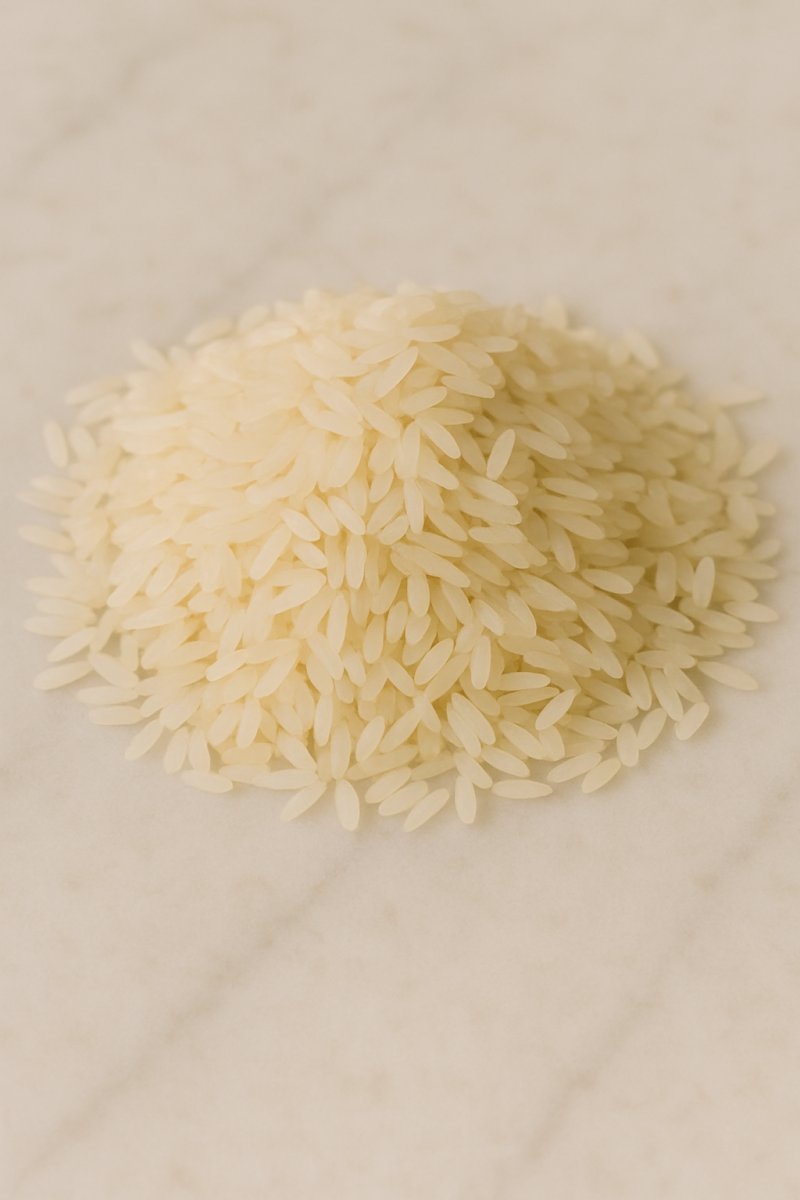
Uncooked white rice in a bowl
I have a long, small love affair with rice that runs through kitchens, train journeys and late dinners. As a child I liked it plain, steamed and with lots of butter; later I learned to love it in foreign cities, from steaming sushi rice in a tiny bar to the aromatic biryani that awakened my senses on a rainy evening. A colleague once brought a jar of fragrant risotto to the office, and the scent dissipated like a promise: rice can begin so unassuming and then, over time, carry whole situations.

Rice is amazingly versatile. It is not just a side dish, but a leading role, a filling, a pudding and a coating. I like experimenting with different varieties: Basmati for fluffy dishes, jasmine rice for exotic aromas, Arborio for creamy risotto and dark wild rice for rustic salads. Each variety has its own properties and moods; I still remember the one evening when I thought my risotto was ruined — until I realized it had exactly the desired silky texture, it just needed to be served a little less impatiently.

A few practical things I've learned:

  • Wash rice thoroughly to remove excess starch and avoid sticky results.
  • The right water ratio often makes the difference between mushy and perfectly fluffy.
  • Rice can rescue leftovers: fried rice, rice pancakes or sweet rice desserts are lifesavers after a long week.
I like how rice carries cultural stories — from the simple peasant meal to the festive rice dish. Whenever I put a pot on, I feel a little anticipation: who will be at the table today, what conversation will arise, which memory will be linked to that smell? A friend once gave me a pack of hand-picked rice from a small mill, and ever since I think with every bite about the patience and care that go into so few grains.

In the end rice is more than just carbohydrates to me: it is comfort, creativity and connection. It allows improvisation and ritualized preparation alike, and that is exactly what makes it so wonderfully reliable and always surprising.

Availability & types

Availability and types of rice

Rice is one of the world's most important foods and can be bought almost anywhere. Its origin goes back a long way: rice was first cultivated thousands of years ago in Asia, especially in countries like China and India. Today, however, rice is grown in many parts of the world where there is enough water and warm temperatures. You can find it in supermarkets, markets and even small shops — sold loose, in bags or as part of processed products like rice cakes or ready meals.

When talking about the growing regions, there are two main groups: regions with heavy rainfall and rivers that can flood fields (these are called wet-rice cultivation), and dry regions where rice grows with the help of irrigated fields. Important producing countries include:

  • Asia: Countries like China, India, Indonesia and Vietnam grow a lot of rice. There you often see the typical flooded rice fields, also called "rice terraces".
  • Africa: Parts of Africa, for example Nigeria and Madagascar, also produce a lot of rice.
  • America: The USA, Brazil and some countries in South America also grow rice, mainly in flat, well-irrigated areas.
  • Europe: In southern regions such as Spain or Italy rice is grown, especially varieties used for specific dishes like risotto.
There are many different varieties and types of rice. Sometimes we distinguish them by grain length or by appearance and taste. Here are the main ones, simply explained:

  • Long-grain rice: The grains are slender and remain loose and separate after cooking. A good example is Basmati, often used in Indian cuisine. You can think of long-grain rice like spaghetti — the pieces stay well separated.
  • Medium-grain rice: The grains are somewhat shorter and become slightly softer and stickier when cooked. It is suitable for dishes like paella.
  • Short-grain rice: These grains are short and thicker. They become very soft and sticky when cooked — perfect for sushi or rice pudding. You can imagine them as small balls that like to stick together.
  • Whole grain rice (brown rice): Here the outer layer of the grain is retained, the so-called bran layers. As a result it is a bit darker and contains more fiber and nutrients. It takes longer to cook but is healthier.
  • White rice: In this variant the outer husks are removed so the grain looks white. It cooks faster and tastes milder but has fewer nutrients than whole grain rice.
  • Special varieties: These include parboiled rice (a rice that is briefly steamed before milling; this preserves some nutrients and makes it less sticky) or aromatic rices like jasmine rice, which has a floral fragrance.
So rice is very versatile: depending on which variety you choose, it is better suited to different dishes. In many stores you will find basic types like white long-grain and short-grain rice, but also special varieties like Basmati, jasmine or brown rice. That makes rice an ingredient that is easy to obtain and offers many possibilities in the kitchen — from simple side-dish rice to sweet or savory dishes.
Details & nutrition

Property Value
Unit g
Calories per 100 350
Protein per 100 7.0
Carbohydrates per 100 78.0
Sugar per 100 0.2
Fat per 100 0.7
Saturated fat per 100 0.2
Monounsaturated fat 0.2
Polyunsaturated fat 0.3
Fiber per 100 1.0
Vitamin C (mg) per 100 0
Vitamin D (IU) per 100 0
Calcium (mg) per 100 10
Iron (mg) per 100 1.2
Nutri-Score C
CO₂ footprint 2.7
Origin Worldwide, especially in Asia
Gluten-free Yes
Lactose-free Yes
Nut-free Yes
Vegan Yes
Note Nutritional values for dry, white long-grain rice; values change when cooked depending on water absorption.

Technical & scientific information

Rice (Oryza sativa and Oryza glaberrima) is one of the world's most important cereals and a staple food for billions of people. Botanically, rice belongs to the grass family (Poaceae). It is an annual plant whose edible part is the seed. The seed consists of several layers: the inner endosperm layer, the nutrient-rich germ (embryo) and an outer seed coat (hull), which is removed in milled rice.

Chemical composition and nutritional values

The main component of rice is starch, a polysaccharide made of amylose and amylopectin. The ratio of these two components varies by rice variety and influences cooking properties and texture: a high amylose content leads to grainy, less sticky rice, while a high amylopectin content produces stickier varieties. In addition to starch, rice contains proteins (typically 6–8% of dry weight), lipids (0.5–2%) mainly in the germ, as well as fiber, minerals and small amounts of vitamins. Whole grain rice (brown rice) retains bran and germ and therefore provides more fiber, B-complex vitamins (particularly B1, B3, B6) and minerals such as magnesium, phosphorus and iron than milled white rice.

Processing methods

  • Harvesting and drying: After harvest, rice grains are dried to reduce moisture and ensure storage stability.
  • Hulling (removal of husk): The outer hull is removed, producing brown rice.
  • Polishing/Milling: Removing the bran layer and germ produces white rice with longer shelf life but reduced nutrient content.
  • Parboiling/parboiling process: Treating the wet grains with steam before milling; this process drives nutrients from the bran into the endosperm and increases cooking firmness.
  • Soaking and puffing: For convenience products, rice grains are sometimes puffed or processed into rice flour.
Physical and technological properties

Starch gelatinization is a central process when cooking rice: heating in water leads to swelling and partial dissolution of starch fractions, producing a soft and digestible texture. Temperature and water uptake depend on the amylose content, grain shape (long-, medium- or short-grain) and pretreatments such as parboiling. Low-gluten or reduced protein content in rice affect foam formation rates and viscosity in foods, which is why rice starch is often used as an industrial raw material in the food and paper industries.

Health aspects

Rice is gluten-free and therefore suitable for people with celiac disease or gluten intolerance. Whole grain rice is associated with beneficial effects on cardiovascular health and blood sugar regulation, since fiber and micronutrients can reduce glycemic load. White rice has a higher glycemic effect and excessive consumption may increase the risk of type 2 diabetes, particularly in context-dependent dietary patterns.

A relevant safety issue is natural contamination with inorganic arsenic, which can occur in soils and irrigation water. Rice variety, growing conditions and processing influence arsenic concentration; whole grain rice tends to contain higher arsenic levels because arsenic can be concentrated in the bran layer. Risk-reduction measures include variety selection, cultivation methods, water management and cooking methods with plenty of water followed by draining.

Applications

  • Food: staple food, rice flour, rice starch, rice milk, alcoholic beverages (e.g. sake).
  • Industrial: starch extraction for textiles, paper, adhesives and packaging.
  • Biotechnological: rice genome research provided early models for plant research; genetically modified rice varieties have been developed for nutrient fortification (e.g. Golden Rice).
In summary, rice is a chemically and technologically versatile cereal with high nutritional importance. Different varieties and processing stages determine nutrient profile, cooking behavior and health impacts. Current research focuses on nutrient fortification, reduction of contaminants such as arsenic and improvement of yield and environmental sustainability in global cultivation.

Wiki entry for: rice
Active now: 14 visitors of which 2 logged-in members in the last 5 minutes