Menu & categories

Rice pudding

Creamy dessert made from milk and short-grain rice

Wiki about rice pudding Nutri-Score D Vegan No Gluten-free Yes Lactose-free No Nut-free Yes
NUTRITION / 100 g
118 kcal 3.5 g Protein 20.0 g Kohlenhydrate 2.5 g Fett

Introduction

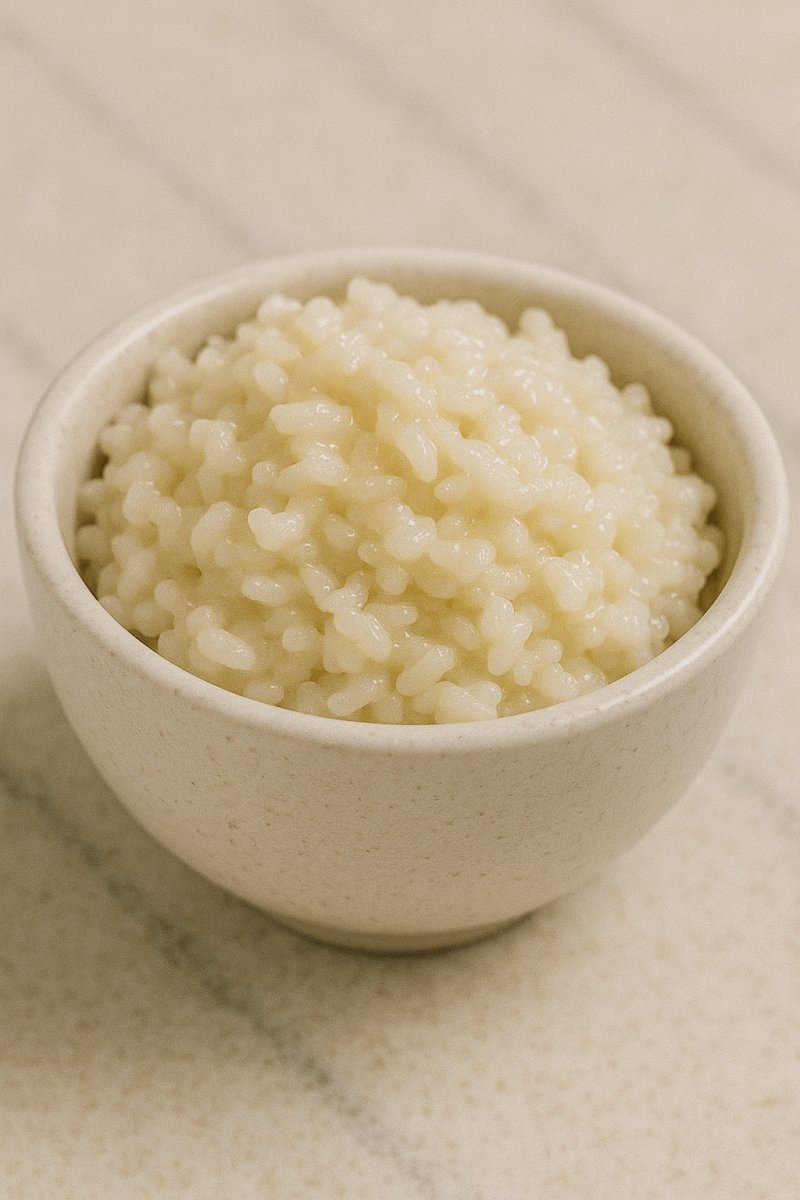
Bowl of creamy rice pudding
I love rice pudding. Even the scent when milk and short-grain rice come to a boil awakens in me a kind of cozy anticipation, the sort you only get from Sunday breakfasts or early winter evenings. I still remember sitting as a child at a neighbor's table and tasting the delicate, almost velvety texture with a spoon; since then this dish has been more than just a sweet for me — it's a layer of memories.

Rice pudding is simple yet surprisingly versatile. The basic ingredients are hard to beat: milk, short-grain rice, a pinch of salt and a little sugar. But that restraint allows for experiments. I've flavored it with a vanilla pod, a cinnamon stick or lemon zest, in another version enriched it with a splash of cream or mixed it with some quark for a snack. A colleague of mine swears by a pinch of cardamom; I was skeptical at first but was convincingly converted.

Preparation is a small art: patience pays off, constant stirring prevents burning and ensures the perfect binding. For an especially creamy result I often cook with a ratio of 1 part rice to 4 parts milk and let it simmer slowly over low heat, covered. Those in a hurry can turn to pressure-cooker rice pudding, but for me the slow stovetop cooking is part of the ritual.

Rice pudding is a chameleon at the dessert table. It pairs with fruity compotes such as cherry or plum jam, with a spoonful of honey and nuts or — surprisingly well — with a dollop of spicy orange marmalade. For cool summer days I like to serve it with fresh berries; in winter I love the combination with rye brittle or candied almonds.

  • Easy to prepare
  • Versatile in flavor combinations
  • Carries memories and coziness
Whether as a childhood memory, a quick snack or a lovingly prepared dessert: rice pudding remains for me a comfort with style. A bowl of it can turn a kitchen into a home and make dining companions smile.

Availability & types

Availability and types of rice pudding

Rice pudding is both an ingredient and a ready dish, made from certain varieties of rice. Its origins lie where rice has long been cultivated: in countries with warm climates and abundant water. Rice grows mainly in Asia — countries like China, India, Thailand and Vietnam are large producers. But rice is also grown in Europe and the Americas, for example in Spain, Italy, Germany (especially in warmer regions) and the USA.

When talking about the availability of rice pudding one means two things: first the rice varieties used for rice pudding, and second the ready-made packages labeled “rice pudding” found in supermarkets. In supermarkets you will usually find both:

  • Dry rice for rice pudding — these are special short-grain or medium-grain rice varieties. They are typically found in the rice aisle.
  • Ready rice pudding — these are already cooked and often sweetened products in the chilled section or in cans and cups. They are quick to eat.
There are different rice varieties suitable for rice pudding. It is important that they release a lot of starch during cooking and thus become nicely creamy. The best known types are:

  • Short-grain rice – the grains are small and round. They release a lot of starch during cooking and become very soft. This is the classic choice for rice pudding because the result becomes very creamy.
  • Arborio – a variety from Italy often used for risotto, but also suitable for rice pudding. It is somewhat larger than short-grain rice and very starch-rich.
  • Carnaroli – also an Italian rice, similar to Arborio but remaining slightly firmer. Some prefer it because the rice pudding then has a somewhat firmer texture.
  • Medium-grain rice – falls in size between short- and long-grain rice. Some varieties are also suitable for rice pudding.
Besides these classic rice varieties there are also variants and alternatives:

  • Wholegrain rice – rice whose outer bran layer has not been removed. It is healthier because it contains more fiber, but it does not become as creamy as white rice and takes longer to cook.
  • Gluten-free or special organic varieties – many supermarkets offer organic rice pudding or rice from ecological farming, i.e. grown without certain chemicals. “Gluten-free” is often printed on packages because rice is naturally gluten-free.
  • Pseudo–rice-pudding options – people who do not like rice or who want to avoid carbohydrates sometimes use oats, quinoa or buckwheat in a similar way to rice pudding. These variants taste different but can be prepared just as creamily.
In many countries there are also regional specialties: in Scandinavia, for example, rice pudding (in Swedish “risgrynsgröt”) is often eaten at Christmas. In Asia, by contrast, rice is used as a staple food for many dishes, and other rice varieties are widespread there.

In summary: you can find suitable rice varieties for rice pudding in almost any supermarket, especially as short-grain or Arborio rice. Ready rice pudding is available in the chilled section or as canned goods. There are also healthier wholegrain variants, organic types and creative alternatives like oat or quinoa rice pudding. This way everyone can choose the appropriate variant according to taste, time and preference.

Details & nutrition

Property Value
Unit g
Calories per 100 118
Protein per 100 3.5
Carbohydrates per 100 20.0
Sugar per 100 7.0
Fat per 100 2.5
Saturated fat per 100 1.6
Monounsaturated fat 0.7
Polyunsaturated fat 0.2
Fiber per 100 0.3
Vitamin C (mg) per 100 0
Vitamin D (IU) per 100 40
Calcium (mg) per 100 120
Iron (mg) per 100 0.1
Nutri-Score D
CO₂ footprint 1.5
Origin Varies by manufacturer, typically EU
Gluten-free Yes
Lactose-free No
Nut-free Yes
Vegan No
Note Nutritional values for prepared rice pudding based on cow's milk (3.5% fat) and short-grain rice, without additional toppings such as cinnamon or the addition of sugar beyond the stated amount.

Technical & scientific information

Rice pudding denotes in food science a dish or an ingredient made from short- to medium-grain rice that is cooked together with milk and usually sugar into a creamy porridge. Chemically speaking, rice pudding is a mixture of starch-rich carbohydrates, milk components such as water, proteins (mainly caseins and whey proteins), milk fat and lactose-containing carbohydrates, as well as smaller amounts of minerals and vitamins. The physical and sensory properties of rice pudding are largely influenced by the starch characteristics of the rice used and the composition of the milk.

Starch and gel formation
Rice starch consists predominantly of two glucose polymers: amylose and amylopectin. Short- and medium-grain rice varieties generally have a higher amylopectin content, which causes them to swell more strongly when heated and hydrated and to produce a smoother, creamier texture. During cooking the starch granules absorb water and gelatinize; some amylose is released into the cooking liquid and can contribute to a gel structure upon cooling. The quantitative ratio of amylose to amylopectin therefore determines viscosity, retrogradation (the reformation of the gel structure on cooling) and the tendency toward a grainy or smooth consistency.

Milk components and their role
Milk provides proteins, fats, lactose and minerals, which influence both nutritional value and structure. Casein forms, upon heating and in complex with calcium, partial colloids that stabilize texture. Milk fat contributes to flavor richness and mouthfeel; its emulsification depends on the amount of fat and the fat content of the milk used. Lactose affects sweetness and can participate at high temperatures in non-enzymatic browning reactions (Maillard reaction) with proteins, which with prolonged heating can lead to flavor changes and color development.

Nutritional values
The composition of a typical rice pudding varies depending on the rice-to-milk ratio and added sugar, but generally follows these characteristics:

  • Calories: high energy content due to the combined carbohydrates (rice starch, lactose, sugar) and milk fats.
  • Carbohydrates: mainly starch (long-chain glucose polymers) and lactose; sugar levels increase with the addition of table sugar.
  • Protein: moderate portion from milk proteins; the plant-based protein contribution from rice is low.
  • Fat: variable depending on the milk used (skimmed to whole); saturated fatty acids predominate.
  • Minerals and vitamins: calcium and phosphorus from milk are significant contributors; vitamins such as B2 and B12 are present, especially in whole milk.
Processing methods
Traditionally rice pudding is made by slowly simmering rice in milk, occasionally with added sugar, vanilla or cinnamon. Industrially produced rice pudding products often undergo pasteurization or sterilization for shelf-life extension; stabilizers (e.g. modified starches, gelling agents) and thickeners may also be added to improve texture and storage stability. Instant rice pudding is precooked and dried so that it can be quickly rehydrated by adding hot liquid. Furthermore, enzymatic treatments are used in the food industry to modulate texture and sweetening power (e.g. breakdown of certain polysaccharides).

Health aspects
Rice pudding is energy-dense and can serve short-term as a readily available carbohydrate source, for example for recovery after physical exertion. For individuals with lactose intolerance conventional versions are problematic, since lactose cannot be sufficiently broken down and causes digestive discomfort. Alternatively, lactose-free milk or plant-based milks can be used, although the latter may alter protein and calcium content. People with diabetes should watch portion sizes, as the combination of rapidly available carbohydrates can strongly affect blood glucose. From a nutritional standpoint rice pudding is suitable as an occasional food; if consumed frequently, fat and sugar contents should be considered.

Sensory properties and storage
The quality of rice pudding is assessed sensorily by texture (creamy vs. grainy), taste (milkiness, sweetness, possible toasty notes) and color. During storage retrogradation and drying out may occur, making the texture firmer. Cooked rice pudding should be refrigerated and consumed within a few days; industrially packaged, preserved products often contain preservatives or are sterilized to ensure shelf-life and microbial safety.

In summary, rice pudding is from a chemical perspective a relatively simple, functionally versatile food whose properties are determined by the interaction between rice starch and milk components. Texture, flavor, nutritional value and shelf-life can be intentionally shaped by choosing raw materials and processing methods, while dietary constraints such as lactose intolerance must be taken into account when formulating products.

Wiki entry for: rice pudding
Active now: 18 visitors of which 2 logged-in members in the last 5 minutes