Menu & categories

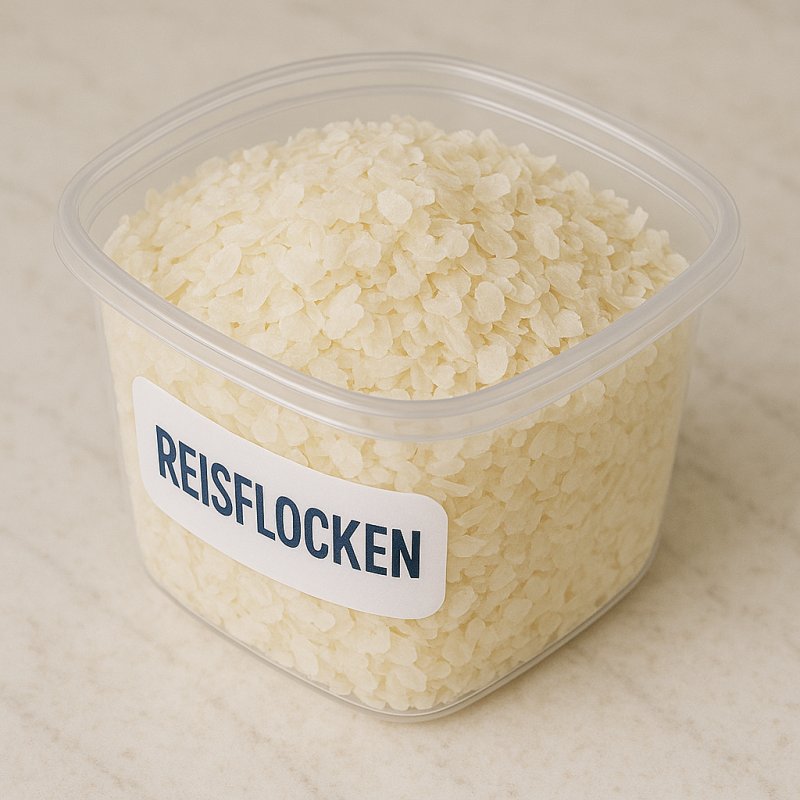
Rice flakes

Mild, gluten-free flakes made from rice - ideal for porridge, purees and baking recipes.

Wiki about rice flake Nutri-Score A Vegan Yes Gluten-free Yes Lactose-free Yes Nut-free Yes
NUTRITION / 100 g
370 kcal 7 g Protein 80 g Kohlenhydrate 1.2 g Fett

Introduction

Bowl of rice flakes
I still remember my first proper encounter with rice flakes vividly: it was on a rainy Sunday afternoon, and a friend had cooked a simple soup that immediately won me over with its silky texture and mild sweetness. Since then rice flakes have been among my quiet kitchen heroes, which I enjoy using equally for quick breakfasts as for improvised sauces or baby food.

Rice flakes are dehulled, pre-cooked rice grains that have been rolled into flat flakes. They require little effort to prepare because they swell quickly, need minimal cooking and are easy to puree. They are naturally gluten-free and therefore a great alternative for people with celiac disease or for anyone wanting to reduce wheat. I also like that they taste very neutral and combine excellently with spices, herbs and other ingredients.

When I want to tell someone about their benefits, I like to mention these points:

  • Quick preparation: Rice flakes are ready in a few minutes.
  • Versatility: They fit into sweet porridges as well as savory casseroles or soups.
  • Gentle on digestion: Ideal for sensitive stomachs or as an introduction to complementary feeding.
  • Long shelf life: Stored dry they are very stable.
A small tip from my kitchen: I briefly toast rice flakes in a dry pan before adding liquid. That brings out a light nutty aroma that pairs especially well with cinnamon, cardamom or coconut. When I need to be quick, I mix oats and rice flakes in a 1:1 ratio for more bite and substance.

Try rice flakes as a binder for meatballs or as a base for a creamy rice soup with leek and nutmeg. The ability to conjure up so many different dishes from a simple package still fascinates me, and I am always happy when I can enthuse someone about them.

Availability & types

What are rice flakes?
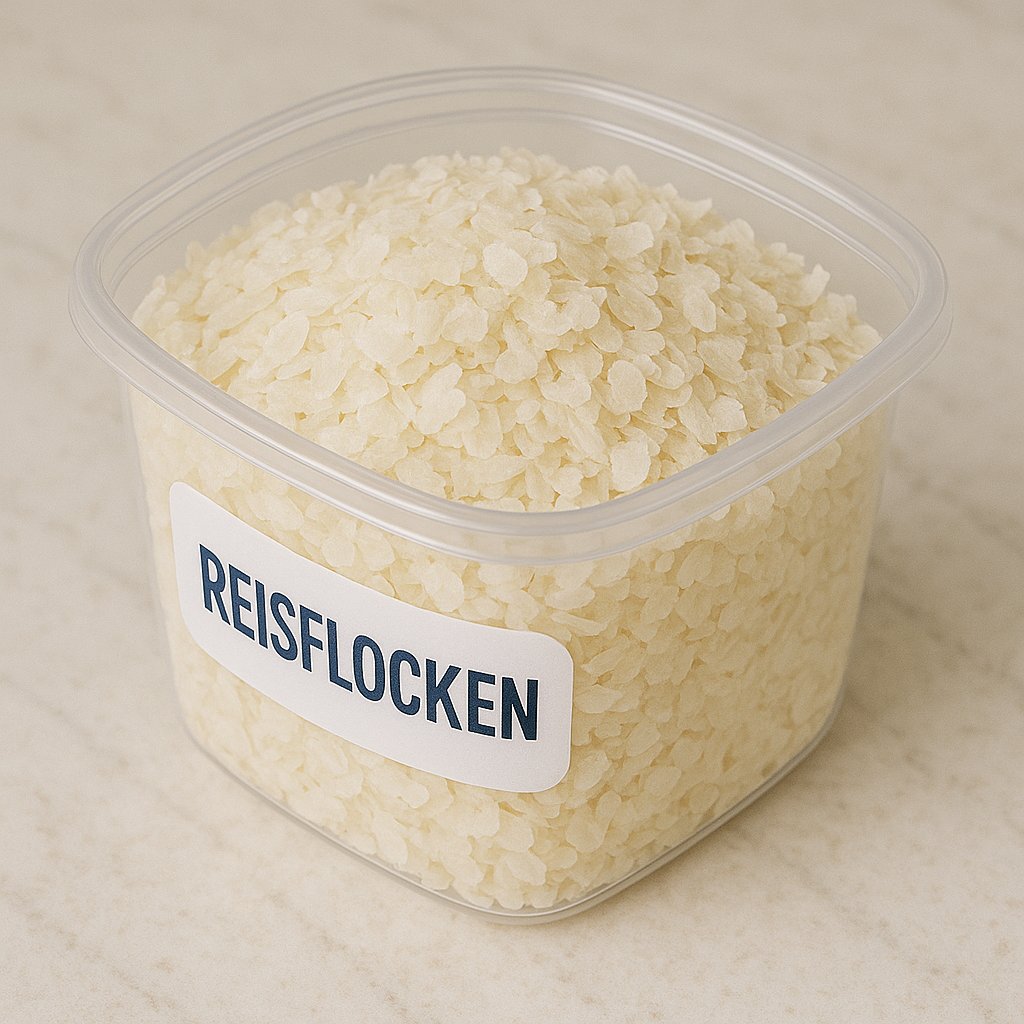
Rice flakes are, simply put, rice that has been cooked or steamed and then flattened. Imagine a grain of rice like a small piece of wood: if it is softened and then crushed between two heavy plates, you get a flat slice — that is a rice flake. They cook quickly, work well in sweet and savory dishes and are especially popular as a breakfast porridge or as an ingredient in bars and snacks.

Origin
Rice originally comes from Asia, and the first rice flakes were invented there as well. In countries such as India, Bangladesh and Sri Lanka they are called for example Poha or Flattened Rice. Over time the idea spread around the world, because rice is grown in many countries and the technique to flatten it is quite simple. The basic idea is therefore old, while production today is often industrial.

Growing regions
Rice grows mainly in warm and humid regions. Important growing regions include:

  • South Asia: India, Bangladesh — very large rice producers.
  • Southeast Asia: Thailand, Vietnam, Indonesia — many varieties for different dishes.
  • China: Very large rice production, many regions with different climates.
  • America and Europe: USA (e.g. California), Spain and Italy also grow rice, but less than Asia.
  • Other regions: Brazil and parts of Africa also cultivate rice.
Depending on how warm it is and how much water is available, different rice varieties grow better. Some rice fields look like large, enclosed bathtubs (they are called "paddies") because rice is often grown standing in water until it matures.

Available types and variants
Rice flakes come in several variants because different rice varieties and processing methods impart different properties. Here are some simple explanations:

  • White rice flakes (polished): These are made from hulled rice. They are light, soft and disintegrate quickly in liquid — good for quick porridge.
  • Whole grain or brown rice flakes: The outer layer of the grain (the bran) is retained. They are nuttier in taste and healthier because they contain more fiber.
  • Thin vs. thick flakes: Thin flakes are like paper-thin sheets and cook very quickly. Thick flakes are larger and take longer but remain firmer.
  • Roasted or pre-cooked flakes: Roasted rice flakes have a slight toasty aroma, pre-cooked ones are only dry-pressed — they require only hot water.
  • Colored variants: Some rice flakes are made from red or black rice and appear darker. They are attractive in muesli and bring different flavors.
  • Organic and gluten-free variants: Rice is naturally gluten-free. There are certified organic rice flakes without pesticides.
Where to get rice flakes?
You can find rice flakes in supermarkets, health-food stores, Asian grocery stores and online. They are often packaged in bags or tins. If you are looking for a product, pay attention to the label (white, brown, roasted) — that way you know how quickly it cooks and what flavor to expect.

Rice flakes are therefore a versatile ingredient: easy to make, widespread in many regions of the world and available in variants suitable for quick breakfasts, sweet desserts or savory dishes.
Details & nutrition

Property Value
Unit g
Calories per 100 370
Protein per 100 7
Carbohydrates per 100 80
Sugar per 100 0.7
Fat per 100 1.2
Saturated fat per 100 0.3
Monounsaturated fat 0.4
Polyunsaturated fat 0.3
Fiber per 100 2.2
Vitamin C (mg) per 100 0
Vitamin D (IU) per 100 0
Calcium (mg) per 100 10
Iron (mg) per 100 1.5
Nutri-Score A
CO₂ footprint 0.09 kg CO2e/100g
Origin Depending on cultivation: EU or Asia
Gluten-free Yes
Lactose-free Yes
Nut-free Yes
Vegan Yes
Note Naturally gluten-free; depending on processing, traces of gluten-containing cereals cannot be excluded due to cross-contamination.

Technical & scientific information

Rice flakes are broken and flattened rice grains that, after various pre-treatments, occur as easily swellable flakes. They are manufactured industrially or artisanally from polished or pre-cooked rice and serve as a base ingredient in breakfast cereals, baby meals, soups, porridges and as a thickening agent in food processing.

Manufacturing process: Production typically includes cleaning, hulling and polishing of the rice grain, where applicable pre-soaking or parboiling, steaming, rolling into flakes and subsequent drying as well as occasional roasting. During parboiling heat-sensitive nutrients migrate from the silver skin into the endosperm and are thus better preserved in the final product. Steaming activates starch gelatinization so that during rolling the grains break more easily and after subsequent drying quickly absorb water.

Chemical composition and constituents: Rice flakes consist predominantly of carbohydrates, primarily starch, with typical amounts of 70 to 85 g per 100 g of product. The starch structure is composed of amylose and amylopectin; the amylose content varies by rice variety typically between 10 and 30%. Protein content is usually between 6 and 8 g per 100 g and includes rice storage proteins such as glutelins and prolamins. Fat content is low (approx. 1–3 g/100 g), so the product is relatively shelf-stable as long as moisture and oxygen are kept away. Dietary fiber, minerals (for example magnesium, phosphorus, iron) and B vitamins are present in low to moderate amounts; in parboiled or fortified flakes B vitamins can be higher.

Nutritional values (typical values per 100 g):

  • Calories: about 360–375 kcal
  • Carbohydrates: 75–85 g
  • Protein: 6–8 g
  • Fat: 1–3 g
  • Fiber: 1–3 g
Physical and techno-functional properties: Rice flakes are characterized by high swelling capacity and relatively low viscosity compared with wheat or maize starch. Gelatinization temperature is typically in the range of 65–75 °C depending on variety. During cooking the disrupted starch molecules lead to thickening which on cooling can partially form resistant starch through retrogradation. Paste properties depend on graininess, pre-treatment and moisture content of the flakes.

Health aspects: Rice flakes are gluten-free and therefore suitable for people with celiac disease or gluten intolerance. Due to their high carbohydrate content they influence blood glucose; the glycemic index varies with flake thickness, pre-treatment and preparation and can range from moderate to high. Rice can accumulate inorganic arsenic, which is why infant foods made from rice flakes should be evaluated critically and, if necessary, supplemented with varieties low in arsenic or with alternative grains. Parboiling reduces nutrient losses, but does not necessarily increase arsenic concentration.

Safety and storage instructions: To maximize shelf life rice flakes should be stored dry (moisture <12 %), cool and protected from light to prevent microbial growth and hydrolytic or oxidative rancidity. Packaging with an oxygen barrier extends shelf life. Industrially, rice flakes are often fortified to correct micronutrient deficiencies, particularly in infant and toddler foods.

In summary, rice flakes are a technically versatile, easily digestible and gluten-free food with a predominantly starch-based nutritional profile. Their functional properties can be specifically controlled by choice of rice variety and pre-treatment, while health assessments should consider glycemic effects, possible arsenic contamination and any fortification.

Wiki entry for: rice flake
Active now: 17 visitors of which 2 logged-in members in the last 5 minutes