Menu & categories

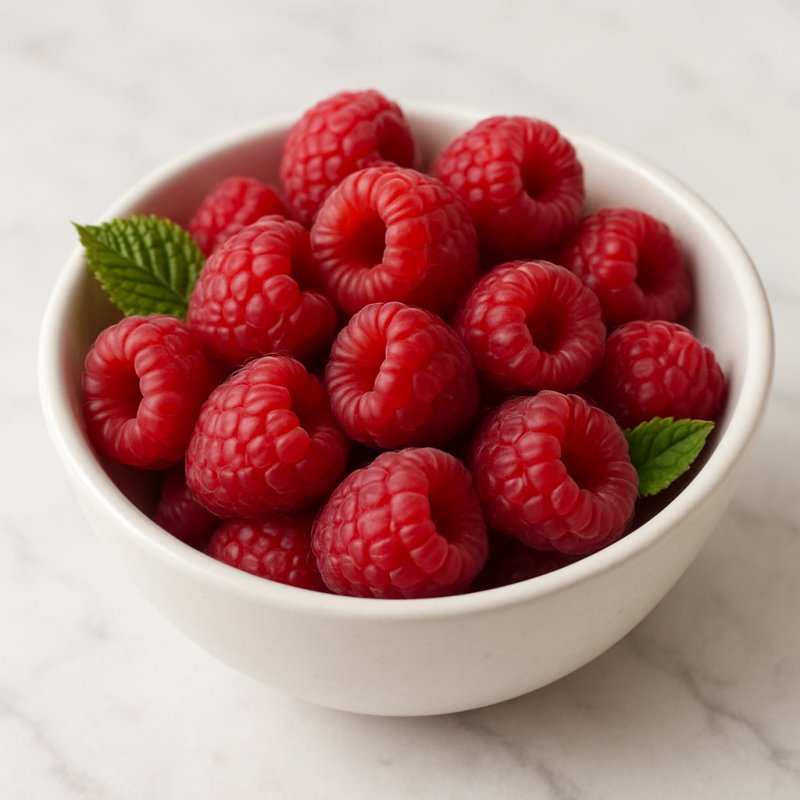
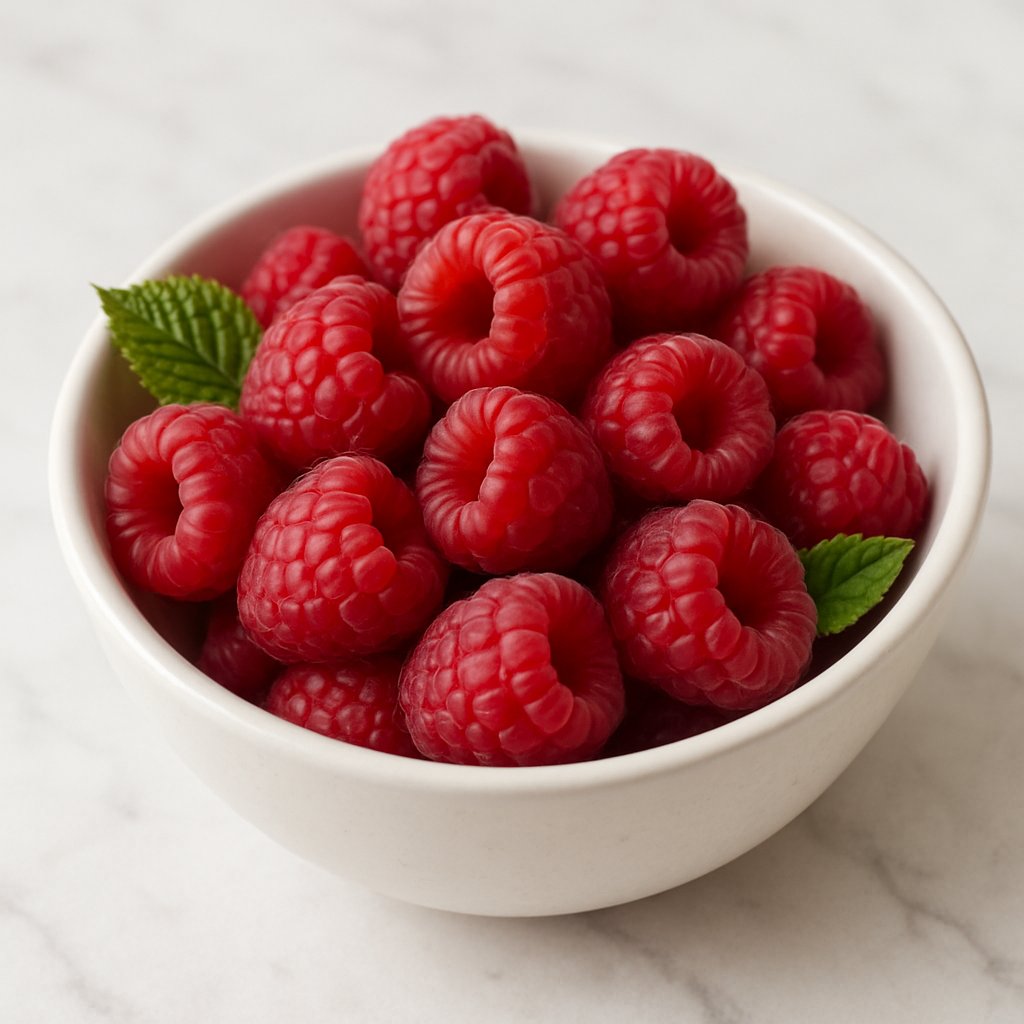
Raspberries

Aromatic berries high in fiber and vitamin C.

Wiki about raspberry Nutri-Score A Vegan Yes Gluten-free Yes Lactose-free Yes Nut-free Yes
NUTRITION / 100 g
52 kcal 1.2 g Protein 12.0 g Kohlenhydrate 0.7 g Fett

Introduction

Fresh raspberries
I remember exactly the first summer when I rediscovered raspberries: it was at a weekly market, where the scent of ripe fruit filled the air and I bought a small punnet without much plan. The first red berries melted on my tongue and left a perfect balance of sweetness and light tartness. Since then raspberries have become one of those ingredients that can elevate a dish in an instant.

Raspberries are delicate, aromatic and surprisingly versatile. Their fine aroma suits both desserts and savory dishes. I once recommended to a friend a goat-cheese salad that gained a wonderful freshness with raspberries and walnuts. A colleague of mine always brings a bag of frozen raspberries to the office because when frozen they are almost as aromatic as fresh ones and great for quick smoothies.

Over the years I have gathered practical properties and tips.

  • Nutrients: raspberries are rich in vitamins, fiber and phytochemicals.
  • Processing: they are well suited to compotes, jams or sauces.
  • Storage: fresh raspberries are delicate and should be kept cool; frozen they remain good for a long time.
  • Pairings: they harmonize with vanilla, citrus, chocolate, but also with herbs like basil or mint.
When picking them you should be careful because raspberries crush easily. I remember a Sunday breakfast when we made jam together and ate more berries than went into the pot. The result was delicious and met with loud approval at the kitchen table.

As a topping on yogurt, in a cold sorbet or as a surprising element in a vinaigrette: raspberries have the ability to make simple dishes special. Their color is already a small promise to the senses. Try different varieties and preparations and let their freshness inspire you.

Availability & types

Availability and types of the ingredient raspberries

Raspberries are small, soft berries that originally grew wild in many parts of the world. Their origins lie in Europe, Asia and North America. People have been harvesting wild raspberries for many hundreds of years, and later gardeners and farmers bred specific varieties that produce more fruit or better flavor.

Today raspberries are grown in many countries. Important production areas include:

  • Europe – countries such as Poland, Serbia, Spain and also Germany grow many fruits.
  • North America – the USA and Canada have large raspberry plantations.
  • South America – especially Chile supplies raspberries during our winter, so they can be bought year-round.
Raspberries come in different varieties and colors. You can compare it to dog breeds: all are dogs, but each has different traits. For raspberries these are flavor, color and ripening time.

  • Red raspberries – the most well-known type; sweet and slightly tart, often soft in texture.
  • Yellow/ golden raspberries – often milder and sweeter, visually attractive in desserts.
  • Black and purple raspberries – somewhat rarer, often more intense in flavor, almost like a cross between raspberry and blackberry.
Two terms are important to remember for harvesting and harvest time:

  • Summer-bearing varieties (sometimes "once-bearing"): these bear fruit once a year, in summer. The berries grow on older canes that developed the previous year.
  • Autumn-bearing or remontant varieties (also called "twice-bearing"): these can fruit already in summer and/or again in autumn. Some cultivars even produce continuously on new shoots.
If you want to buy raspberries, you can find them in various forms in the shop:

  • Fresh – best in season, just picked from the market or supermarket. They are very delicate and spoil quickly.
  • Frozen – taste good year-round and are practical for baking or smoothies.
  • Canned, jam, puree or juice – longer shelf life and useful when you want to preserve the flavor.
  • Dried – as a snack or in muesli, with a more concentrated taste.
One tip: fresh raspberries are delicate like little cushions – handle them gently and store them in the refrigerator. Out of season many fresh raspberries come from abroad, for example from Chile, or you can opt for frozen fruit.

Popular variety names you sometimes see include Tulameen, Heritage or Autumn Bliss. These names help growers and sellers distinguish characteristics – like different apple varieties.

In summary: raspberries come in many colors and varieties, grow in different regions of the world, and can be bought fresh, frozen or processed. That way almost everyone can find the raspberry they like best.
Details & nutrition

Property Value
Unit g
Average weight per piece 4
Calories per 100 52
Protein per 100 1.2
Carbohydrates per 100 12.0
Sugar per 100 4.4
Fat per 100 0.7
Saturated fat per 100 0.02
Monounsaturated fat 0.06
Polyunsaturated fat 0.38
Fiber per 100 6.5
Vitamin C (mg) per 100 26
Vitamin D (IU) per 100 0
Calcium (mg) per 100 25
Iron (mg) per 100 0.7
Nutri-Score A
CO₂ footprint 1.5
Origin Europe (seasonally also Germany)
Gluten-free Yes
Lactose-free Yes
Nut-free Yes
Vegan Yes
Note Rinse briefly before eating; very delicate and best used fresh.

Technical & scientific information

Raspberries (mostly Rubus idaeus and related species) are small aggregate fruits in the rose family, cultivated in temperate climates. Botanically the visible red fruits consist of many small drupelets (false fruits), each containing an achene (seed). Plants differ in growth habit, such as summer-bearing and remontant varieties, and require well-aerated, humus-rich soil and adequate insect pollination.

Composition and nutritional values
Fresh raspberries are composed mainly of water (about 85–88%). Per 100 g they provide around 50–60 kcal and contain roughly 5–7 g of fiber, 1–1.5 g of protein, less than 1 g of fat and 9–12 g of carbohydrates of which about 4–5 g are sugars. Mineral components include mainly potassium and, to a lesser extent, calcium, magnesium and manganese. Important vitamins in raspberries are vitamin C, some B vitamins (e.g. folate) and vitamin K in moderate amounts.

Phytochemistry and secondary plant compounds
Raspberries are rich in phenolic compounds. These include anthocyanins (responsible for red to purple color), ellagitannins and free ellagic acid, flavonols such as quercetin and various phenolic acids. The seeds contain oil-rich flesh with a high proportion of polyunsaturated fatty acids, especially linoleic and alpha-linolenic acids, as well as tocopherol (vitamin E)-like compounds. Aroma compounds such as raspberry ketone and various esters contribute to the typical smell and taste.

Processing and technological aspects
Raspberries are sensitive to pressure and microbial spoilage, so cooling immediately after harvest and gentle handling are important. Common processing forms include:

  • Fresh sale and short-term storage under refrigeration (2–4 °C).
  • Freezing or quick-freezing, which preserves many nutrients relatively well.
  • Heating into jams, juices and purees; however, some vitamin C and heat-sensitive anthocyanins are lost in the process.
  • Freeze-drying and dehydration to produce fruit powders with long shelf life.
Health aspects
Due to their high fiber content and low energy density raspberries are nutritionally favorable. The phenolic compounds exhibit antioxidant properties in vitro, and there is evidence that ellagitannins can be metabolized in the gut to urolithins, which may have inflammation-modulating effects. However, claims about preventive effects against specific diseases remain a subject of research and cannot be generalized. People with pollen allergies may experience cross-reactions (oral allergy syndrome), so consuming fresh fruits can occasionally cause local symptoms in the mouth.

Safety, storage and quality characteristics
Fresh raspberries are highly perishable; rapid cooling, dry storage and short supply chains minimize quality losses. Visually, a bright, even color and a firm but elastic fruit body are considered quality indicators. In commercial cultivation, pesticide residues should be considered; washing and appropriate certifications reduce risks. For processed products, a pectin-rich flesh content and balanced acid-sugar ratios are technologically relevant.

Overall raspberries are a nutrient-rich, sensorily attractive ingredient with versatile applications in fresh and processed products. Their chemical diversity also makes them an interesting subject for nutritional and phytochemical research, while safe storage and gentle processing are crucial to preserve health-related and sensory qualities.

Wiki entry for: raspberry
Active now: 6 visitors of which 2 logged-in members in the last 5 minutes