Availability and types
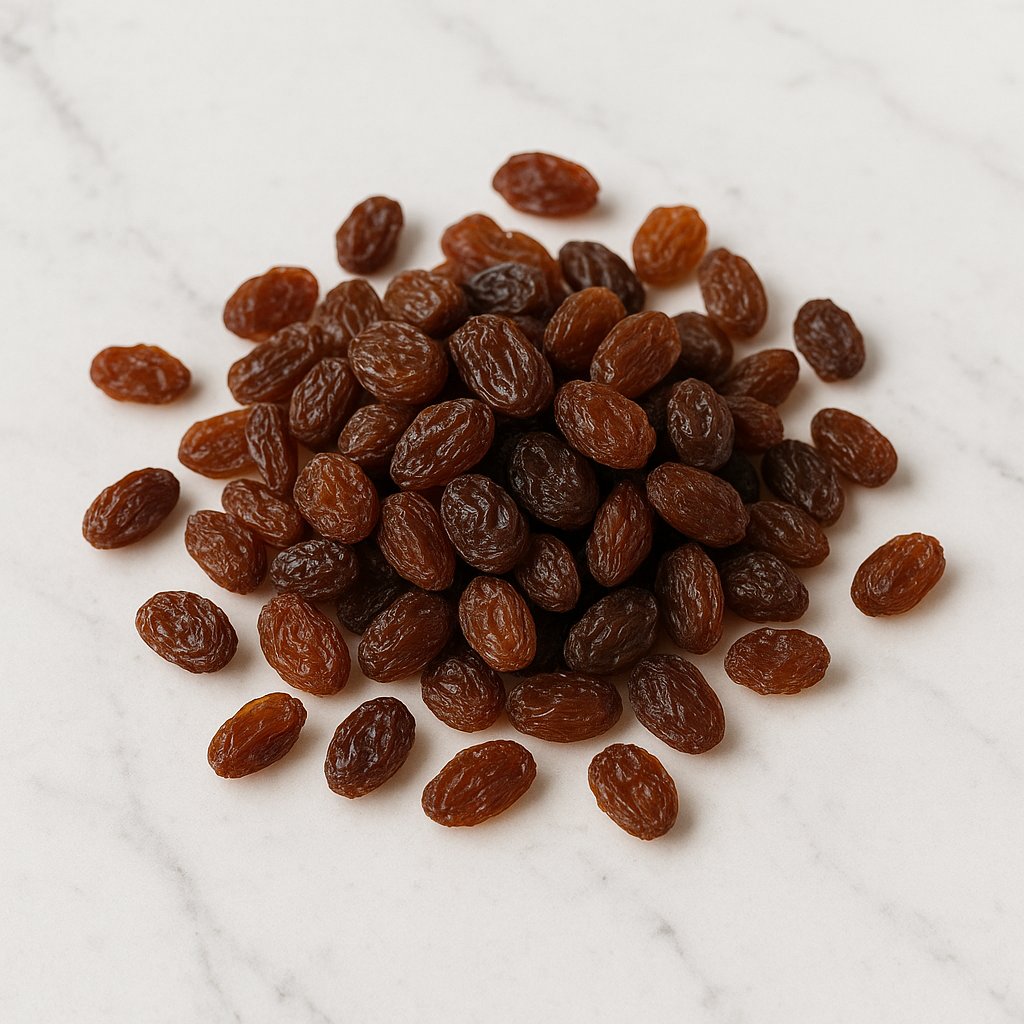
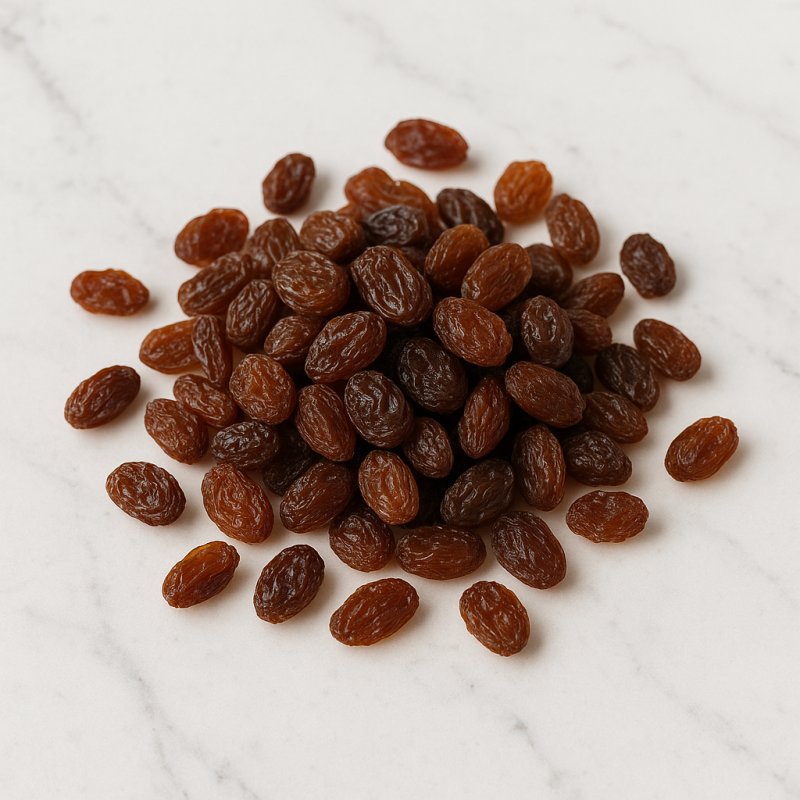
Raisins are dried grapes and therefore can be found in supermarkets almost all year round. They are dried shortly after harvest and can then be stored for a long time. You can buy them loose in large bags, in small portion packs for lunchboxes, or already mixed into mueslis and baked goods. Because they are dry, they last longer than fresh fruit – similar to dried apricots or dates. Still, they retain their flavor best when stored in a cool, dark place.
Where do raisins come from?
Most raisins come from warm, sunny countries, because grapes need a lot of sun to become sweet. Important growing regions are:
Most raisins come from warm, sunny countries, because grapes need a lot of sun to become sweet. Important growing regions are:
- Mediterranean: Spain, Turkey and Greece
- California: many raisins are produced in the USA
- Australia and Chile: also known suppliers
You can imagine it like this: grapes are like small water balloons that slowly shrink in the sun. In warm regions the sun is stronger and dries the grapes more quickly and evenly. Therefore many raisins come from these countries and are then shipped around the world.
What varieties are there?
There are several typical types of raisins that differ in color, taste and size. The main ones are:
There are several typical types of raisins that differ in color, taste and size. The main ones are:
- Sultanas: Light, sweet raisins, often from light-colored grapes. They are soft and very popular in baked goods and muesli.
- Currants: Very small, dark raisins, almost like tiny berries. They are somewhat more intense in flavor and often found in traditional cakes.
- Black raisins: Larger and darker, they have a stronger flavor.
- Golden raisins: Light raisins that are sometimes treated with sulfur dioxide to preserve their golden color. This treatment is similar to preserving apples so they don't turn brown.
- With seeds or seedless: Some raisins come from seeded grapes, others from seedless varieties – the latter are more convenient for snacking.
How are they dried?
Raisins can be dried in various ways: either in the sun, on drying racks, or mechanically in drying facilities. Sun drying is traditional and inexpensive, mechanical drying is faster and more controlled. Those who want natural raisins without additives look for the words “no additives” or “natural” on the packaging.
Raisins can be dried in various ways: either in the sun, on drying racks, or mechanically in drying facilities. Sun drying is traditional and inexpensive, mechanical drying is faster and more controlled. Those who want natural raisins without additives look for the words “no additives” or “natural” on the packaging.
Variants when buying
There are also organic raisins, where chemical treatment is avoided, and oil-treated or sugared variants that have a more specific taste. In trade you can also find ready-made raisin mixes with nuts, chocolate or other dried fruits – practical for on the go.
There are also organic raisins, where chemical treatment is avoided, and oil-treated or sugared variants that have a more specific taste. In trade you can also find ready-made raisin mixes with nuts, chocolate or other dried fruits – practical for on the go.
In short: raisins are widely available, mostly come from sunny countries and come in many forms – light or dark, small or large, with or without seeds. That way you can easily find the variety you like best, whether for baking, muesli or simply as a snack.