Menu & categories

Raffaelo

Coconut-almond confection with milk cream filling

Wiki about Raffaello Nutri-Score E Vegan No Gluten-free Yes Lactose-free No Nut-free No
NUTRITION / 100 g
640 kcal 7.0 g Protein 42.0 g Kohlenhydrate 49.0 g Fett

Introduction

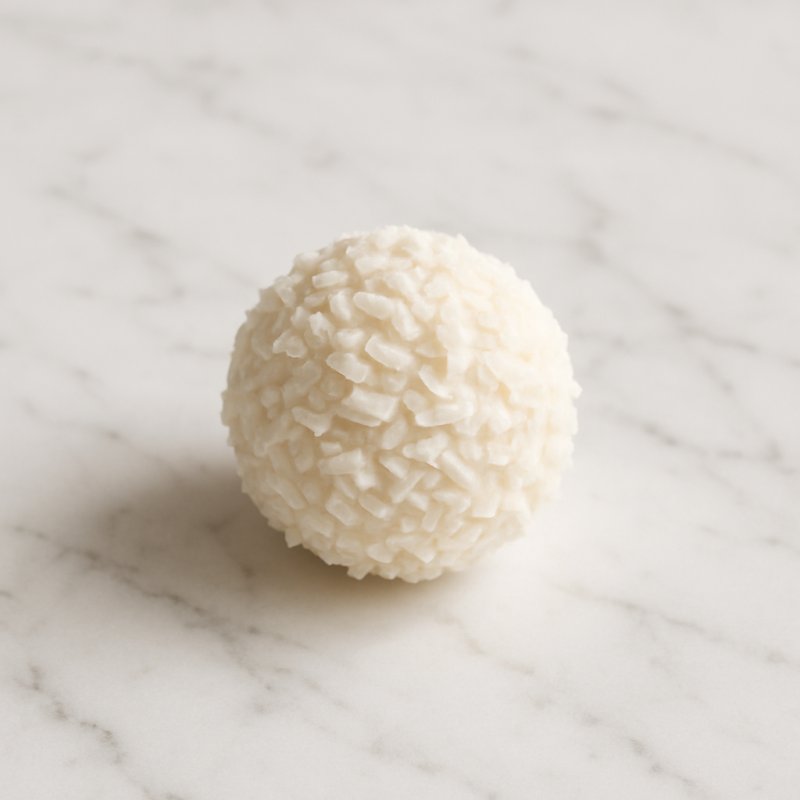
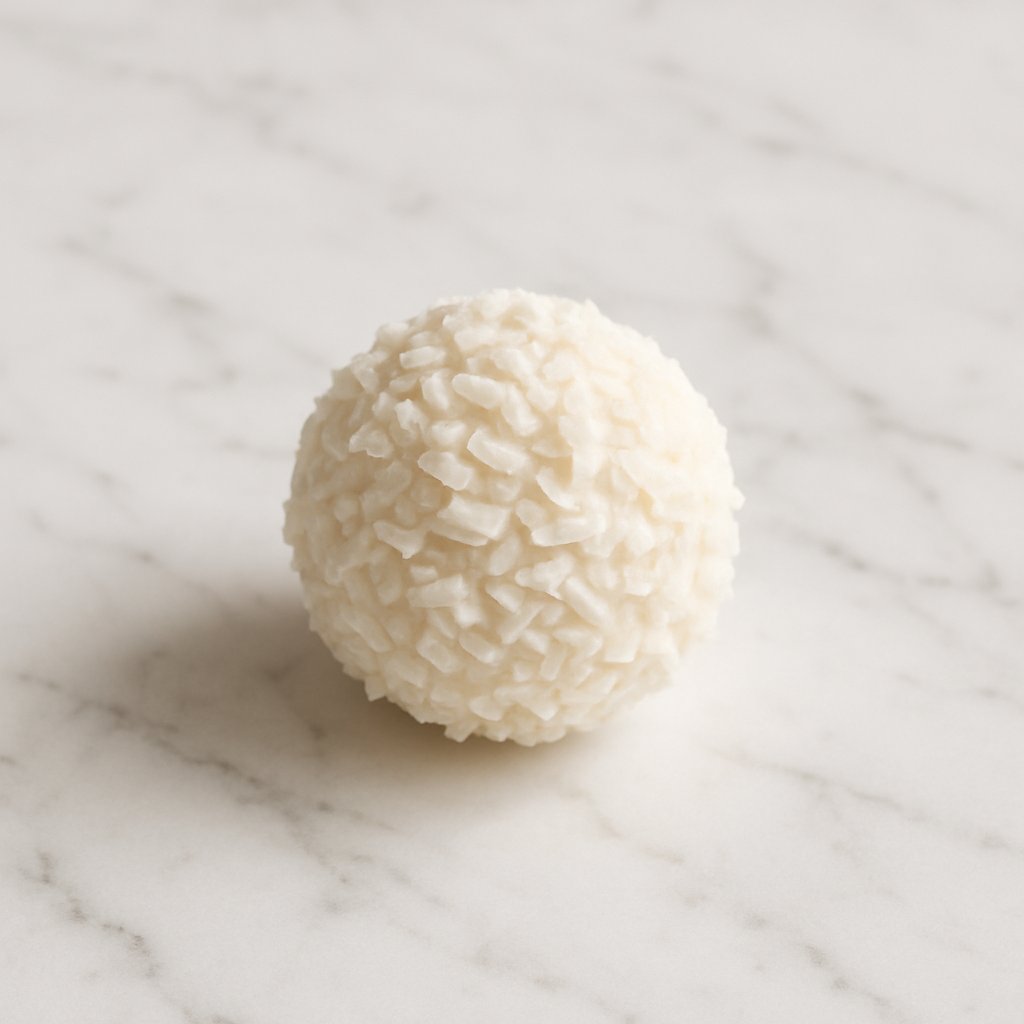
Several Raffaelo pralines covered in white coconut flakes
I still remember exactly the first bite of Raffaello that I consciously tasted: a cool, white sphere that crackled on the outside and melted creamily inside. Raffaello is for me more than a sweet; it is a small ritual of coconut, almond and that delicate sweetness that evokes holidays, even when you are just sitting in an open-plan office. A colleague of mine once brought a pack to celebrate the completion of a project – we shared them like sacred objects and then discussed with serious faces the right balance of texture and aroma.

On the outside Raffaello is unmistakable: a white shell of coconut flakes that immediately shows character when bitten. Inside waits a crunchy almond, surrounded by a fine, creamy filling that is not too sweet. This combination makes Raffaello versatile: as a compact dessert bite after a rich meal, as an extravagant gift, or as a quick reward on a rainy afternoon. I even used them as a secret ingredient in a winter tiramisu – the result surprised all the guests.

What I particularly appreciate about Raffaello is its ability to evoke memories. As soon as I smell coconut bars, I see a childhood party before me, lamps flickering, and people secretly lighting tealights because the music is too loud. In the meantime I have tried numerous recipes inspired by Raffaello: stuffed dates refined with half a ball and a little cinnamon, or small servings of mousse placed on a bed of grated coconut.

Over the years I have picked up some practical tips for handling Raffaello:

  • In warm temperatures chill briefly so the filling remains firm.
  • For decoration, crumbled coconut flakes or finely sliced almonds work well.
  • When pairing with drinks, mild teas, espresso or a light prosecco work best.
Raffaello is not haute cuisine, but a small, cultivated pleasure that combines simple ingredients into a consistent, enjoyable experience. For me it remains a reliable moment of enjoyment that I like to share – with friends, colleagues or other sweet-tooths who know that a small piece of coconut moon can sometimes save the whole day.

Availability & types

Availability and types of Raffaello

What is Raffaello and where does it come from?
Raffaello is a confection produced by the company Ferrero. You can imagine it as a small ball: crunchy on the outside with coconut flakes, a soft coconut-cream core inside and often a whole almond kernel in the center. Although coconut does not grow in Europe, Raffaello is manufactured in factories in Europe. The main ingredients such as coconut, sugar and almonds come from different countries. Coconut often comes from tropical regions, almonds are usually imported from warmer Mediterranean areas or California, and processing then takes place in factories before the balls are sold in many countries.

In which countries is Raffaello available?
Raffaello is available in many parts of the world. You can often find them in:

  • Supermarkets – in the chocolate or gift-box sections.
  • Drugstores – sometimes next to other sweets.
  • Train stations and airports – as small gift packs or collector boxes.
  • Online shops – here you can often order different package sizes, even to countries where they are not stocked in stores.
Raffaello is therefore quite widespread and can be bought easily in many countries.
What varieties and variants exist?
Basically there is the classic Raffaello ball, but there are also different package sizes and special variants. The main types are:
  • Classic Raffaello – the well-known white ball with coconut on the outside, cream inside and an almond in the center. This is the most common variant.
  • Mini or single packs – small packages for snacking or portions for children's parties.
  • Gift packages – larger tins or nicely wrapped boxes that are given as presents for holidays.
  • Seasonal or limited editions – sometimes the manufacturer releases special versions, for example with special packaging for Christmas or Valentine's Day.
  • Similar products – other companies may produce similar coconut-almond pralines. They will not be called Raffaello, but often look similar.
Sometimes there are small differences in recipe or packaging depending on the country, but the basic idea remains the same: a sweet coconut praline with an almond kernel.
Why are there different packages and what are the differences?
The different package sizes are practical because not everyone needs the same amount. A small package is good for school or to try, while a large tin is better for sharing or gifting. Limited editions or special packaging are often more decorative and are especially suitable as gifts. The recipe usually remains the same; only the appearance or quantity changes.
Simple example for comparison
Imagine Raffaello as little white snowballs you can nibble. In a shop these snowballs stand in different jars: a small jar for a snack, a large jar to share at a party and a nicely decorated jar to give at Christmas. The balls inside taste similar; only the jar is different.
Conclusion
Raffaello is widespread and easy to find in many countries. There is the classic praline in different package sizes, gift boxes and occasionally special editions. The ingredients come from different regions of the world but are processed in factories before they go on sale. That way almost anyone, child or adult, can enjoy the little coconut balls.
Details & nutrition

Property Value
Unit g
Average weight per piece 10
Calories per 100 640
Protein per 100 7.0
Carbohydrates per 100 42.0
Sugar per 100 42.0
Fat per 100 49.0
Saturated fat per 100 36.0
Monounsaturated fat 9.0
Polyunsaturated fat 4.0
Fiber per 100 4.0
Vitamin C (mg) per 100 0
Vitamin D (IU) per 100 0
Calcium (mg) per 100 120
Iron (mg) per 100 1.0
Nutri-Score E
CO₂ footprint 4.5
Origin Industrial confectionery product, brand Ferrero
Gluten-free Yes
Lactose-free No
Nut-free No
Vegan No
Note May contain traces of other tree nuts; high sugar and fat content; not suitable for people with nut or milk allergies.

Technical & scientific information

Raffaello is not a single scientifically defined food item, but a commercial confection by Ferrero that must be regarded as a composite product with characteristic texture and composition. The typical Raffaello praline consists of a thin, crisp wafer shell, a creamy coconut-almond filling, a whole or chopped almond at the core and an external layer of grated coconut. For technical and nutritional considerations, the individual components and their relationships are therefore relevant.

Composition and ingredients

  • Macronutrients: Raffaello contains primarily carbohydrates (mainly sugars), fat (from vegetable fats and almonds) and a moderate proportion of protein, primarily from almonds and milk components. The exact distribution varies by recipe, but typically features a high sugar content (≥40% of dry mass) and a fat content shaped by coconut fat, vegetable oils and almond oil.
  • Fats: The fat spectrum includes saturated fatty acids (from coconut components), monounsaturated fatty acids (mainly from almonds, e.g. oleic acid) and traces of polyunsaturated fatty acids. Coconut components increase the proportion of short- and medium-chain saturated fatty acids such as lauric and myristic acid.
  • Proteins: The protein fraction comes mainly from almonds and, if present, milk components (whey or milk powder). These proteins provide essential amino acids, but not in proportions that would make them a complete sole protein source.
  • Fiber and micronutrients: Grated coconut and almonds provide small amounts of fiber, vitamin E (mainly from almonds), minerals such as magnesium, potassium and calcium and traces of B vitamins.
  • Additives: Emulsifiers (e.g. lecithins), flavorings and sweeteners as well as preservatives or stabilizers may be included in the recipe to optimize texture, shelf life and sensory properties.
Processing methods

  • Raw material preparation: Almonds are cleaned, possibly blanched and chopped or left whole. Coconut flakes are dried and sometimes lightly toasted to develop flavor.
  • Emulsification and mixing: Fat and water phases are homogenized with emulsifiers to create a stable, creamy filling. This process uses stirring and homogenization techniques to ensure uniform particle distribution.
  • Shaping: The filling is portioned, an almond is embedded, followed by coating with the wafer and final coating with coconut flakes. Thermal treatment is usually minimal, as the confection is mostly cold-formed and packaged.
Sensorics and structure

The perceived texture results from the interplay of a crisp shell, a velvety creamy inner mass and the crunchy almond core. Mouthfeel and melting behavior are determined by the behavior of the fat matrix: melting point and crystal structure of the fats influence how quickly the filling softens at room temperature and how aromas are released.

Nutritional and health aspects

  • Energy content: As a confectionery product, Raffaello is energy-dense; a small portion provides relatively many calories from sugars and fats.
  • Cardiovascular effects: The content of saturated fatty acids from coconut contributes to the saturated fat balance. The share of monounsaturated fatty acids from almonds, however, has a more favorable effect on the lipid profile. Overall consumption in moderation is compatible with a balanced diet.
  • Allergens: Almonds (tree nuts) and milk components are common allergens; product labeling is required for safety reasons. Cross-contamination with other tree nuts is possible.
  • Glycemic effect: The high sugar content can promote a rapid rise in blood glucose. Combination with fat and protein moderates absorption somewhat.
  • Shelf life and microbiological safety: Low water content combined with sugar and/or fat layers reduces water activity and thus microbial risk. Nevertheless oxidative processes (fat rancidity) are relevant for shelf life; antioxidants or protective packaging are used to minimize spoilage.
Final remark

From a technical perspective Raffaello is a complex multiphase product whose properties are determined by fat composition, particle size distribution of solids and processing steps. Nutritionally it is an energy-rich indulgence that requires special caution for allergy sufferers and should be integrated into a balanced diet in moderate amounts.

Wiki entry for: Raffaello
Active now: 20 visitors of which 2 logged-in members in the last 5 minutes