Menu & categories

Radishes

Crisp, peppery and low in calories

Wiki about radish Nutri-Score A Vegan Yes Gluten-free Yes Lactose-free Yes Nut-free Yes
NUTRITION / 100 g
16 kcal 1.1 g Protein 3.4 g Kohlenhydrate 0.1 g Fett

Introduction

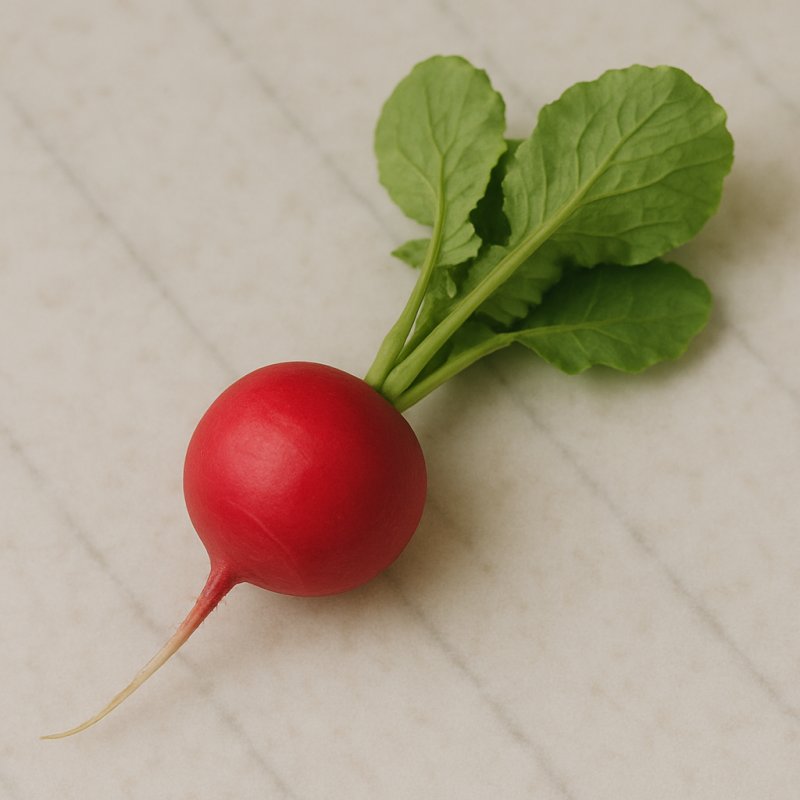
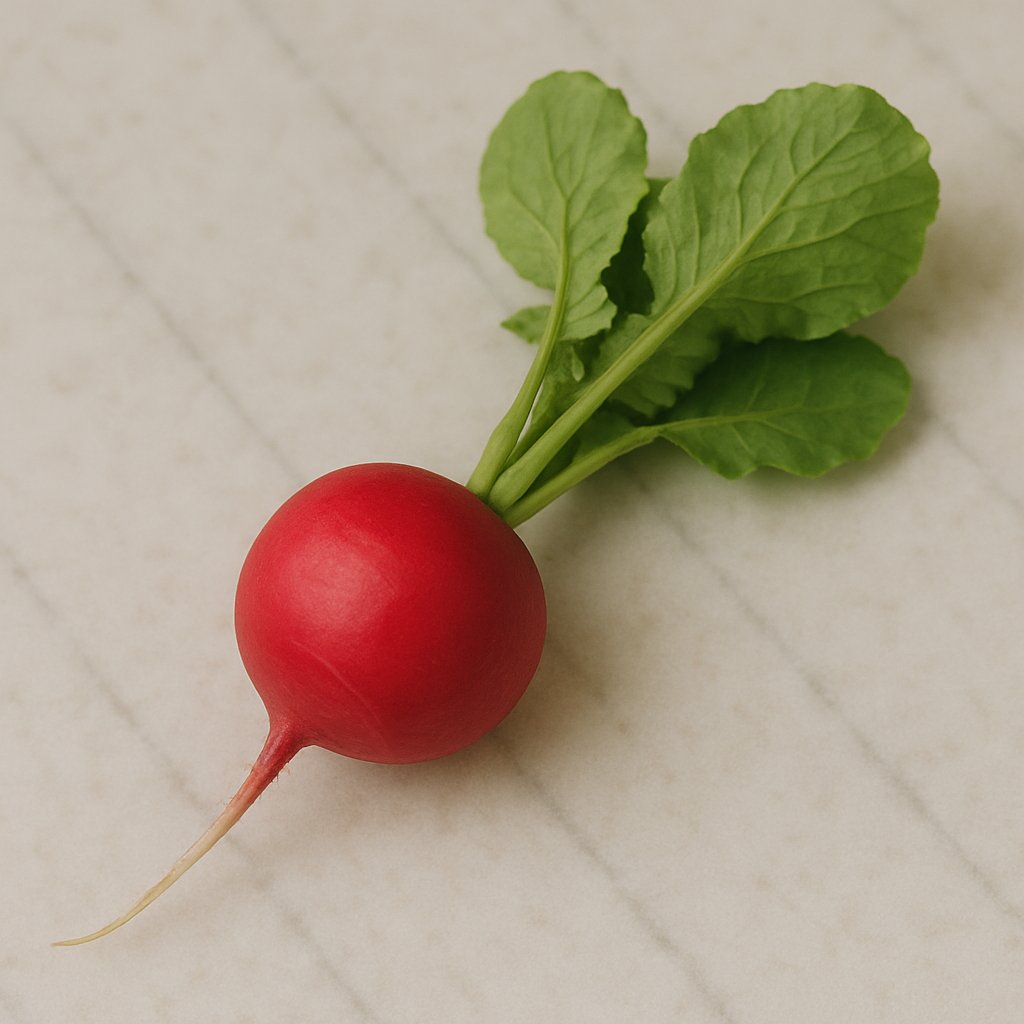
Fresh red radishes with greens
Radishes for me are far more than just a crunchy side: they are a culinary wake-up call, a splash of color on the plate and a seasonal compass in my kitchen. As a 35-year-old editor from Europe I have discovered radishes in farmers' markets from Brittany to Brandenburg, nibbled them raw, sliced paper-thin, pickled, fried and even turned into butter. Each time they surprise me with their versatility and their peppery character, which can range from mild to intense. The round, pink classics are only the beginning; elongated, two-tone varieties like “French Breakfast” or unusually colored purple and yellow types make every salad eye-catching and every snack an experience.

What I particularly value about radishes is their straightforward access to freshness and flavor. They are rooted in many European kitchens, whether as salted slices on fresh bread, as a crunchy ingredient in bowls or as an aromatic note in Asian-inspired dishes. A colleague of mine swears by his morning routine: he halves radishes, spreads a bit of butter on them, sprinkles sea salt and lemon zest on top and places everything on warm sourdough bread. It's a small ceremony that shows how radishes achieve maximum effect with minimal ingredients.

The origin and history of the radish tell of adaptability and a taste for travel. Probably originating in Asia, the radish early found its way to Europe, where short growing periods and robust traits quickly made it a garden favorite. Especially in temperate climates it can be cultivated almost year-round, often as the first harvest in spring and the last in autumn. You can taste this closeness to the season: freshly harvested radishes taste juicy, peppery and lively, while older tubers lose their aroma and can seem watery.

Quality traits and shopping tips accompany me on every market visit. I look for crisp, firm tubers without soft spots and for deep green leaves, because they reveal freshness. A vendor in Vienna once told me that radishes that squeak under light pressure are particularly juicy. Since then I check them

Availability & types

Availability and types of radishes

Radishes are small, round or elongated roots with a crunchy bite and a slightly sharp taste. They belong to the large plant family of Brassicaceae, which also includes cabbages, broccoli and radish relatives (daikon). When you see radishes at the supermarket or farmers' market, you usually find them as red, round tubers with green leaves – but in fact there are many more varieties. In this section you will learn when radishes are available, where they come from, and which varieties and shapes exist. All explained simply so that even a 12-year-old can understand it well.

Availability through the year:
Radishes grow very quickly. After only 4–6 weeks they can be harvested. That is why in Central Europe they are available almost all year round. The best time, however, is spring and early summer, when days get longer and temperatures are mild. At that time many radishes come fresh from regional fields. In summer they remain readily available, although in very hot weather they can become woodier more quickly. In autumn there are also plenty of radishes, often special varieties in other colors. In winter most radishes come from greenhouses or are imported from warmer regions. This way you can find them in trade practically continuously; only the origin changes with the seasons.

Origin and growing areas:
Radishes probably originally come from Asia, where the radish relatives have been cultivated for a very long time. Today radishes are grown worldwide, because they are undemanding and prefer cool to mild climates. In Europe countries such as Germany, France, the Netherlands and Italy are important producers. In Germany many radishes come from regions with fertile soils, for example Bavaria, Rhineland-Palatinate or Lower Saxony. Internationally Spain and Morocco also supply in the cooler months. Thanks to this variety of growing areas you can buy radishes fresh almost always.

Types and varieties – much more than just red and round:

  • Classic red, round radishes: These are
Details & nutrition

Property Value
Unit g
Average weight per piece 15
Calories per 100 16
Protein per 100 1.1
Carbohydrates per 100 3.4
Sugar per 100 1.9
Fat per 100 0.1
Saturated fat per 100 0.02
Monounsaturated fat 0.01
Polyunsaturated fat 0.04
Fiber per 100 1.6
Vitamin C (mg) per 100 14
Vitamin D (IU) per 100 0
Calcium (mg) per 100 25
Iron (mg) per 100 0.3
Nutri-Score A
CO₂ footprint 0.2 kg CO2e/kg
Origin Europe, Asia
Gluten-free Yes
Lactose-free Yes
Nut-free Yes
Vegan Yes
Note Contain glucosinolates for the typical pungency; ideal raw in salads or as a snack.

Technical & scientific information

Radishes (Raphanus sativus var. sativus) are the tuberous storage organs of an annual to biennial cultivated form in the Brassicaceae family. Characteristic are their compact hypocotyl tubers, which vary in colors from bright red through pink and purple to white and bicolor. Botanically they are not true fruits, but thickened shoot sections that store water, sugars, glucosinolates and secondary plant substances. The plant forms a basal rosette with spatulate, slightly hairy leaves and develops during bolting racemose inflorescences with tetramerous, mostly white flowers veined violet, typical for cruciferous plants.

Taxonomy and origin: Radishes are a cultivated form of the garden radish/oilseed radish complex (Raphanus sativus). Domestication is attributed to the West Asian–Mediterranean area, with later diversification in Europe and East Asia. Genetic analyses show close kinship to radish varieties (daikon), while radishes derive from early selection for small, fast-growing tubers. Varieties are classified by tuber shape (round, oval, cylindrical), color and cultivation time (spring, summer, autumn types).

Morphology and anatomy: The hypocotyl is the main storage organ; its epidermis bears the variety-typical coloration, caused by anthocyanins (mainly cyanidin derivatives). The parenchyma tissue shows large intercellular spaces, responsible for the crunchy texture and high water content (approx. 93–95%). Vascular bundles are arranged concentrically; with overripening increased lignification occurs, leading to woody consistency. The root remains fibrous and thin while the hypocotyl swells tuberously.

Constituents and nutritional profile: Radishes are low in energy (about 60–80 kJ/100 g; 15–20 kcal) and provide fiber (1.5–2 g/100 g), vitamin C (approx. 15–25 mg/100 g), folate, potassium, calcium and trace elements such as manganese. To

Wiki entry for: radish
Active now: 21 visitors of which 2 logged-in members in the last 5 minutes