Menu & categories

Radicchio

Bitter leafy salad with an intense red color

Wiki about radicchio Nutri-Score A Vegan Yes Gluten-free Yes Lactose-free Yes Nut-free Yes
NUTRITION / 100 g
23 kcal 1.4 g Protein 4.0 g Kohlenhydrate 0.3 g Fett

Introduction

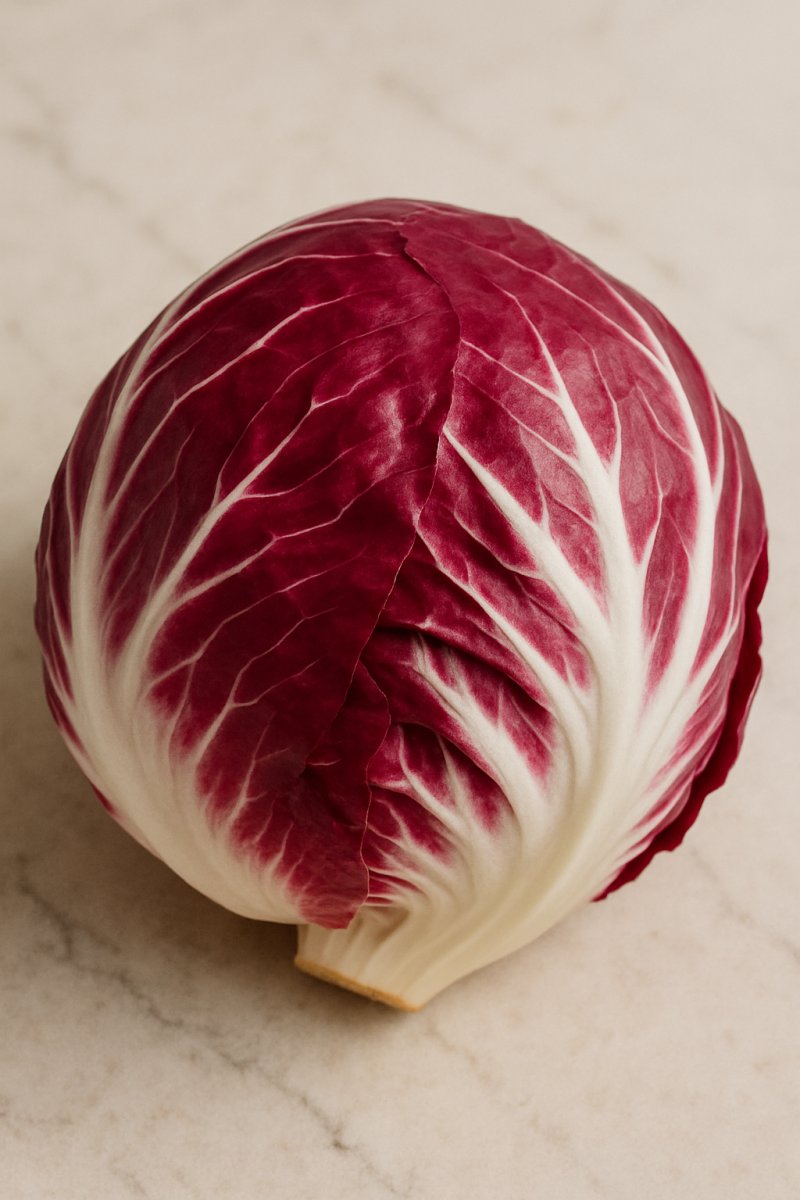
Fresh red radicchio head cut open
I still clearly remember the first radicchio I consciously tried: a small, purple-red and white marbled little head on a market stall that looked like a miniature work of art. I took it home because the color attracted me, and because a vendor, with a mischievous smile, assured me his radicchio was "pungent." At home I fried the leaves in a warm pan with a little olive oil and immediately fell in love with that contrast of bitterness and caramelized sweetness.

Radicchio is a special type of chicory, cultivated mainly in Italy but long since arrived in many European kitchens. Its firm texture and striking purple make it an eye-catcher in salads, on pizza, or as an accompaniment to strong cheeses. I like it raw, thinly shaved with a squeeze of lemon, and just as much when it softens in the oven and tastes almost honeyed.

What I especially appreciate about radicchio are the versatile ways to prepare it:

  • Raw – crunchy in salads, often paired with nuts or pear.
  • Grilled – lightly roasted, it develops a subtle sweetness.
  • In the oven – as a casserole or gratinéed with cheese it's a dream.
  • Risotto or pasta – gives hearty dishes a lovely contrast.
A colleague of mine was once skeptical and claimed bitterness was only for gourmets. I served him a pan-fried radicchio with honey and balsamic – he was converted and later sent the recipe idea to his grandmother. Moments like that show me how food can tell stories and dissolve prejudices.

When shopping I look for firm heads without wilted edges and for an intense color that signals freshness. Radicchio is not only interesting in flavor, it also brings structure and color to dishes and is excellent for experimenting. I always enjoy introducing someone to the taste, because a touch of bitterness makes a dish's complexity truly exciting.

Availability & types

Availability and types

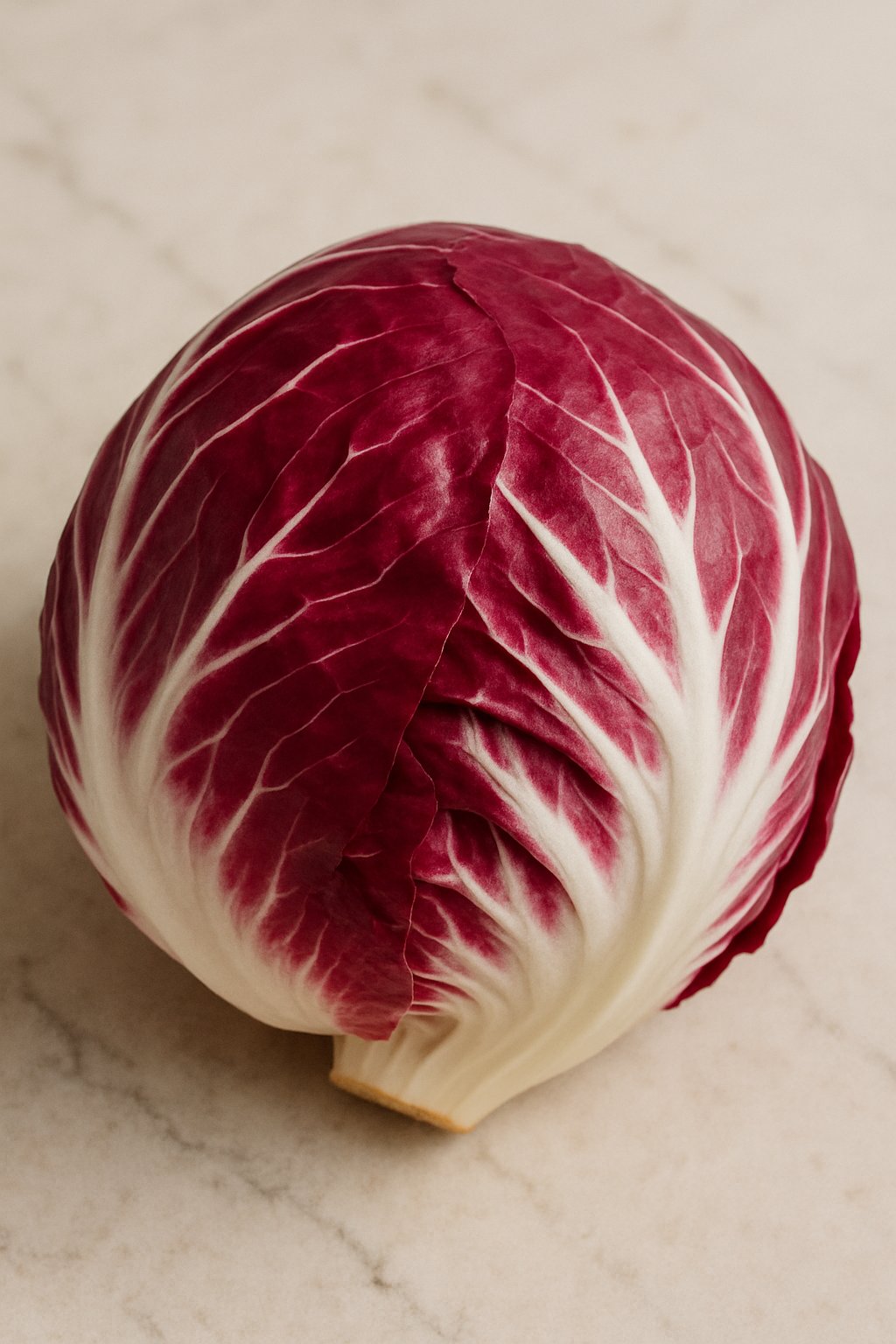
Radicchio is a red salad variety originally from Italy. You can easily recognize it by its strong red color and white veins. Radicchio grows better in cooler months than in the hot summer, so you often see it in supermarkets and at weekly markets in autumn and winter. Because it comes from the Mediterranean, it is grown particularly often in countries with a similar climate.

Origin
Radicchio has its roots in Italy, especially in the Veneto region and the northern part of the country. Different varieties were bred there long ago. Appearance and flavor have become so popular over the years that radicchio has also spread to other countries. You can imagine it as a plant that grew up in Italy and then "went traveling" because people liked its distinctive taste.

Growing regions
Today radicchio is grown in many places with conditions similar to Italy: milder winters and not too hot summers. Important growing regions include:

  • Italy: Especially in Veneto and the north – here are the most traditional varieties.
  • Germany and the Netherlands: Radicchio is grown here in greenhouses or outdoors, mainly for the local market.
  • Spain and France: These countries also supply radicchio to supermarkets in other parts of Europe.
  • United States and Australia: Distant countries also cultivate radicchio, often in regions with a mild climate.
Available varieties and forms
Radicchio is not just one type – there are several varieties that differ in shape, color and taste. Here are the best known, simply explained:

  • Radicchio di Chioggia: This variety is round like a ball and has strong red leaves with white stripes. It is very common and looks attractive in salads.
  • Radicchio di Treviso: It is elongated and has slightly longer leaves. Its taste can be a bit more bitter than Chioggia. It can be eaten raw or lightly sautéed, which makes it milder.
  • Radicchio di Verona: Another variant with a compact shape, often somewhat smaller and also decorative on the plate.
  • Pink and white-mixed varieties: Some varieties have lighter red tones or more white. They are less bitter and suit children or people who prefer milder flavors.
  • Baby radicchio: Small, tender heads harvested young. These are softer and less bitter, ideal for salads where a strong taste is not desired.
How to notice the differences
Radicchio's taste ranges from slightly bitter to strongly tangy. Bitterness is like the taste of dark chocolate compared to milk chocolate: some like it intense, others prefer it milder. Color and shape often give clues: round heads (Chioggia) are usually milder, elongated ones (Treviso) can taste stronger. Baby radicchio is like a young version – more tender and milder.

When is radicchio best available?
You will find radicchio most reliably in autumn and winter. Then it is freshly harvested and tastes best. However, supermarkets now carry it almost year-round because it is grown in different countries and in greenhouses. Fresh radicchio has firm leaves, a good color and makes a crisp sound when touched.

In summary: Radicchio comes from Italy, is now grown in many countries and is available in several types – round or elongated, intense or mild. Its availability is highest in the cooler season, and depending on the variety you can choose whether you prefer a mild or a somewhat more bitter option.
Details & nutrition

Property Value
Unit g
Average weight per piece 300
Calories per 100 23
Protein per 100 1.4
Carbohydrates per 100 4.0
Sugar per 100 0.6
Fat per 100 0.3
Saturated fat per 100 0.04
Monounsaturated fat 0.02
Polyunsaturated fat 0.14
Fiber per 100 0.9
Vitamin C (mg) per 100 10
Vitamin D (IU) per 100 0
Calcium (mg) per 100 19
Iron (mg) per 100 0.3
Nutri-Score A
CO₂ footprint 0.2
Origin Italy and other European countries
Gluten-free Yes
Lactose-free Yes
Nut-free Yes
Vegan Yes
Note Nutritional values for fresh, raw radicchio; values may vary slightly depending on variety and growing region.

Technical & scientific information

Radicchio (botanically often Cichorium intybus var. sativum or varieties of the chicory group) is a leafy vegetable plant from the family Asteraceae that forms characteristically red to purple leaves with white veining. The name covers several cultivars, including the well-known Radicchio di Chioggia, Radicchio di Treviso and smaller round forms. Radicchio is grown in temperate climates and botanically belongs to the chicories, which have a long cultivation history as bitter vegetables.

Morphology and cultivation: Radicchio forms compact heads whose color intensity depends on the content of anthocyanins. The plants prefer well-drained soils and cool temperatures; many varieties are harvested after the first frost or exposed to cold stimulus to moderate bitterness and promote color development. Cultivation techniques include raising seedlings, targeted irrigation and sometimes forcing in darker conditions to influence leaf structure and bitterness.

Chemical composition and constituents: Radicchio contains a mixture of secondary plant compounds and macronutrients. Important components are:

  • Anthocyanins: water-soluble flavonoids responsible for the red to violet coloration, primarily cyanidin derivatives. These pigments have antioxidant properties.
  • Bitter compounds: sesquiterpene lactones (e.g. lactucopicrin-like compounds) and other bitter terpenoids that shape the typical taste and may affect bile secretion and appetite.
  • Phenolic compounds: various hydroxycinnamic acids and flavonoids with antioxidant capacity.
  • Vitamins and minerals: especially vitamin K, vitamin A precursors (beta-carotene), vitamin C in moderate amounts and minerals such as potassium, calcium and magnesium.
  • Fiber: insoluble and soluble fibers that can contribute to gut health.
Nutritional profile: Raw radicchio is low in calories and consists mostly of water. Per 100 g it typically provides few calories (approx. 20–25 kcal), small amounts of protein and fat and several grams of fiber. The vitamin K content can be nutritionally relevant, particularly for people on anticoagulant medication, while the antioxidant plant compounds contribute to cellular protective capacity.

Processing and culinary use: Radicchio is used raw in salads, where cutting techniques influence bitterness because smaller surfaces release more cell sap. It can be grilled, fried or braised; heat generally reduces the perception of bitterness through thermal changes of secondary compounds and by caramelization of sugars. Fermentation methods are possible and change flavor profile and microbial spectrum. For storage, cool, humid conditions are advantageous because otherwise leaf structure wilts and pigments degrade.

Health aspects: The antioxidants and fibers in radicchio are associated with positive effects on inflammatory markers and gut health. Bitter compounds may regulate appetite and stimulate bile secretion, supporting digestion. It is important to note the relatively high vitamin K concentration, which can be clinically relevant for patients on vitamin K antagonist medication. Allergies to Asteraceae are rare but possible.

Research and functional properties: Studies focus on the antioxidant activity of anthocyanins and phenols from radicchio as well as on the metabolic effects of bitter sesquiterpene lactones. Research addresses quality assurance in cultivation and storage, optimization of pigment formation and postharvest changes in nutritionally relevant constituents.

Overall, radicchio is a versatile leafy vegetable with a pronounced sensory profile and a nutrient spectrum that particularly includes antioxidants, vitamins and fiber. Its characteristic bitter compounds and anthocyanins influence both culinary use and health-related properties, while cultivation and processing conditions are decisive for flavor, color and bioactive composition.

Wiki entry for: radicchio
Active now: 17 visitors of which 2 logged-in members in the last 5 minutes