Menu & categories

Quark (curd cheese)

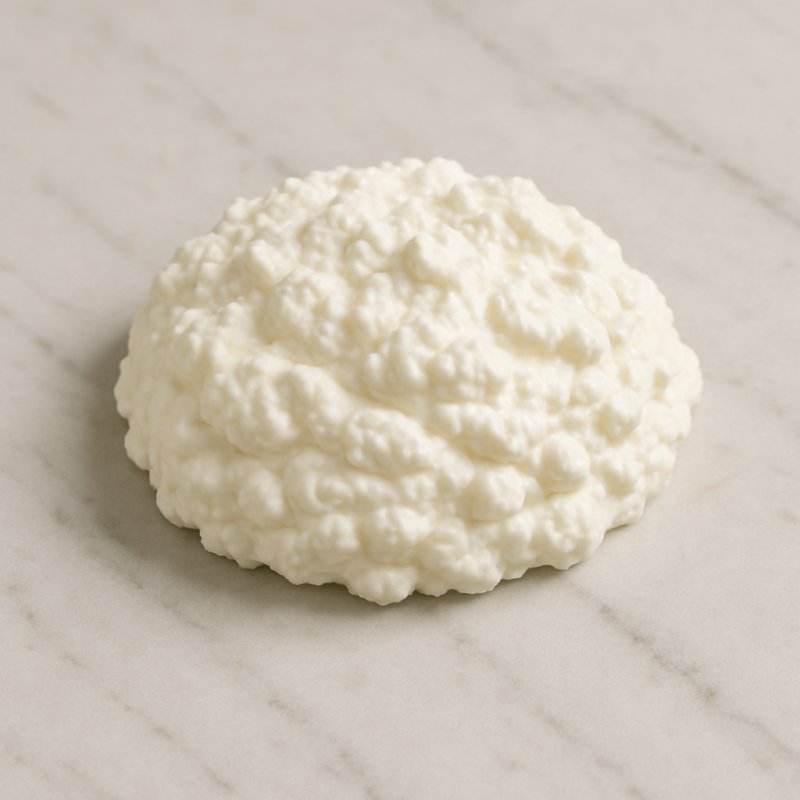
Fresh, creamy quark made from cow's milk

Wiki about quark Nutri-Score B Vegan No Gluten-free Yes Lactose-free No Nut-free Yes
NUTRITION / 100 g
98 kcal 13.0 g Protein 3.5 g Kohlenhydrate 3.5 g Fett

Introduction

Bowl of fresh quark
I first truly learned to love Topfen on a rainy Sunday in a small kitchen, where the scent of freshly baked yeast dough drifted through the window. A friend brought a jar and described it fondly as creamy, mild and surprisingly versatile. I was skeptical until I tried a spoonful and immediately understood why so many home recipes here rely on it. Topfen, often understood here as the silky, slightly tangy version of quark, has this remarkable ability to shine in both sweet and savory dishes.

What fascinates me about Topfen is its simple versatility. It works for classic cheesecakes, delicate strudels and airy palatschinken, but also for savory dips or creamy bases for casseroles. A colleague of mine sometimes whips up a quick dip with herbs and garlic that disappears at every party. I still remember one Christmas when I served a Topfen spread with honey and walnuts and everyone asked in surprise why it was still so little known.

Topfen also has a lot to offer nutritionally. It is high in protein, relatively low in fat in the common variants, and provides useful amounts of calcium. For people who like to play with textures, it is a dream: you can make it smooth, leave it chunky or even bake it in the oven into a delicate cream. In my drawer of recipe notes I have more than once found notes: “Topfen instead of mascarpone” or “Topfen in creams for lighter desserts”. These little tricks turn many sins into slightly lighter versions.

Culinarily, it is worth approaching Topfen openly and with curiosity. It pairs surprisingly well with citrus fruits, fresh herbs, toasted nuts or even robust smoked salmon. When shopping I pay attention to texture and fat content, because that determines whether I use it for a fluffy cake batter or a dense cheese spread. Once at a regional market I met a farmer who recommended blotting Topfen briefly before use if it was very wet — a simple tip that noticeably improves results.

In conclusion I can say: Topfen is for me a small kitchen hero that shines modestly and continually reinvents itself. It is uncomplicated, healthy and often makes recipes a bit more refined without needing much magic. Next time you stand in front of it in the store, go ahead and try something new — you will be surprised how many recipes get a small, delicious upgrade.

Availability & types

Availability and types of Topfen

Topfen, also known as quark in many regions, is a soft fresh cheese available in many supermarkets, farm shops and markets. It is popular because it tastes mild and is versatile — it can be spread on bread, baked into cakes or used in savory dishes like dumplings or casseroles. Topfen comes in different varieties that are easy to distinguish.

Origin and production regions
Topfen is not cultivated like vegetables, but produced from milk. The most important ingredient is therefore cow's milk. Where a lot of milk is produced, there is also a lot of Topfen. In Europe these are particularly regions with many dairy farmers:

  • Central Europe: Countries like Austria, Germany and Switzerland are major producers. There Topfen has a long tradition and is often offered fresh from the farm.
  • Southeast Europe: In countries like Slovenia or Croatia, Topfen is also very widespread.
  • Other regions: In many other countries there are similar products (e.g. curd or cottage cheese) that are used in similar ways.
Available varieties and types
Topfen is available in several variants that differ in fat content, consistency and flavor. Here are the main types, simply explained:

  • Low-fat Topfen (lean): This has little fat and therefore feels lighter. It is good if you watch your weight or want a neutral taste. It is comparable to a very thin yogurt.
  • Semi-fat Topfen: Slightly creamier than low-fat Topfen, but still relatively light. Many people like this variant because it offers a good balance between taste and calories.
  • Full-fat Topfen: This is richer and tastes stronger and creamier. It is suitable for desserts or when you want particularly creamy dishes — similar to cream, but with a milky flavor.
  • Fresh Topfen vs. aged Topfen: Regular Topfen is fresh and eaten immediately. There are also special cheeses that start similarly to Topfen and are then aged — these taste somewhat more intense.
  • Gently acidified Topfen: Here the milk was acidified with a culture (small, beneficial bacteria), which gives the Topfen a slightly tangy taste. This is similar to how grape juice becomes wine, only much milder and without alcohol.
  • With additions: Topfen can also be found with fresh herbs, fruit or honey. These variants are already seasoned and work well as spreads or snacks.
How to recognize good quality?
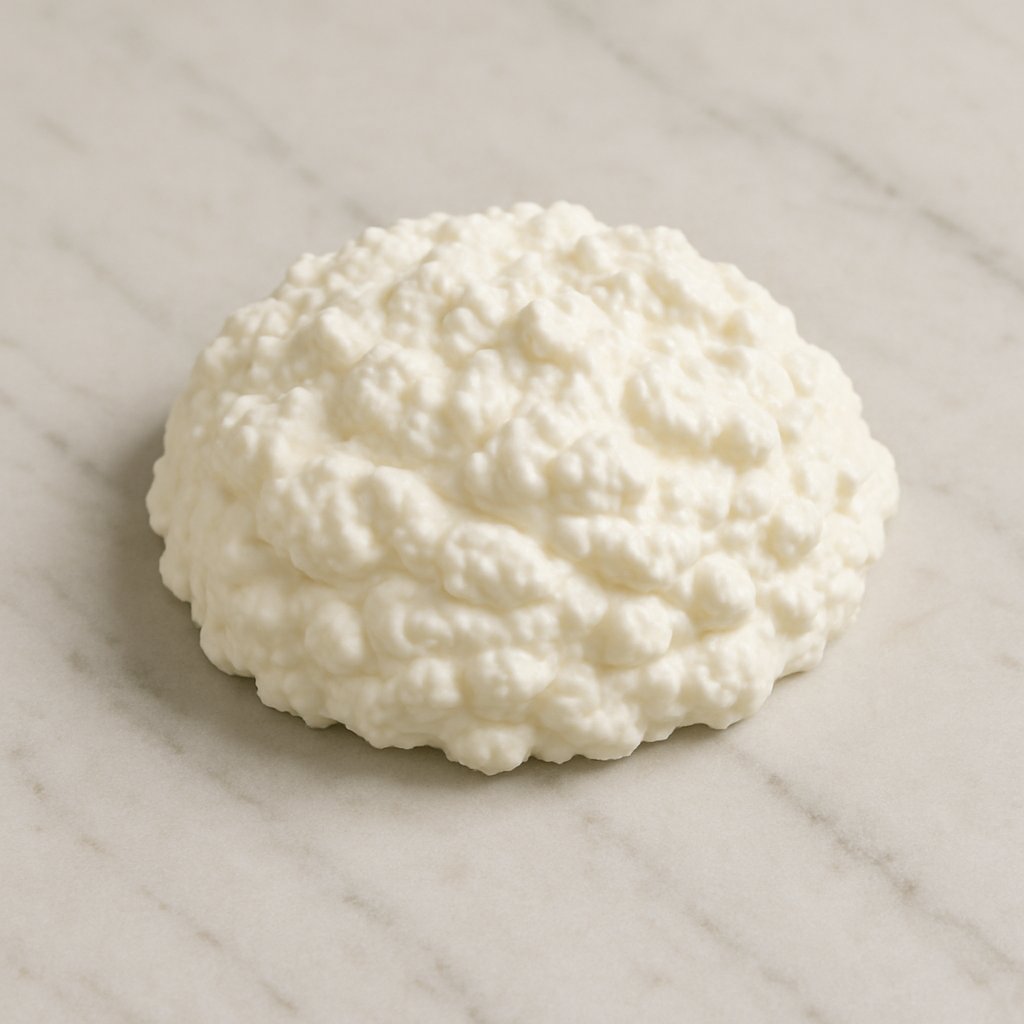
Good quality is recognizable by Topfen smelling fresh and having a uniform, creamy consistency. If it is very watery or smells odd, it should not be eaten. The packaging usually states from which milk it was produced (e.g. cow's milk) and how much fat it contains.

Simple comparisons/examples
Imagine Topfen as different levels of cushion filling: the low-fat Topfen is like a thin cushion — light and flat; the semi-fat Topfen is like a moderately comfy cushion; and the full-fat Topfen is like a thick, cozy cushion — nicely creamy. This helps you picture how the variants differ in texture.

In summary: Topfen is widespread and available in many varieties — from low-fat to full-fat, plain or with additions. It originates from dairy regions and is easy to find in supermarkets, from farmers and at markets. Everyone can find a suitable type for bread, cakes or other favorite dishes.
Details & nutrition

Property Value
Unit g
Calories per 100 98
Protein per 100 13.0
Carbohydrates per 100 3.5
Sugar per 100 3.5
Fat per 100 3.5
Saturated fat per 100 2.3
Monounsaturated fat 0.9
Polyunsaturated fat 0.3
Fiber per 100 0
Vitamin C (mg) per 100 0
Vitamin D (IU) per 100 0
Calcium (mg) per 100 90
Iron (mg) per 100 0.1
Nutri-Score B
CO₂ footprint 1.6
Origin Mostly from cow's milk, predominantly from Europe
Gluten-free Yes
Lactose-free No
Nut-free Yes
Vegan No
Note Nutritional values for low-fat to semi-fat quark (quark, approx. 10-20% fat in dry matter); may vary slightly depending on fat content and manufacturer.

Technical & scientific information

Topfen (in many regions also referred to as quark) is a fresh dairy product produced by coagulating and separating whey from pasteurized milk. It belongs to the group of fresh cheeses and is characterized by a soft, spreadable to crumbly texture and a mild-tangy flavor. Topfen is produced both industrially and artisanally and is available in different fat levels, typically from lean (approx. 0.2–10% fat on dry matter) to full-fat (around 20% fat on dry matter).

Production process and processing methods

  • Production begins with pasteurized cow's milk, which is heated to a certain temperature and inoculated with lactic acid bacteria and occasionally rennet or enzymes to acidify and coagulate the milk.
  • The acidification causes the milk protein casein to collapse and form a curd (coagulum). This is separated mechanically or by natural resting phases from the liquid whey.
  • Depending on the desired consistency, whey is drained, pressed or centrifuged. To produce particularly fine-grained variants, the Topfen can be further stirred and mixed with cream or milk.
  • Optionally, culturally specific strains of lactic acid bacteria are used that influence aroma, texture and shelf life. Industrial processes also use standardized cultures and temperature-controlled ripening steps.
Chemical composition and constituents

  • Topfen consists predominantly of water (typically 70–80%). The remainder is made up of proteins, fats, lactose (milk sugar), minerals and vitamins.
  • The proteins (mainly casein and to a lesser extent whey proteins) provide essential amino acids and are well bioavailable. Protein content varies by fat level; in lean types it is often 10–14 g/100 g.
  • Fats consist mainly of saturated and monounsaturated fatty acids, with the specific fatty acid composition depending on the cows' diet.
  • Important minerals are calcium, phosphorus and potassium; Topfen also contains B vitamins and small amounts of fat-soluble vitamins such as vitamin A in higher-fat variants.
Nutritional values (example values per 100 g)

  • Energy: depending on fat content approx. 60–200 kcal.
  • Protein: approx. 8–14 g.
  • Fat: 0.1–20 g (depending on variety).
  • Carbohydrates (lactose): approx. 3–4 g.
Functional properties and food technology

Due to its high protein content and water-binding capacity, Topfen has many uses in food processing. It serves as an emulsifier and thickening agent in spreads, desserts and baked goods. The proteins contribute to dough stability and can reduce fat content in recipes without completely replacing the texture. Furthermore, lactic acid bacteria influence pH values, which improves microbiological stability and shelf life.

Health aspects

  • Topfen is a protein-rich, light food source that is suitable for muscle protein synthesis and for weight-loss diets, especially in lean forms.
  • The calcium and protein supply supports bone health. People with lactose intolerance may tolerate low-lactose variants, as some lactose is broken down by bacterial fermentation; with severe intolerance caution is advised.
  • Topfen is not suitable for cow's milk protein allergy because it contains milk proteins. Reduced-fat variants should be complemented with other sources for essential fatty acids and fat-soluble vitamins.
  • Microbiological quality depends on hygiene standards and storage conditions; pasteurized variants have a lower infection risk than raw milk products.
Variants and culinary use Topfen is valued in many regional cuisines: as an ingredient in sweet dishes (e.g. cheesecakes), as a spread, in savory fillings or as a protein source in diet dishes. Different fat levels and the addition of herbs, fruit or cream create a wide range of textures and flavor profiles.

Overall, Topfen is a versatile, nutrient-dense dairy product with a good nutrient profile and techno-functional properties, whose sensory and nutritional characteristics strongly depend on the production method and fat content.

Wiki entry for: quark
Active now: 14 visitors of which 2 logged-in members in the last 5 minutes