Menu & categories

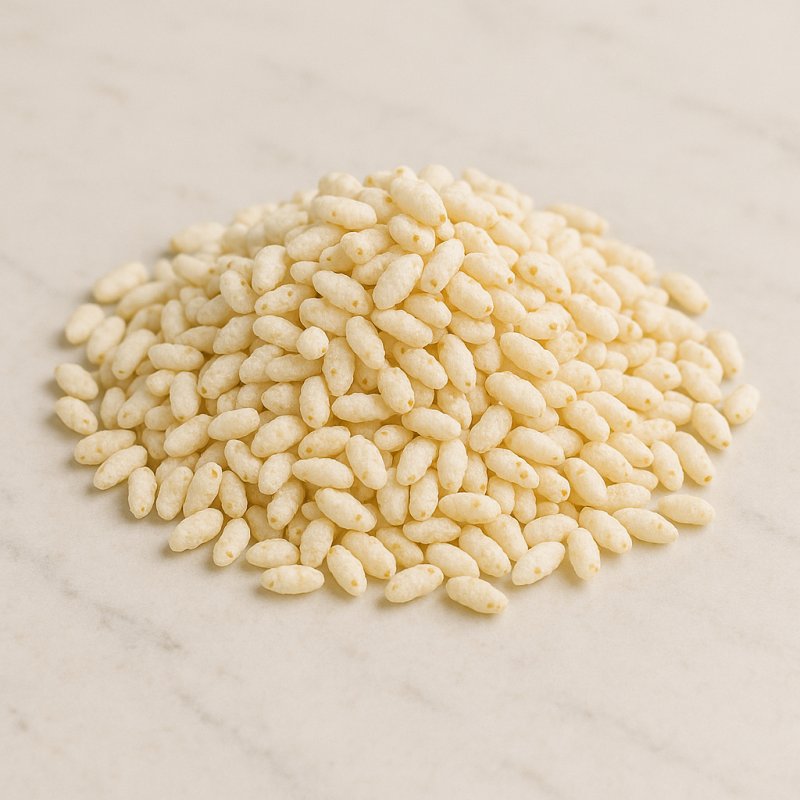
Puffed Rice

Light snack with a crunchy bite

Wiki about puffed rice Nutri-Score B Vegan Yes Gluten-free Yes Lactose-free Yes Nut-free Yes
NUTRITION / 100 g
387 kcal 8.0 g Protein 83.0 g Kohlenhydrate 1.5 g Fett

Introduction

A bowl of puffed rice
I still remember the first times I tried puffed rice in my kitchen. It was a rainy Sunday, and I had decided to get a little creative. A colleague told me that puffed rice is not only suitable for children but can also be a real all‑rounder in the kitchen. I was skeptical, but also curious.

Puffed rice is a fascinating food made from rice grains that have been puffed. The grains are heated until they pop and gain a light, crispy texture. It's almost like magic when you hear the little 'pop' sounds as they dance in the pot. And the best part? Puffed rice is incredibly versatile! It can be a snack, an ingredient for healthy mueslis, or even a base for energy bars.

I first used puffed rice in a recipe for homemade muesli bars. The recipe was simple: honey, nuts, dried fruit and, of course, puffed rice. When I pressed the mixture into the tin I couldn't wait to try the bars. The combination of sweet and crunchy was simply irresistible. I served the bars at a small gathering with friends, and they were a hit! Everyone wanted the recipe, and I felt like a kitchen wizard.

Another advantage of puffed rice is that it is relatively low in calories. That makes it a great choice for anyone who wants to watch their diet without giving up enjoyment. You can also use it in savory dishes to add a crispy crunch. I once tried a recipe for an Asian-style salad bowl where puffed rice was the perfect addition. The guests loved the combination of freshness and crunch.

  • Light snack: Perfect for in between meals.
  • Versatile ingredient: Whether sweet or savory, puffed rice fits everywhere.
  • Healthy and nutritious: Ideal for mindful eating.
Puffed rice has taken a permanent place in my kitchen. I constantly discover new ways to use it and enjoy surprising friends and family with creative dishes. So if you've never tried puffed rice, I can only recommend giving it a go. You'll be surprised how much joy and flavor this little puffed ingredient can bring into your life.

Availability & types

Puffed rice is a popular ingredient found in many snacks and sweets. It is made from rice that is expanded by heat and pressure. This method makes the rice light and crispy. But where does puffed rice actually come from and what different types are there?

Origin and growing regions
The rice used to make puffed rice has a long history. It originally comes from Asia, where it has been cultivated for thousands of years. The best-known rice-growing regions are countries like China, India, Thailand and Vietnam. There are large rice fields there, often flooded with water, because rice plants love water. When harvest time comes, the ripe grains are harvested and then processed.

Production of puffed rice
To make puffed rice, the rice is first thoroughly cleaned and then cooked. Afterwards it is heated under high pressure. When the pressure is released, the rice explodes, similar to a popcorn kernel, becoming light and airy. The result is the small, crispy pieces of puffed rice that we enjoy so much.

Available varieties and types
Puffed rice comes in different shapes and flavors. Here are some popular varieties:

  • Plain puffed rice: This type is simple and pure, perfect for snacking or as a base for other snacks.
  • Sweetened puffed rice: Here the puffed rice is coated with sugar or honey, making it sweeter and more delicious.
  • Chocolate puffed rice: A popular variant where the puffed rice is coated in chocolate. These snacks are especially popular with children.
  • Salted puffed rice: Sometimes puffed rice is seasoned with spices or salt, giving it a savory taste.
There are also various products that contain puffed rice. For example, there are puffed rice cereals, often eaten for breakfast. These cereals are crunchy and light and can be served with milk. Another example is puffed rice bars, which are a convenient snack option for on the go. These bars often also contain nuts or dried fruit to add more flavor and nutrients.

Puffed rice is not only tasty but also versatile. It can be used in many recipes, for example as an ingredient in bars, snacks or even baked goods. You can also use it to make your own creations by combining it with chocolate, nuts and dried fruit.

In summary, puffed rice is an exciting and versatile ingredient made from rice. It comes from various countries, is offered in many forms and can be used in a variety of snacks and dishes. Whether you like it plain, sweetened or chocolate-coated, puffed rice has something for everyone and makes every snack time special.
Details & nutrition

Property Value
Unit g
Calories per 100 387
Protein per 100 8.0
Carbohydrates per 100 83.0
Sugar per 100 0.5
Fat per 100 1.5
Saturated fat per 100 0.3
Monounsaturated fat 0.5
Polyunsaturated fat 0.5
Fiber per 100 3.0
Vitamin C (mg) per 100 0
Vitamin D (IU) per 100 0
Calcium (mg) per 100 2
Iron (mg) per 100 0.5
Nutri-Score B
CO₂ footprint 0.5
Origin Germany
Gluten-free Yes
Lactose-free Yes
Nut-free Yes
Vegan Yes
Note Ideal as a snack or for muesli.

Technical & scientific information

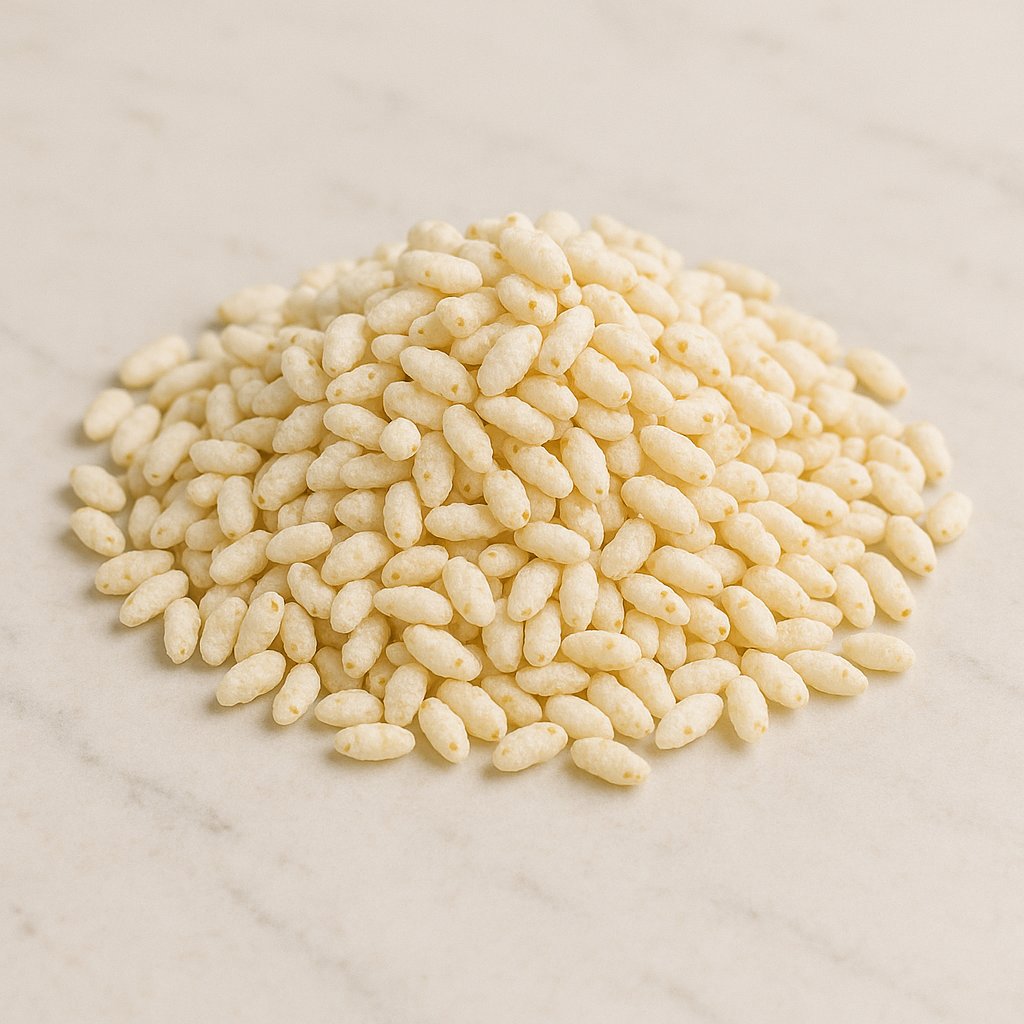
Puffed rice is a popular food made from rice that is heated and expanded through a specific process. This ingredient is frequently used in snacks, cereals and baked goods and is characterized by its light, crispy texture. The production of puffed rice is based on a process known as puffing or expansion and is widely used in the food industry.

Production of puffed rice

The production of puffed rice is carried out in several steps:

  • Selection of rice variety: Round-grain rice is typically used because it has a higher starch content and yields better results when puffed.
  • Pretreatment: The rice is first washed and can then be partially pre-cooked by steaming or boiling to activate the starch.
  • Puffing process: The pre-cooked rice is treated under high pressure and temperature in specialized puffing machines. A sudden release of pressure causes the rice to expand and develop the characteristic crispy texture.
  • Drying and cooling: After puffing, the rice is dried and cooled to optimize texture and shelf life.
Chemical composition and nutritional values

Puffed rice consists mainly of carbohydrates, with the starch content altered by the puffing process. The chemical composition includes:

  • Carbohydrates: About 80–90% of the composition, mainly in the form of starch.
  • Proteins: Puffed rice generally contains 6–8% protein, which comes from the rice.
  • Fats: The fat content is minimal, often below 1%, since rice is naturally low in fat.
  • Fiber: Puffed rice also contains fiber, which is important for digestion.
Nutritional values can vary depending on the production method and any added ingredients. Typically, puffed rice has about 380–400 kcal per 100 grams, making it an energy-dense but relatively low-calorie snack option.

Health aspects

Puffed rice is considered easily digestible and can be integrated into a balanced diet. Some health aspects are:

  • Gluten-free: Puffed rice is naturally gluten-free, making it a suitable choice for people with celiac disease or gluten intolerance.
  • Low in calories: Compared to other snacks, puffed rice has a low calorie content, making it a good alternative for calorie-conscious diets.
  • High glycemic index: Puffed rice has a high glycemic index, which means it is quickly converted into glucose and causes blood sugar levels to rise rapidly. Therefore it should be consumed in moderation, especially by people with diabetes.


Wiki entry for: puffed rice
Active now: 20 visitors of which 2 logged-in members in the last 5 minutes