Menu & categories

Processed cheese 45% fat in product

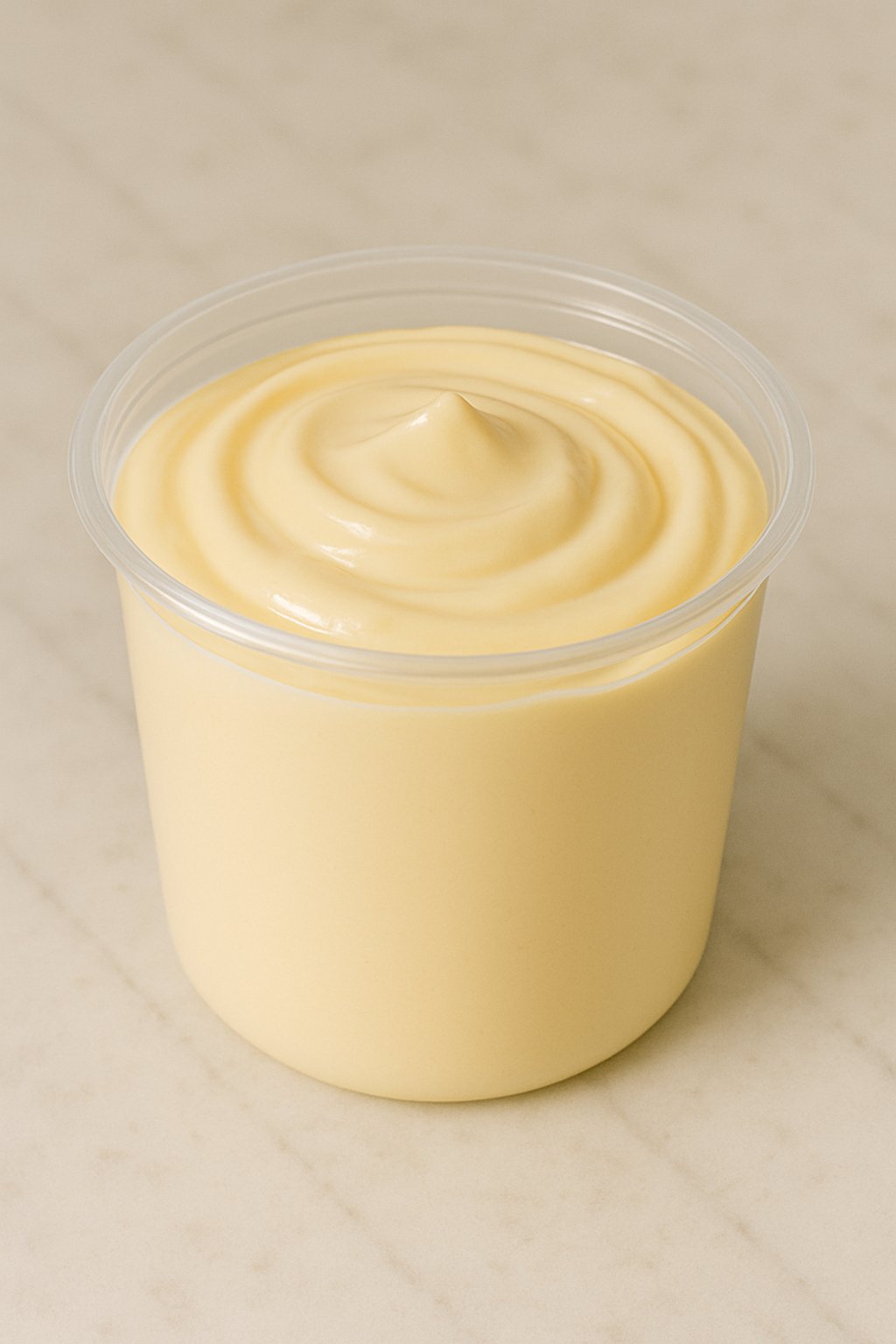
Creamy spreadable with a mild cheese flavor

Wiki about processed cheese 45% fat in dry matter Nutri-Score D Vegan No Gluten-free Yes Lactose-free No Nut-free Yes
NUTRITION / 100 g
260 kcal 16 g Protein 3 g Kohlenhydrate 21 g Fett

Introduction

Slice of processed cheese on bread
Melted cheese 45% fat in dry matter is one of the most versatile ingredients in my European kitchen – and I say that as a 35-year-old editor who constantly tests new recipes, trends and everyday solutions both professionally and privately. What convinced me about this cheese right away is the combination of a creamy texture, a mild, pleasantly savory flavor and remarkable reliability when melting. Whether on freshly toasted bread, in a silky cheese sauce or as a binder in a soup – melted cheese with 45% fat in dry matter delivers a consistent, velvety result that both beginners and experienced home cooks appreciate.

When we say “45% fat in dry matter” we mean the fat content relative to the dry matter of the cheese, i.e. excluding the water content. This is a common indication in Europe and makes it easier to compare different cheeses. In practice this means a balanced ratio: enough fat for depth of flavor and melting, but not so rich that dishes feel overloaded. I remember an editorial tasting where a colleague of mine prepared a classic potato gratin – two versions, one with melted cheese 45% fat in dry matter and one with a very high-fat alternative. Surprise: the 45% version was more rounded in aroma and had the more harmonious, finer crumb, while the higher-fat one felt too heavy.

Melted cheese is made from cheese that is processed with the addition of melting salts and specific heat treatment into an emulsified, spreadable or sliceable mass. This manufacturing method provides the typical, homogeneous consistency you can rely on when cooking. I particularly appreciate that the cheese does not break down when I heat a sauce and that the texture combines into a smooth, even surface without lumping. For me as a recipe developer this is a real advantage, especially for after-work recipes that need to succeed without stress.

A friend who works in catering swears that melted cheese 45% fat in dry matter is a kind of “safety net” in the hectic daily kitchen: it stabilizes sauces,

Availability & types

Availability and types of melted cheese 45% fat in dry matter

Melted cheese with 45% fat in dry matter is a very popular cheese variety that you can find almost everywhere. Fat in dry matter means the fat content is calculated excluding the water in the cheese. In practice a 45% melted cheese feels medium-full: creamy but not extremely fatty. This exact type is therefore found in many households, school canteens and snack counters because it melts well, tastes mild and is versatile.

Where can you find it?
Melted cheese 45% in dry matter is available in most supermarkets, discounters and often also in smaller grocery stores. You can get it:

  • In the chilled counter with cheese and cold cuts
  • As an individual portion (e.g. small triangular pieces in a round box)
  • As slices in a resealable pack
  • As spreadable cheese in a tub or tube
  • As a block or roll for the kitchen, often in larger quantities
Origin and production in brief
Melted cheese is produced by finely shredding one or more “regular” cheeses (for example Gouda, Edam or Emmental), gently heating them and processing them with melting salts and sometimes a little milk or cream into a smooth mass. The idea comes from early 20th century food technology: cheese should last longer and be easier to spread. Today melted cheese is produced in many countries, particularly in Europe (Germany, France, the Netherlands), North America and parts of Asia. The 45% variant is a common standard because it offers a good compromise of flavor, melting behavior and nutritional value.

Why is it so widespread?
It has a long shelf life, is easy to store, and
Details & nutrition

Property Value
Unit g
Average weight per piece 25
Calories per 100 260
Protein per 100 16
Carbohydrates per 100 3
Sugar per 100 3
Fat per 100 21
Saturated fat per 100 14
Monounsaturated fat 5
Polyunsaturated fat 1
Fiber per 100 0
Vitamin C (mg) per 100 0
Vitamin D (IU) per 100 20
Calcium (mg) per 100 600
Iron (mg) per 100 0.2
Nutri-Score D
CO₂ footprint 5.5 kg CO2e/kg
Origin EU
Gluten-free Yes
Lactose-free No
Nut-free Yes
Vegan No
Note Contains emulsifying salts; moderate salt content. Suitable for vegetarians depending on the use of rennet.

Technical & scientific information

Melted cheese 45% fat in dry matter is a processed cheese obtained by fusing natural cheeses with the help of melting salts into a homogeneous, spreadable or sliceable mass. The declaration “45% fat in dry matter (i. d. m.)” refers to the fat content relative to the water-free portion of the product. This labeling is anchored in cheese regulations and relevant EU provisions and allows a standardized classification of fat content levels. In the final product the absolute fat content varies depending on the water content, typically between about 20 and 30 g of fat per 100 g.

The production of melted cheese 45% fat in dry matter begins with the selection of suitable base cheeses, for example young and medium-aged Gouda, Edam, Tilsiter or Emmental. These bases are selected according to functional criteria such as protein stability, moisture content, pH and flavor. Under controlled heating (typically 75–95 °C) the cheeses are processed together with water, milk fat, milk protein fractions and melting salts (often citrates or phosphates) under stirring to form a stable emulsion. The thermal process ensures microbial safety, modifies the protein structure and causes re-emulsification of milk fat into a continuous phase.

Melting salts fulfil a central technological function. They bind calcium from the casein micelle system, increase protein hydration and promote the formation of a thermodynamically stable fat-in-water emulsion. This produces the characteristic even texture without fat separation or phase splitting. The pH is adjusted in a range of about 5.4 to 5.9 to achieve optimal emulsion and melting stability. The mass can then be filled hot and cooled to set. Depending on the recipe, spreadable, sliceable or melting variants result, also in portions or slices.

The nutritional composition of melted cheese 45% fat in dry matter typically includes relevant amounts of milk fat, high-quality milk proteins (caseins and whey proteins

Wiki entry for: processed cheese 45% fat in dry matter
Active now: 20 visitors of which 2 logged-in members in the last 5 minutes