Menu & categories

Pretzel / rolls

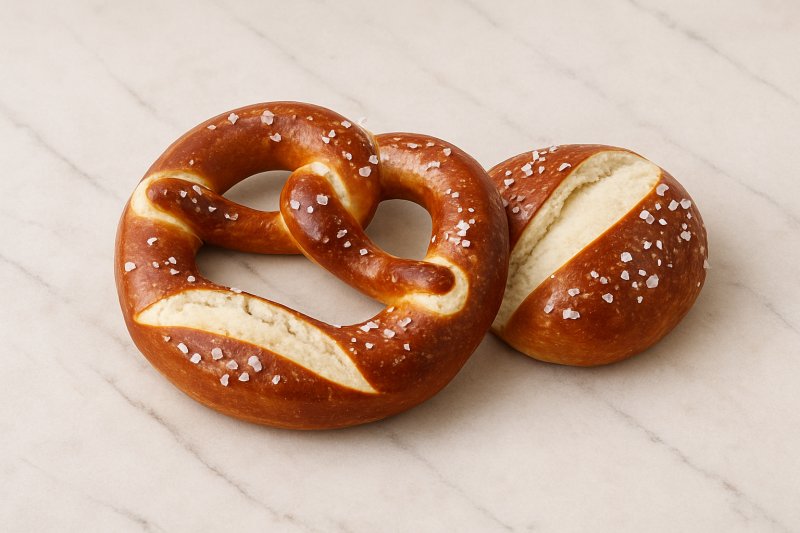
Savory yeast pastry with a lye crust

Wiki about pretzel Nutri-Score C Vegan Yes Gluten-free No Lactose-free Yes Nut-free Yes
NUTRITION / 100 g
290 kcal 8 g Protein 54 g Kohlenhydrate 3 g Fett

Introduction

Fresh pretzels and pretzel rolls on a wooden board
I love lye pretzels and lye rolls because for me they are the reliable comfort food: crispy on the outside, soft on the inside, with that characteristic brown crust and the slightly salty bite. At the first bite I remember a morning at a market when a friendly baker put a still-warm pretzel in my hand. The smell of freshly baked dough and the shiny lye layer immediately captivated me. Since then I always keep an eye out for that combination of simplicity and refinement.

I have learned that the difference between a lye pretzel and a lye roll is often in the shape, but also in the feel: the pretzel has that traditional, almost theatrical sweep, while the lye roll feels pragmatic-modern and fits perfectly in the hand. Both, however, share the secret of the lye, which gives the dough its unmistakable color and distinctive taste. A colleague of mine swears that the coarse salt on the crust is almost as important as the lye itself — it brings out the flavors and gives each piece structure.

When I have guests, I often serve lye rolls with various spreads and toppings. The combinations are surprisingly varied:

  • Classic: butter and a slice of mountain cheese
  • Savory: smoked salmon with horseradish
  • Sweet: fruity jam and a bit of cream cheese
  • Vegetarian: oven-roasted vegetables and hummus
I still remember a Sunday breakfast routine where we halved the rolls, spread them with herb butter and briefly melted them under the grill — the perfect compromise between crispy and tender. For me, lye baked goods are more than just pastry; they are a piece of everyday life that creates memories. They suit a quick snack, an extended brunch and even fine, surprising combos when I'm feeling experimental.

In the end I find that lye pretzels and rolls have something very human: they are down-to-earth, comfort on gray days and celebrate simple pleasures. I am happy every time the scent of lye reaches my nose — then I know something good is about to happen.

Availability & types

Availability and types

Lye pretzels and lye rolls are popular in many countries, especially Germany, Austria and parts of Switzerland. Their origin is in Europe, and the pretzel has a long history: it is believed that monks invented it in the Middle Ages. Lye pastry is made by briefly dipping the dough in a caustic lye bath before baking. This lye produces the dark, shiny crust and the typical flavor.

You can get lye pretzels and lye rolls almost anywhere there are bakeries or supermarkets. In cities they are often found in bakeries on every corner or in supermarket chilled counters. In rural areas there may be fewer bakeries, but regional bakers or weekly markets usually offer lye pastry. In larger cities there are sometimes even specialist shops focusing on lye products.

Available types and variants

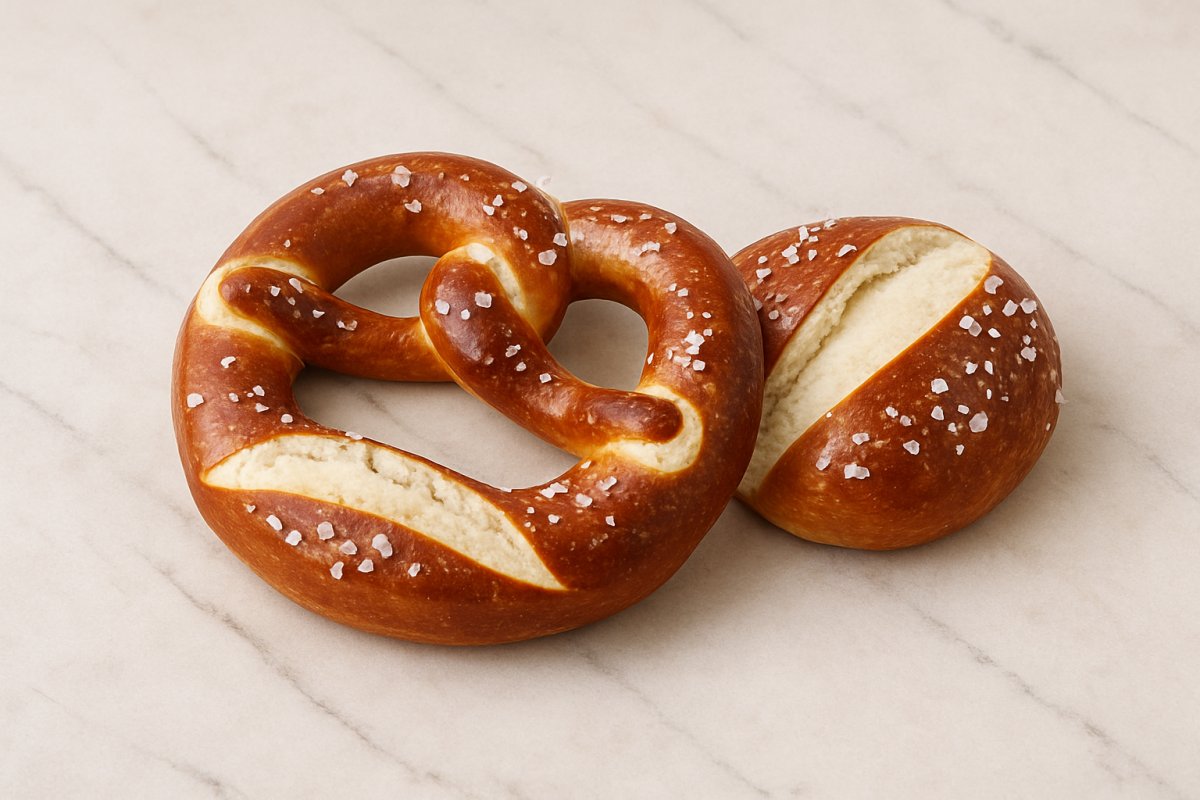
  • Classic lye pretzel: that is the well-known shape with the curved arms and the thick belly in the middle. It is crispy on the outside and soft inside.
  • Lye roll: smaller, round versions that work well as rolls for sandwiches. They are practical for on the go.
  • Small lye sticks: elongated, thin pieces often offered as a snack.
  • Whole grain and multigrain variants: these contain more fiber and are darker. Different flours or seeds (for example flaxseeds) are mixed into the dough.
  • With toppings: some lye products are topped with coarse salt, cheese, poppy seeds or sesame. That changes the flavor and makes them more varied.
  • Mini pretzels: small pastries suitable for sharing or as a children's portion.
  • Vegetarian and vegan options: traditionally lye pretzels are mostly vegan because they consist of flour, water, yeast and lye, but sometimes butter or egg is used — then there are specially labeled variants without animal products.
If you look for specialties you can also find sweet variants or combo items, for example lye rolls with chocolate or filled with cream cheese. In some countries they are also used in sandwiches with cold cuts or as burger buns — it's like a normal roll swap, only with the special lye flavor.

Origin of ingredients and growing regions

The main ingredient is flour, usually wheat. Wheat is grown worldwide: major growing regions are Europe, North America, Russia and Australia. That means flour is widely available. Yeast, water and salt are also basic ingredients available everywhere. The caustic soda lye used for the lye bath is a special ingredient bakers use in small quantities; it provides the distinctive crust. Many bakeries make lye pastry fresh daily, so availability and freshness are often best in the morning.

Supermarkets offer ready-packaged lye pretzels that can be briefly reheated. In bakeries they are usually fresh and often still warm. Best availability is in the morning or at typical breakfast times. For special varieties it's worth checking the weekly market or holidays when bakers offer special recipes.

In summary: lye pretzels and rolls are easy to find, originate from Europe and come in many variants — from classic to whole grain, with or without toppings. Their basic ingredients come from large growing regions worldwide, and fresh lye pastry is best obtained at the bakery in the morning.
Details & nutrition

Property Value
Unit g
Average weight per piece 70
Calories per 100 290
Protein per 100 8
Carbohydrates per 100 54
Sugar per 100 2
Fat per 100 3
Saturated fat per 100 0.6
Monounsaturated fat 1
Polyunsaturated fat 0.8
Fiber per 100 3
Vitamin C (mg) per 100 0
Vitamin D (IU) per 100 0
Calcium (mg) per 100 15
Iron (mg) per 100 1.5
Nutri-Score C
CO₂ footprint 0.6
Origin Europe
Gluten-free No
Lactose-free Yes
Nut-free Yes
Vegan Yes
Note Typically made from wheat flour, water, yeast, salt and fat; may contain traces of other allergens depending on the recipe.

Technical & scientific information

Lye pretzel / lye roll are traditional baked goods from Central European cuisine, characterized by a distinctive surface and a specific taste. The lye surface is created by briefly immersing the shaped dough pieces in an alkaline solution, usually caustic soda (sodium hydroxide, NaOH) or, at household concentrations, baking soda (sodium bicarbonate, NaHCO3) in hot water. This process causes a chemical reaction at the dough surface that is responsible for the typical brown, shiny crust and the slightly soapy, savory taste.

Composition and ingredients
The basic ingredients of lye pretzels and lye rolls correspond to those of simple wheat baked goods: wheat flour (usually type 550 or equivalent), water, yeast or sourdough, salt and occasionally a fat component (butter or vegetable oil). In industrial production enzymes, ascorbic acid or emulsifiers may also be used to improve dough stability and volume. The lye itself is not a significant nutrient source, but serves as a surface treatment; with proper use only very small lye residues remain on the end product, which are transformed during baking.

Chemical and physical processes during lye treatment
When the alkaline solution contacts the dough surface, proteins (especially gluten) and the polysaccharides of flour starch are chemically affected. The lye denatures protein components, alters the dispersion relations of fat and water and promotes the Maillard reaction during baking. The alkaline pre-treatment intensifies the Maillard reaction at the surface temperature, producing the dark coloring and characteristic flavor. In addition, the surface starch is partly dissolved or gelled, which supports the shiny crust.

Nutritional values and nutritional aspects
Nutritionally, lye products largely correspond to other wheat rolls. Per 100 g they typically provide about 250–300 kcal, with a macronutrient profile of around 9–11 g protein, 1–3 g fat and 50–60 g carbohydrates, depending on recipes and toppings. Salt content can be increased by rubbing in coarse salt after the lye. For people with celiac disease or wheat allergy lye pretzels are unsuitable, since they are made from wheat flour. The lye process hardly affects nutrient availability, but can change the solubility of certain surface proteins.

Health and safety aspects
The caustic soda or sodium hydroxide solution used is highly corrosive and requires protective measures when handled. In professional bakeries standardized concentrations and occupational safety regulations are observed to avoid burn hazards. Only very small, non-corrosive residues remain on the final product, because the lye is chemically converted during the subsequent baking process. Because of the typically increased salt content, people on a salt-restricted diet should pay attention to portion size and added salt. Industrially produced lye pastries may contain additives such as emulsifiers, preservatives or enzymes; labeling requirements inform about such additives.

Processing methods and variants
Production includes dough mixing, portioning, shaping and a rest or proofing stage, followed by the lye bath and baking. Lye time, temperature of the lye solution and concentration determine the final appearance of the crust. Traditional pretzels are usually dipped in caustic soda; at home a baking soda solution is a safe alternative. Variants include lye sticks, rolls and buns as well as regional differences in size, salt sprinkling and additions like cheese or seeds.

Sensory properties
Characteristic are a shiny, dark-brown crust that can be slightly crispy, and a denser interior crumb structure than some other rolls. Flavor is dominated by lightly malty and roasted notes, complemented by the salty accent. The texture results from the combination of intensive crust formation and relatively compact crumb.

Overall the lye treatment is a precise chemical-physical procedure that turns simple dough ingredients into a distinctive product with specific sensory and technological properties.

Wiki entry for: pretzel
Active now: 11 visitors of which 2 logged-in members in the last 5 minutes