Menu & categories

Pralines

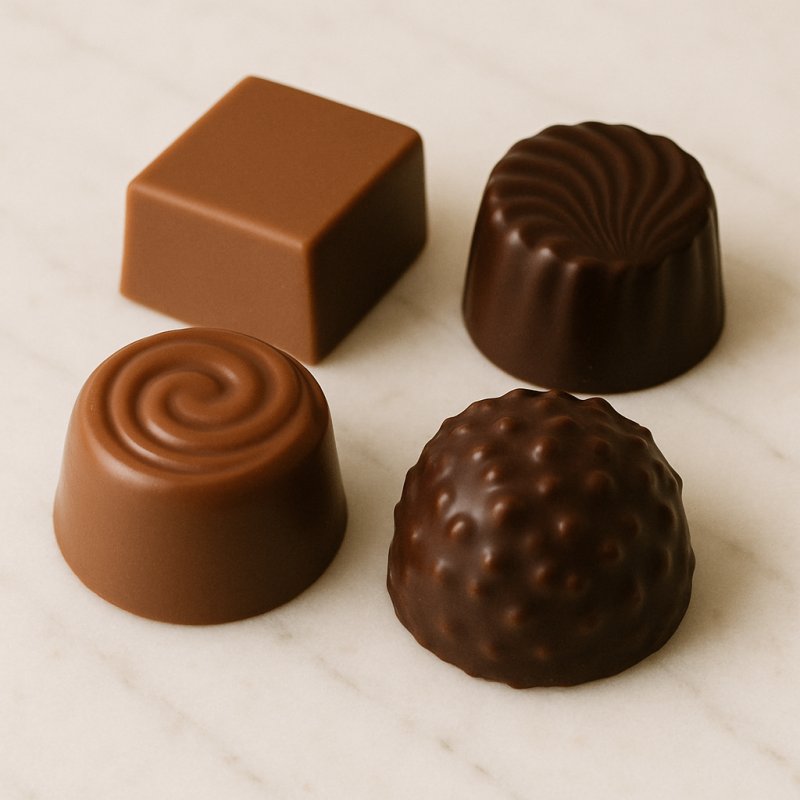
Filled chocolate confections with assorted fillings

Wiki about praline Nutri-Score E Vegan No Gluten-free No Lactose-free No Nut-free No
NUTRITION / 100 g
520 kcal 6 g Protein 50 g Kohlenhydrate 32 g Fett

Introduction

Assorted pralines on a plate
I still remember the first bite of a homemade praline as if it were yesterday: the chocolate gently melting on the tongue, and suddenly a surprising filling that evokes both joy and wonder. For me, pralines are more than just sweets; they are little works of art that combine technique, flavor and feeling. Each praline tells a story of ingredients, tempering, craftsmanship and the search for the perfect balance between bitterness, sweetness and texture.

In small workshops and large confectioneries I repeatedly encounter the same basic principles: a high-quality chocolate shell, a carefully composed ganache or nougat filling, and often a surprising element like salt, alcohol or crunchy nuts. I once tried a praline whose core tasted of a secret spice blend; a colleague of mine was sure he recognized cardamom, while I suspected citrus. Such debates make tasting an experience.

Pralines offer an astonishing variety:

  • Ganache-based: creamy, velvety and often enriched with cream.
  • Nougat and marzipan: nutty, sweet and sometimes with praline for added crunch.
  • Liquid-filled: liqueur or caramel that flows out when bitten and surprises.
  • Freeze-dried fruits or spices: for a modern, aromatic note.
When baking or making pralines, patience is a virtue. I remember an afternoon when I completely underestimated the temperature of a chocolate and ended up improvising. From that "mishap" came an unusual texture that was surprisingly well received. Such mishaps have often shown me that experimenting is allowed and sometimes leads to new favorite recipes.

High-quality ingredients are essential: good cocoa beans, pure cream, real butter and fresh nuts make the difference. At the same time I am fascinated by cultural variations: some countries prefer very sweet profiles, others emphasize bitter, complex profiles. This diversity invites not only enjoying pralines but also exploring them and reinterpreting them according to personal preference.

In the end pralines are, for me, small everyday gifts, perfect for special moments or as a reward after a long day. They combine craftsmanship and imagination and invite you to remain curious — about new flavors, textures and stories hidden in each individual praline.

Availability & types

Availability and types

Pralines are small filled pieces of chocolate that can be bought in many countries around the world. They are often found in specialized shops such as confectioneries (these are stores that sell sweets and particularly fine chocolate), but also in supermarkets, department stores and at candy stands. On special occasions such as Christmas, Easter or Valentine's Day they are particularly common because people like to buy them as gifts or as a small treat.

Origin and raw materials
Pralines mostly consist of chocolate and a filling. The most important ingredient for chocolate is the cocoa bean, which grows on cocoa trees. These trees need warm weather and a lot of rain, so they grow mainly in countries near the equator, such as in West Africa (for example in Côte d'Ivoire and Ghana), in South America (like Brazil and Ecuador) and in parts of Asia (for example Indonesia).

You can imagine the origin like a large garden: in certain regions the cocoa tree thrives particularly well because the sun, warmth and rain are right there. The cocoa beans are harvested, dried and processed before they become chocolate, which is then shaped into pralines.

Available types and variants
There are many different kinds of pralines. Some important types are:

  • Filled pralines: These have a hard chocolate shell and inside a creamy or solid filling. Examples of fillings are nougat (a sweet nut cream), caramel, fruit jelly or liqueur.
  • Truffles: Truffles are soft and creamy inside, often dusted with cocoa. They resemble a small, round chocolate ball.
  • Marzipan pralines: These contain marzipan, a sweet paste made from almonds and sugar. Marzipan has a nutty flavor and pairs well with chocolate.
  • Nut and almond pralines: Some pralines are filled with whole nuts or nut creams or sprinkled with nut pieces.
  • Chocolate assortments: Gift boxes often contain various types so you can try and see which you like best.
Additionally, pralines come in different types of chocolate:

  • Milk chocolate: It is sweet and mild because it contains milk. Many children especially like it.
  • Dark chocolate: It tastes more bitter, thus less sweet, because it contains more cocoa and less sugar.
  • White chocolate: Technically it contains no cocoa solids but cocoa butter, milk and sugar, making it very sweet and creamy.
Special variants
There are pralines with special flavors, such as sea salt, coffee notes, exotic fruits or herbs. Some are also made with alcoholic fillings, for example rum or liqueurs — these are not suitable for children. Today there are also vegan pralines made without dairy products, so people who do not consume milk can enjoy them as well.

In short: pralines come from chocolate, whose base is the cocoa bean, and these beans grow mainly in warm countries near the equator. In shops you will find many different types and flavors — from creamy and nutty to fruity and bitter — so there is something for almost every taste. The end.
Details & nutrition

Property Value
Unit g
Average weight per piece 12
Calories per 100 520
Protein per 100 6
Carbohydrates per 100 50
Sugar per 100 45
Fat per 100 32
Saturated fat per 100 19
Monounsaturated fat 9
Polyunsaturated fat 2
Fiber per 100 4
Vitamin C (mg) per 100 0
Vitamin D (IU) per 100 0
Calcium (mg) per 100 90
Iron (mg) per 100 2.5
Nutri-Score E
CO₂ footprint 5.0
Origin Varies depending on the manufacturer and the chocolate used
Gluten-free No
Lactose-free No
Nut-free No
Vegan No
Note Nutritional values are average values for mixed milk chocolate pralines with various fillings; actual values vary by variety and manufacturer.

Technical & scientific information

Pralines are finely filled chocolate spheres or bites produced industrially or artisanally from a chocolate shell and an inner filling. Chemically speaking, pralines mostly consist of the components also found in chocolate bars: cocoa mass, cocoa butter, sugar and partially milk constituents. Depending on the recipe, vegetable fats, emulsifiers such as lecithin, flavorings (e.g. vanillin) and the typical substances for fillings such as nuts, marzipan, nougat, caramel, liqueurs or fruit jellies are added.

The chemical composition varies greatly by type. Cocoa mass provides a complex mixture of fatty acids (mainly stearic acid, palmitic acid and oleic acids) bound in the cocoa butter, as well as alkaloid stimulants like theobromine and traces of caffeine. Cocoa solids also contain phenolic compounds such as polyphenols, which have antioxidant properties and influence flavor. Sugar (sucrose, sometimes glucose syrup) makes up the largest portion of carbohydrates. Milk pralines additionally contain milk sugar (lactose) and milk proteins (casein, whey proteins). Nut fillings bring plant proteins, unsaturated fatty acids, minerals (e.g. magnesium, phosphorus) and vitamins.

The nutritional balance of pralines is typical for confectionery chocolate products: high energy content due to fat and sugar, moderate protein content and very low fiber content. On average 100 g of pralines provide about 500–600 kcal, 30–50 g of fat, 40–60 g of carbohydrates and 5–10 g of protein; exact values depend on the filling and coating chocolate. Because of the high energy and sugar content, pralines should be considered an occasional treat.

From a manufacturing perspective, tempering and molding the chocolate shell are central. Tempering is a controlled crystallization process of cocoa butter, in which the desired polymorphic β networks are produced. These result in a glossy surface, a crisp bite and stable melting characteristics. In the classic production chain, molds are filled with tempered chocolate, excess chocolate is removed, the layers harden and then the preformed hollow bodies are filled. Fillings often require their own processing steps: emulsifying (for praline creams), cooking (for caramels), grinding and hydrating (for marzipan) and, if necessary, microbiological stability measures such as sugar concentration or alcohol addition to ensure shelf life.

Food-technology relevant aspects are water activity, pH and fat migration. Fillings with higher water activity can increase the risk of microbial growth; therefore sugar or alcohol contents and heat treatments are common to reduce this risk. Fat migration describes the movement of liquid fats from the filling into the chocolate shell, leading to greasiness or a dull surface; this effect is minimized by appropriate fat modification, intermediate coatings (e.g. cocoa fat bridges) or the use of fat barriers.

Health-relevant points are allergens (nuts, milk, soy lecithin), high sugar and fat content and the stimulants theobromine and caffeine, which can cause discomfort in sensitive individuals or small children. Dark-chocolate-based pralines may show antioxidant effects due to higher polyphenol content, but these effects are limited nutritionally given the small portions and sugar content. For diabetics, people with milk or nut allergies or phenylketonuria (with certain flavorings or sweeteners) specific labeling and formulations are required.

Sensory-wise pralines are a product of complex interactions between texture (crisp shell, soft or firm filling), aroma (cocoa notes, roast notes, nut and fruit aromas) and melting behavior, which depends strongly on the cocoa butter structure. Quality assurance therefore includes sensory tests, physical measurements (e.g. melting point, fracture strength) and chemical analyses (fat profile, moisture, microbial checks). For industrial producers, stability tests and packaging design are important to minimize aroma loss, fat migration and mechanical damage during storage and transport.

Wiki entry for: praline
Active now: 12 visitors of which 2 logged-in members in the last 5 minutes