Menu & categories

Powder for cream sauce

Creamy sauce base for quick preparation.

Wiki about powder for cream sauce Nutri-Score D Vegan No Gluten-free No Lactose-free No Nut-free Yes
NUTRITION / 100 g
410 kcal 8.0 g Protein 55.0 g Kohlenhydrate 20.0 g Fett

Introduction

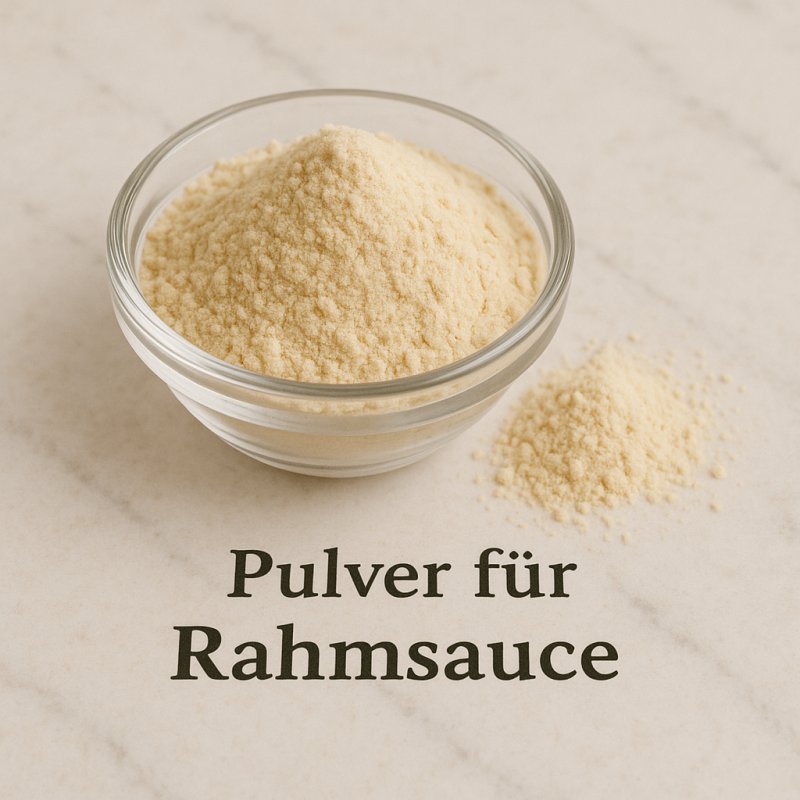
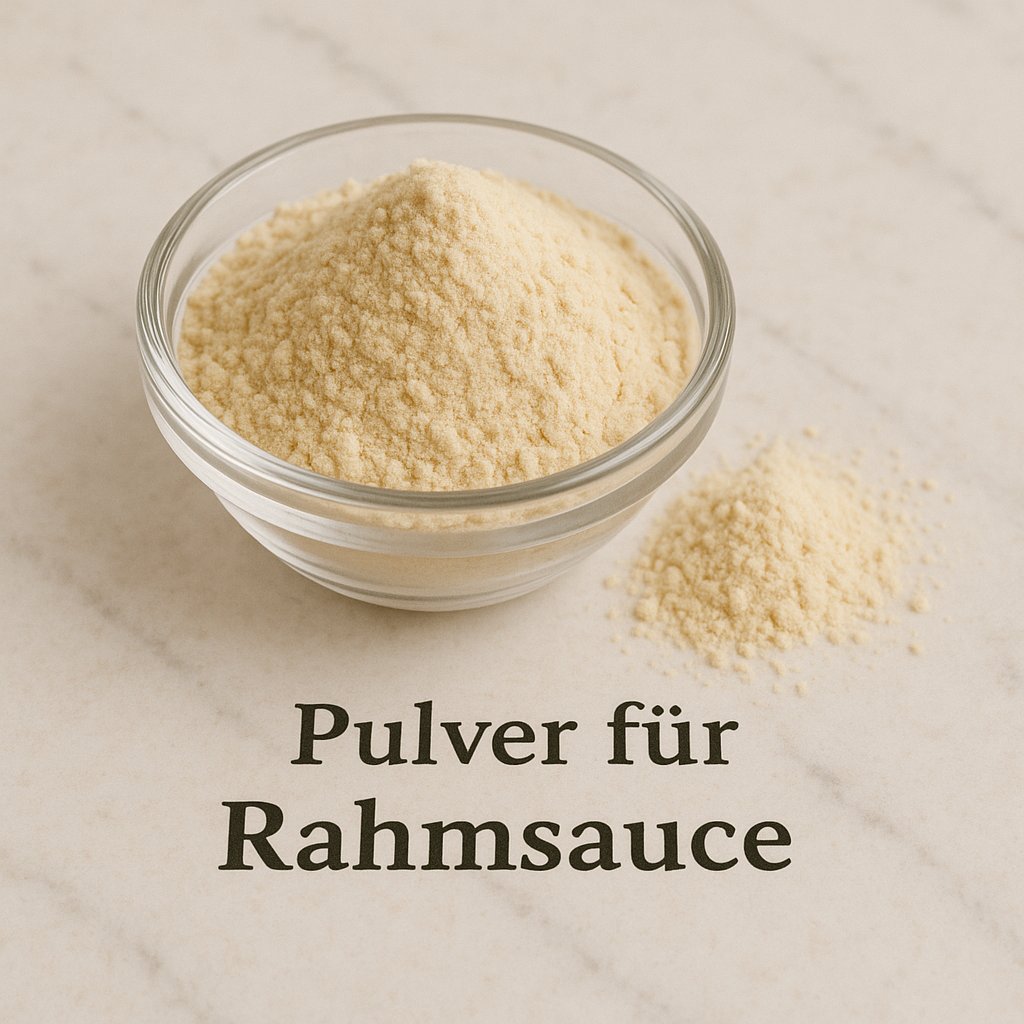
Powder for cream sauce in a bowl

I have a secret soft spot for practical kitchen tricks, and cream sauce powder definitely belongs to that category. As an ingredient that quietly sits on many supermarket shelves, it looks unremarkable at first glance, but in hectic moments it reliably delivers creamy flavor. I still remember a rainy evening when an impromptu dinner was saved because I had this powder on hand and within minutes was able to pour a silky sauce over sautéed mushrooms.

The powder usually consists of a blend of milk powder, starch, salt and natural flavors. This combination ensures the sauce thickens when brought to a boil and gains a pleasant texture. The big advantage is consistency: what I especially like is that the texture is reproducible, even when time is tight or you need to finish several plates at once.

Of course the product is not a substitute for a freshly reduced cream sauce with fresh herbs, but it is a reliable compromise. A colleague of mine swears by jazzing up the powder with a splash of white wine and a dollop of mustard, and I have found that a squeeze of lemon juice or a few drops of Worcestershire sauce round the flavors beautifully.

  • Preparation tip: First dissolve the powder in cold liquid, then heat slowly to avoid lumps.
  • Vary thickness: More liquid for a thinner sauce, less for a creamier consistency.
  • Storage: Store dry and airtight, protect from moisture.

For special occasions I refine the basic recipe with roasted garlic, fresh herbs or a spoonful of cream to add depth. There are also vegan or lactose-free versions that work surprisingly well when you want to avoid dairy. In the end I love this powder because it bridges ease of use and surprisingly good taste, and because it has saved me from more than a few kitchen disasters.

Availability & types

Availability and types of cream sauce powder

Cream sauce powders are dried mixes that let you quickly make a creamy sauce. You can find them in supermarkets, discount stores, health food shops and online. They usually come in small packets, tins or single-serve sachets. They are popular because they have a longer shelf life than fresh cream and are quick to prepare – similar to instant cocoa powder that you just mix with milk.

Origin of the ingredients
The individual components come from different regions:

  • Milk components (such as milk powder or cream powder) come from dairy farms. In Europe they often come from Germany, the Netherlands or France. Milk is not a field crop but a product of animal husbandry.
  • Starches (e.g. corn, potato or wheat starch) are produced from plants. Corn is widely grown in Europe and the Americas, potatoes in many parts of Europe, and wheat is an important field crop in Germany and other countries.
  • Spices and herbs like pepper, paprika or parsley come from a variety of countries: pepper often from India or Indonesia, herbs from the Mediterranean region or Europe.
  • Fats, cheese or mushroom powders are typically processed in production facilities often located where milk or raw materials are readily available.

Cultivation and production areas
For plant-based ingredients the cultivation areas vary by crop. Corn and wheat are grown on large fields in Europe and North America. Potatoes are popular in cooler climates and grow well in many European countries. Herbs and spices often come from warmer regions or are grown locally in greenhouses. The conversion into powder usually takes place in food factories that clean, dry and blend the raw materials.

Available varieties and variants
Cream sauce powders come in many flavors and to meet different needs. Here are some common types:

  • Classic cream sauce – neutral, mild and creamy, pairs well with potatoes or pasta.
  • Herb or parsley sauce – with dried herbs, tastes fresh and green.
  • Mushroom or champignon sauce – contains dried mushrooms or mushroom flavor.
  • Cheese or gorgonzola sauce – with cheese powder for a savory taste.
  • Garlic or onion sauce – stronger flavor for heartier dishes.
  • Light variants – with less fat, often using other binding agents or skim milk powder.
  • Lactose-free and vegan – for people who cannot tolerate dairy or avoid animal products. Vegan powders use soy, pea or oat ingredients instead of milk.
  • Gluten-free – corn or potato starch is used instead of wheat starch so people with gluten intolerance can eat the sauce.
  • Organic variants – made from organically grown raw materials, without artificial additives.

In summary: cream sauce powders are easy to find and come in many variants – from classic creamy to vegan or gluten-free. The raw materials come from different countries depending on whether they are milk, cereals, potatoes or herbs, and the finished mixes are produced in factories so they keep long and can be prepared quickly.
Details & nutrition

Property Value
Unit g
Calories per 100 410
Protein per 100 8.0
Carbohydrates per 100 55.0
Sugar per 100 10.0
Fat per 100 20.0
Saturated fat per 100 12.0
Monounsaturated fat 6.0
Polyunsaturated fat 2.0
Fiber per 100 2.0
Vitamin C (mg) per 100 0
Vitamin D (IU) per 100 0
Calcium (mg) per 100 220
Iron (mg) per 100 1.2
Nutri-Score D
CO₂ footprint 4.0 kg CO2e/kg
Origin EU
Gluten-free No
Lactose-free No
Nut-free Yes
Vegan No
Note Typical dry product to be reconstituted; nutritional values may vary depending on manufacturer and preparation (e.g., with butter/cream).

Technical & scientific information

Cream sauce powder is a dried blend product intended primarily to make a creamy sauce easily. It typically consists of a combination of thickeners, milk components or milk substitutes, fats, salt, seasonings and additives that are shelf-stable in powdered form. The composition targets a clear technological effect: when water (and often fat or milk) is added and the mixture is heated, a creamy consistency develops.

Chemical and physical composition: The main components are

  • Starch-based thickeners (e.g. corn starch, wheat starch, modified starches): these form a viscous gel during heating by swelling of starch granules and release of amylose and amylopectin.
  • Milk powder or whey products (e.g. skimmed milk powder, whey concentrate, milk fat): they provide proteins (casein, whey proteins), lactose and milk fat that contribute to texture, mouthfeel and Maillard-related flavor development.
  • Fats and emulsifiers (vegetable fats, mono- and diglycerides): these stabilize fat-in-water emulsions and improve the creamy sensation.
  • Hydrocolloids and stabilizers (e.g. xanthan, guar gum, carrageenan): they increase viscosity, prevent phase separation and provide cold and heat stability.
  • Salt, spices and flavorings, as well as anti-caking agents (e.g. silicon dioxide) and acidity regulators (e.g. citric acid).

Technological processing: Production begins with formulation and drying of liquid mixtures. Spray drying is the most common method: a liquid emulsion or suspension is finely atomized and dried in a hot air stream, producing microcrystalline particles. Agglomeration steps are often used to improve solubility and handling; in this process powder particles are bound into larger, porous aggregates. Mixing and filling operations follow under controlled humidity.

Rehydration and function during cooking: When stirred into liquid starch particles swell, proteins solubilize and emulsifiers stabilize the fat. Heating promotes starch gelation and, where applicable, protein denaturation, which increases viscosity and yields a homogeneous, creamy sauce. Modified starches are more heat- and acid-stable and prevent flocculation during prolonged heating.

Nutrition and health aspects: Nutritional value depends strongly on the formulation. Typical features are a high proportion of carbohydrates (starch, maltodextrins), moderate protein content (when milk components are present) and variable fat levels. Salt content can be significant; some products also contain added sugars or flavor enhancers. Allergens: milk components and, if wheat starch is used, gluten are relevant declarations. Alternative formulations exist for people with lactose intolerance or milk allergy. Long-term health considerations mainly concern high sodium and processing-related additives; individual emulsifiers and E-numbers are considered safe at usual consumption levels but may cause irritation or intolerance in sensitive individuals.

Storage and quality: Powdered cream sauces should be stored dry, cool and protected from light. Control of moisture and oxygen is crucial to prevent lumping, microbial spoilage after opening and fat oxidation. The processing instructions on the label typically provide mixing ratios and cooking temperatures for the desired result.

Overall, cream sauce powder is a technologically optimized product that, by combining starch preparations, milk components and stabilizers, enables rapid preparation of stable, creamy sauces. Consumers should check ingredient lists and nutritional information if allergies, lactose intolerance or a low-salt diet are relevant.

Wiki entry for: powder for cream sauce
Active now: 20 visitors of which 2 logged-in members in the last 5 minutes