Menu & categories

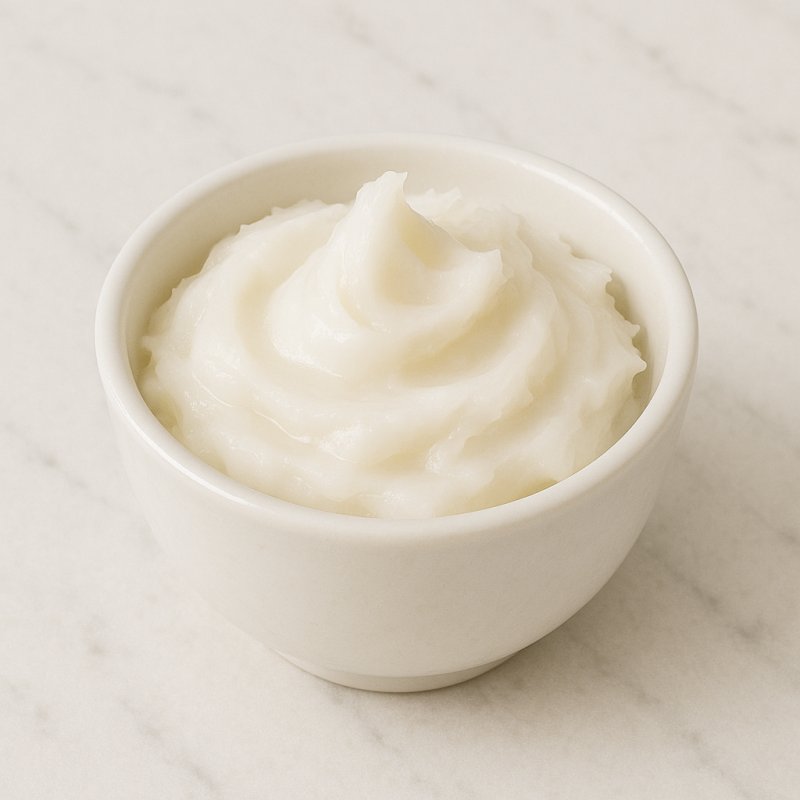
Pork lard

Pure animal fat for frying and baking

Wiki about lard Nutri-Score E Vegan No Gluten-free Yes Lactose-free Yes Nut-free Yes
NUTRITION / 100 g
902 kcal 0 g Protein 0 g Kohlenhydrate 100 g Fett

Introduction

Pork lard in a jar
Lard for me is more than just a traditional ingredient – it is a piece of European food culture that has held a permanent place in my kitchen for years. As a 35-year-old editor who writes a lot professionally about food and cooking, I am repeatedly fascinated by how versatile and at the same time underestimated this fat is. While many modern nutritional discussions revolve around vegetable oils or butter, lard remains in many regions of Europe a quiet but powerful constant. It convinces with flavor, temperature stability and its remarkable ability to transform in sweet and savory dishes.

I remember my grandmother frying lard doughnuts in a cast-iron pan at Advent. The scent was unmistakable: warm, nutty and inviting. A colleague once told me that his family from southern Poland did not consider breakfast complete without crackling fat with apples, onions and marjoram. These personal stories are more than nostalgia – they show how deeply lard is rooted in everyday European cooking.

What makes lard so special is its smoke point, which is significantly higher than that of many butter varieties. That makes it excellent for frying, braising and deep-frying. Whether crispy fried potatoes, juicy schnitzels or golden doughnuts: the result is even, flavorful and convincing in texture. In addition, pure lard has a relatively neutral, mild taste – quite different from its reputation. It does not dominate but subtly enhances the ingredients' own aromas.

There are noticeable differences in product quality, however. Artisan-rendered lard often has a creamy consistency and fine roasted notes, while industrially produced variants are more consistent but often less complex in aroma. Clarified lard is clearer, keeps longer and is ideal for high temperatures. Lard with cracklings, in contrast, contains crunchy bacon bits and often spices – a spreadable delicacy that convinces both on bread and as a seasoning component in hot dishes.

Advantages of lard in

Availability & types

Availability and types of lard

Lard is a fat obtained from pig tissue. In many countries it is a traditional cooking fat because it withstands high temperatures when frying, baking and deep-frying and gives dishes an aromatic taste. For children from about 12 years old it can be imagined like this: just as butter is made from milk fat, lard is made from pig fat. However, it is firmer than oil and softer than cold butter, depending on the temperature. Important: good lard is clean, smells mild and does not taste sharp.

Where can you get lard?
Today lard is available in many shops if you know where to look:

  • Supermarkets: Usually in the chilled section, by butter and margarine, or on the shelf with baking ingredients. Often in tubs, jars or firmly packaged blocks.
  • Butcher shops: Often particularly fresh, sometimes even homemade. Here you can ask for specific types, for example from back fat or belly fat.
  • Weekly markets and farm shops: Regional variants, often artisan-made. Sometimes refined with herbs or onions.
  • Online shops: Wide selection, including organic quality, special cuts (e.g. “leaf lard”) and international variants.
  • International: In stores with Eastern European, Spanish, Latin American or Asian foods, sometimes under other names (e.g. “manteca” in Spanish).
Why are there different types?
The fat comes from different parts of the pig. Depending on where it comes from and how it is processed, flavor, color and consistency change. Filtering, clarifying and possible additions (such as onions) also play a role.

Origin within the animal

  • Back fat (Back Fat): Provides fairly firm lard with a mild flavor. Good for frying and as a spread on bread

Details & nutrition

Property Value
Unit g
Average weight per piece 10
Calories per 100 902
Protein per 100 0
Carbohydrates per 100 0
Sugar per 100 0
Fat per 100 100
Saturated fat per 100 39
Monounsaturated fat 45
Polyunsaturated fat 11
Fiber per 100 0
Vitamin C (mg) per 100 0
Vitamin D (IU) per 100 0
Calcium (mg) per 100 0
Iron (mg) per 100 0.1
Nutri-Score E
CO₂ footprint 3.5 kg CO2e/kg
Origin Pig, Europe
Gluten-free Yes
Lactose-free Yes
Nut-free Yes
Vegan No
Note Pure animal fat; ideal for frying and sautéing, highly heat-stable. Spreadable at room temperature, solid in the refrigerator.

Technical & scientific information

API Error: An error occurred while processing your request. You can retry your request, or contact us through our help center at help.openai.com if the error persists. Please include the request ID req_cd09ff4bb7524245859d53120d23a47e in your message.
Wiki entry for: lard
Active now: 21 visitors of which 2 logged-in members in the last 5 minutes