Menu & categories

Popcorn

Airy corn snack with high fiber content

Wiki about popcorn Nutri-Score C Vegan Yes Gluten-free Yes Lactose-free Yes Nut-free Yes
NUTRITION / 100 g
387 kcal 12 g Protein 78 g Kohlenhydrate 4.5 g Fett

Introduction

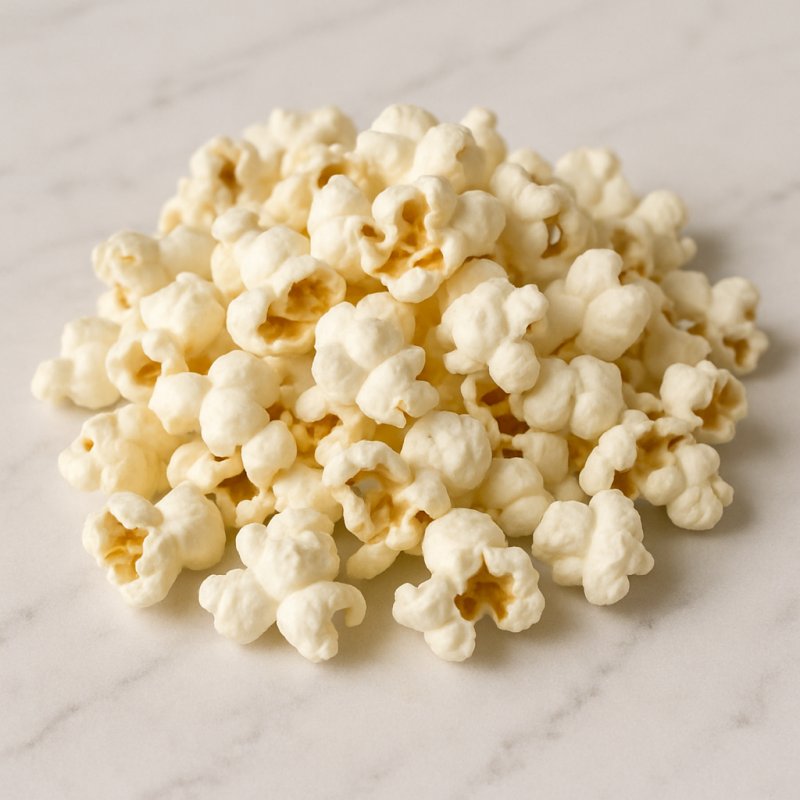
Bowl of freshly popped popcorn
I still remember a rainy Sunday afternoon when I armed myself in the kitchen with a bag of corn kernels and an old pan because I simply did not want to miss the ritual of popping popcorn. For me popcorn is more than a cinema snack; it is a small, crackling ceremony that evokes smells, memories and conversations. Even the first "plop" feels like a starting signal for good cheer.

The kernels themselves are unassuming but surprisingly sturdy: a hard seed that is transformed by heat into an airy, white wonder. I have learned that heat and patience are the most important ingredients. A colleague once brought popcorn with chili and lime to the office, and suddenly I realized how adaptable this ingredient is. Sweet, salty, spicy or caramelized — popcorn takes on flavors almost like a chameleon.

What fascinates me particularly is the combination of simplicity and creativity. You only need corn, fat and heat, yet countless variations arise. At home I often prefer a mix of butter and sea salt; on more experimental days I roast the kernels with coconut oil and add toasted sesame or a pinch of smoked paprika. Children in my neighborhood found it delightful when I served a "cocoa-cinnamon" version — they smiled before they even tasted it.

Popcorn is also surprisingly versatile in the kitchen. It works as a salad topping, as a crunchy component in desserts, or as a compact, light snack on the go. I make sure to choose good-quality kernels and the right fat, because texture and flavor depend on that. Another plus: popcorn can be a relatively healthy alternative to many processed snacks, as long as you keep sugar and fat in check.

In conclusion: popcorn combines simplicity with adventure. It is a small pleasure that creates big memories, and I still enjoy trying new combinations and surprising friends. The next time you put corn kernels in the pan, watch for the first "plop" — it is often the beginning of a small, delicious story.

Availability & types

Availability and types of popcorn

Popcorn is a special variety of maize that pops when heated and becomes the familiar white, fluffy pieces. It is easy to find and available in many variants. Here I explain where popcorn comes from, where it is grown and which varieties and versions you can find in the store or at the fair — explained so simply that even a 12-year-old child can understand it all.

Origin and growing regions
Popcorn originally comes from North and Central America. The indigenous peoples there knew popcorn many hundreds of years ago. Today popcorn is grown in many countries, especially where the climate is warm and the soils are fertile. Important growing regions include:

  • USA — The country produces a great deal of popcorn. Especially in states like Nebraska, Indiana or Iowa a lot of popcorn maize is grown.
  • Mexico — Here popcorn has a long history and has been cultivated for a very long time.
  • Brazil and Argentina — In parts of South America a lot of popcorn is also grown.
  • Europe and other countries — Popcorn is now also grown in Europe, India or China when the weather allows.
How does popcorn grow?
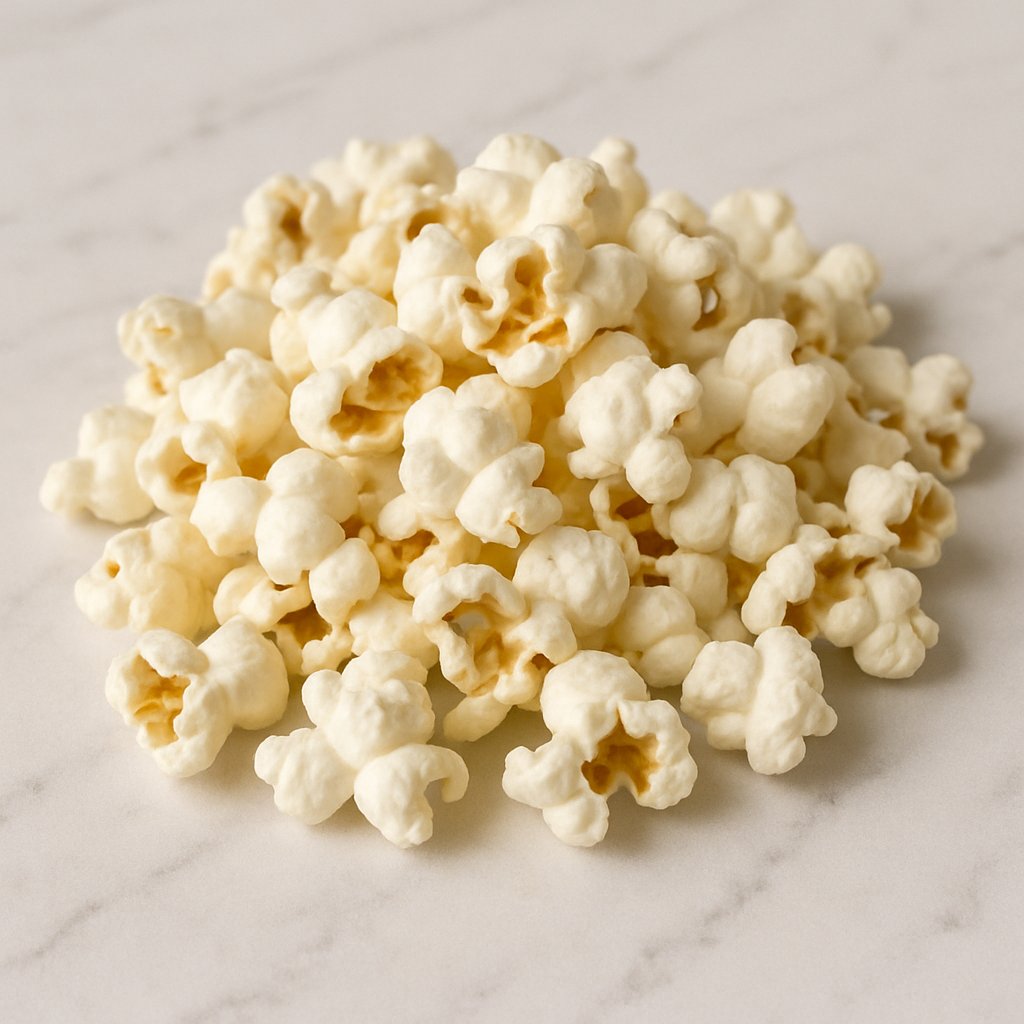
Popcorn maize looks like ordinary corn from the outside. The difference lies in the small kernels: they have a hard hull and a starchy interior. When the kernels are heated, the moisture inside turns to steam. Because the hull is hard, the steam cannot escape — until the pressure becomes so great that the kernel bursts. The result is the popcorn we eat. You can imagine it like a tiny balloon that is inflated until it suddenly bursts and takes on a funny shape.

Available varieties
Popcorn comes in various varieties. The most important are:

  • Butter or snack popcorn — This is classic popcorn, often butter-flavored or salted. You find it at the cinema or in bags at the supermarket.
  • Kernels in different colors — Popcorn kernels are not only yellowish-white but also come in red or blue kernels which are usually white after popping, but sometimes have a different shape.
  • Microwave popcorn — Prepackaged in a bag that you can put in the microwave. Very convenient at home.
  • Organic and specialty varieties — There is popcorn from organic farming or specially treated popcorn without additives for people who pay particular attention to what they eat.
Variants and preparation methods
You can prepare and enjoy popcorn in various ways:

  • In a pan or pot — With a little oil the kernels are heated until they pop.
  • Popcorn machine — At fairs or for a movie night at home there are special machines that pop many kernels evenly.
  • Microwave — Ready bags or special containers make popping quick and easy.
  • Sweet and savory variants — Popcorn can be flavored with sugar, caramel, chocolate, cheese or spices. This creates many different taste variations.
Popcorn is therefore very versatile: it grows in many countries, comes in different varieties and is easy to prepare at home or at the fair. Sweet or salty, colorful kernels or classic yellow — popcorn is available everywhere and is a popular snack for all age groups.
Details & nutrition

Property Value
Unit g
Calories per 100 387
Protein per 100 12
Carbohydrates per 100 78
Sugar per 100 0.9
Fat per 100 4.5
Saturated fat per 100 0.6
Monounsaturated fat 1.3
Polyunsaturated fat 2.0
Fiber per 100 15
Vitamin C (mg) per 100 0
Vitamin D (IU) per 100 0
Calcium (mg) per 100 7
Iron (mg) per 100 3
Nutri-Score C
CO₂ footprint 0.6
Origin Worldwide, predominantly from North and South America
Gluten-free Yes
Lactose-free Yes
Nut-free Yes
Vegan Yes
Note Nutritional values for air-popped, unsalted and unsweetened popcorn kernels without oil or butter; ready-made products with oil, sugar, or flavorings may differ significantly.

Technical & scientific information

Popcorn is puffed maize, produced from special corn kernels (Zea mays var. everta), whose botanical and physical properties enable popping when heated. The kernels have a hard, hydraulically tight hull (pericarp) and an inner portion of starchy endosperm that encloses a small moisture content (typically 13–14% water). When heated, the pressure of the water vapor trapped in the kernel increases until the pericarp fails; the remaining starch gelatinizes and expands suddenly, freezing into the well-known foamy, porous structural matrix.

Chemical composition and constituents
Popcorn consists predominantly of carbohydrates, mainly amylose and amylopectin from the maize starch kernel. The starch composition affects texture and volume of the puff. Proteins are present in smaller amounts and contribute to the structure of the surface layer. Lipids are mainly found in the germ region of the kernel, though overall in low proportions. In addition, popcorn contains fiber (mostly insoluble cellulose and hemicelluloses), minerals such as potassium, magnesium and phosphorus, and trace amounts of vitamins, particularly B vitamins.

Nutrition information (typical values, dependent on preparation)
Unsalted, air-popped popcorn is low in calories and nutrient-dense: about 370–390 kcal per 100 g of dry, unpopped maize product; air-popped popcorn provides around 3–4 g protein, 70–75 g carbohydrates (a large part of which is resistant starch and fiber) and 4–5 g fiber per 100 g of popcorn. Fat content remains low provided no additional fat is used. With the addition of oil or butter, calories and fat content increase significantly.

Physical and technological aspects of processing
The poppability of a maize kernel depends on pericarp thickness, moisture content, kernel size and internal starch structure. Industrial and homemade methods use different heat sources: direct heat in a pan/popcorn machine, hot air or microwaves. Temperature and time control are decisive; typical heating temperatures are between 175 and 190 C. At too high a temperature the pericarp can char, at too low a temperature the kernel remains unpopped (so-called "Old Maids"). Technological optimizations include pre-conditioning (moisture adjustment), coatings for flavor compounds and the use of oils with a high smoke point.

Sensory properties and texture
The typical texture is produced by the porous, foamy structure of the expanded starch. Different pop styles (e.g. "butterfly" with an open shape vs. "mushroom" with a compact head) result from the fracture and expansion dynamics of the endosperm and influence flakiness, crispness and uptake of coatings. The crispy mouthfeel is based on a low surface moisture content and high degrees of porosity.

Health aspects
Unsalted, air-popped popcorn is considered a comparatively healthy snack: the high fiber content and low energy density can promote satiety. Potential risks arise from additives and preparation methods: fried variants or those heavily topped with butter/oil and salt are energy-dense and can supply high amounts of saturated fatty acids and sodium. Industrial microwave popcorn products formerly contained synthetic flavorings such as diacetyl, which can be harmful to the lungs if inhaled; many manufacturers have since replaced this compound. In addition, improper storage can lead to harmful mold toxins (e.g. mycotoxins), which is why dry, cool storage is important.

Ecological and culinary aspects
As a plant product, popcorn is linked to the same ecological diversity as maize cultivation: variety selection, fertilization and farming methods influence yield and quality characteristics. Culinarily, popcorn is versatile: sweet, salty, spicy and caramelized preparations are common, as are functionalized variants with additives such as spices, sweeteners or coatings that alter taste and shelf life.

In summary, popcorn is a technically interesting food whose puffing behavior is based on clear physico-chemical principles. Its nutritional properties make it a fiber-rich snack with potentially low energy content, provided fat and salt additions are kept moderate. Quality and safety depend on variety selection, moisture content, storage conditions and preparation methods.

Wiki entry for: popcorn
Active now: 18 visitors of which 2 logged-in members in the last 5 minutes