Menu & categories

Pomegranate

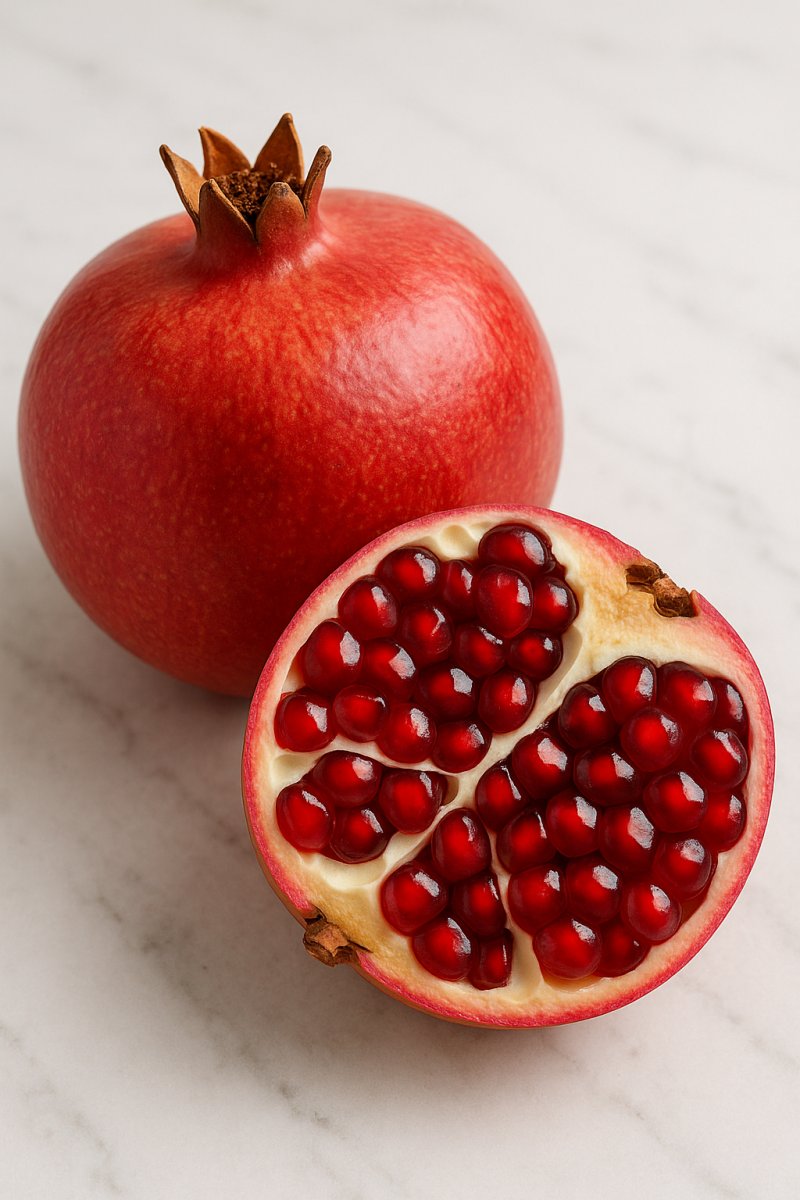
Fruity-tart seeds with a crunchy bite and fresh acidity.

Wiki about pomegranate Nutri-Score A Vegan Yes Gluten-free Yes Lactose-free Yes Nut-free Yes
NUTRITION / 100 g
83 kcal 1.7 g Protein 18.7 g Kohlenhydrate 1.2 g Fett

Introduction

Pomegranate
Pomegranate is, for me, one of those ingredients that feels simultaneously mysterious and extremely accessible. I still remember the first winter market where I inhaled the scent of freshly cut fruit and warm spiced tea, and a stall owner pressed a shiny red pomegranate into my hand. When I cut it open the arils popped out like little jewels and I was instantly enchanted. This fruit has something celebratory about it, even when used plainly for Sunday breakfast.

Flavor-wise I find the pomegranate fascinating: a cool acidity, a sweet undertone and a crunchy texture that balances between juice and seed. It originally comes from the area between the Mediterranean and Iran, but today it is cultivated worldwide and fits many culinary styles. It's not to be underestimated for health; the seeds are rich in antioxidants, vitamin C and fiber. I like to mention that when I want to impress guests who ask why one should replace an apple with this red treasure.

Practical tips I've collected since I started playing with pomegranates:

  • Selection: firm fruit, no bruises, the heavier the juicier.
  • Cutting: cut off the top, score into quarters and loosen under water to avoid splatter.
  • Storage: whole fruit keeps well chilled; extracted arils keep in the refrigerator up to five days.
  • Use: all parts are versatile: juice, arils, even the rind for preserves or as a bitter component.
I like to use pomegranate in the kitchen for salads, with roasted vegetables, in dressings and with lamb. A colleague of mine swears by a few arils on vanilla ice cream — I tried it and he was right. I also like the visual effect: scattered on a plate, the seeds sparkle like little red glass beads and make any dish photogenic.

Moreover, disassembling the fruit is almost meditative; it takes little time but has a big impact. When I have guests I often see their curiosity and they ask if they can taste some. For me that's the really nice part — the moment a simple fruit sparks conversations, memories and new flavor combinations.

Availability & types


Availability and types of pomegranate

The pomegranate originally comes from the area between present‑day Iran and the Himalayas. That means it has been cultivated there for many centuries and spread to other countries from that region. Today it grows in many warm places around the world because it likes sun and little frost — similar to oranges or olives.

Important growing regions include:

  • Mediterranean (Spain, Italy, Greece, Turkey) – many sweet varieties ripen here.
  • Middle East (Iran, Israel) – traditionally strong producers with many varieties.
  • South Asia (India, Pakistan) – many fruits and often intense colors.
  • USA (especially California) – the Wonderful variety is widespread here.
  • North Africa & Central Asia (Morocco, Afghanistan) – many local varieties are found there as well.
You'll find pomegranates in stores mostly in autumn and winter. In our latitudes the season often begins in September and runs until about January or February. In Southern Hemisphere countries the season occurs at the opposite time of year. Very important: whole pomegranates keep in the refrigerator for several weeks — sometimes months. If you remove the small red seeds (called arils) they only stay fresh for a few days in the fridge but can last months in the freezer.

There are many varieties and forms. Here are some well‑known types and how they differ, simply explained:

  • Wonderful – a very common variety, often large and dark red; juicy and usually sweet‑tart.
  • Mollar de Elche – from Spain, usually softer rind and very sweet seeds; good for fresh eating.
  • Acco – an early‑ripening variety, often somewhat lighter and fruity in taste.
  • Parfianka – favored for particularly aromatic seeds, not too sour.
  • White or yellowish varieties – yes, there are variants with paler seeds; they are milder and sometimes less sweet.
Besides whole fruits, pomegranate is sold in many forms:

  • Fresh seeds (arils) in packs – convenient for direct eating or on salads.
  • Juice – freshly pressed or pasteurized bottled juice.
  • Syrup or molasses (sometimes called pomegranate molasses) – thick and good for cooking.
  • Frozen seeds – like small red ice cubes for winter.
  • Powder – dried seeds ground to powder for drinks or desserts.
A simple comparison: imagine the pomegranate as a small treasure chest full of red pearls. Depending on the variety the pearls can be as sweet as grapes or more tart like a lemon. At the supermarket you'll find either the whole “chest” or already removed pearls, depending on how much time you have for cutting. That way you can always choose the option that suits you best.
Details & nutrition

Property Value
Unit g
Average weight per piece 350
Calories per 100 83
Protein per 100 1.7
Carbohydrates per 100 18.7
Sugar per 100 13.7
Fat per 100 1.2
Saturated fat per 100 0.1
Monounsaturated fat 0.1
Polyunsaturated fat 0.4
Fiber per 100 4.0
Vitamin C (mg) per 100 10
Vitamin D (IU) per 100 0
Calcium (mg) per 100 10
Iron (mg) per 100 0.3
Nutri-Score A
CO₂ footprint 0.9 kg CO2e/kg
Origin Mediterranean region / Middle East (depending on season also Spain, Turkey, Israel)
Gluten-free Yes
Lactose-free Yes
Nut-free Yes
Vegan Yes
Note Nutritional values refer to the edible seeds (arils). Season usually autumn to winter; seeds are suitable for salads, desserts and sauces.

Technical & scientific information


Pomegranate (Punica granatum) is a culturally significant fruit in the family Lythraceae, originating in Western Asia. Botanically it is a tree‑ or shrub‑like plant with a woody pericarp and inner juicy seed coverings, the so‑called arils. The fruit is used both fresh and in processed forms and is economically important for its characteristic flavor and its high content of secondary plant compounds.

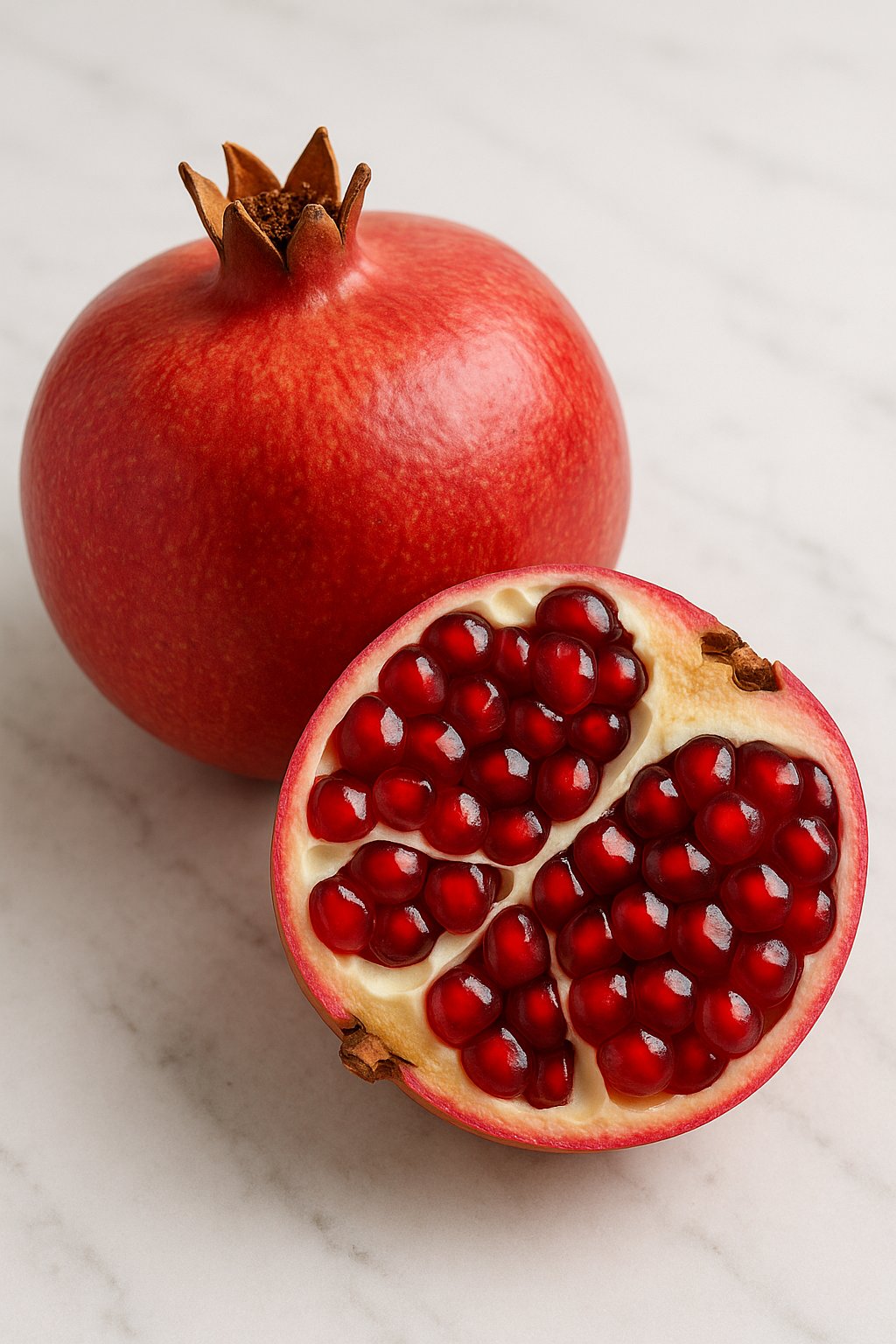
Structure and physical properties: The outer rind is relatively thick and leathery, protecting the fruit well from drying out. The internal structure consists of numerous arils that enclose a sweet‑sour juice around a hard seed. The water content of the arils is typically above 70%.

Chemical composition and nutritional values: Pomegranate arils provide calories mainly as carbohydrates, plus fiber, small amounts of protein and fat, and minerals and vitamins. Typical nutritional values per 100 g of arils are:

  • Calories: about 80–90 kcal
  • Carbohydrates: approximately 15–20 g, partly as free sugars
  • Fiber: around 3–5 g
  • Protein: about 1–2 g
  • Fat: normally under 2 g
  • Minerals: notably potassium and small amounts of phosphorus and calcium
  • Vitamins: notable amounts of vitamin C and small amounts of B‑vitamins and vitamin K
Secondary plant compounds: Characteristic of pomegranate are polyphenolic compounds such as ellagitannins (particularly punicalagins), free ellagic acid and anthocyanins. These compounds contribute substantially to the antioxidant capacity of the juice and determine color and sensory properties. The seed oil contains an unusually high proportion of conjugated linolenic acids (punicic acid), making it interesting for cosmetic and functional applications.

Processing and products: Pomegranate is mainly processed into juice, concentrates, extracts and oil. Typical steps in juice production include fruit maceration, aril recovery, pressing, filtration and pasteurization. Seed oil extraction uses mechanical cold pressing or solvent methods. Besides juice, dried arils, jams and fermented products are produced. The rind and pulp are considered by‑products and serve as raw materials for tannin extracts, animal feed or fiber extraction.

Stability and technological aspects: Anthocyanins are pH‑sensitive and are degraded by heat and light, whereas punicalagins are relatively more stable to temperature changes. Juice acidity (typically pH ~2.9–3.8) inhibits growth of many pathogens; nevertheless microbial spoilage by yeasts and molds and enzymatic browning reactions are relevant challenges during processing.

Health aspects and state of research: In vitro and preclinical studies show antioxidant and anti‑inflammatory effects of the polyphenolic components. Clinical studies are heterogeneous and provide indications of potential beneficial effects on blood pressure, lipid profile and inflammatory parameters, but lack conclusive evidence for specific therapeutic applications. Interactions with drugs are not yet fully clarified; occasional effects on liver enzymes have been described, so medical advice is advisable when taking medications concurrently.

Storage and sensory properties: Whole fruits are storable at cool temperatures (around 5–10 °C) for several weeks. Arils can be frozen or pasteurized; juice products are often microbially stabilized by heating or aseptic processes. Flavor ranges from sweet to tart‑bitter; color varies from pale pink to deep ruby red depending on variety and anthocyanin content.

Overall, the pomegranate is a versatile ingredient with a complex chemical composition that provides nutritionally useful nutrients and a high concentration of bioactive polyphenols. Economically and technologically relevant are, besides the fruit juice, seed oil and extracts from rind and pulp, while health‑related effects remain the subject of ongoing scientific research.

Wiki entry for: pomegranate
Active now: 20 visitors of which 2 logged-in members in the last 5 minutes