Availability and types
Plums are fruits that grow in many parts of the world and are available year-round in different forms. They originally come from regions such as Europe, Asia and North Africa. Today they are grown practically everywhere the climate is warm enough in summer and not too harsh in winter. This means: in Europe countries like Spain, Italy, France and Germany are important growing areas, in Asia especially China and Japan, and also in North America, for example California, there are large plum plantations.
When you can buy plums
Fresh plums are usually available in late summer and early autumn, so roughly from July to October, depending on where you live. In the supermarket you will find them in the fruit department. Outside of this time plums are often available as dried plums (also called prunes), as canned or frozen. Dried plums keep for a long time and are therefore a good storage fruit.
Fresh plums are usually available in late summer and early autumn, so roughly from July to October, depending on where you live. In the supermarket you will find them in the fruit department. Outside of this time plums are often available as dried plums (also called prunes), as canned or frozen. Dried plums keep for a long time and are therefore a good storage fruit.
Varieties and how they differ
There are many different plum varieties. Each variety can differ in shape, size, color and taste. Here are a few typical groups and examples to give you an idea:
There are many different plum varieties. Each variety can differ in shape, size, color and taste. Here are a few typical groups and examples to give you an idea:
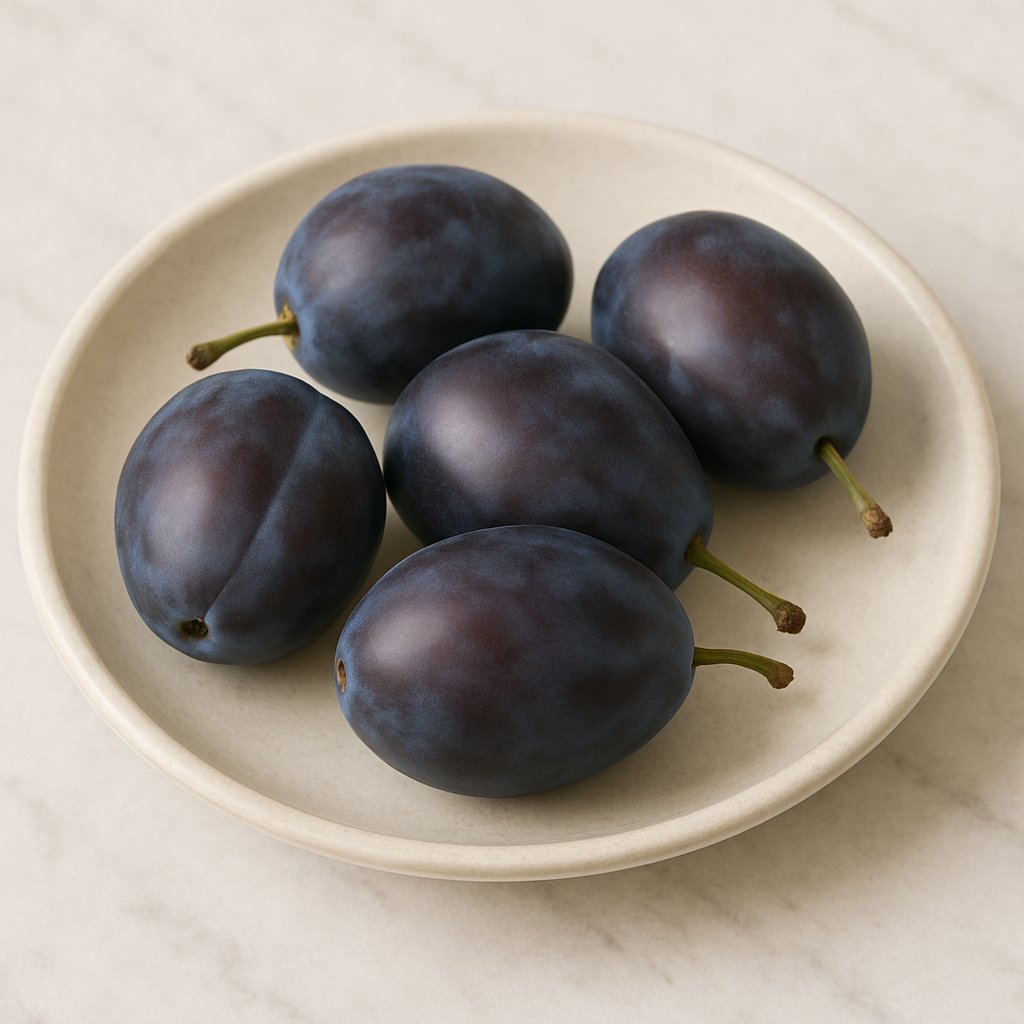
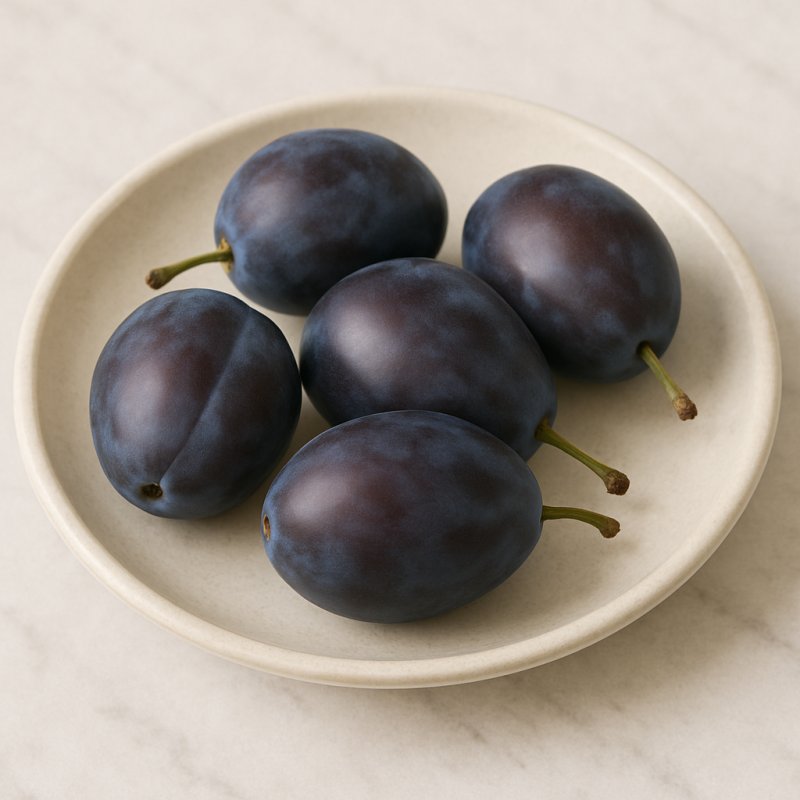
- European plums (often rounded and somewhat oval): these are juicy and suitable for baking or preserving. The best known type is the domestic plum, from which dried plums are also made. They are usually dark blue to purple.
- Japanese plums (usually longer and oval): they are often sweeter and juicier than European varieties and often have a red, yellow or purple skin. Varieties like Santa Rosa are popular for fresh eating.
- Small plums (mirabelles or damsons): some plums are small and very aromatic. Damsons are a special subgroup that are more oval and firm; they are excellent for baking or for compote.
Fresh vs. processed variants
Fresh plums are eaten raw, but they can also be cooked, preserved or baked. Common variants include:
Fresh plums are eaten raw, but they can also be cooked, preserved or baked. Common variants include:
- Fresh – for snacks, fruit salads or on cakes.
- Dried – dried plums are soft and sweet; convenient to take and long‑lasting.
- Preserved – as jam, compote or in jars, ideal for breakfast bread or desserts.
- Frozen – preserved or frozen plums are available out of season and suitable for baking.
How to recognize good plums?
Good plums are firm, have smooth skin and smell fruity. They should not be heavily pressed or brown or mushy. Some plums are still a bit hard and will ripen at home — this is normal. Minor bruises or a fine white film on the skin are often just natural fruit bloom and not a cause for concern.
Good plums are firm, have smooth skin and smell fruity. They should not be heavily pressed or brown or mushy. Some plums are still a bit hard and will ripen at home — this is normal. Minor bruises or a fine white film on the skin are often just natural fruit bloom and not a cause for concern.
In summary plums are easy to find, come in many varieties and can be enjoyed fresh, dried or processed. Depending on the variety they are more or less sweet, juicy or firm, so there is something for every taste.