Menu & categories

Plums

Juicy, sweet-tart stone fruits rich in valuable dietary fiber

Wiki about plum Nutri-Score A Vegan Yes Gluten-free Yes Lactose-free Yes Nut-free Yes
NUTRITION / 100 g
46 kcal 0.7 g Protein 11.4 g Kohlenhydrate 0.3 g Fett

Introduction

Fresh raw plums cut open with the pit
I still remember exactly the first bite of a freshly picked, raw plum: the skin giving way, the sweet‑tart flesh that almost immediately fills the whole mouth — a small, juicy moment of happiness. Since then plums have become a staple in my pantry and my spontaneous snacks. They are uncomplicated, versatile and somehow homely: a fruit that looks as good at the farmers' market next to fragrant bread as it does in elegant desserts.

What particularly fascinates me about raw plums is their variety. There are shapes and colors ranging from deep purple to light yellow, and each variety brings its own aroma. I once tried a plum that tasted so intensely of honey that I briefly thought I was inside a beehive. At the same time I appreciate the fresh acidity that complements salads, cheeseboards or a simple yogurt.

Plums are practical too: they're portable, don't require much fuss, and can be eaten straight from the hand. When I'm out I often keep a few ripe plums in my bag — it's my little sweet emergency ration for the afternoon slump. A colleague once brought them to a meeting and started a spontaneous fruit conversation; suddenly people were discussing favorite varieties instead of agenda items.

From a nutritional point of view raw plums score as well: they are rich in vitamins, fiber and antioxidants. I especially value the fiber after heavy meals, and their low calorie content makes them a great, unadulterated snack. I also like to use plums as a natural sweetener in muesli or smoothies.

In my kitchen plums are a chameleon: they work raw, caramelized in a pan or paired with pungent cheese and arugula. Once I created a simple starter where raw plums played the leading role — the feedback was overwhelming, and hardly anyone believed that so much flavor could come from such a plain ingredient. For me raw plums are a small celebration of the everyday that continually surprises and delights.

Availability & types

Availability and types

Plums are fruits that grow in many parts of the world and are available year-round in different forms. They originally come from regions such as Europe, Asia and North Africa. Today they are grown practically everywhere the climate is warm enough in summer and not too harsh in winter. This means: in Europe countries like Spain, Italy, France and Germany are important growing areas, in Asia especially China and Japan, and also in North America, for example California, there are large plum plantations.

When you can buy plums
Fresh plums are usually available in late summer and early autumn, so roughly from July to October, depending on where you live. In the supermarket you will find them in the fruit department. Outside of this time plums are often available as dried plums (also called prunes), as canned or frozen. Dried plums keep for a long time and are therefore a good storage fruit.

Varieties and how they differ
There are many different plum varieties. Each variety can differ in shape, size, color and taste. Here are a few typical groups and examples to give you an idea:

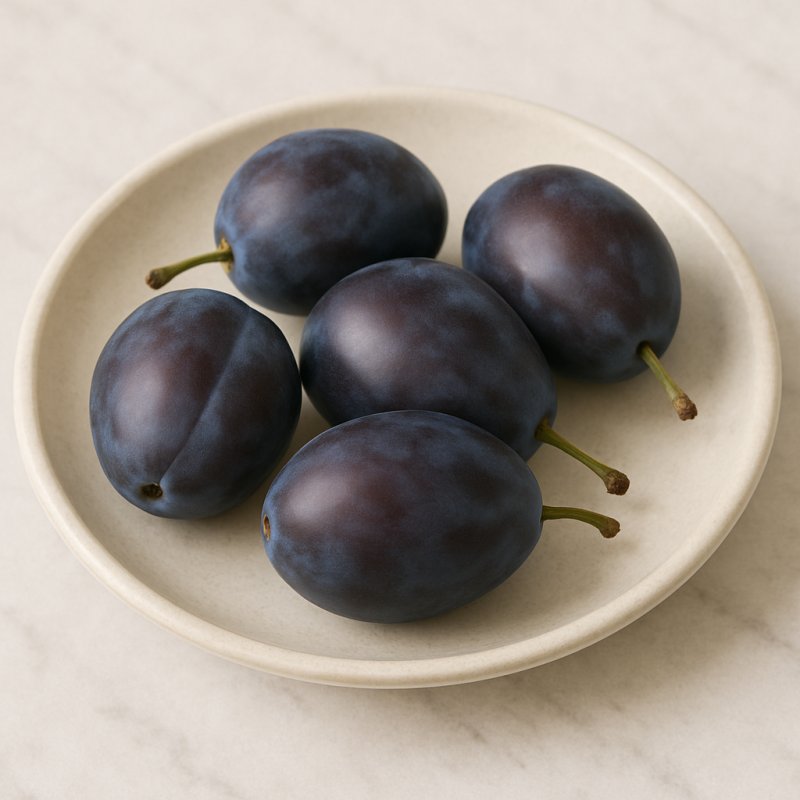
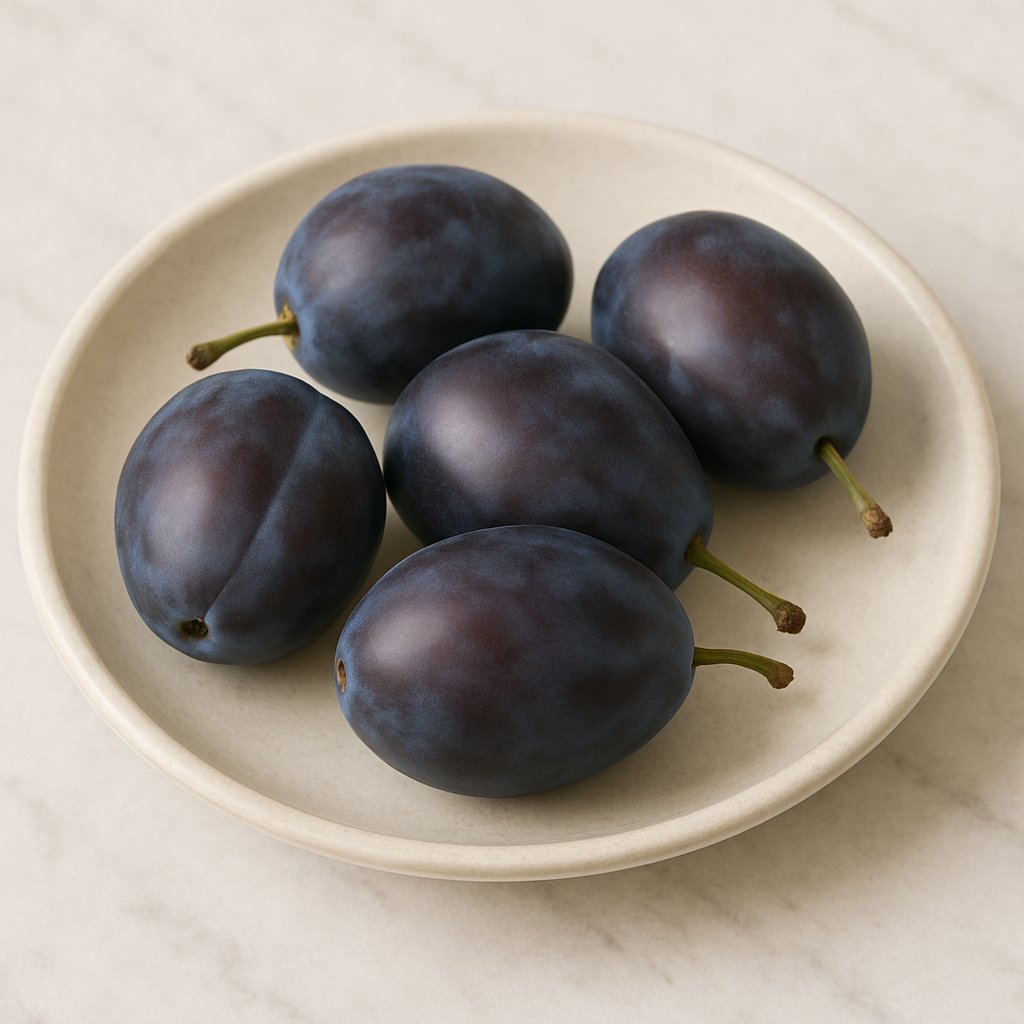
  • European plums (often rounded and somewhat oval): these are juicy and suitable for baking or preserving. The best known type is the domestic plum, from which dried plums are also made. They are usually dark blue to purple.
  • Japanese plums (usually longer and oval): they are often sweeter and juicier than European varieties and often have a red, yellow or purple skin. Varieties like Santa Rosa are popular for fresh eating.
  • Small plums (mirabelles or damsons): some plums are small and very aromatic. Damsons are a special subgroup that are more oval and firm; they are excellent for baking or for compote.
Fresh vs. processed variants
Fresh plums are eaten raw, but they can also be cooked, preserved or baked. Common variants include:

  • Fresh – for snacks, fruit salads or on cakes.
  • Dried – dried plums are soft and sweet; convenient to take and long‑lasting.
  • Preserved – as jam, compote or in jars, ideal for breakfast bread or desserts.
  • Frozen – preserved or frozen plums are available out of season and suitable for baking.
How to recognize good plums?
Good plums are firm, have smooth skin and smell fruity. They should not be heavily pressed or brown or mushy. Some plums are still a bit hard and will ripen at home — this is normal. Minor bruises or a fine white film on the skin are often just natural fruit bloom and not a cause for concern.

In summary plums are easy to find, come in many varieties and can be enjoyed fresh, dried or processed. Depending on the variety they are more or less sweet, juicy or firm, so there is something for every taste.
Details & nutrition

Property Value
Unit g
Average weight per piece 35
Calories per 100 46
Protein per 100 0.7
Carbohydrates per 100 11.4
Sugar per 100 9.9
Fat per 100 0.3
Saturated fat per 100 0.02
Monounsaturated fat 0.1
Polyunsaturated fat 0.1
Fiber per 100 1.4
Vitamin C (mg) per 100 9.5
Vitamin D (IU) per 100 0
Calcium (mg) per 100 6
Iron (mg) per 100 0.2
Nutri-Score A
CO₂ footprint 0.4
Origin Europe, Asia
Gluten-free Yes
Lactose-free Yes
Nut-free Yes
Vegan Yes
Note Nutritional values refer to fresh, raw plums without the pit.

Technical & scientific information

Plums, raw are the fresh fruits of various Prunus species, predominantly Prunus domestica, and are used worldwide as table fruit as well as for further processing. They consist largely of water (typically 80–87 %), but also provide appreciable amounts of carbohydrates, fiber, vitamins and minerals. When consumed raw, plums are a source of rapidly available sugars (mainly glucose and fructose) as well as soluble and insoluble fiber, with sorbitol as a natural sugar alcohol representing a metabolic peculiarity and potentially contributing to laxative effects.

Chemical composition and macronutrients
The energy content of raw plums is about 40–60 kcal per 100 g, depending on variety and ripeness. Carbohydrates make up the largest proportion, typically 9–11 g/100 g, of which about 7–8 g are sugars and 1–2 g are fiber. The fiber fraction consists of pectin (soluble) and cell wall components such as cellulose and hemicelluloses (insoluble). Protein content is low (approx. 0.5–1 g/100 g), as is fat content (<0.5 g/100 g).

Vitamins, minerals and secondary plant compounds
Plums contain several water‑soluble vitamins, notably vitamin C (ascorbic acid) and some B vitamins, particularly vitamin B6 and small amounts of folate. Among the minerals potassium (typically 150–250 mg/100 g) is relevant, with small amounts of calcium, magnesium and iron. Biologically active secondary plant compounds include phenolic compounds such as chlorogenic acid, neochlorogenic acid and anthocyanins, which have antioxidant properties and are responsible for coloration.

Physiological effects and health aspects
The combination of fiber, sorbitol and sulfur compounds can promote intestinal motility and explains the traditional use of dried plums as a mild laxative. Antioxidant phenols in plums are associated in in vitro and animal studies with reductions in oxidative stress and inflammatory markers; the transferability to humans is being investigated in clinical studies. The comparatively low glycemic index of fresh plums makes them a moderate fruit choice for individuals monitoring blood sugar, although their content of available sugars still needs to be taken into account.

Processing and storage
Plums consumed raw can be stored fresh; at 0–4 °C and high humidity their quality is maintained for several days to weeks. Processing techniques include cooling, freezing, preserving (e.g. jams, compotes), and drying to dried plums (prunes), which removes water and concentrates sugars and organic acids. On heating texture and composition change: pectin is partially broken down, and flavor is intensified by concentration of sugars and aromatic compounds. The stone fruit contains a pit with precursors of hydrocyanic acid in the seeds; at usual culinary amounts there is little risk, provided pits are not crushed or processed.

Safety, allergies and interactions
Allergic reactions to plums are rare but can occur in individuals with cross‑reactivity to birch pollen (oral allergy syndrome). Due to their sorbitol content, large amounts can trigger bloating or diarrhea in sensitive individuals. Interactions with medications are not prominently described, yet patients with specific metabolic disorders or fructose intolerance should discuss consumption with medical professionals.

Applications in nutrition and research
Plums are studied in nutrition research because of their combination of fiber and bioactive compounds, for example regarding metabolic effects, bone metabolism and gut health. Culinarily they are versatile: raw as fresh fruit, baked, preserved or dried. The choice between fresh and dried fruit depends on desired water content, sweetness and functional properties.

In summary, raw plums are a water‑rich, low‑calorie fruit with a notable content of soluble fiber, potassium, vitamin C and antioxidant phenols. Their physiological effects on digestion and oxidative processes make them an interesting food for nutrition and research, while variety, ripeness and processing markedly influence chemical composition and thus health effects.

Wiki entry for: plum
Active now: 15 visitors of which 2 logged-in members in the last 5 minutes