Availability and types of plaice
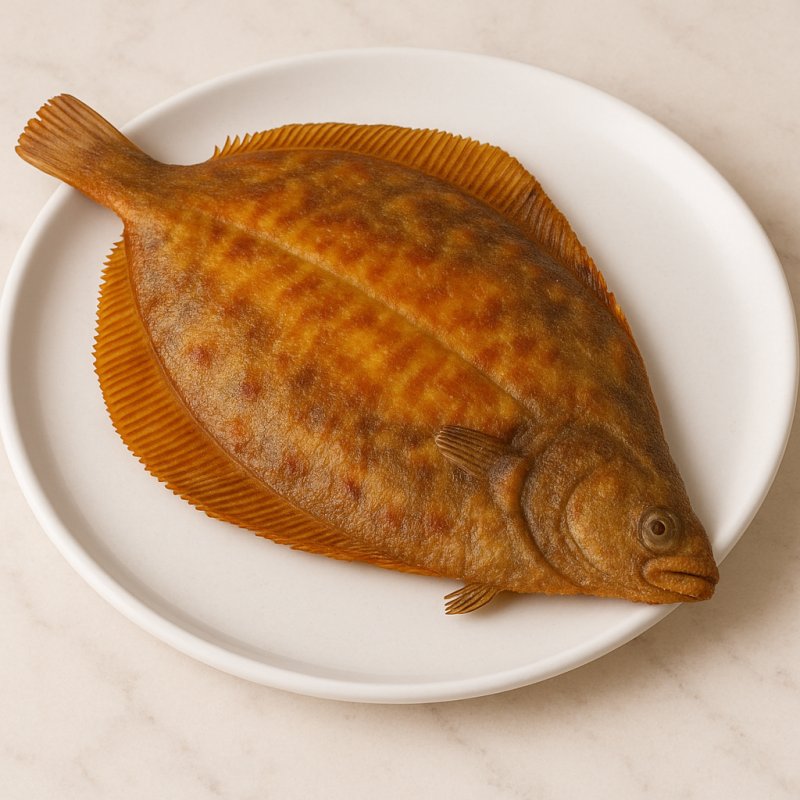
The plaice is a popular food fish often found in supermarkets, fishmongers and restaurants. It belongs to the family of flatfish – these are fish that swim on one side and have both eyes on the same side of the body. That makes them easy to recognize. If you imagine a plaice, you can think of a flat, round shape, almost like a small pancake-fish.
Origin and fishing areas
Plaice live mainly in cold and temperate seas. The best-known fishing areas are:
Plaice live mainly in cold and temperate seas. The best-known fishing areas are:
- North Sea – one of the most important areas in Europe. Many plaice found in German and Dutch shops come from here.
- Baltic Sea – somewhat less salty than the North Sea, but also supplies plaice.
- Atlantic – plaice are also caught off the coasts of countries like France, the United Kingdom and Spain.
Some plaice are caught wild, meaning fishermen take them from the sea with nets or lines. There are also regions where fish are specifically farmed (aquaculture), but plaice are still more often caught wild nowadays.
Available types and variants
Plaice is not just a single "type" of fish – it is often distinguished by catch area, size and preparation. Here are a few simple categories:
Plaice is not just a single "type" of fish – it is often distinguished by catch area, size and preparation. Here are a few simple categories:
- Common plaice (also called "European plaice") – the most frequent species in European kitchens. It has tender, white flesh and a mild flavor.
- Size classes – plaice are sold by weight: small, medium or large. Smaller ones are often suitable for children's portions, larger ones for hungrier eaters.
- Fresh vs. frozen – fresh plaice was caught recently and kept cold. Frozen plaice was quickly frozen after capture so it keeps longer. Frozen is practical because it can be stored for longer.
- Fillets vs. whole fish – fillet means the fish flesh has been separated from the head and bones, making it easier to eat. Whole fish are sometimes sold for roasting whole and still have head and skin.
- MSC or sustainability labels – some products carry a blue label (MSC) or similar marks. This is like a quality seal for fisheries, showing that the plaice comes from a fishery that tries to protect the sea and fish stocks. A label helps buyers make a more sustainable choice.
Tips for selection
If you want to buy plaice, you can look for a few simple things: fresh fish smell slightly of the sea but not strongly "fishy." Fresh fillets look glossy and are firm. If you don't want to cook immediately, frozen fillets are a practical option because they keep longer and are often already filleted.
If you want to buy plaice, you can look for a few simple things: fresh fish smell slightly of the sea but not strongly "fishy." Fresh fillets look glossy and are firm. If you don't want to cook immediately, frozen fillets are a practical option because they keep longer and are often already filleted.
In summary, plaice is a versatile, mild food fish that comes from the North and Baltic Seas as well as the North Atlantic. You can buy it fresh, frozen, as fillets or as whole fish – and with a sustainability label you can more easily find an environmentally friendly option. That keeps the choice manageable and easy to understand for all age groups.
