Menu & categories

Pizza seasoning

Aromatic herb blend for Italian pizza and pasta

Wiki about pizza seasoning Nutri-Score A Vegan Yes Gluten-free Yes Lactose-free Yes Nut-free Yes
NUTRITION / 100 g
250 kcal 12 g Protein 35 g Kohlenhydrate 6 g Fett

Introduction

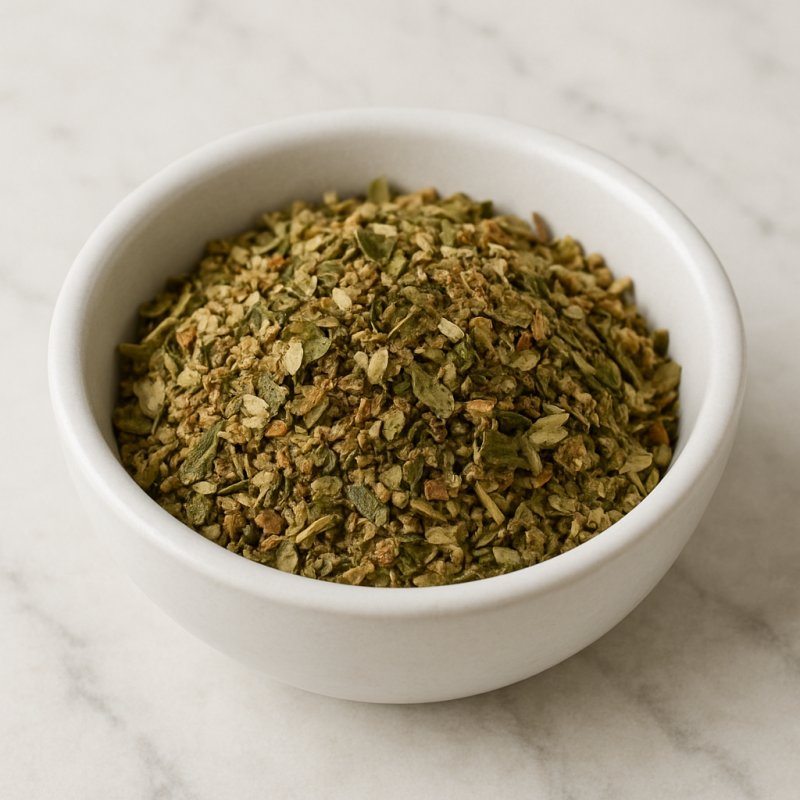
Dried pizza seasoning in a small bowl
When I think of pizza seasoning, I immediately see the first warm scents before my inner eye: oregano, basil, a bit of garlic and maybe a hint of chili that draws a mischievous smile at the first bite. I still remember how, as a young cooking enthusiast, I once refined a plain tomato sauce with a homemade pizza seasoning and suddenly everyone at the table asked what I had done differently. It was just the spice mix, but it turned the everyday into something cozy, almost ritualistic.

Pizza seasoning is not a rigid formula; it is more like a toolbox for flavor. Typical blends include:

  • Oregano – dry, slightly bitter, the classic base.
  • Basil – sweet-fresh, gives warmth and freshness at once.
  • Thyme – earthy and aromatic, often underestimated.
  • Garlic powder – for savory depth.
  • Chili flakes or pepper – for the necessary kick.
I've learned that the art is to keep the balance. Too much oregano can be harsh and dominant, too much garlic becomes rude. A colleague of mine swears by a pinch of fennel because it gives the mix a surprising, almost sweet refinement – that led me to experiment with small variations until I found my personal favorite blend.

Practically, pizza seasoning is not only for pizza. I like to sprinkle it over roasted vegetables, mix it into yogurt dips, or stir it into tomato soups. The blend is adaptable and very forgiving, ideal for quick improvisation in the kitchen. If desired, one can briefly toast the herbs in a pan to activate essential oils; I sometimes do this when I expect guests and want the aroma to be even more intense.

In the end, pizza seasoning for me is a small piece of culture that evokes memories and makes everyday life into enjoyment. It combines simple ingredients into a greater whole and reminds you that good cooking often begins with a few, well-chosen extras.

Availability & types

Availability and types

Pizza seasoning is a spice blend you can buy in many countries. It usually consists of several dried herbs and sometimes small ingredients like garlic or chili. Because the individual herbs come from different regions, pizza seasoning is often the result of plants grown in very different places. The main herbs are oregano, basil, thyme, rosemary and sometimes pepper or chili flakes.

Many of these herbs originally come from the Mediterranean region. Oregano and basil, for example, grow well in countries like Italy, Greece, Spain or Turkey, because the climate there is warm and sunny. Thyme and rosemary also like warm weather and are often found on dry hillsides and stony soils. Today, however, some herbs are also grown in other parts of the world, for example in North America or even in greenhouses in cooler countries. It's like oranges that used to be known only from warm countries but can now also be grown in greenhouses.

If you want to buy pizza seasoning, you can choose between different types. Here are the most common variants:

  • The classic blend: This usually contains oregano, basil, thyme and sometimes rosemary. It is mild and suits most pizzas. You can compare it to a smile: it goes with almost everything.
  • Spicier variants: Some mixes have chili flakes, pepper or dried garlic. These give the pizza a stronger, more piquant taste – almost like a little surprise for the palate.
  • Italian or Mediterranean mixes: These emphasize typically Mediterranean herbs such as basil and oregano. They are often marketed as “original” because many pizza recipes come from Italy.
  • Organic or natural variants: Here the herbs are grown without chemical pesticides. This is a good choice if you want the plants to have been grown in a more environmentally friendly way.
  • Salted or cheese-containing mixes: Some pizza seasonings already include salt or dried cheese (like Parmesan). That saves time when seasoning, but is less flexible because the salt strongly influences the taste.
You can buy pizza seasoning in different places:

  • Supermarket: There are usually several brands and variants. Packages are mostly small and convenient for the kitchen.
  • Delicatessen or spice shops: In specialized stores you often find fresher blends or special recipes that are not available everywhere.
  • Farmers' market or direct from the producer: Sometimes people from the region sell dried herbs or blends made locally. These products can be particularly aromatic.
  • Online shops: Here you find a very large selection, including organic or exotic variants.
When buying, it's worth checking the minimum shelf life and the ingredient list. Fresher spices have more aroma and flavor, similar to how freshly baked bread smells better than old bread. If you want to make your own mix, you can buy the individual herbs separately and mix them to taste — that way you can decide whether you want more of a particular flavor. Overall, pizza seasoning is easy to obtain and available in many different types, so there's something for every taste.
Details & nutrition

Property Value
Unit g
Calories per 100 250
Protein per 100 12
Carbohydrates per 100 35
Sugar per 100 4
Fat per 100 6
Saturated fat per 100 1
Monounsaturated fat 1.5
Polyunsaturated fat 2.5
Fiber per 100 30
Vitamin C (mg) per 100 20
Vitamin D (IU) per 100 0
Calcium (mg) per 100 500
Iron (mg) per 100 30
Nutri-Score A
CO₂ footprint 2.0 kg CO2e/kg
Origin Typical blend of dried herbs such as oregano, basil and thyme, predominantly from the Mediterranean region
Gluten-free Yes
Lactose-free Yes
Nut-free Yes
Vegan Yes
Note Typical pizza seasoning consists of dried herbs like oregano, basil, thyme, marjoram and possibly garlic and onion. Exact nutritional values may vary slightly depending on the manufacturer and composition.

Technical & scientific information

Pizza seasoning is a spice blend typically used to flavor pizzas, tomato sauces and Italian-inspired dishes. As a product of the food industry and home cooking, pizza seasoning mostly consists of dried herbs and spices, whose composition varies regionally and by brand. Characteristic, however, are components that recreate the Mediterranean aroma profile, such as oregano, basil, thyme, rosemary, marjoram and occasionally garlic and onion granules.

Chemically, these herbs provide a complex mixture of volatile aroma compounds, essential oils, phenols, flavonoids and terpenes. Important single molecules are carvacrol and thymol (especially in oregano and thyme), eugenol (partly in basil), as well as monoterpenes such as p‑cymene, linalool and α‑pinene. These compounds contribute to the typical smell and taste spectrum, show antimicrobial activity in vitro and influence oxidative properties in foods.

Ingredient analyses show that pizza seasoning mainly consists of fiber-rich plant components; the energy content is low because the blend contains hardly any usable macronutrients in relevant amounts. Typical nutritional values per 100 g are in the range: energy 200–350 kcal, protein 10–20 g, fat 3–10 g and carbohydrates 40–60 g, whereas in practical use (small doses of a few grams per preparation) the nutritional contribution is negligible. Minerals such as potassium, calcium and iron are present in trace amounts, as are secondary plant compounds with antioxidant effects.

The production of pizza seasoning involves several processing steps. First, herbs are harvested and dried, usually by air drying at moderate temperatures or gently in drying chambers, to minimize the formation of chlorophyll degradation products and to conserve the aroma. Afterwards grinding or sieving takes place depending on the desired particle size. The blends are homogenized under controlled conditions and, if necessary, provided with anticaking agents such as silicates or calcium carbonate to ensure free-flowing properties. Industrial hygiene standards and microbiological controls are important because dried herbs can be contaminated by air contact.

From a health perspective, the individual components are largely safe and considered harmless when used in usual amounts. However, certain essential oils can cause allergies or gastrointestinal irritation in sensitive individuals. The antimicrobial and antioxidant properties of the molecules contained are the subject of numerous studies; they can support the shelf life of perishable foods, but do not replace conventional preservation methods. Excessive consumption of essential oils — which would require unrealistically high doses for normal culinary use of commercial spices — could theoretically lead to toxicological effects.

Other relevant aspects concern quality and sensory properties. Freshness, leaf color, smell and volatile compound profile determine the sensory quality of a pizza seasoning. Industrial products can be standardized in aroma, while handcrafted variants smell fresher but are subject to greater batch-to-batch variation. Storage conditions affect stability: heat, light and moisture promote the loss of volatile aroma compounds and microbial growth, therefore dark, dry and cool storage is recommended.

In summary, pizza seasoning is a versatile aromatic herb blend with characteristic essential oils and secondary plant compounds. It provides only small amounts of macronutrients but, through its chemical composition, can influence flavor, shelf life and nutritionally relevant secondary contents of foods. Quality assurance in harvest, drying and blending as well as proper storage are crucial for the sensory result and food safety.

Wiki entry for: pizza seasoning
Active now: 20 visitors of which 2 logged-in members in the last 5 minutes