Menu & categories

Pine nuts

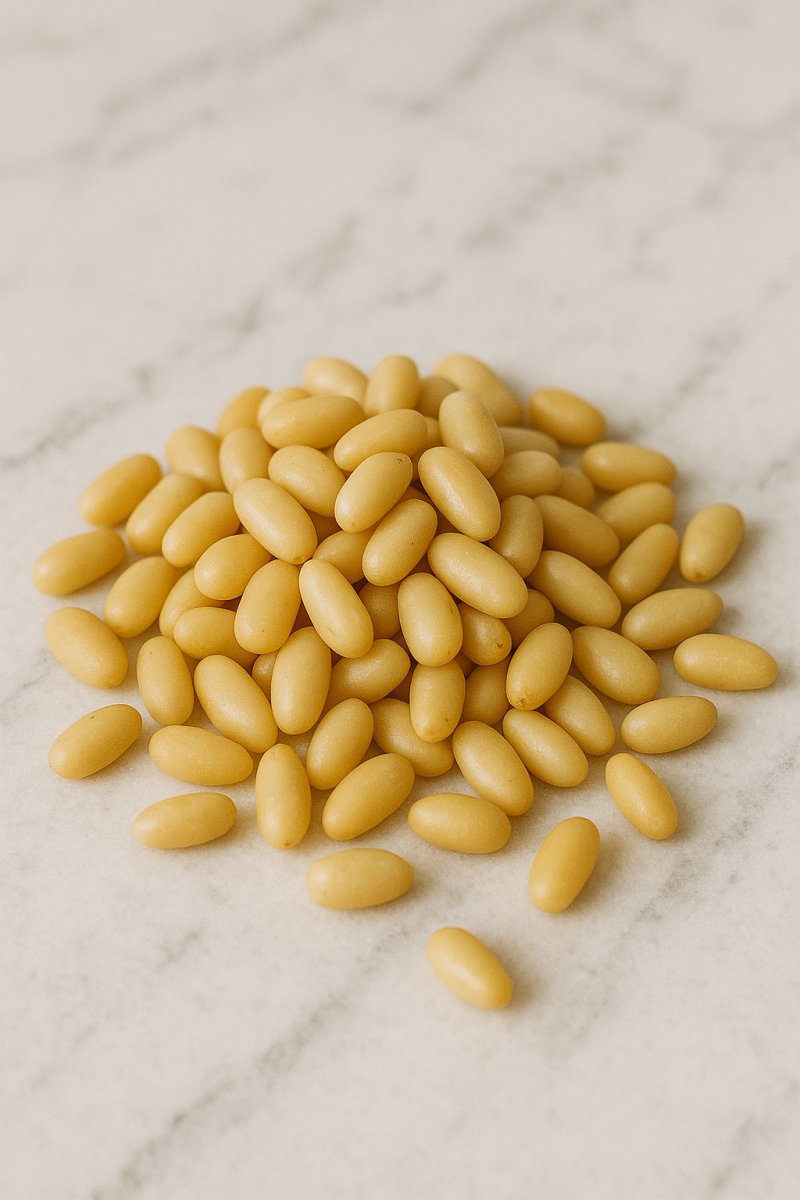
Aromatic pine nuts with a high content of healthy fats and protein

Wiki about pine nut Nutri-Score D Vegan Yes Gluten-free Yes Lactose-free Yes Nut-free No
NUTRITION / 100 g
673 kcal 13.7 g Protein 13.1 g Kohlenhydrate 68.4 g Fett

Introduction

Pine nuts in a small bowl
I love pine nuts. These small, ivory‑colored kernels have something magical for me: they are tender, buttery and carry a hint of forest sunshine. I still remember my first bite of freshly roasted pine nuts at a market stall in Liguria, where the vendor handed me a handful and I was almost speechless from the pure explosion of flavor. Since then they have been a constant part of my kitchen and my culinary memories.

Pine nuts come from the cones of various pine species, the best known being Pinus pinea, which grows in Mediterranean regions. Their harvest is labor‑intensive, and that partly explains their price. A colleague of mine who once helped with a harvest said that combing the cones felt like a treasure hunt: you need patience to find the best kernels. You can taste that effort.

I use pine nuts in many ways: as a crunchy topping on salads, in pestos, in pasta sauces or classically in sweet pastries like Italian panforte or Spanish turrón. I particularly love the simple ritual of briefly toasting them in a dry pan. The aroma that rises is incomparable and immediately draws guests into the kitchen. Sometimes I toast too many — and then there is a spontaneous pine‑nut session with bread and some good olive oil.

A few things to note: pine nuts are sensitive to heat and tend to burn quickly. I have learned to always toast them over medium heat and not to take my eyes off the pan. They are also rather expensive, so I value them all the more and use them selectively. In my pantry they like to live in an airtight jar, cool and dark.

If you have never worked with pine nuts, I recommend a simple dish: some freshly cooked pasta, a spoonful of butter, freshly grated Parmesan and a handful of toasted pine nuts on top. It is uncomplicated, luxurious and evokes sun, sea and handcrafted work in a small space. To me pine nuts are more than an ingredient: they are little moments of happiness that elevate a dish in no time.

Availability & types

Availability and types

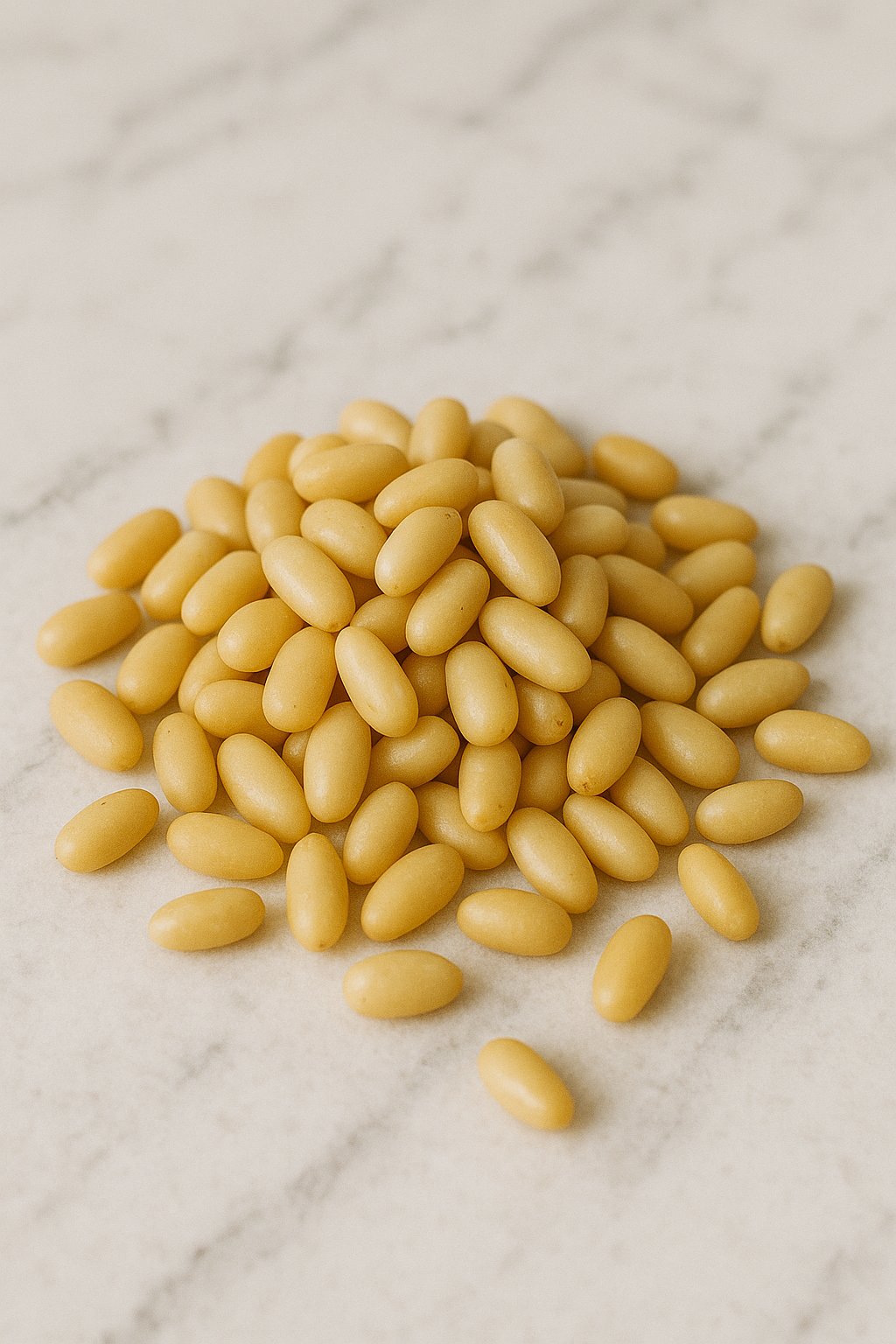
What are pine nuts? Pine nuts are the edible seeds of certain pine species, also called pine kernels. You can picture them as small, soft nuts that are pale inside and slightly glossy outside. They have a mild, buttery taste and are often used in cooking, for example in pesto or on salads.

Where do pine nuts come from? Pine nuts grow on pines that live mainly in warmer regions. The classic pine nuts originate from the Mediterranean area, especially from countries like Italy, Spain and Portugal. They are also harvested in parts of North Africa, such as Tunisia and Morocco. In Asia there are pine species, for example in China and Korea, that also provide pine kernels.

Why do they come from different countries? Imagine different pines are like different apple varieties: some prefer hotter conditions, others somewhat cooler. Therefore they grow in different places and produce slightly different kernels. The ways people harvest and process them can also change their taste and appearance.

  • Mediterranean pine nuts: These kernels are often medium to large and have a mild, nutty flavor. Italian pine nuts are very popular and are often used in traditional dishes.
  • Spanish and Portuguese pine nuts: Also mild, sometimes a bit firmer in texture. They are good for baked goods and salads.
  • North African pine nuts: From countries like Tunisia the kernels can be slightly smaller but still aromatic. They are often used in regional dishes.
  • Asian pine kernels: From China or Korea the kernels can be larger or longer and have a somewhat different, sometimes more intense flavor. Some varieties are lighter or darker than Mediterranean ones.
Which variants are there in stores?
When you buy pine nuts you can find different types:

  • Raw: Unprocessed kernels that you can roast yourself or use directly. Raw they taste mild, like a neutral, buttery snack.
  • Roasted: Light roasting makes them crunchier and gives a more intense aroma, similar to toasting bread.
  • Shelled or unshelled: Sometimes pine nuts have a thin skin; they are usually sold shelled because they taste finer and are more pleasant to eat.
  • Organic or conventional: Organic pine nuts come from ecological farming, meaning without certain chemicals. Conventional variants are often cheaper.
How easy are they to find? Pine nuts are available in many supermarkets, delicatessens and online shops. However they are often more expensive than other nuts because their harvest is labor‑intensive. Sometimes they come in small packages because only a few pieces are needed to give a dish a lot of flavor.

A simple image: Imagine you want to buy almond flakes — pine nuts are similar: small, fine and usually found in small packets. Their origin may be printed on the packaging, for example Italy or China, and that helps you know what flavor to expect.

In summary: pine nuts come from various pines in the Mediterranean, North Africa and Asia. There are multiple varieties and processing methods (raw, roasted, shelled, organic), and while they are not always inexpensive, they are available in many shops. This lets you choose the appropriate variant depending on taste and recipe.
Details & nutrition

Property Value
Unit g
Average weight per piece 0.1
Calories per 100 673
Protein per 100 13.7
Carbohydrates per 100 13.1
Sugar per 100 3.6
Fat per 100 68.4
Saturated fat per 100 4.9
Monounsaturated fat 18.8
Polyunsaturated fat 34.0
Fiber per 100 3.7
Vitamin C (mg) per 100 0.8
Vitamin D (IU) per 100 0
Calcium (mg) per 100 16
Iron (mg) per 100 5.5
Nutri-Score D
CO₂ footprint 3.5
Origin Mediterranean region, Asia and North America, depending on the variety
Gluten-free Yes
Lactose-free Yes
Nut-free No
Vegan Yes
Note Pine nuts are the shelled seeds of the pine and are commonly used in Mediterranean cuisine, e.g., for pesto or as a topping for salads and baked goods. Despite their high fat content, they provide mainly unsaturated fatty acids.

Technical & scientific information

Pine nuts are the edible seeds of the pine, especially Pinus pinea (stone pine, also called the Mediterranean pine), and botanically belong to the so‑called stone fruits. They have been collected since antiquity in the Mediterranean region and today serve worldwide as a high‑quality ingredient in sweet and savory dishes. Botanically they are seeds that mature in cones; the hard seed coat is removed to expose the inner kernel that is used culinarily.

Chemical composition and nutritional values
Pine nuts are energy‑dense and provide mainly fat, alongside proteins and small amounts of carbohydrates. Typical nutritional values per 100 g are about 630–670 kcal, 60–68 g fat, 13–16 g protein and 3–4 g carbohydrates. The fat consists predominantly of mono‑ and polyunsaturated fatty acids: a high share of oleic acid (C18:1) and linoleic acid (C18:2) is characteristic, complemented by moderate amounts of palmitic acid (C16:0) and stearic acid (C18:0).

Other notable constituents include:

  • Vitamins: mainly vitamin E (tocopherols), which acts as an antioxidant, as well as small amounts of B vitamins.
  • Minerals: magnesium, zinc, iron, manganese and phosphorus in relevant amounts.
  • Phytonutrients: phenolic compounds and secondary plant substances in small amounts, which can support antioxidant properties.
  • Dietary fiber: Present in moderate amounts; they contribute to satiety and intestinal health.
Processing and storage
Commercial production includes collecting ripe cones, drying to open the cones and extracting the seeds. Afterwards the hard shell and seed coats are removed mechanically. Pine nuts are sensitive to light, heat and oxygen due to their high fat content. For storage an airtight package, cool temperatures (ideally in the refrigerator) and protection from moisture are recommended to minimize oxidation and rancidity. Roasting generates aromatic Maillard and roasting reactions, alters the flavor and reduces water content, but can also reduce some volatile antioxidants.

Health aspects
Because of their high energy and fat content, pine nuts are a concentrated source of calories; in moderate amounts they can nonetheless be nutritionally beneficial. The high proportions of unsaturated fatty acids contribute to improving lipid profiles when they replace saturated fats. Vitamin E and secondary plant compounds support antioxidant defenses. Minerals such as magnesium and zinc are important for metabolic processes, the immune system and enzyme functions. From a nutritional perspective, pine nuts are suitable as part of a balanced diet, especially when combined with fiber‑rich and protein‑rich foods.

Safety and allergy notices
Like other tree nuts, pine nuts can trigger allergic reactions; people with known nut or tree‑nut allergies should exercise caution. Other risks arise from microbial contamination or molds with improper storage; therefore good hygiene practices, appropriate drying and storage conditions are important. Pine nut butter and oils are less commonly processed industrially, but in production oxidative stability is a technical issue that can be improved with antioxidants or cool storage.

Uses in cuisine and industry
Pine nuts are used raw or roasted as an ingredient in pesto, baked goods (such as cookie fillings and macaroons), salads and sauces. Technologically they provide texture, aroma and fat components that can help stabilize emulsions. In food analysis their fatty acid profiles and tocopherol contents are used for quality control, while authenticity analyses help detect adulteration with cheaper nuts.

Pine nuts are thus a nutrient‑rich, aromatic food with specific chemical properties and nutritional benefits. Proper processing and storage are crucial to preserve flavor, nutrient content and microbiological safety. For people with allergies or those needing to limit calorie intake, attention to portion size and caution are advised.

Wiki entry for: pine nut
Active now: 6 visitors of which 2 logged-in members in the last 5 minutes