Menu & categories

Phyllo dough

Thin, crispy dough for delicious dishes.

Wiki about phyllo pastry Nutri-Score B Vegan Yes Gluten-free No Lactose-free Yes Nut-free Yes
NUTRITION / 100 g
250 kcal 8 g Protein 50 g Kohlenhydrate 3 g Fett

Introduction

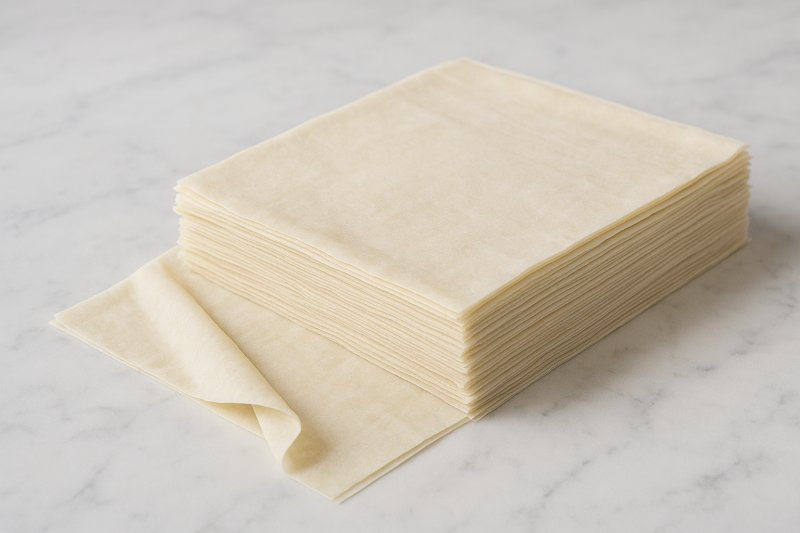
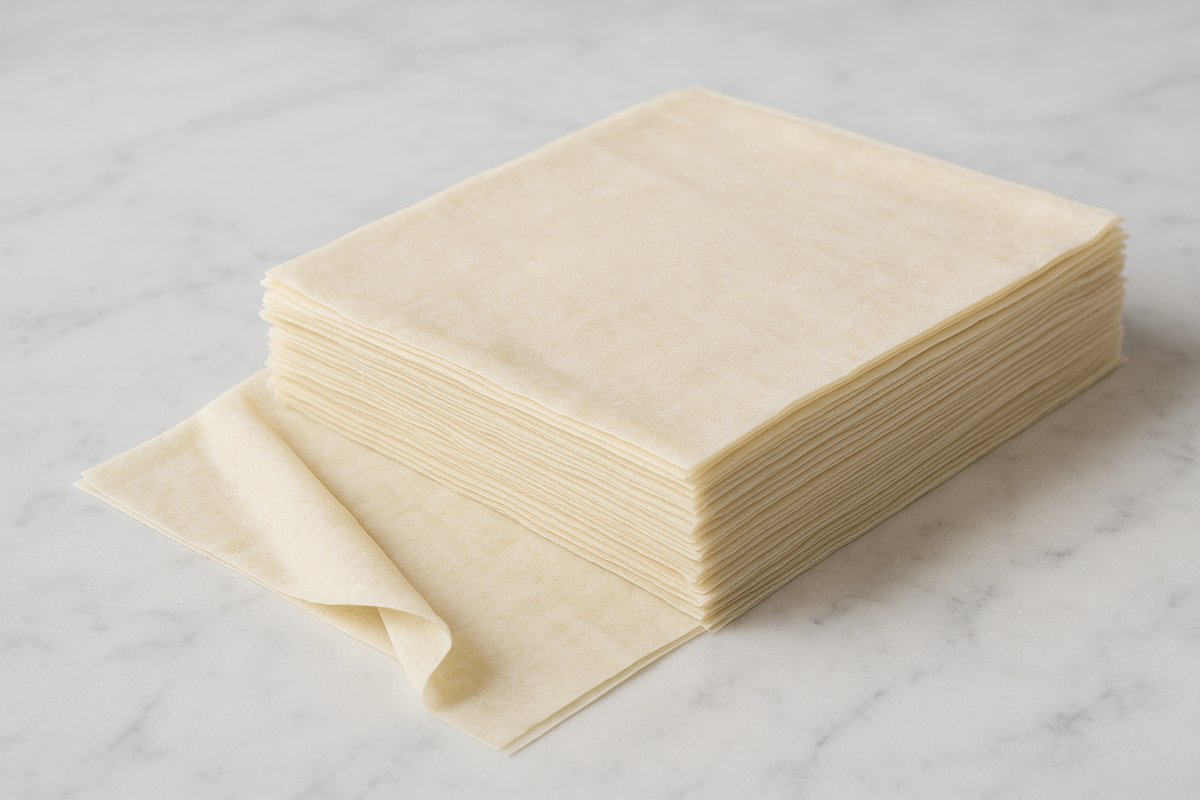
Phyllo dough spread out on a wooden board.
When I think of filo pastry, memories of the many culinary adventures I've had with it come to mind immediately. It was on a rainy Sunday when I first held the delicate, many-layered dough in my hands. A colleague of mine, who is from Greece, had invited me to a small cooking evening to discover the secrets of Greek cuisine. I still remember staring with wide eyes at the thin sheets of filo pastry, layered like delicate clouds. It was almost as if I were working on a piece of art.

Filo pastry, also known as strudel dough, is an incredible chameleon in the kitchen. It is made from water, flour and a little oil and is characterized by its remarkable tenderness and crispness. The art of filo lies in handling – the thinner the layers, the airier the final product. It is excellent for both sweet and savory dishes. I've used it for all sorts of things: from classic baklava to savory spinach parcels that I serve friends as a snack.

Preparing filo pastry can be challenging at first. I remember a particularly embarrassing moment when I tried to open the dough and tore it into several pieces. My colleague just laughed and assured me that every cook has made this faux pas at least once. The most important thing is to stay calm and not give up. With some practice and patience you'll soon become a filo pastry pro.

  • Variety of use: Filo pastry can be used for sweet and savory dishes.
  • Crispness: The dough becomes wonderfully crisp and light when baked.
  • Health awareness: It can be prepared with less fat than many other doughs.
Another highlight of my filo experiences was when I hosted a large dinner party. I decided to make a filling of feta, spinach and herbs in delicate filo parcels. The guests were delighted and I felt like a culinary queen. It's amazing how such a simple dough can bring so much joy and enjoyment.

Filo pastry is therefore not just an ingredient, but an experience that creates memories and enchants the palate. I can't wait to get back into the kitchen and create new dishes with this versatile dough. If you have the chance to work with filo pastry, be inspired and enjoy the journey it offers you. Who knows, it may become an unforgettable culinary discovery for you too.

Availability & types

Filo pastry is a very special ingredient used in many delicious dishes. Originally this dough comes from the eastern Mediterranean region, particularly from countries such as Greece, Turkey and the Balkans. The name «Filoteig» comes from the Greek word «phyllon», which means «leaf». That fits well, because the dough is rolled out very thin so that it almost looks like a leaf.

The main ingredients for filo pastry are flour, water, oil or butter and a pinch of salt. This dough is very flexible and is often used in the kitchen to create delicious dishes. You can use it, for example, for sweet desserts like baklava or for savory dishes like börek. The dough is light and crispy when baked, which makes it particularly tasty.

Filo pastry is made in many regions, but it is especially popular in countries such as Greece, Turkey and Egypt. In these countries there are many small bakeries that prepare fresh filo daily. These bakeries often use traditional methods to make the dough as thin and delicate as possible. Sometimes the dough is even pulled by hand, which is an art in itself!

  • Origin: Greece, Turkey, Balkans
  • Ingredients: Flour, water, oil or butter, salt
  • Use: Sweet and savory dishes
If you want to buy filo pastry, there are different types you can find in supermarkets or specialty food stores. It usually comes in large rectangular sheets that you can simply pull apart. Sometimes you can also find frozen filo pastry, which is very convenient because you can just thaw it when you need it. Make sure to wrap the dough well when you store it after opening so it doesn't dry out and become brittle.

There are also different varieties of filo pastry that can differ in thickness and texture. Some are particularly thin while others are a bit thicker. These different variants can affect the outcome of your dishes. For example, a thicker dough can hold more filling, while a thinner dough becomes crispier when baked.

Here are some popular types of dishes you can make with filo pastry:

  • Baklava: A sweet dessert with nuts and honey.
  • Börek: A savory filling of meat or vegetables wrapped in filo pastry.
  • Spanakopita: A Greek specialty with spinach and feta cheese.
Filo pastry is thus a versatile ingredient that offers many possibilities in the kitchen. Whether you want to prepare something sweet or something savory, with filo pastry you can create many delicious dishes. It's worth trying.
Details & nutrition

Property Value
Unit g
Calories per 100 250
Protein per 100 8
Carbohydrates per 100 50
Sugar per 100 1
Fat per 100 3
Saturated fat per 100 0.5
Monounsaturated fat 1
Polyunsaturated fat 1
Fiber per 100 2
Vitamin C (mg) per 100 0
Vitamin D (IU) per 100 0
Calcium (mg) per 100 10
Iron (mg) per 100 1
Nutri-Score B
CO₂ footprint 1.2
Origin Turkey
Gluten-free No
Lactose-free Yes
Nut-free Yes
Vegan Yes
Note Phyllo dough is ideal for making baklava and other filled pastry dishes.

Technical & scientific information

Filo pastry is an extremely thin dough that is widespread in Mediterranean and particularly Greek cuisine. Its origins can be traced back to ancient times, where it was used mainly for the preparation of sweet and savory dishes. Filo pastry is characterized by its delicate and crispy texture, which is produced by repeatedly rolling and folding the dough. The main components of filo pastry are flour, water, salt and sometimes oil or butter.

The chemical composition of filo pastry varies depending on the recipe and method of preparation. Generally a combination of wheat flour and water is used, where the flour mainly contains starch and proteins. The starch provides elasticity to the dough while the proteins contribute to structure formation. Through kneading and rolling, the gluten-containing proteins are activated, giving filo pastry its characteristic extensibility.

The nutritional values of filo pastry can vary depending on the method of preparation and additional ingredients. In general, filo pastry contains per 100 grams approximately:

  • Calories: 250–300 kcal
  • Fat: 5–10 g
  • Protein: 7–10 g
  • Carbohydrates: 50–70 g
  • Fiber: 2–3 g
The processing method of filo pastry is crucial for the quality and texture of the final product. The process begins with making the dough, which is well kneaded and then rolled out into thin layers. Traditionally the dough is spread on a clean surface or cloth and brushed with oil to separate the individual layers. This prevents the dough from sticking together during baking. The layers can then be used to prepare a variety of dishes, including the famous Greek Börek or Baklava.

Another interesting aspect of filo pastry is its health relevance. Since filo pastry typically contains less fat than many other types of dough, it is considered relatively light and easy to digest. This makes it an attractive option for preparing dishes that require a crispy texture without being too heavy. However, consumers should note that the fillings often combined with filo have a significant impact on the nutritional value of the final dish. Fillings made from cheese, meat or nuts can considerably increase the calorie and fat content.

Another important aspect of health considerations is the use of whole grain flour instead of white flour. This can increase the fiber content and provide additional vitamins and minerals that are missing in refined flour. In addition, filo pastry is generally gluten-containing.

Wiki entry for: phyllo pastry
Active now: 20 visitors of which 2 logged-in members in the last 5 minutes